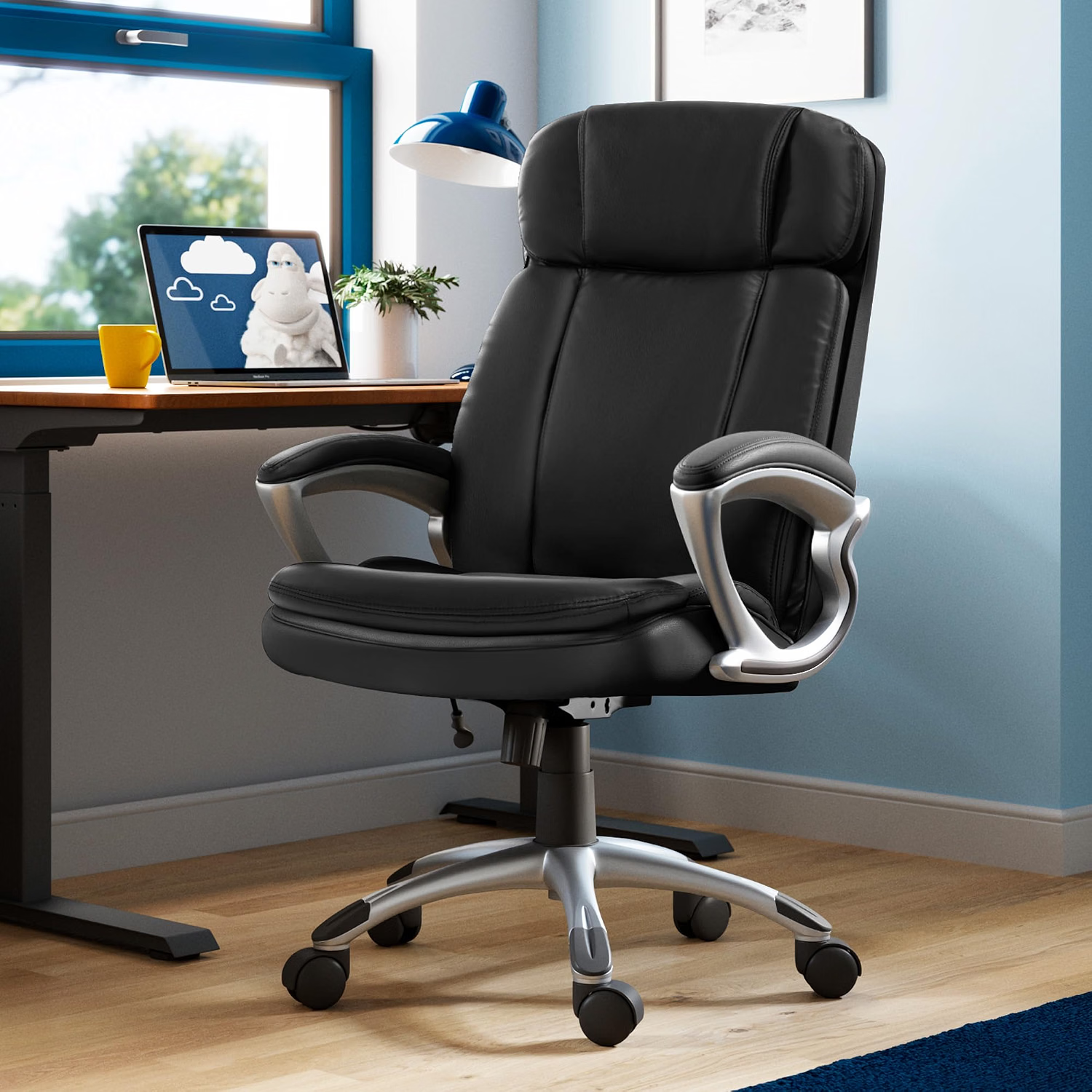
If sitting leaves your hips sore, stiff, or uncomfortable, your chair may be part of the problem. The best chair for hip pain is not necessarily the softest one. What matters more is whether the seat fits your body, supports your thighs, allows you to change position, and lets you maintain a comfortable working posture.
In this guide, we compare ergonomic office chairs, cushioned executive chairs, recliners, and alternative seating options. The goal is not to claim that a chair can treat a hip condition, but to help you choose seating that makes everyday sitting more comfortable.
If your hip pain is persistent, severe, worsening, or affecting normal activities, consider speaking with a healthcare professional. Hip pain can have many different causes, so the right seating setup depends on the individual.
In This Guide
🔍 How We Evaluate Chairs for Hip Pain
For this guide, we focus on chair characteristics that are relevant to comfortable desk sitting: seat fit, adjustability, cushioning, back support, recline, and overall stability.
We do not treat a particular chair as a medical device, and a chair cannot determine the cause of hip pain. Instead, the comparisons below are intended to help shoppers evaluate seating based on body dimensions, work habits, and personal comfort preferences.
- Seat fit:
Look for enough depth to support your thighs without pressing behind your knees. - Seat cushioning:
A supportive medium-firm surface can be preferable to extremely soft padding that allows you to sink deeply into the seat. - Adjustability:
Seat height, seat depth, backrest position, armrests, and tilt can help you adapt the chair to your body rather than forcing your body to adapt to the chair. - Back support:
Adjustable lumbar support can make it easier to maintain a supported sitting position during desk work. - Movement:
A chair that allows comfortable changes in posture can be more practical than one that locks you into a single position.
These principles are consistent with general office-ergonomics guidance from Mayo Clinic and Cleveland Clinic, which emphasizes appropriate chair height, foot support, back support, relaxed shoulders, and regular movement rather than trying to maintain one rigid posture all day.
🪑 7 Best Chairs for Hip Pain in 2026
The seven options below represent different seating priorities. Instead of assuming one chair works for everyone, consider the seat design, adjustability, body fit, and intended use before buying.
| Chair | Best For | Key Consideration | Check Price |
|---|---|---|---|
| Steelcase Gesture Premium ergonomic chair |
Long desk sessions | Highly adjustable seating and recline system; fit should be checked carefully for your body size. | Check Price → |
| Hbada Ergonomic Office Chair Budget option |
Budget-conscious shoppers | Look for the specific model’s seat dimensions and weight capacity before purchasing. | Check Price → |
| Esright Massage Recliner Recliner option |
Resting and relaxing | Reclining can provide a different sitting position, but verify dimensions, padding, and control layout before buying. | Check Price → |
| Herman Miller Aeron Mesh ergonomic chair |
Breathable desk seating | Multiple sizes and adjustable features make fit especially important when choosing an Aeron. | Check Price → |
| Serta Big & Tall Executive Chair Cushioned seating |
Users who prefer more padding | A softer, thicker seat may feel comfortable, but excessive sinking can make repositioning more difficult. | Check Price → |
| Varier Balans Kneeling chair |
Alternative seating | A substantially different posture from a conventional office chair; not suitable for every user or every task. | Check Price → |
| Flash Furniture High-Back Chair Wider seating |
Larger body frames | Check the exact seat width, depth, height range, and stated weight capacity for the model you select. | Check Price → |
📌 Key Features to Look For in a Chair for Hip Pain
When comparing the best chair for hip pain, start with fit rather than branding. A premium chair that is too deep or too high may be less comfortable than a less expensive chair that fits your body properly.
1. Seat Height
Adjust the seat so your feet can rest comfortably on the floor. If the chair is too high and your feet cannot reach the floor, a footrest can help provide support. Mayo Clinic similarly recommends adjusting chair height so the feet are supported and the thighs are appropriately positioned.
2. Seat Depth
Seat depth is especially important if you are shorter or taller than average. You want the seat to support your thighs without creating uncomfortable pressure behind the knees. Adjustable seat depth makes it easier to achieve that balance.
3. Cushioning
There is no universally correct firmness level for hip pain. Extremely hard seats may create pressure points, while very soft cushions can allow the pelvis to sink deeply. A supportive cushion with enough give for your body weight is often a practical starting point.
4. Lumbar Support
Lumbar support does not directly treat hip pain, but it can help create a more supported desk posture. Look for a backrest that feels comfortable against your lower back and, ideally, allows some adjustment.
5. Recline and Tilt
A chair that allows you to change your backrest angle gives you another way to vary your posture during the day. Cleveland Clinic’s office-ergonomics guidance also describes a slightly reclined supported position as one option for desk work.
6. Armrests
Adjustable armrests can help you keep your shoulders relaxed while working. Position them so your arms can rest naturally without forcing your shoulders upward or causing you to lean heavily to one side.
7. Seat Edge
A rounded or waterfall-style front edge can feel more comfortable than a hard, sharp edge, particularly when you sit for extended periods. Comfort here is highly individual, so pay attention to how the front edge contacts your thighs.
⚡ Ergonomic Chairs vs. Recliners vs. Standard Office Chairs
The right seating type depends heavily on what you are doing. A desk chair needs to support computer work, while a recliner may make more sense for reading or relaxing. Neither category is automatically better for every person with hip pain.
| Chair Type | Typical Use | Potential Advantages | Potential Limitation |
|---|---|---|---|
| Ergonomic chair | Desk work | More adjustment options for seat height, depth, backrest and arm position | Higher-quality models can be expensive |
| Recliner | Reading and resting | Allows a more reclined position and may feel comfortable when upright sitting is tiring | Usually less practical for computer work |
| Standard office chair | Shorter desk sessions | Affordable and widely available | Often has fewer adjustment options |
When an Ergonomic Chair Makes Sense
If you spend several hours at a desk, prioritize adjustability. Being able to set the chair height, seat depth, backrest and armrests to your body can make your workstation more comfortable.
When a Recliner Makes Sense
A recliner can be useful for reading, watching television, or relaxing when you want to change your sitting position. However, it is generally less suitable for keyboard-and-mouse work because the screen, keyboard, and arm position become harder to arrange ergonomically.
What About a Standard Office Chair?
A basic office chair can still work if its dimensions fit you and you can establish a comfortable workstation. Before replacing it, check whether adjusting the height, adding appropriate foot support, or improving the desk setup solves the problem.
🔑 How to Sit More Comfortably With Hip Pain
Even an expensive chair can feel uncomfortable if the setup is wrong. Use these adjustments as a starting point rather than trying to force your body into one “perfect” posture.
- ✓ Keep your feet supported.
Your feet should rest on the floor or a footrest rather than dangling. - ✓ Sit back against the backrest.
Use the backrest rather than perching at the front edge of the chair. - ✓ Keep your shoulders relaxed.
Adjust your armrests so your arms can rest without shrugging. - ✓ Avoid staying in one position for hours.
Stand up, walk around, or change your sitting position regularly. Mayo Clinic and Cleveland Clinic both emphasize workspace ergonomics and reducing prolonged static sitting. - ✓ Adjust your monitor and keyboard.
A chair cannot compensate for a poorly positioned desk setup. Keep frequently used items within comfortable reach. - ✓ Stop if an adjustment increases your pain.
Comfort should guide the setup. Do not force a posture or stretch that causes sharp, worsening, or persistent symptoms.
🛒 Hip Pain Chair Buying Checklist
- Check the seat height range against your leg length.
- Check the seat depth rather than relying only on overall chair size.
- Look for enough seat width for your preferred sitting position.
- Consider whether you prefer firm, medium-firm, or softer cushioning.
- Look for adjustable lumbar support if you work at a desk for long periods.
- Check whether the armrests can be adjusted to your desk height.
- Look for a recline or tilt mechanism if you like changing position during the day.
- Check the manufacturer’s weight capacity and warranty.
- For larger or smaller frames, compare the actual dimensions rather than relying on labels such as “big and tall” or “compact.”
- If possible, choose a retailer with a reasonable return policy because chair comfort is highly individual.
👤 Who This Guide Is For
This guide is primarily for people looking for more comfortable seating for home offices, desk work, reading, and everyday sitting.
It is not intended to diagnose hip pain or replace treatment from a physician, physical therapist, or other qualified healthcare professional. Hip pain can result from different conditions, including arthritis, injuries, bursitis, and other joint or soft-tissue problems.
📌 Frequently Asked Questions
What type of chair is best for hip pain?
For desk work, an adjustable ergonomic chair is a useful starting point because you can change the seat height, seat depth, backrest and armrests to fit your body. However, there is no single chair that is best for every type or cause of hip pain.
Is a firm or soft chair better for hip pain?
Neither is automatically better. Very firm surfaces can create pressure points, while very soft cushions may allow excessive sinking. A supportive cushion that feels comfortable and keeps you well supported is a more useful target.
Can an ergonomic chair help with hip bursitis or arthritis?
An ergonomic chair cannot treat or cure bursitis or arthritis. It may, however, make sitting more comfortable by improving support and allowing you to change position. Because these conditions have different causes and symptoms, persistent hip pain should be evaluated by a healthcare professional.
Is a recliner good for hip pain?
A recliner can be useful for resting because it allows you to change from an upright sitting position. Whether it feels better for your particular hip problem depends on the cause of your pain, the recliner’s dimensions, and your individual comfort.
How often should I take a break from sitting?
There is no universal chair-break schedule that works for everyone. A practical approach is to avoid remaining in one position for long uninterrupted periods. Stand, walk, or change your posture regularly throughout the day. Cleveland Clinic notes that reducing prolonged sedentary time and increasing movement are important parts of a healthy routine.
Should I use a cushion on my office chair?
Possibly. A cushion can change the pressure distribution and effective seat height, but it can also alter your posture. If you use one, check that your feet remain supported and that the added height does not make the desk and armrests uncomfortable.
When should I see a doctor about hip pain?
Consider medical evaluation if hip pain persists, gets worse, interferes with normal activities, or makes walking difficult. Seek urgent medical attention after significant trauma or if you cannot move the hip or leg.
More Chair Guides
Final Takeaway
The best chair for hip pain is usually the one that fits your body, supports your legs and back, and allows you to change position comfortably. For desk work, prioritize adjustability and fit over extra padding or marketing claims. If you mainly need a chair for relaxing, a supportive recliner may be more appropriate.
Most importantly, don’t expect a chair to solve an underlying medical condition. If sitting consistently causes significant or worsening hip pain, the cause matters more than the chair, and professional medical advice may be appropriate.
Medical and ergonomic references: Mayo Clinic guidance on office ergonomics and hip pain; Cleveland Clinic guidance on ergonomics, prolonged sitting, and hip pain. Product availability, prices, specifications, and warranties can change, so verify current details before purchasing.
1 thought on “Best Chair for Hip Pain: 7 Ergonomic Picks for 2026”