
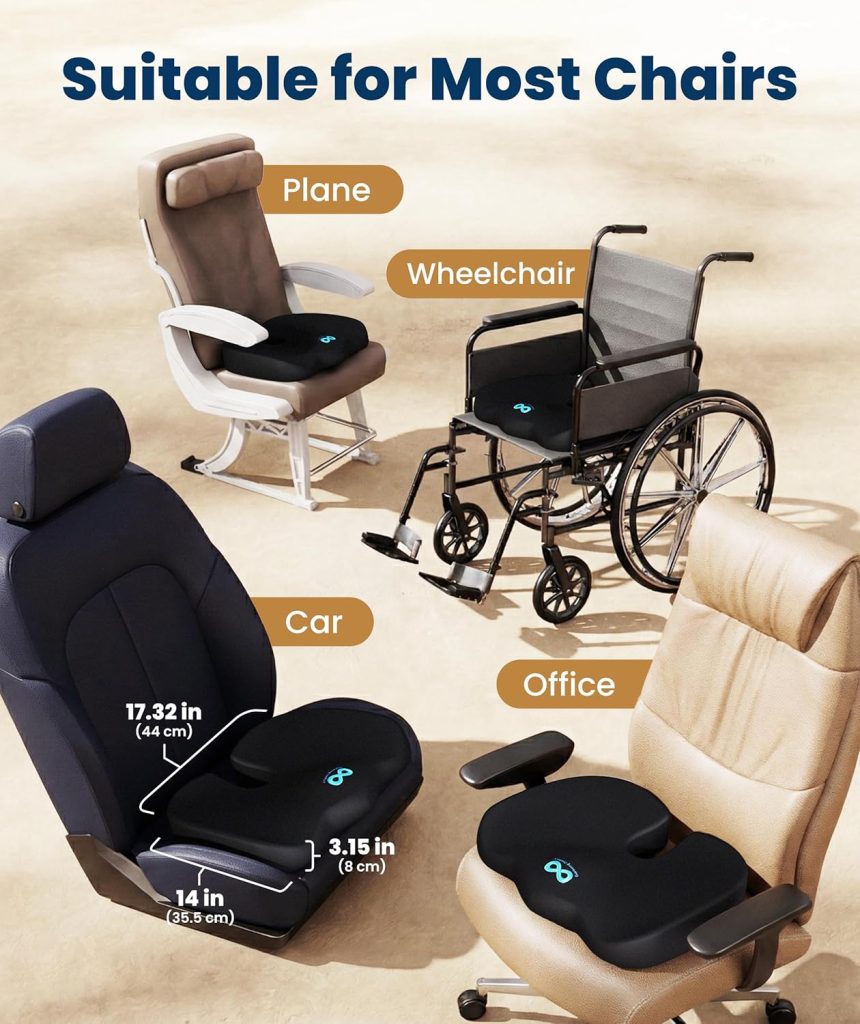
Seat Cushion Buying Guide
An uncomfortable office chair doesn’t always need replacing. The right cushion may improve seat comfort, reduce pressure on sensitive areas, or make a firm chair more pleasant to use.
This guide compares seven seat cushions for different priorities, including tailbone comfort, cushioning, breathability, budget, and portability. We’ll also explain when a cushion is worth trying—and when the real problem may be your chair’s fit or adjustments.
Disclosure: This article contains affiliate links. We may earn a commission if you purchase through these links, at no extra cost to you.
If you spend hours at a desk, a hard or worn-out seat can make it difficult to stay comfortable. You may find yourself shifting position, feeling pressure beneath your sitting bones, or noticing that your chair no longer feels supportive.
A seat cushion can be a practical upgrade when the chair itself fits reasonably well but its seat needs more padding or a different shape. It is not a guaranteed solution for pain, numbness, or other symptoms, and it cannot correct every ergonomic problem.
For most shoppers, the key is to choose a cushion based on the problem they want to solve—not simply the thickest cushion or the product with the most impressive marketing claims.
Quick recommendation:
- For general office comfort: Consider a contoured memory foam cushion such as Everlasting Comfort or ComfiLife.
- For tailbone pressure: Look for a U-shaped rear cutout that aligns with your tailbone.
- For a different feel and an open-grid design: Consider Purple Simply Seat Cushion.
- For a larger body size: Check the cushion’s actual dimensions and stated weight limit before buying.
- If your chair already fits poorly: Check chair height, seat depth, and back support before adding a thick cushion.
Quick Comparison: Best Seat Cushions for Office Chairs
Use this table as a starting point. Prices, availability, product versions, dimensions, and warranty terms can change, so check the current listing before ordering. The “best for” descriptions indicate intended use and design—not a guarantee of medical benefit.
| Cushion | Best for | Design | What to check | View |
|---|---|---|---|---|
| Everlasting Comfort Memory Foam | General comfort and tailbone pressure | Memory foam, contoured rear cutout | Current model, thickness, cover and attachment method | Check price → |
| LoveHome Memory Foam Coccyx Cushion | Budget shoppers | Contoured foam with rear cutout | Current availability, dimensions and cover care | Check price → |
| ComfiLife Gel Enhanced | Foam cushioning with a gel layer | Gel-enhanced memory foam and rear cutout | Weight limit, dimensions and gel-layer expectations | Check price → |
| Purple Simply Seat Cushion | Open-grid design and a different sitting feel | Flexible polymer grid | Thickness, weight, price and return policy | Check price → |
| Aylio Coccyx Cushion | People who prefer a firmer coccyx cushion | Firm foam with rear cutout | Firmness, dimensions and fit | Check price → |
| Vaunn Medical Seat Cushion | Shoppers considering a wheelchair-style cushion | Cushioned support; verify exact model | Exact product, dimensions and weight capacity | Check options → |
| Gel Seat Cushion with Bamboo Charcoal | Budget shoppers who want a gel-style cushion | Varies by product | Verify the exact brand, filling, cover and dimensions | Check options → |
Before you buy: A product name or Amazon search result may show multiple versions. Confirm the exact model and its current specifications rather than relying only on an older comparison chart.
Do You Need a Seat Cushion?
A cushion may be worth trying when the chair is otherwise a reasonable fit but the seat feels too firm, worn, or uncomfortable. Common reasons to consider one include:
- The seat feels too hard: Additional padding may make the chair more comfortable.
- You feel pressure beneath your sitting bones: A cushion with an appropriate shape and firmness may change how pressure is distributed.
- Your tailbone is uncomfortable against the seat: A rear cutout may reduce direct contact with that area.
- The seat foam is worn or flattened: A cushion may be a temporary improvement, although a badly deteriorated chair may need repair or replacement.
- You use multiple chairs: A portable cushion can give you a more familiar sitting surface at home and at work.
A cushion is not the right fix for every problem. If your feet cannot rest flat, the seat is too deep, the backrest does not support you comfortably, or the chair’s adjustment mechanisms are broken, address those issues first.
Persistent numbness, tingling, weakness, or significant pain should not automatically be blamed on the chair. Consider getting medical advice, especially if symptoms are new, worsening, or continue after changing your sitting setup.
What to Look for in an Office Chair Seat Cushion
1. A Coccyx Cutout for Tailbone Pressure
A coccyx cushion usually has a U-shaped opening at the back. When positioned correctly, the opening can reduce direct contact between the tailbone and the seat. It does not guarantee pain relief, and the shape must line up with your body.
If tailbone discomfort is your main concern, compare dedicated options in our best coccyx cushions for office chairs guide.
2. Memory Foam, Gel, or a Flexible Grid
Memory foam conforms to body shape and can feel cushioning, although its feel and firmness vary by formulation and temperature.
Gel-enhanced foam adds a gel layer to a foam cushion. It may change the initial feel or heat experience, but a gel layer does not guarantee that a cushion will stay cool throughout the day.
Flexible polymer grids feel different from conventional foam and have open spaces in their structure. Some users may prefer this design, while others may prefer a more traditional padded surface.
For a closer material comparison, read Memory Foam vs. Gel Seat Cushions and Purple Seat Cushion vs. Memory Foam.
3. The Right Thickness
A thicker cushion adds more height to your sitting position. That may help on a hard seat, but it can also bring you too close to the desk or reduce the effective seat depth.
Measure your chair’s current seat height and depth, and check whether your feet can still rest flat after adding the cushion. A thinner option may be more suitable when your chair already puts you at the right height.
See our seat cushion thickness guide for more help choosing the right height.
4. A Stable, Non-Slip Base
A cushion that slides around can be frustrating. Look for a textured or rubberized base, or straps if the model includes them. Check that the base works with your chair’s upholstery and that the cushion does not extend awkwardly beyond the seat.
5. A Removable Cover
If you use a cushion daily, a removable cover can make cleaning easier. Check the care label: some covers are machine washable, while the foam or grid insert may require separate cleaning instructions.
6. Breathability and Heat
If you tend to feel warm while sitting, consider the cover material, cushion structure, and how much of the surface is covered by fabric. Open-grid designs allow air to move through their structure, while foam and gel products vary by construction. No design can guarantee a cool sitting experience for everyone.
7. Dimensions and Weight Capacity
Check both the cushion’s width and front-to-back depth against your chair. A cushion that is too small may not support your sitting area adequately, while one that is too large may overhang the seat.
Weight capacity matters too. Do not assume that a cushion marketed for office chairs or wheelchairs is suitable for every body size. Confirm the manufacturer’s current recommendations before buying.
1. Everlasting Comfort Memory Foam Seat Cushion — Best General-Purpose Option
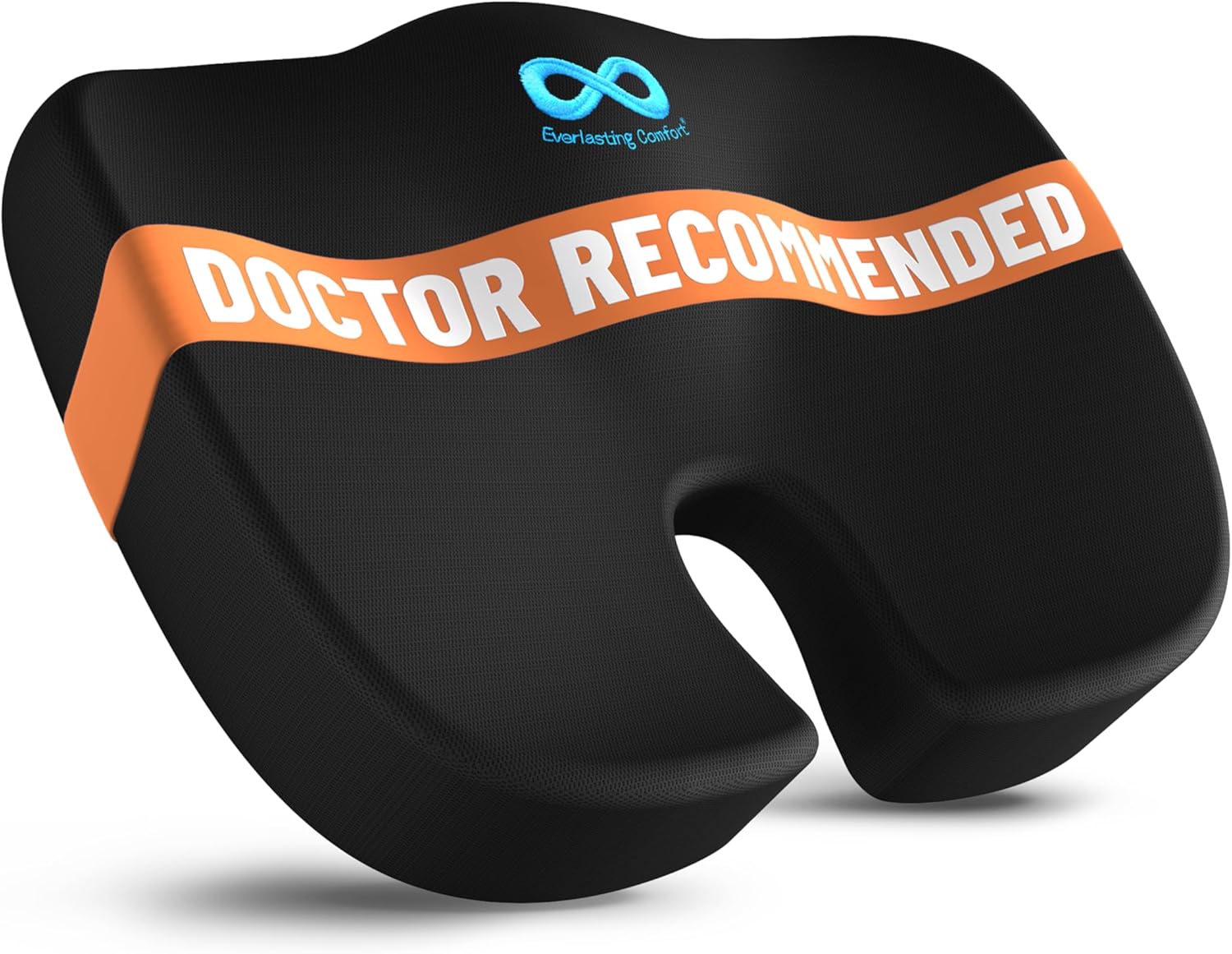

Best for: Shoppers who want a conventional foam cushion with a contoured shape.
The Everlasting Comfort cushion is worth considering if your office chair feels too firm and you prefer the feel of memory foam. The model linked here has been sold as a coccyx-style cushion with a rear cutout, but verify the current listing for its exact construction, cover, attachment method, and dimensions.
Memory foam can conform to your body under pressure. Whether that feels supportive or too soft is personal, and the right firmness depends on your weight, sitting posture, and the chair underneath it.
Potential advantages
- Contoured shape with a rear cutout on the relevant model.
- Foam cushioning for a chair that feels too firm.
- May be useful for people who want to move a cushion between compatible seats.
- Provides an alternative to replacing the entire chair immediately.
Things to consider
- Memory foam may feel warm during extended use.
- The extra height may affect desk alignment and seat depth.
- Confirm the current version includes the features you want; listings and product versions can change.
Verdict: A reasonable starting point for general cushioning, particularly if you prefer foam and want a contoured design. Measure your chair first and check the current product details.
Check Everlasting Comfort on Amazon →
2. LoveHome Memory Foam Coccyx Cushion — A Budget Option to Compare
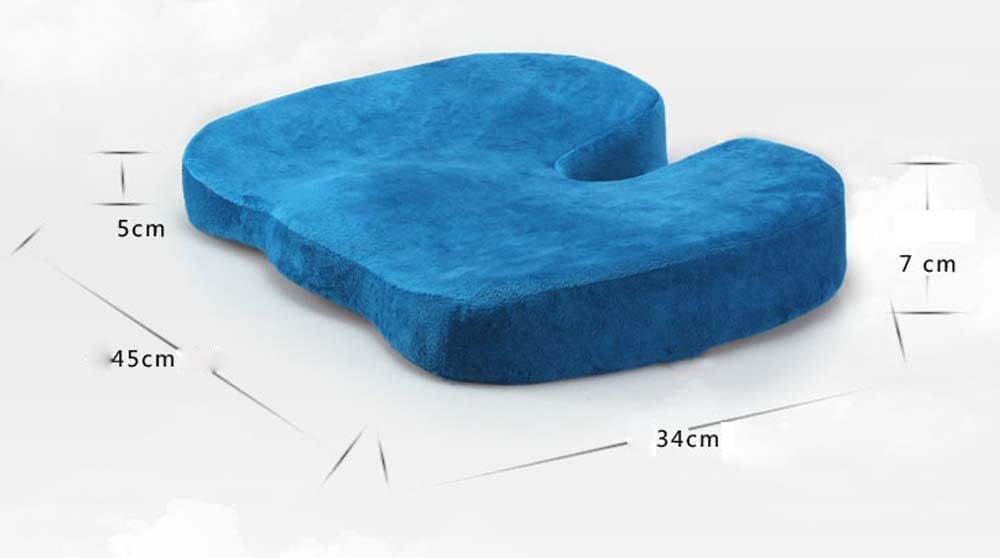

Best for: Budget-conscious shoppers looking for a contoured foam cushion.
LoveHome coccyx cushions have been sold as affordable foam options with a rear cutout. If the current listing matches the model you want, it may be worth comparing with better-known alternatives before spending more.
Rather than assuming that a lower price means the same features as a premium model, inspect the listing for the actual dimensions, foam construction, cover material, base grip, and cleaning instructions.
Potential advantages
- May offer a lower-cost way to try a contoured cushion.
- A rear cutout may help reduce direct seat contact at the tailbone.
- Portable enough to move between compatible chairs if the dimensions work.
Things to consider
- Confirm the product is currently available and that the listing matches the intended model.
- Foam firmness and cover quality can vary by product.
- Compare dimensions carefully; a thick cushion may change your seating position.
Verdict: Consider LoveHome if you want to keep the cost down and the current listing meets your requirements. Compare the exact model with other cushions instead of relying on the brand name alone.
Check LoveHome options on Amazon →
3. ComfiLife Gel Enhanced Seat Cushion — Foam with a Gel Layer
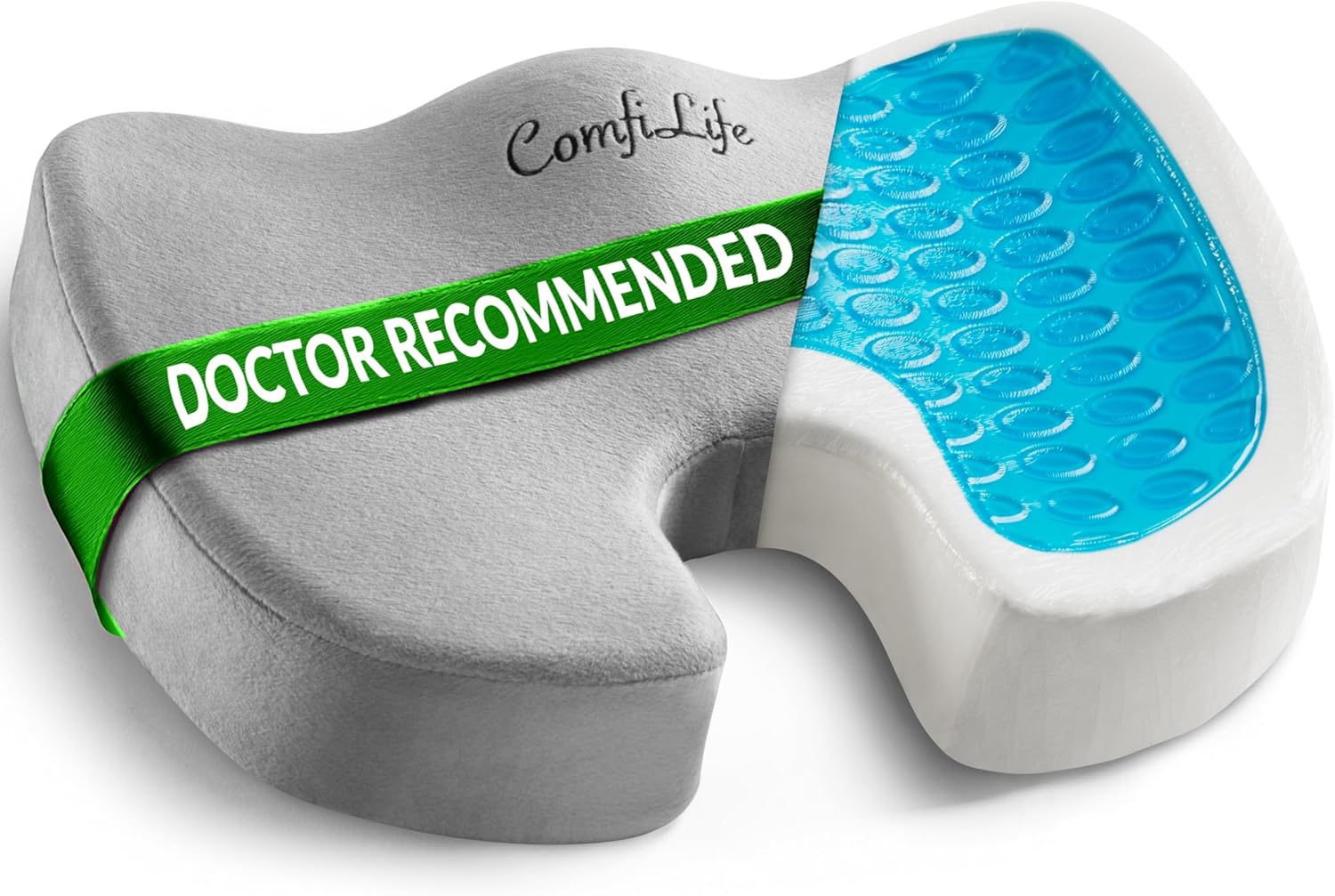

Best for: Shoppers who want a memory foam cushion with a gel layer and a contoured rear cutout.
The ComfiLife Gel Enhanced cushion combines memory foam with a gel layer. Its shape is intended to reduce direct contact at the tailbone, while the foam provides cushioning beneath the rest of the sitting area. It is one option to compare if you prefer a shaped cushion over a flat pad.
The manufacturer notes that memory foam responds to temperature and body weight, and its FAQ gives a recommended maximum weight of 250 pounds for its seat cushions. Check the current product documentation before purchasing, particularly if you need a cushion for a higher weight range.
Potential advantages
- Gel-enhanced memory foam construction.
- Contoured design with a rear opening on the relevant model.
- Manufacturer describes a removable, washable cover and non-slip base.
- Portable design for use on compatible seats.
Things to consider
- A gel layer does not guarantee that the cushion will stay cool all day.
- The cushioning may change your sitting height and effective seat depth.
- Confirm the current weight recommendation and model specifications.
Verdict: A useful option to compare if you want both foam cushioning and a gel layer. If your main concern is persistent sciatica or other pain, do not assume a cushion is a treatment; seek professional guidance when appropriate.
Related reading: Best Seat Cushions for Sciatica.
4. Purple Simply Seat Cushion — Best to Consider for an Open-Grid Feel
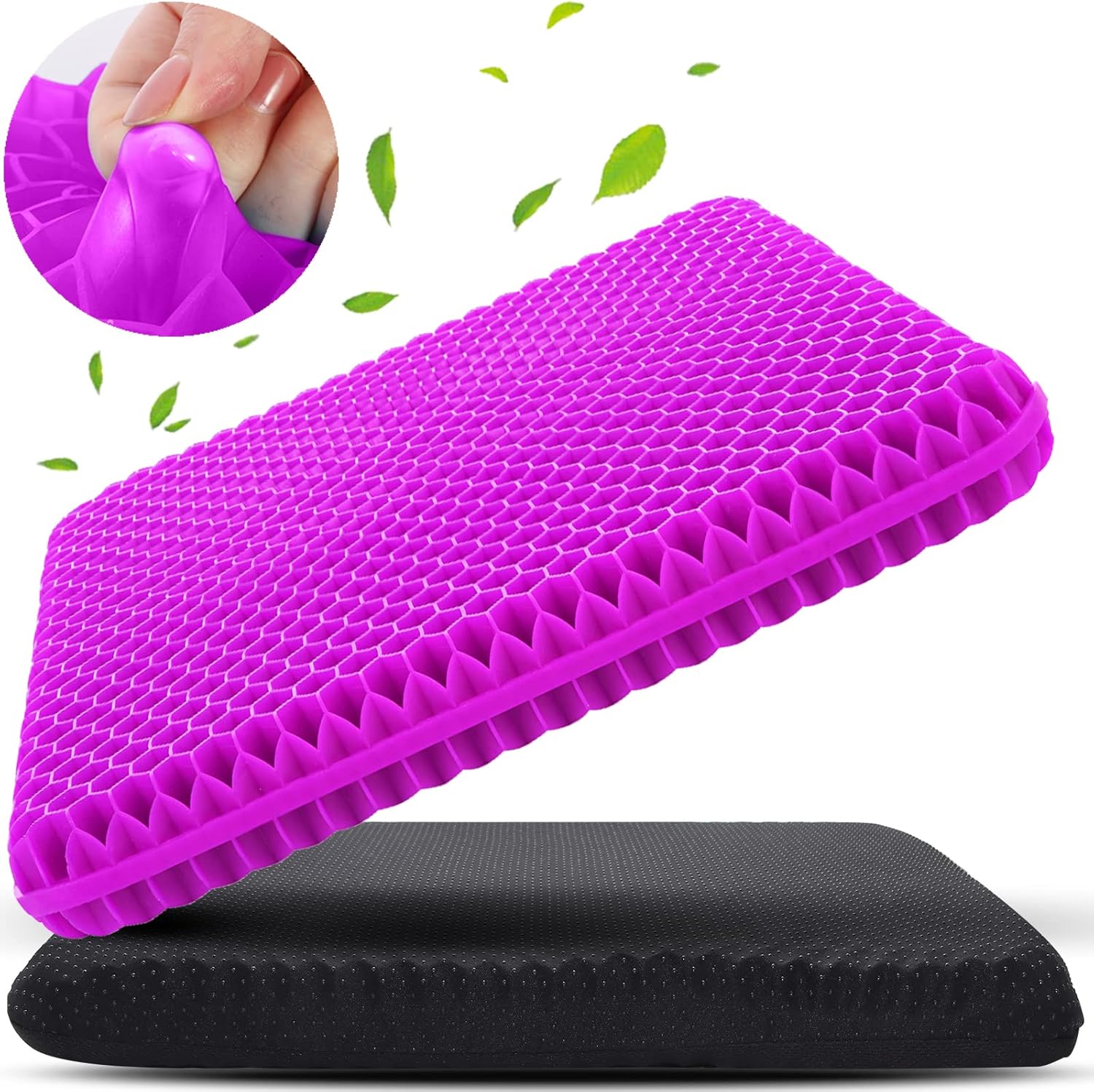

Best for: Shoppers who want to try a flexible grid-style cushion instead of conventional foam.
The Purple Simply Seat Cushion uses Purple’s flexible grid material rather than a traditional foam core. This gives it a noticeably different construction and feel from the other options in this guide.
The open structure may appeal to people who prefer a less conventional cushion, but airflow and temperature comfort depend on the full product design and the conditions in which you sit. It is not accurate to promise that any cushion will never feel warm.
Purple’s published product information lists the Simply Seat Cushion at approximately 1.25 inches thick for the version covered by its current product information. Check the listing for the exact model, because dimensions can differ among Purple cushion styles.
Potential advantages
- Flexible polymer-grid construction rather than a conventional foam pad.
- Distinct feel that some users may prefer.
- Low-profile design may be useful when seat height is a concern.
- Official product information describes a removable, washable cover and a one-year warranty; verify current terms.
Things to consider
- Usually costs more than basic foam cushions.
- The grid feel may not suit everyone.
- Compare the thickness and dimensions with your chair before ordering.
- It does not use the same dedicated U-shaped coccyx-cutout design as the coccyx cushions above.
Verdict: Purple Simply is worth considering if you specifically want to try a flexible grid cushion and its price fits your budget. If tailbone pressure is your main concern, compare it with cushions designed around a rear cutout.
Check Purple Simply on Amazon →
Read our detailed comparison: Purple Seat Cushion vs. Memory Foam: Is Purple Worth It?
5. Aylio Coccyx Cushion — A Firmer-Feeling Option
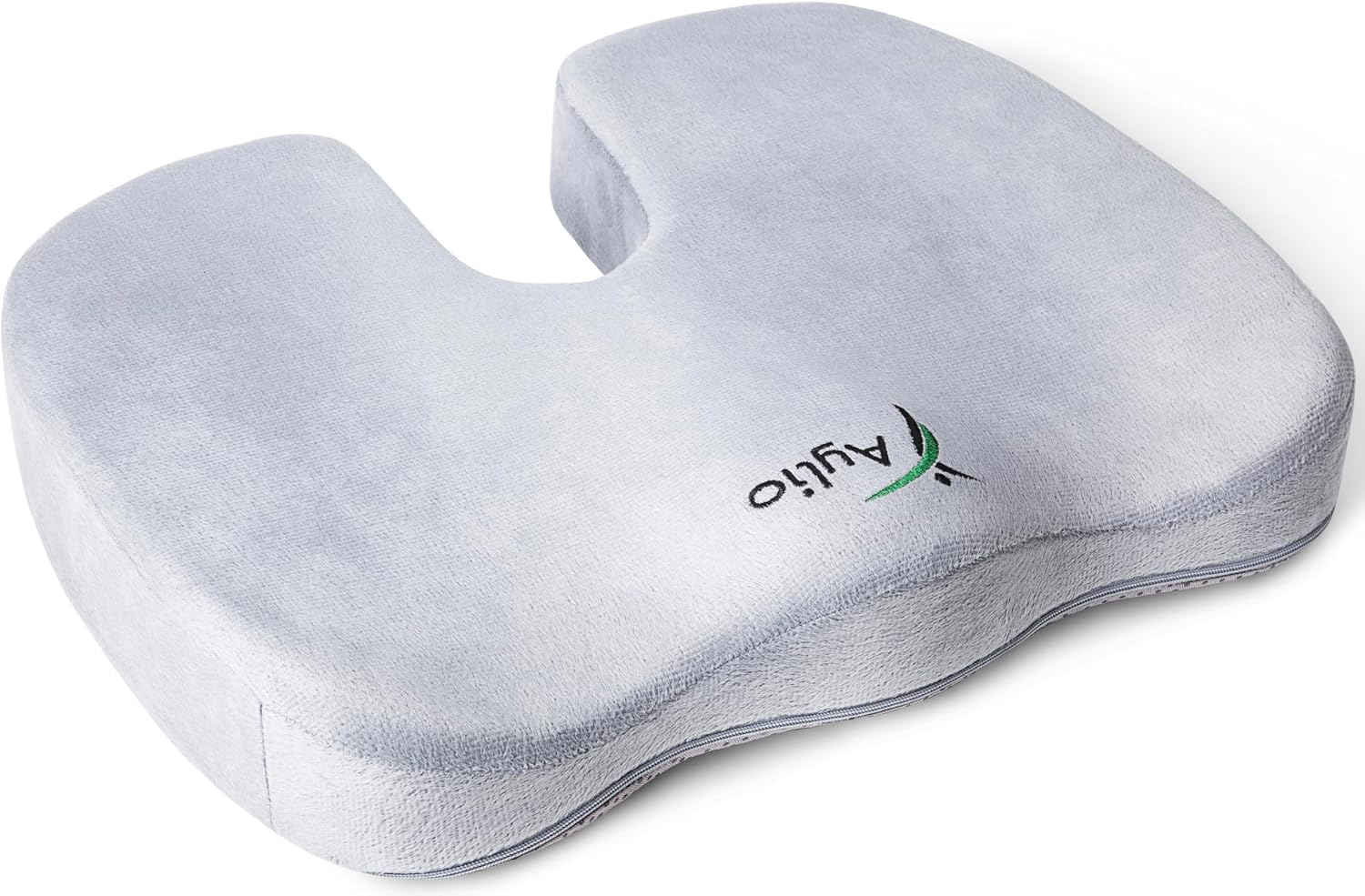

Best for: People who want a dedicated coccyx cushion and prefer a firmer support surface.
The Aylio Coccyx Cushion uses a rear cutout intended to leave space beneath the tailbone. Its shape and foam firmness may appeal to users who find softer cushions compress too much. The exact feel will depend on the user and the product version.
A cutout only helps if it lines up with the tailbone and the surrounding cushion supports you comfortably. A firmer cushion is not automatically better for everyone, and this product should not be presented as a substitute for advice about recovery after an injury or surgery.
Potential advantages
- Dedicated coccyx-style design with a rear opening.
- May suit users who prefer a firmer foam surface.
- Portable for compatible office and home seats.
- The manufacturer describes a removable, washable cover; check current care instructions.
Things to consider
- Firmness may feel uncomfortable if you prefer a plush seat.
- Check the current dimensions and cover details.
- If you are recovering from surgery or an injury, follow the recommendations of your healthcare professional.
Verdict: Aylio is worth comparing if you want a dedicated coccyx cushion and prefer a firmer feel. Match the cutout and dimensions to your body and chair rather than choosing based on the word “orthopedic” alone.
6. Vaunn Medical Seat Cushion — Check the Exact Model Before Buying
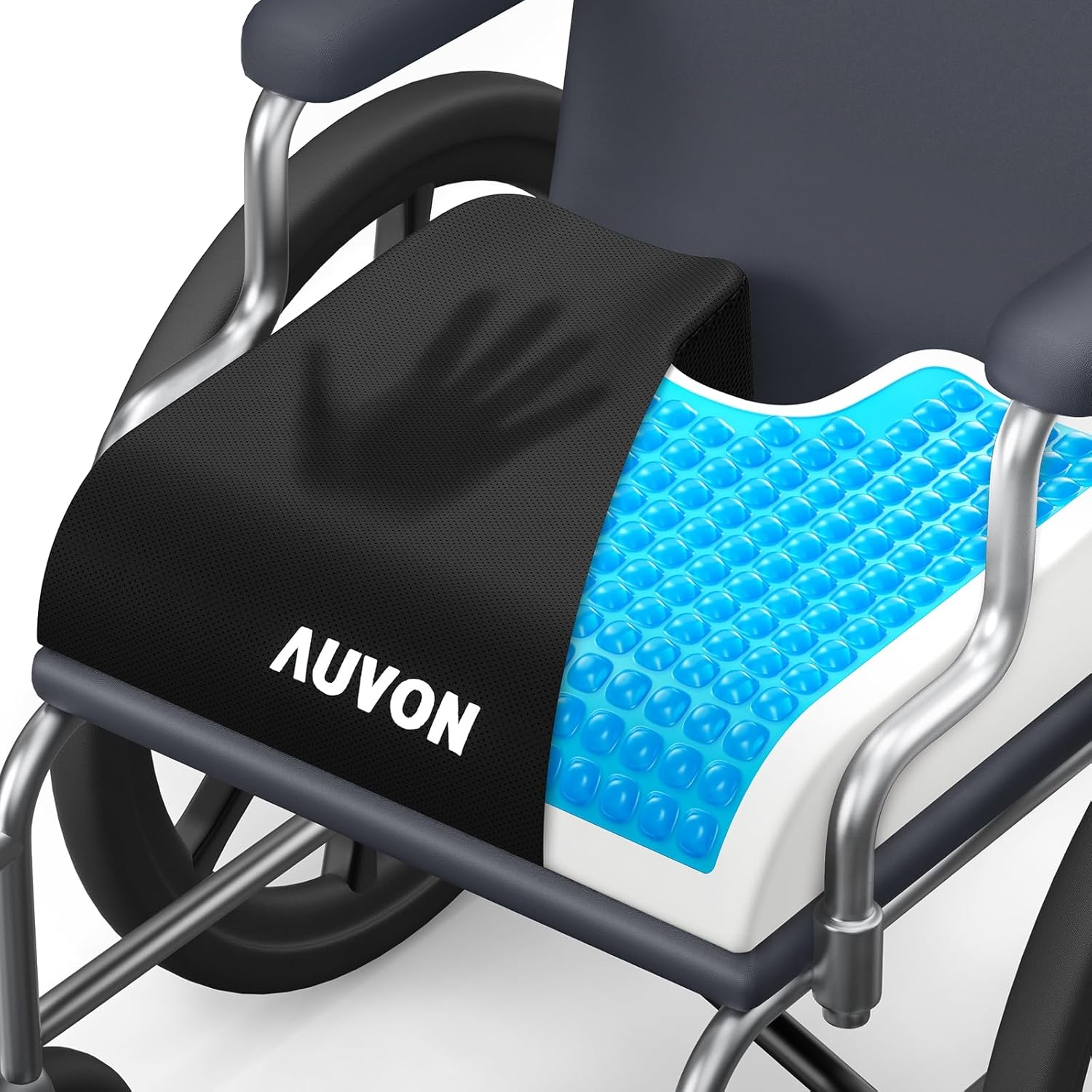

Best for: Shoppers comparing wheelchair-style cushions or looking for a different seat shape.
Wheelchair cushions come in several constructions and sizes. Some are designed primarily for everyday comfort, while others are intended for specific seating needs. The name “medical” alone does not establish a product’s suitability for a particular condition or body weight.
The Vaunn product link previously used for this article should be checked carefully against the image and intended model. Before recommending it for a larger user, verify the exact product, dimensions, materials, and manufacturer-stated weight capacity on the current listing.
What to check
- Whether the listing matches the cushion shown in the image.
- Seat width, depth, and height.
- Weight capacity and intended use.
- Whether the cover is removable and how the insert should be cleaned.
- Whether the cushion fits your office chair without slipping or overhanging.
Verdict: Treat this as a product to verify rather than an automatic heavy-duty recommendation. If you need a cushion for a higher weight range or a medical seating requirement, use the manufacturer’s documented specifications to guide your choice.
Check Vaunn cushion options on Amazon →
7. Gel Seat Cushion with Bamboo Charcoal — A Budget Category to Compare
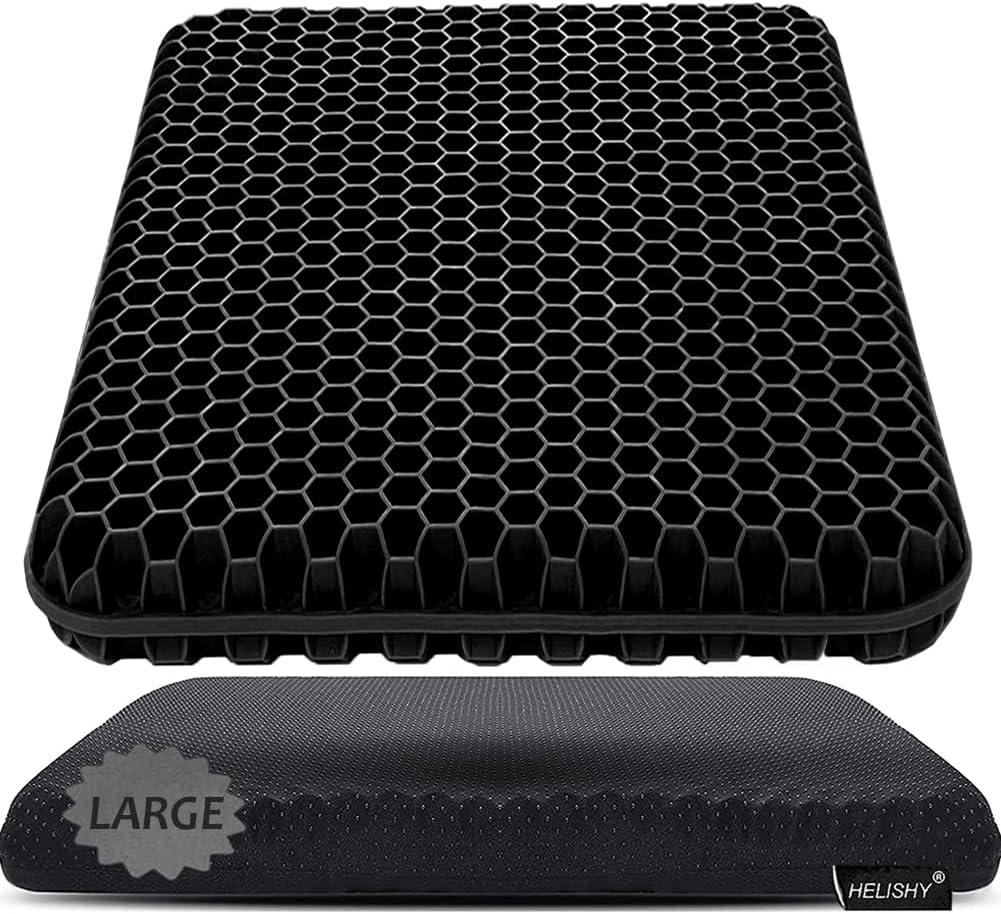

Best for: Shoppers exploring lower-cost gel-style cushions.
Gel cushions vary widely. Some combine gel with foam, while others use a different construction. A bamboo-charcoal label is not enough on its own to establish cooling performance, odor control, or long-term durability.
The original product link should be verified before publication to ensure it still points to the exact product shown in the image. If the original item is unavailable or the listing has changed, use a clearly labeled search link rather than implying that a different item has identical features.
What to check
- The actual filling material and whether it includes a gel layer.
- Dimensions, thickness, and the shape of the cushion.
- Whether the cover can be removed and washed.
- Recent customer feedback about firmness, odor, and how the cushion fits different chairs.
Verdict: This category may be worth exploring if price is your main concern. Confirm the exact construction and fit, and do not pay extra solely for a cooling or odor-control claim without checking what the product actually offers.
Explore gel seat cushions on Amazon →
Which Seat Cushion Should You Choose?
For tailbone pressure
Compare coccyx cushions with a rear U-shaped cutout. Make sure the opening lines up with your tailbone.
For a softer seat
Consider memory foam if you like a conforming feel. Check firmness and thickness before buying.
For a different material
Compare a flexible polymer-grid cushion with foam and gel options. Feel and temperature comfort are personal.
For a larger body size
Prioritize documented weight capacity, adequate width and depth, and a stable base.
If you need more width or support for a larger body size, see our dedicated guide to seat cushions for big and tall users. Do not assume that a thicker cushion has a higher weight capacity.
Seat Cushion vs. Replacing Your Office Chair
A cushion is a relatively small change, so it makes the most sense when the chair already fits you well and the main problem is the seat surface.
- Try a cushion first: The chair height and depth work for you, the backrest feels suitable, and the seat is simply too firm or worn.
- Adjust the chair first: Your feet dangle, your knees press against the seat edge, or your desk and armrests are at the wrong height.
- Consider a new chair: The seat is badly damaged, the chair cannot be adjusted to fit, or its backrest and overall dimensions are unsuitable.
For a more detailed decision guide, read Seat Cushion vs. New Office Chair: Which Should You Buy?.
Frequently Asked Questions
Will a seat cushion help with lower back pain?
It may improve comfort if the chair’s seat is contributing to an uncomfortable sitting position, but a cushion does not directly correct every cause of lower back pain. Check chair height, seat depth, backrest support, and how often you change position. Seek professional advice if pain persists or worsens.
Can a seat cushion make back discomfort worse?
Yes. A cushion that is too thick, too soft, too firm, or poorly shaped may make it harder to sit comfortably. Added height can also affect foot support and desk alignment. Stop using a cushion if it consistently makes your symptoms worse.
What type of seat cushion is best for tailbone pressure?
A coccyx cushion with a U-shaped rear cutout is one option to consider because it can reduce direct contact with the tailbone. Fit matters: the cutout must align with the tailbone, and the surrounding cushion must support you comfortably.
Are seat cushions good for sitting all day?
A suitable cushion may make a chair more comfortable, but it cannot compensate for every ergonomic issue or replace movement breaks. Adjust your workstation and change position regularly rather than expecting any cushion to solve discomfort throughout an entire workday.
Is gel better than memory foam?
Neither is universally better. Memory foam generally offers a conforming feel, while gel-enhanced products add a different layer to the cushion. Construction, firmness, cover material, fit, and personal preference matter more than the material label alone. See our guide to memory foam vs. gel seat cushions.
Can I put a seat cushion on any office chair?
Many cushions can be used on different chairs, but not every cushion will fit every seat. Measure the width and depth, check the cushion’s height, and make sure it does not slide or interfere with the backrest. Also confirm that the added height still allows a comfortable working position.
How long does an office chair cushion last?
There is no reliable lifespan that applies to every cushion. Durability depends on materials, construction, body weight, frequency of use, care, and storage. Check for flattening, cracks, loss of shape, damaged covers, or reduced stability rather than relying on a fixed number of years.
How should I clean a seat cushion?
Follow the care instructions for the exact model. Some covers can be machine washed, but the foam or grid insert may require hand cleaning. Do not assume the entire cushion is machine washable, and allow any washed insert to dry fully as directed before using it again.
Are expensive seat cushions worth it?
Price alone does not determine comfort. A more expensive grid cushion may appeal to someone who dislikes foam, while a basic contoured cushion may be enough for another person. Compare fit, material, cover care, return terms, and weight capacity before paying more.
When should I stop using a cushion and seek medical advice?
If you experience persistent or worsening pain, numbness, tingling, or weakness, do not assume a seat cushion will solve the problem. Seek appropriate medical advice. New severe symptoms or sudden weakness deserve prompt assessment.
Final Verdict: How to Choose the Right Seat Cushion
The best seat cushion for your office chair depends on the problem you want to solve. A coccyx cushion, a conventional foam cushion, and a flexible polymer-grid cushion have different designs and will not feel the same.
- For general cushioning: Start by comparing contoured memory foam options such as Everlasting Comfort and LoveHome.
- For a gel-enhanced design: Consider ComfiLife, but check its current dimensions and weight recommendation.
- For an open-grid alternative: Purple Simply offers a different material and feel, but compare its price and profile with your needs.
- For a firmer coccyx cushion: Compare the Aylio model’s current specifications and shape with other options.
- For a larger body size or special seating need: Confirm the documented weight limit and dimensions rather than assuming a medical or wheelchair-style cushion will fit.
One last tip before ordering
Measure your chair’s seat width, depth, and height. Check whether the cushion will leave your feet supported and your desk at a comfortable working height. If your chair is fundamentally the wrong size or its adjustments no longer work, a new chair may be a better long-term investment than adding more padding.
For more help choosing the right setup, explore our seat cushion guide, compare coccyx cushions, or read how to choose seat cushion thickness.
Related Articles
- Seat Cushions: Complete Buying Guide
- Best Coccyx Cushions for Office Chairs
- Best Seat Cushions for Sciatica
- Best Seat Cushions for Big and Tall Users
- Seat Cushion Thickness Guide
- Memory Foam vs. Gel Seat Cushions
- Purple Seat Cushion vs. Memory Foam
- Seat Cushion vs. New Office Chair
Affiliate disclosure: SitBetterLab may earn a commission from qualifying purchases made through links in this article, at no extra cost to you. Product features, pricing, availability, return policies, and warranty terms can change. Check the current product listing and manufacturer’s information before purchasing. This article is for general informational purposes and is not medical advice.