
Seat Cushion Comparison Guide
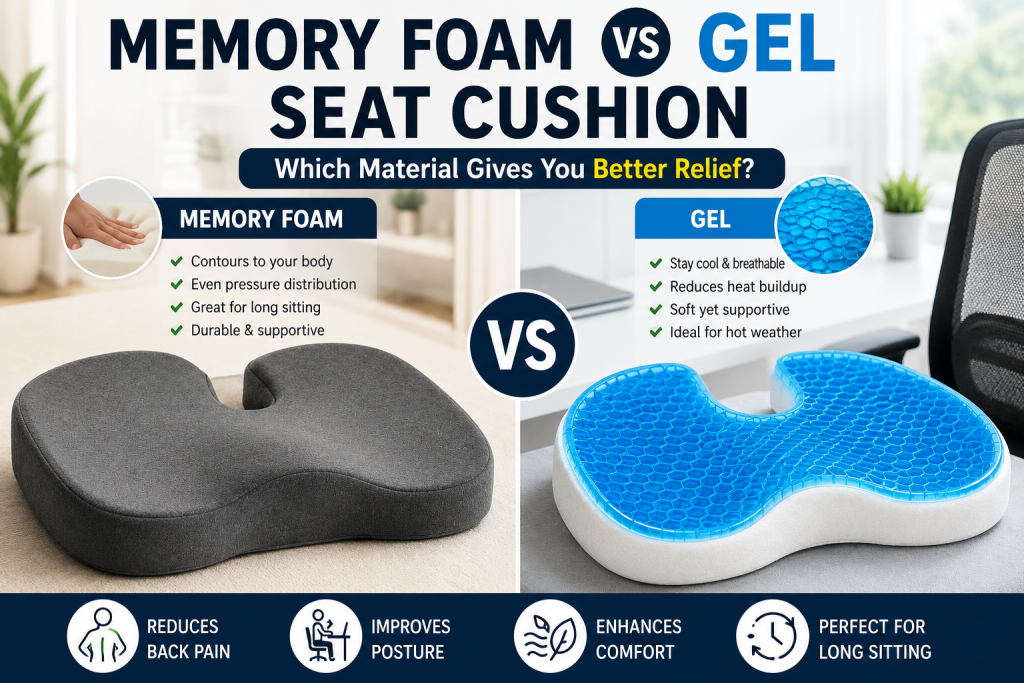
Memory Foam vs Gel Seat Cushion: Which Is Better?
When comparing a memory foam vs gel seat cushion, the biggest difference is usually how the material feels beneath you. Memory foam generally contours more slowly around your body, while gel cushions can feel springier and may offer a cooler-feeling surface, depending on their construction.
Neither material is automatically better for everyone. Your chair, sitting habits, preferred firmness, and tolerance for heat all matter. This guide explains the differences so you can choose a cushion that suits your setup.
Quick Answer: Gel vs Memory Foam
Memory Foam
Best for: People who prefer a contouring, cradling feel.
Often molds gradually around the sitting area. Dense foam may retain heat during long sessions.
Gel Cushion
Best for: People who prefer a springier feel or a cooler-feeling surface.
The feel and airflow depend on whether the design uses a gel layer, gel grid, or another construction.
Important: Gel-infused memory foam is a hybrid material, not the same as a standalone gel-grid cushion. Check the product’s actual construction before comparing it with traditional memory foam.
Memory Foam vs Gel Seat Cushion: Key Differences
| Feature | Memory Foam | Gel Cushion |
|---|---|---|
| Feel | Contouring, often with a slow-sinking sensation | May feel springier or more responsive, depending on the design |
| Heat and airflow | Solid foam may retain heat | Open-grid designs allow airflow; solid gel layers may behave differently |
| Pressure distribution | Conforms around the body as it compresses | Depends on gel flexibility, thickness, and the supporting base |
| Response when shifting | May recover more slowly after pressure is removed | Some designs respond more quickly to movement |
| Weight and portability | Varies by foam density and cushion size | Can be heavier, particularly with thick gel inserts |
| Best buying priority | Contour, firmness, foam quality, and shape | Gel construction, airflow, stability, and surface feel |
What Is a Memory Foam Seat Cushion?
Memory foam is a type of viscoelastic foam that compresses under body weight and gradually adapts to the shape pressing against it. When you sit down, the material yields around the sitting area rather than behaving like a completely rigid pad.
Seat cushions use different foam formulations, densities, thicknesses, and shapes. Those details affect how soft or firm a cushion feels, how much it compresses, and how well it retains its shape during repeated use.
Advantages of Memory Foam
- Contouring feel: The foam adapts gradually to the body, which some people find more comfortable than a firmer, springier surface.
- Many shape options: Memory foam cushions are available in flat, contoured, wedge, and coccyx-cutout designs.
- Choice of firmness: Different formulations can offer different levels of compression and support.
- Broad availability: You can find options for office chairs, car seats, gaming chairs, and other everyday seating.
Potential Drawbacks of Memory Foam
- Heat retention: Solid foam can limit airflow at the contact surface and feel warm during long sitting sessions.
- Slow response: Some memory foam takes longer to return to its original shape after you move.
- Compression over time: Repeated use can change the feel of foam, particularly if the cushion is poorly made or unsuitable for the load placed on it.
- Too much sink: A cushion that compresses excessively may feel less stable or fail to provide the firmness you prefer.
Memory foam is worth considering if you like a more molded, cradling feel. Pay attention to foam firmness and construction rather than assuming that every memory foam cushion will feel the same.
What Is a Gel Seat Cushion?
The term “gel seat cushion” can describe several different designs. Some use a flexible gel grid, some contain a solid gel layer over foam, and others combine gel with memory foam. These designs can feel quite different even when they use similar product names.
For that reason, it is useful to distinguish between three common types:
- Gel-grid cushions: Flexible cells or openings create a distinctive springy feel. Open structures may allow air to move through the cushion.
- Gel-layer cushions: A gel layer sits on top of, or within, another cushioning material. Airflow depends on the rest of the construction.
- Gel-infused memory foam: Gel is incorporated into foam. The cushion still behaves substantially like a foam cushion, and the gel does not guarantee a cooler sitting experience.
Advantages of Gel Cushions
- Potentially cooler feel: Some gel-grid designs have open spaces that improve airflow around the sitting surface.
- Responsive surface: Certain gel constructions feel springier and respond quickly when you shift position.
- Distinct cushioning feel: Gel may appeal to people who prefer a more flexible surface rather than the slow-sinking sensation of memory foam.
- Hybrid choices: Gel-and-foam products combine different materials in one cushion, giving shoppers more options to compare.
Potential Drawbacks of Gel Cushions
- Not every design is breathable: A solid gel layer covered by thick fabric may not provide the airflow of an open grid.
- Different feel: Some users may find a gel grid too springy, too firm, or less contouring than foam.
- Potential extra weight: A substantial gel insert can make a cushion less convenient to carry.
- Construction varies: A product described as “cooling gel” may use a relatively thin layer, so read the materials description carefully.
Choose gel based on the actual structure, not just the word “cooling” on the product page. If heat is your main concern, an open-grid design and a breathable cover may be more relevant than a gel label alone.
Which Cushion Is Better for Long Hours of Sitting?
For extended desk work, driving, or gaming, the better option depends on what makes your current seat uncomfortable.
Choose Memory Foam If…
- You prefer a contouring feel.
- You want a cushion that molds gradually around your sitting area.
- You prefer a familiar foam surface.
- You can find a suitable firmness and thickness for your chair.
Choose Gel If…
- You prefer a springier surface.
- You tend to feel hot while sitting.
- You are considering an open-grid design for airflow.
- You want to compare a different feel from traditional foam.
Neither material can compensate for every problem with a chair. If the seat is badly worn, too narrow, or poorly matched to your body, replacing or adjusting the chair may be more useful than adding another layer.
Does Gel or Memory Foam Provide Better Pressure Relief?
Both materials can change how pressure is distributed across the seating surface. Memory foam does this by deforming around the body. Gel cushions work differently depending on whether the gel is a flexible grid, a solid layer, or part of a foam hybrid.
There is no universal winner based on material alone. The result also depends on:
- The cushion’s thickness and overall shape.
- The firmness and quality of the foam or gel structure.
- How much the cushion compresses under your body weight.
- Whether the cushion fits the chair without sliding or bunching.
- Your sitting position and how frequently you change it.
If your main discomfort is directly around the tailbone, look at the cushion’s shape as well as its material. A coccyx cutout is designed to leave space around the tailbone, but it needs to align properly with your body. A gel cushion without a cutout is not automatically a substitute for a coccyx cushion.
Also, do not assume that a cushion advertised for pressure relief will treat back pain, sciatica, or another medical condition. Comfort varies, and persistent pain may need professional assessment.
Gel vs Memory Foam for Heat and Breathability
If your chair feels hot after several hours, this may be the most important part of the comparison. Traditional solid memory foam can retain warmth because air does not move freely through the compressed seating surface.
Some gel-grid cushions have open cells that let air circulate through the structure. However, a gel layer does not automatically make a cushion cooler. Covers, foam bases, seat upholstery, room temperature, and the amount of contact between your body and the cushion all affect the experience.
Gel-infused memory foam deserves special attention. It still contains foam, so it may retain heat much like a conventional foam cushion. Gel additives may change the initial feel or thermal behavior, but the actual effect varies by product.
For a cooler setup, look for:
- An open-grid construction if you want airflow through the cushion.
- A breathable fabric cover rather than a thick, heat-retaining outer layer.
- A shape that fits your chair without creating extra folds or layers.
- Care instructions that let you keep the cover clean without damaging the cushioning material.
What About a Gel and Memory Foam Hybrid Cushion?
A hybrid cushion combines foam with a gel layer or insert. The goal is to offer some of the contouring feel of foam alongside the surface feel of gel.
For example, the ComfiLife Gel Enhanced Seat Cushion combines memory foam with a gel layer and a coccyx-style shape. It may be worth comparing if you want to explore a hybrid design rather than choosing between a pure foam cushion and a standalone gel grid.
Before buying a hybrid, check whether the gel is a thin top layer or a substantial part of the cushion, whether the product includes a tailbone cutout, and how thick the complete cushion is. A hybrid does not automatically offer better pressure relief or better cooling than every single-material option.
Check ComfiLife Gel Enhanced on Amazon
This is a product example, not a claim that the cushion has been independently tested by SitBetterLab. Check the current listing for the exact model, construction, dimensions, price, and return policy.
How to Choose the Right Seat Cushion
1. Measure Your Chair
Check the usable width and depth of the seat before choosing a cushion. This is particularly important for gaming chairs with raised side bolsters and car seats with pronounced contours. A cushion that is too wide may buckle or shift.
2. Consider the Cushion’s Thickness
A thick cushion raises your sitting height and changes the relationship between your hips, knees, feet, desk, and armrests. Make sure the added height does not leave your feet unsupported or make your working position awkward.
3. Check Firmness and Compression
Softness alone is not a reliable measure of support. Consider how the cushion feels after sitting on it for a while, whether it compresses too much, and whether you can shift position without feeling unstable.
4. Look at the Cover and Base
A removable cover may make cleaning easier, while a nonslip base can help the cushion stay in place. Confirm the manufacturer’s cleaning instructions and consider whether the base works with your chair’s upholstery.
5. Think About Your Main Discomfort
General seat discomfort, tailbone tenderness, and lower-back discomfort are not identical problems. Choose the cushion’s shape and material according to your needs rather than relying only on broad product claims.
Frequently Asked Questions
Is memory foam or gel better for a seat cushion?
Memory foam may suit people who prefer a contouring, cradling feel. Gel may appeal to people who prefer a springier surface or an open-grid design that allows airflow. The best choice depends on the specific construction, fit, and your comfort preferences.
Are gel seat cushions cooler than memory foam?
Some gel-grid designs may feel cooler because their open structure allows airflow. A solid gel layer or gel-infused memory foam may not provide the same effect. The cover and underlying material also influence heat retention.
Which material is better for long hours of sitting?
Either may work if the cushion fits well and feels comfortable over time. If you prefer a molded feel, try memory foam. If you tend to feel hot or prefer a more responsive surface, compare gel-grid designs. Take movement breaks whichever material you choose.
Does gel memory foam offer the best of both materials?
A hybrid combines foam with gel, but its performance depends on the materials, thickness, and construction. It may offer a balance of contouring and surface feel, but it is not automatically cooler or more supportive than every pure foam or gel design.
Is memory foam good for tailbone discomfort?
Some people find a contoured memory foam cushion comfortable, especially when it includes a properly positioned coccyx cutout. The shape and fit matter as much as the material, and no cushion can guarantee relief from tailbone pain.
How long should a seat cushion last?
Lifespan varies with material quality, construction, use, and care. Look for signs of permanent flattening, uneven compression, damage, or a loss of stability. Follow the manufacturer’s care instructions and replace a cushion when it no longer provides a comfortable, secure surface.
Explore More Seat Cushion Guides
Want to compare cushion shapes and find an option for your chair? Start with our broader guide, then explore articles focused on particular seating needs.
Affiliate Disclosure: As an Amazon Associate, SitBetterLab may earn from qualifying purchases. This does not affect the price you pay.
Editorial Note: This guide compares general material characteristics and is not a report of hands-on testing. Product construction varies by model. Verify the current product details before purchasing. Seat cushions are comfort accessories, not medical treatments.