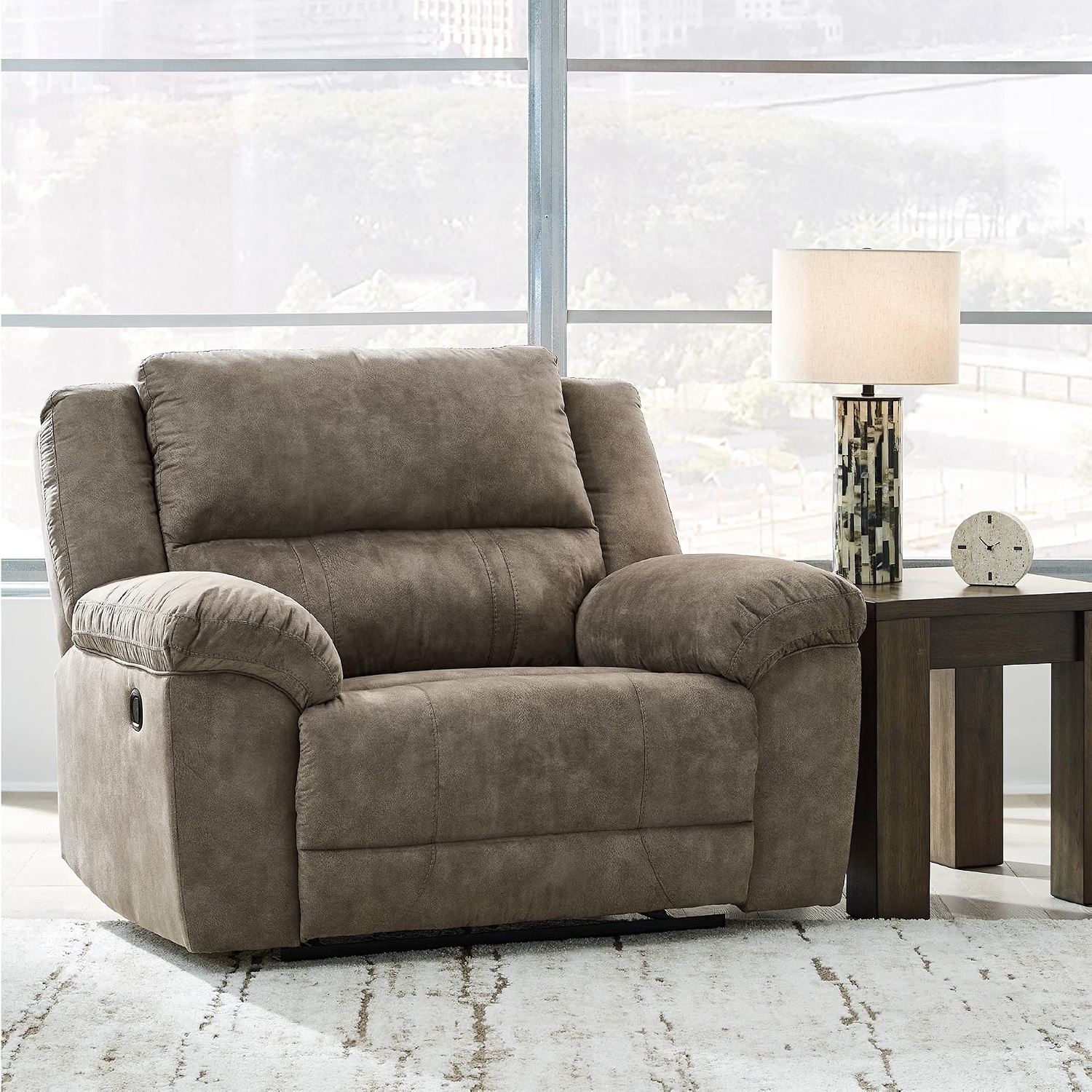
What is an oversized recliner? An oversized recliner is a recliner designed with more usable space than a typical single recliner, usually through a wider seat, greater seat depth, a larger overall frame, or a combination of these features. However, there is no universal industry measurement that officially defines a chair as “oversized.”
For shoppers, the most useful measurements are the overall width, distance between the arms, seat depth, seat height, fully reclined length, and published weight capacity. These measurements tell you much more about whether a recliner will actually fit your body and room than the word “oversized” on a product listing.
What Is an Oversized Recliner?
An oversized recliner is a reclining chair that provides more space than a conventional recliner. Manufacturers may increase the chair’s overall width, seat width, seat depth, cushioning, or frame size to create a roomier sitting experience.
The term is primarily a product-sizing and marketing description, rather than a standardized technical category. That means two chairs labeled “oversized” can have noticeably different dimensions.
For example, one oversized recliner may be wide because it has a large seat between the arms, while another may have a relatively normal seat but a much larger outside frame. This is why you should always check the actual dimensions before buying.
What Makes a Recliner Oversized?
Several measurements and design characteristics can make a recliner feel oversized. The most important are:
- Wider overall chair width
- Greater distance between the arms
- Wider usable seat
- Deeper seat
- Larger overall frame
- More substantial cushioning
- Higher published weight capacity on some models
These characteristics do not always appear together. A recliner can be extremely wide without having a particularly high weight capacity, while a heavy-duty recliner can have a strong frame without being especially wide.
That distinction matters when shopping for an oversized recliner for big and tall users. Width and weight capacity are two separate specifications and should not be treated as interchangeable.
Oversized Recliner Dimensions: What Should You Look For?
When comparing oversized recliner dimensions, don’t focus only on the advertised width. A recliner’s comfort and room fit depend on several measurements.
| Measurement | Why It Matters |
|---|---|
| Overall Width | Determines how much floor space the chair occupies. |
| Distance Between Arms | Provides a better indication of usable sitting width. |
| Seat Depth | Affects thigh support and how deeply you sit in the chair. |
| Seat Height | Affects leg position and how easily you can get in and out. |
| Fully Reclined Length | Shows how much space the chair needs when reclined. |
| Wall Clearance | Important for placing the chair without interfering with walls or furniture. |
Overall Width vs. Usable Seat Width
One of the most common shopping mistakes is assuming that a wider outside measurement automatically means a wider seat.
For example, a recliner can have thick arms that add several inches to its overall width. Another chair may have slimmer arms and provide almost the same usable seating area with a smaller outside footprint.
For this reason, look for both overall width and distance between the arms when available.
How Wide Is an Oversized Recliner?
There is no single width that defines every oversized recliner. In practice, oversized models are commonly wider than standard single recliners, but the exact dimensions vary considerably by manufacturer and design.
Some oversized recliners are designed with especially wide seats, while others use additional width for thicker arms, larger cushions, or a more substantial frame.
A Better Way to Compare Width
Instead of asking only “How wide is an oversized recliner?”, compare these three numbers:
- Overall width — the chair’s outside measurement.
- Distance between the arms — the available space between the armrests.
- Actual seat width — the manufacturer’s stated seating area, when provided.
This approach is particularly useful when comparing an extra wide recliner with a standard recliner. The wider chair may take substantially more floor space, but what matters for comfort is how much of that extra width becomes usable seating space.
What Size Is an Oversized Recliner?
An oversized recliner typically has a larger overall footprint and more generous seating dimensions than a conventional recliner. However, there is no universal oversized recliner size.
When evaluating an oversized recliner chair, consider the entire dimensional profile rather than a single number.
| If You Need More… | Pay Attention To… |
|---|---|
| Side-to-side room | Overall width and distance between arms |
| Legroom | Seat depth and fully reclined length |
| Easier entry and exit | Seat height and arm height |
| Higher load rating | Manufacturer’s published weight capacity |
Oversized Recliner Weight Capacity
An important point is that oversized does not automatically mean heavy-duty.
A chair may have a very wide seat but still have a relatively ordinary published weight capacity. Conversely, a heavy-duty recliner may be engineered for a higher load without being exceptionally wide.
If weight capacity is important to you, look specifically for a manufacturer’s published capacity rather than estimating it from the chair’s size.
Oversized vs. Heavy-Duty Recliners
The two categories overlap, but they describe different things.
| Feature | Oversized Recliner | Heavy-Duty Recliner |
|---|---|---|
| Main Focus | More space and roomier seating | Higher load rating and structural support |
| Wide Seat | Often a major feature | May or may not be especially wide |
| Weight Capacity | Varies by model | Usually a key specification |
| Best For | People wanting more personal space | People who specifically need a higher load rating |
If you need a recliner specifically for higher weight capacities, see our guide to heavy-duty recliners rated for up to 600 pounds.
Oversized Recliner vs. Standard Recliner
The main difference is the amount of space the chair provides, but the best comparison depends on your body size and available room.
| Consideration | Standard Recliner | Oversized Recliner |
|---|---|---|
| Overall footprint | Generally smaller | Generally larger |
| Seat space | More compact | Usually more generous |
| Room requirement | Usually easier to fit | Requires more planning |
| Weight capacity | Varies | Varies; oversized does not guarantee higher capacity |
How to Measure Your Room for an Oversized Recliner
An oversized recliner can look comfortable in a product photo but become difficult to use if there is not enough clearance around it.
1. Measure the Available Width
Measure the space where the chair will sit from side to side. Leave enough room for the armrests and for people to walk around the chair.
2. Check the Reclined Length
Do not measure only the upright chair. Check the manufacturer’s fully reclined length and make sure the footrest will not interfere with a coffee table, wall, cabinet, or another chair.
3. Check Wall Clearance
Some recliners need only a small amount of space behind the chair, while traditional reclining mechanisms may require more clearance. Always check the manufacturer’s specification for the exact model.
4. Measure the Doorway
A large recliner also needs to get into the room. Check the packaged dimensions and the manufacturer’s recommended minimum doorway width when available.
Who Should Consider an Oversized Recliner?
An oversized recliner can make sense if you prefer more personal space or find conventional recliners too narrow.
- People who prefer a wider seating area
- Taller users who need additional seat depth or reclined length
- Larger users who want more room between the armrests
- People who like to sit cross-legged or change sitting positions
- Households with enough floor space for a larger chair
However, a larger chair is not automatically more comfortable for everyone. A chair that is too deep or too wide for your body can make it harder to maintain a comfortable sitting position.
How to Choose the Right Oversized Recliner
1. Start With Your Body Measurements
Consider your height, hip width, leg length, and preferred sitting position. Your body dimensions are more useful than a generic label such as “oversized.”
2. Compare Seat Width
Look for the distance between the arms or the manufacturer’s stated seat width. This tells you how much usable space you actually have.
3. Check Seat Depth
A deeper seat can provide more thigh support for taller users, but excessive depth can leave shorter users without proper back support.
4. Verify Weight Capacity
If load capacity is important, use the manufacturer’s published specification. Do not infer capacity from width or the word “oversized.”
5. Check Reclined Dimensions
A chair that fits perfectly upright may require significantly more space when fully reclined.
6. Consider Manual vs. Power Reclining
Manual oversized recliners generally use a lever or pull mechanism, while power recliners use an electric motor. Power models may add features such as powered headrests, lumbar adjustment, USB charging, heat, or massage depending on the model.
If you’re specifically shopping for a power model, see our guide to oversized power recliners.
Looking for an Oversized Recliner?
If you already know that you need a wider, roomier recliner, our main guide compares oversized recliner chairs by seating space, features, capacity, and overall fit.
Frequently Asked Questions
What is an oversized recliner?
An oversized recliner is a larger, roomier reclining chair designed to provide more seating space than a conventional recliner. There is no universal industry measurement that defines the category.
How wide is an oversized recliner?
There is no standard width for an oversized recliner. Dimensions vary by manufacturer and model, so compare overall width, distance between the arms, and actual seat width when available.
What makes a recliner oversized?
A recliner may be described as oversized because it has a wider frame, wider seating area, deeper seat, larger cushions, or a combination of these characteristics. The exact definition varies by manufacturer.
Are oversized recliners good for big and tall people?
They can provide more useful seating space, but oversized does not automatically mean suitable for every big or tall user. Check seat width, seat depth, seat height, reclined length, and weight capacity for the specific model.
Does an oversized recliner have a higher weight capacity?
Not necessarily. Oversized describes the chair’s size or seating space, while weight capacity is a separate specification. Always check the manufacturer’s published capacity.
Are oversized recliners wider than standard recliners?
Generally, oversized models are designed to provide more space than standard recliners, but there is no universal width threshold. Check the actual dimensions rather than relying only on the product name.
How do I know if an oversized recliner will fit my room?
Measure the available floor width, check the chair’s overall dimensions, measure the fully reclined length, verify wall clearance, and confirm that the chair can pass through your doorway.
Is an oversized recliner the same as a heavy-duty recliner?
No. An oversized recliner focuses primarily on providing more space, while a heavy-duty recliner emphasizes a higher published weight capacity or reinforced construction. Some chairs can be both oversized and heavy-duty.
Final Takeaway
The most important thing to remember is that “oversized” is not a single measurement. It is a general description for a recliner that offers more space than a typical model.
When comparing oversized recliner dimensions, focus on the measurements that affect real-world comfort: overall width, distance between the arms, seat depth, seat height, fully reclined length, and weight capacity.
If you are shopping for an oversized recliner, start with your own body measurements and available room space. Then compare the manufacturer’s specifications instead of choosing a chair based solely on the word “oversized.”