
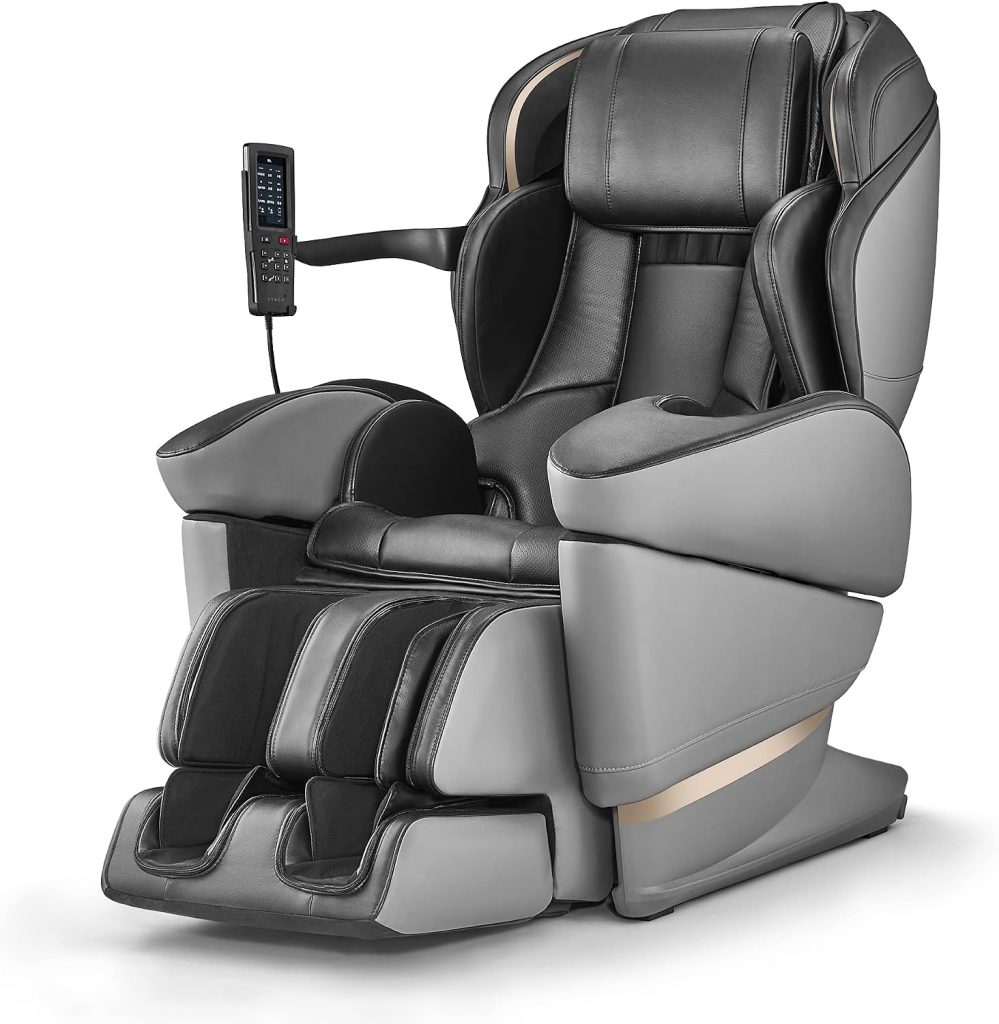
By 4 p.m. your shoulders are locked, your lower back has that familiar dull pinch, and the $40 massage gun isn’t cutting it anymore. That’s usually the moment people start researching the Synca Wellness JP3000-5D AI Deluxe Zero Gravity Massage Chair — a premium recliner that promises to undo a week of desk work in about twenty minutes a day.
It’s a serious purchase, so the real question isn’t whether “5D AI” sounds impressive. It’s whether the massage mechanism, body scan, and zero gravity recline justify the price gap over a 3D or 4D chair. I’ll walk you through the specs, the footprint, the warranty, and the honest drawbacks before you commit.
Want to see current pricing and available configurations first?
📌 Synca Wellness JP3000-5D AI Deluxe Zero Gravity Massage Chair: Specs, Price, and What You Get
The Synca Wellness JP3000-5D AI Deluxe Zero Gravity Massage Chair sits at the top of Synca’s lineup, above the CirC and Kurodo models, as the flagship for buyers who want AI body scanning and a 5D roller mechanism in one unit. It’s a full-size lounger, not a compact recliner, so the first decision is whether you have the floor space.
Synca publishes the exact spec sheet on its product page — verify the numbers below against the current listing, since crate sizes and revision parts change between production runs:
- Reclined length: roughly 76–80 in (about 6.5 ft)
- Width: about 32–34 in at the armrests
- Weight: around 280–330 lb shipped in a crate
- Wall clearance: plan on 6–12 in behind the chair for full zero gravity
- Power: standard 120V household outlet
- Upholstery: synthetic leather over high-density foam, usually in black or brown
In the box you get the wireless remote, AI body scan, multi-stage zero gravity recline, lumbar and seat heating, airbag coverage across shoulders, arms, hips, calves, and feet, plus preset programs for full body, neck and shoulder, lower back, stretch, and sleep.
For 2026, street pricing generally lands in the $7,000–$10,000 range depending on retailer and promotions, with 12–36 month financing available through Affirm or Klarna and a multi-year parts and labor warranty. It’s aimed at buyers who use a chair daily and want deep-tissue coverage without booking appointments.
📌 How the 5D AI Massage Mechanism Actually Works and How It Differs from 3D and 4D Chairs
Think of a massage chair’s roller as a hand. A 3D chair can push deeper, move side to side, and change speed. A 4D chair adds control over rhythm — how fast or slow that push repeats. The JP3000-5D AI adds a fifth layer: pressure that adapts while the massage is running, rather than staying at whatever setting you punched in.
In practice, the “5D” label covers five adjustable variables working together:
- Depth — how far the rollers reach into muscle tissue
- Speed — the tempo of each stroke
- Width — how far apart the rollers sit, matched to your frame
- Rhythm — the pattern and pause between strokes
- Adaptive pressure — real-time intensity response during the session
What the AI body scan changes
Before the first stroke, the chair scans your body to locate the spine, shoulder blades, and neck base. That map sets the starting depth and roller width so the neck rollers don’t sit too high or dig into your shoulder blades. On a basic 3D chair, that alignment is usually guesswork.
| Capability | 3D Chair | 4D Chair | JP3000-5D AI |
|---|---|---|---|
| Roller depth | Fixed levels | Adjustable | Continuously variable |
| Speed & rhythm | Limited patterns | Adjustable | Auto-adjusts mid-session |
| Body mapping | Basic | Full-body scan | AI scan of spine, shoulders, neck |
| Pressure adaptation | None | Minimal | Sensor-driven throughout |
What you actually notice
Reviewers and owners tend to describe three practical differences. Intensity is steadier — the chair eases off on tight spots instead of hammering them at one fixed level. Coverage improves at the neck and shoulder junction, where cheaper chairs feel vague. And transitions feel smoother through the lower back, glutes, and legs because speed and depth shift together instead of jumping between presets.
Honest caveat: 5D is marketing language, not an industry standard. The measurable gain over a good 4D chair is the adaptive response — noticeable, but not a different category of massage.
📌 Zero Gravity Recline, Body Scan, and Daily Comfort: Real-World Performance
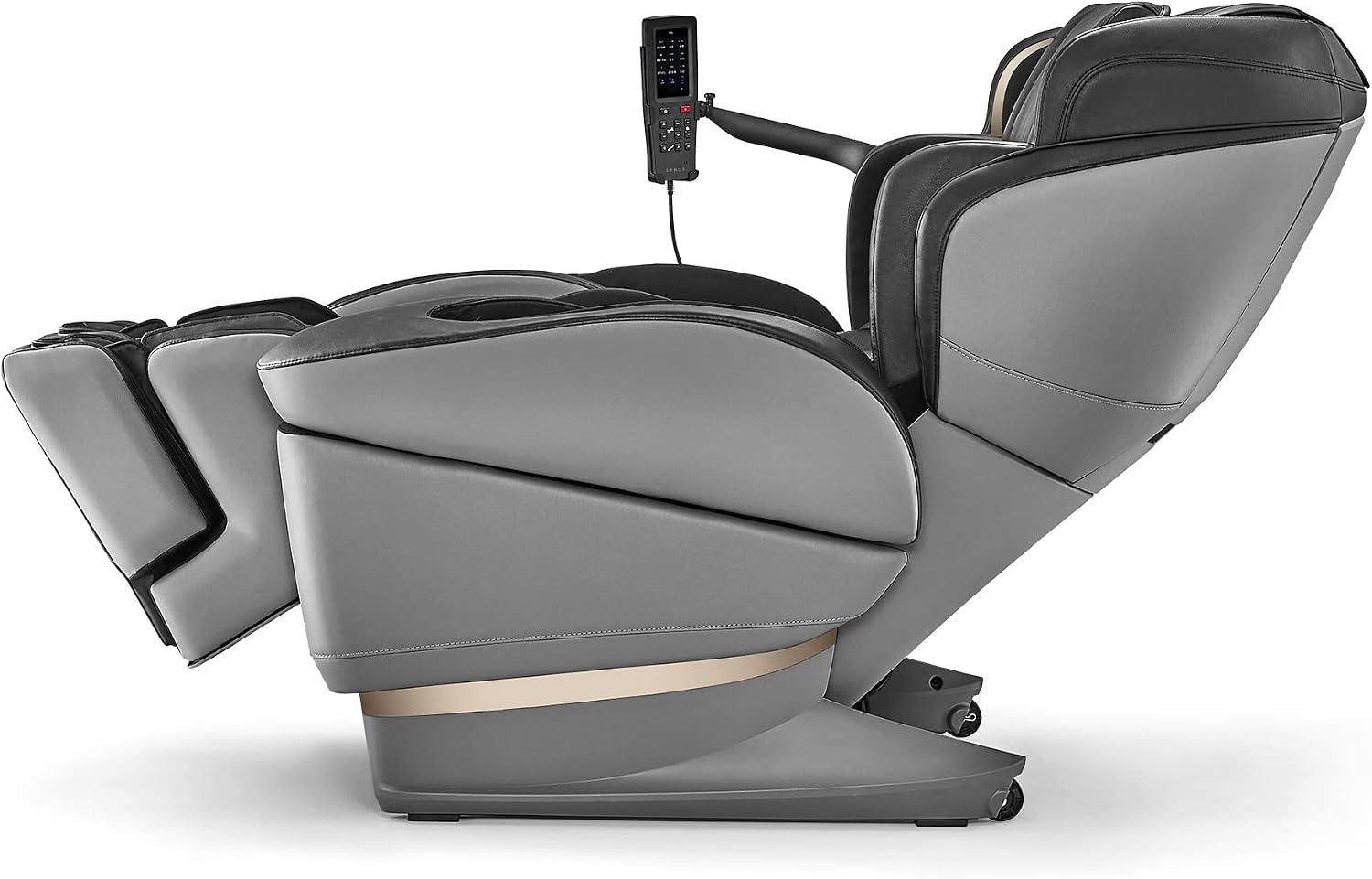
The zero gravity recline is the part you’ll notice within thirty seconds. The seat tilts back and the leg rest rises until your knees sit slightly above hip level, which takes the load off your lower back and lets your shoulders drop.
For a 15–20 minute wind-down after work, most people describe it as genuinely weightless. Over a longer 45-minute session, the pressure points under the shoulder blades can start to feel firm — a folded towel behind the neck usually solves that.
The AI body scan reads your spine curve and shoulder height, then maps the rollers to your frame. It’s noticeably more accurate when you sit fully back into the seat with shoulders against the backrest — slouch forward and the map drifts.
Taller users around 6’2″ and up report the shoulder airbags landing lower than ideal, while shorter users under about 5’2″ may feel the foot rollers work the calves instead of the soles.
Where it performs best, based on owner feedback:
- Upper back tension — the deep-kneading 5D rollers reach between the shoulder blades better than most 3D chairs.
- Lumbar stiffness — the heated rollers may help relax tight lower back muscles; many users run a 15-minute program in the evening.
- Sciatica-type discomfort — the glute and thigh airbags can reduce strain, but it’s not a substitute for medical advice.
- Foot fatigue — the shiatsu foot rollers are a highlight after long standing shifts.
Noise stays low enough to hear the TV — the mechanisms hum rather than grind. Heat is gentle, not hot. Airbag intensity is adjustable, and switching between auto programs and manual mode takes two taps on the remote, so you can dial in a specific knot without scrolling through menus.
It’s comfortable for reading, watching TV, or falling asleep mid-program. It is not a work chair — the deep recline rules out laptop use.
📌 Build Quality, Footprint, and Setup: Will It Fit Your Space?
The JP3000-5D is built like furniture, not like a gadget. Synca uses a reinforced steel frame with a synthetic leather (leatherette) finish and high-density molded foam, so the seat, armrests, and leg rest feel firm and planted rather than squishy. Owners of luxury chairs tend to judge them on two things — creaks and stitching — and this one holds up better than most in its class.
That solidity has a cost: weight. Most chairs in this tier land between 220 and 300 lb, which means you won’t reposition one by yourself. Check the current spec sheet for exact figures, but here’s what to plan around:
- Upright footprint: roughly the size of a large recliner — allow about 3 ft of width.
- Reclined length: expect close to 6 ft of depth with the leg rest extended.
- Wall clearance: many zero-gravity chairs slide forward as they recline, but keep 6–12 in behind as a safety margin.
- Doorways: measure every opening and stair turn before delivery. A 30-in door plus a tight hallway corner is the usual pinch point.
Delivery is typically white-glove: the chair arrives partially assembled, and the crew handles the heavy lifting, frame assembly, and placement. Expect 30–60 minutes on site. Budget for a standard 120V outlet within reach of the cord, ideally on a circuit that isn’t shared with a space heater.
Placement matters. In a living room, angle it toward the TV and leave room for the footrest. In a home office or wellness room, keep 2–3 ft of walking space on at least one side. On hardwood or tile, a rubber-backed chair mat prevents scuffs and makes the occasional nudge easier.
The included remote uses large preset buttons for auto programs, plus manual controls for intensity, rollers, airbags, and heat. If there’s app pairing on your version, it’s a nice extra — but the physical remote is what most households will actually use. Save a memory slot per person and switching between users takes seconds.
📌 Pros and Cons: Who Should (and Shouldn’t) Buy the JP3000-5D AI Deluxe?
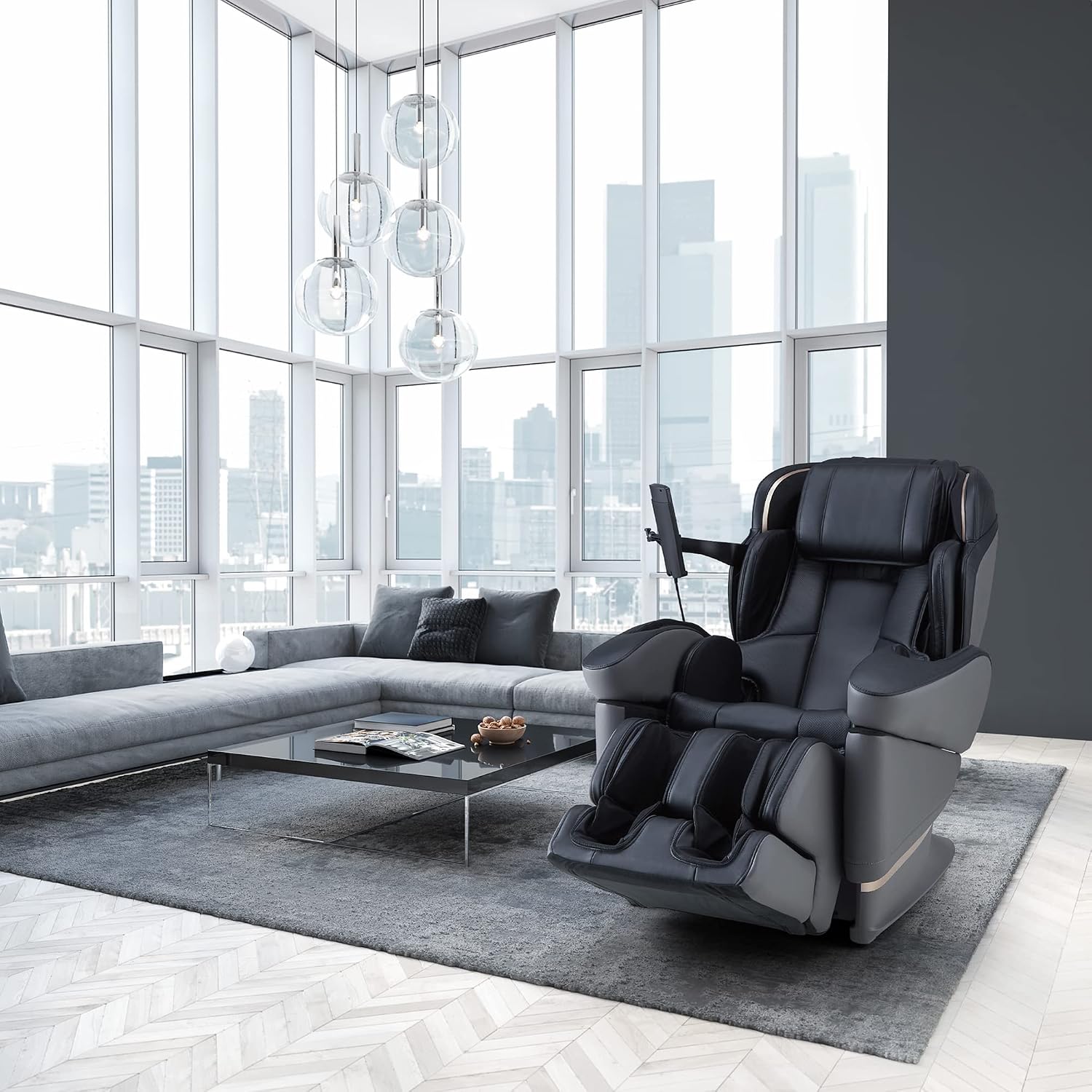

The JP3000-5D AI Deluxe earns its price tag in daily use — but only if you have the room and the budget to commit to it. Here’s the honest breakdown.
- 5D AI massage mechanism adjusts depth and rhythm in real time instead of just following a fixed 3D path
- Zero gravity recline takes pressure off the lower back within seconds
- Premium build: reinforced frame, dense foam padding, and upholstery that holds up to daily sessions
- Extensive preset programs covering neck and shoulder focus, stretching, and full-body recovery
- Body scan maps your spine length automatically, so taller and shorter users get a usable starting point
- High price — it sits firmly in the luxury tier, well above most 3D and 4D chairs
- Large footprint and heavy weight: you need roughly a 3 ft × 6 ft clear zone plus a nearby outlet
- Learning curve — manual depth, speed, and airbag settings take a few sessions to dial in
- Assembly and doorway clearance require planning, sometimes a second pair of hands
Who Should Buy It
It’s a strong fit for home office users who sit 6+ hours a day and carry chronic neck, shoulder, or lower-back tension. Luxury wellness shoppers replacing a stack of devices — foot massager, shiatsu cushion, massage gun — will get more value here than from three separate gadgets. Anyone wanting a daily 20-minute wind-down routine will actually use this.
Who Should Skip It
Skip it if your office is tight, your budget cap sits under $5,000, or you simply want a straightforward shiatsu chair without app pairing and AI tuning. A simpler 3D chair covers the basics for a fraction of the cost.
Is the Premium Price Justified?
For heavy daily use, yes — the 5D AI head, build quality, and warranty coverage spread over years of sessions make it a reasonable per-use cost. For occasional use, a mid-range chair is the smarter buy. Budget for the footprint and check the warranty terms before ordering.
⚡ Synca Wellness JP3000-5D AI vs Other Premium Massage Chairs: Value Comparison
At this price point, the JP3000-5D AI isn’t competing with mid-range chairs — it’s up against flagship models from Human Touch, Osaki, Luraco, and Panasonic. Here’s how it stacks up on the specs that actually matter.
| Chair | Massage Mechanism | Zero Gravity | Heat & Foot Massage | Warranty | Typical Street Price | Check Price |
|---|---|---|---|---|---|---|
| Synca Wellness JP3000-5D AI Deluxe | 5D AI variable-depth rollers | Yes, multi-stage recline | Lumbar heat + reflexology foot rollers | 5-year limited | ≈ $8,000–$10,000 | Check Price → |
| Human Touch Super Novo 2.0 | 4D | Yes | Lumbar + calf heat, foot rollers | 5-year limited | ≈ $7,000–$9,000 | Check Price → |
| Osaki OS-Pro Maestro LE | 4D | Yes | Lumbar heat, foot rollers | 3-year limited | ≈ $4,500–$6,500 | Check Price → |
| Luraco i9 Max Plus | 4D (US-assembled) | Yes | Lumbar heat, foot & calf massage | 5-year limited | ≈ $10,000–$13,000 | Check Price → |
| Panasonic Real Pro Ultra MAF1 | 3D | No full recline | Heated rollers, foot massage | 3-year limited | ≈ $4,000–$6,000 | Check Price → |
Prices are typical street ranges as of 2026 and move with sales — always confirm the live listing.
Where the JP3000-5D AI Wins
The 5D AI mechanism is the real differentiator. Instead of fixed roller depth, it continuously adjusts pressure based on body scan data and muscle resistance — a noticeable step up from the 3D and 4D chairs on this list.
Zero gravity positioning here is also deeper and more adjustable, which takes load off your lower back during longer sessions. And Synca Wellness backs it with US-based support and white-glove delivery, which matters on a chair this size and price.
Where Rivals May Appeal More
- Price: Osaki and Panasonic flagships often land $2,000–$5,000 lower.
- Footprint: Panasonic’s MAF1 needs far less wall clearance.
- Specialized programs: Luraco and Osaki lean harder into stretching and yoga-style routines.
- Domestic assembly: Luraco builds in the US, which some buyers value for service turnaround.
Overall Value Verdict
If AI-driven pressure adaptation and deep zero gravity are your priorities, the Synca Wellness JP3000-5D AI Deluxe Zero Gravity Massage Chair justifies its premium against every 4D rival here.
If you mainly want heat, foot rollers, and a solid stretch program for less money, an Osaki or Panasonic model gets you 80% of the experience at a lower price. Decide which single feature you’d use daily — then pay for that one.
📌 Buying Guide: Price, Warranty, After-Sales Support, and Owner Feedback
Prices in this tier move constantly. Synca’s flagship chairs list somewhere between $5,000 and $9,000, and street prices can swing by $1,000–$2,000 during Black Friday, Memorial Day, and Labor Day promotions. White-glove delivery is often bundled into those sale windows, so timing a purchase around a holiday saves real money.
Financing is how most buyers actually pay. Affirm, Shop Pay Installments, and Klarna appear at authorized checkout, with 0% APR terms running 12–24 months on approved credit. Spread a $6,000 chair over 24 months and you’re near $250 a month.
Where you buy matters as much as the price. Unauthorized resellers and marketplace listings often skip white-glove setup and can leave you outside warranty coverage. Synca sells direct and through authorized dealers — check that before chasing a $300 discount.
Warranty terms shift by model year, but the structure on high-end massage chairs is consistent:
- Frame: longest coverage, sometimes limited lifetime
- Parts and labor: shorter term, handled through in-home service
- Excluded: upholstery wear, punctures, cosmetic fading, commercial use, and damage from moving the chair yourself
My take here draws on manufacturer specs and owner reviews rather than a long-term hands-on test. Across retailer and forum feedback from buyers several months in, the frame and rollers draw few complaints. The recurring nits are upholstery softening on the armrests, occasional airbag timing quirks, and remote-to-chair pairing headaches. Delivery crews get consistent praise, and assembly is minimal since the chair arrives largely built.
Support runs through Synca’s US phone and email channels, with repairs routed to a local technician network for in-home visits and replacement parts shipped from the manufacturer. Response times reportedly slow during peak season.
To protect your investment, vacuum the upholstery monthly with a brush attachment, skip harsh solvents, keep the chair out of direct sunlight, and plug it into a surge protector rather than a bare wall outlet.
Running one full-body auto program a week keeps airbags pliable and surfaces the first sign of a failing motor while it’s still under warranty. For the Synca Wellness JP3000-5D AI Deluxe Zero Gravity Massage Chair, that routine is what separates a five-year chair from a ten-year one.
❓ FAQ: Synca Wellness JP3000-5D AI Deluxe Zero Gravity Massage Chair Questions Answered

What does the 5D AI massage mechanism actually do, and how is it different from 3D and 4D chairs?
A 3D chair moves its rollers in and out. A 4D chair adds variable speed. The 5D AI layer goes further: it reads your body scan, then adjusts depth, speed, and rhythm on the fly during the session. In practice, that means fewer trips to the remote to dial intensity up or down.
How much space does the JP3000-5D AI Deluxe need, and will it fit through standard doorways?
Synca markets the JP3000 line as a space-saving zero gravity design, so it needs less wall clearance than older recliners — but you should still plan for several inches behind it when fully reclined.
Measure your doorway first: many fully assembled massage chairs are wider than a standard 30-inch interior door, so a tight hallway or stairwell can be the real dealbreaker. Check the current spec sheet for exact assembled dimensions before ordering.
Is the zero gravity recline comfortable for tall or short users, and how many positions does it offer?
The body scan and extendable leg rest are what make it work for a range of heights. Shorter users usually get good lumbar contact; taller users tend to need the shoulder position adjusted after the scan. It offers multiple zero gravity stages, so you can pick a partial recline for reading or a full recline for a longer session.
How does the Synca Wellness JP3000-5D AI compare with other high-end massage chairs in price, features, and warranty?
It sits in the premium tier alongside brands like Human Touch, Osaki, and Luraco — expect a four-figure price well above mid-range chairs. What you’re paying for is the AI adjustment, the foot-and-calf massage, and heat. Warranty coverage is typically tiered (parts and labor differ), so confirm the current terms rather than assuming.
What do owners say about durability, delivery, assembly, and after-sales support?
Owner reports are generally positive on build quality, with the usual caveat that these are heavy machines. Delivery is typically freight and curbside, not white-glove, unless a room-of-choice upgrade is offered. Assembly is minimal — most people just position it and plug it in. Support runs through Synca’s US-based team, and response times vary by season.
Is the Synca Wellness JP3000-5D AI Deluxe Zero Gravity Massage Chair worth the premium price in 2026?
It’s worth it if you’ll use it daily and want the AI to handle intensity instead of you. If you mostly want basic rollers and a recline, a mid-range chair will do the job for far less. My honest take: buy it for the 5D AI adjustment and leg massage, not for the badge.