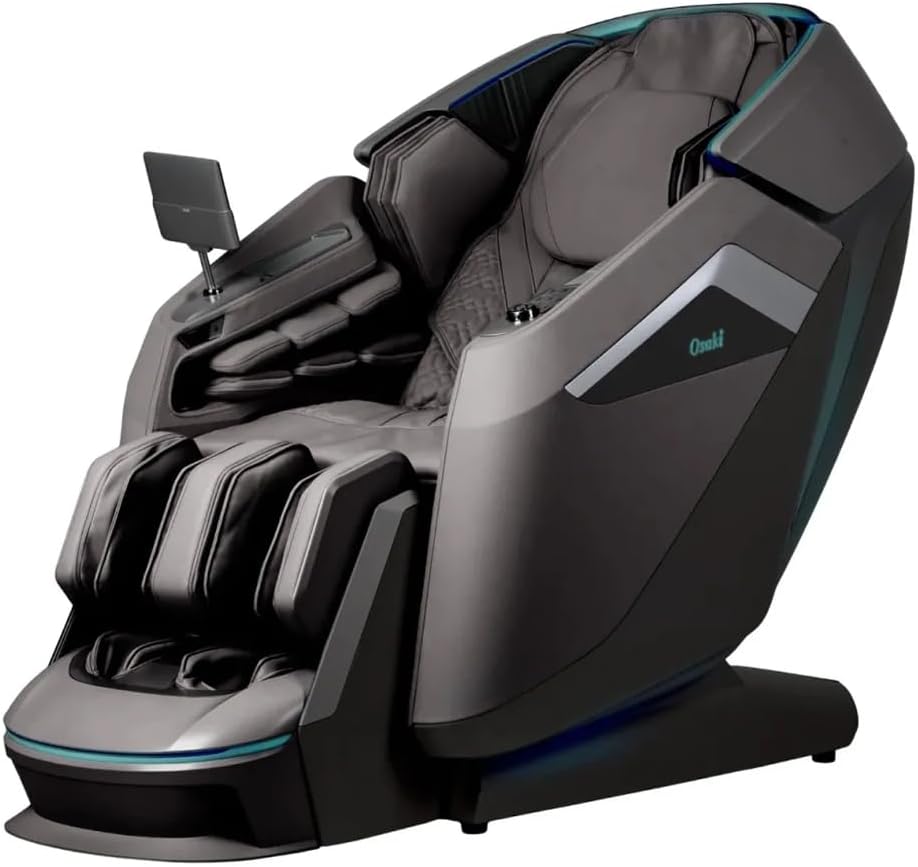
Most massage chairs treat every body the same. The rollers grind across your shoulder blades, the footrest is either too short or too long, and the “body scan” can feel more like a guess.
The Osaki AI Apex Duo massage chair takes a different approach, combining dual 4D massage mechanisms with an AI-assisted body scan designed to better match the massage to your body.
The dual-mechanism design is the biggest differentiator. Instead of relying on one roller assembly to cover your entire back, the chair can work different areas simultaneously.
In this Osaki AI Apex Duo review, I’ll look at the body scan, dual 4D mechanism, comfort, build quality, space requirements, warranty, pricing, competitors, and the biggest reasons to buy — or skip — this premium massage chair.
Osaki AI Apex Duo: Quick Verdict
Best for: Buyers who want a premium dual-mechanism massage chair with AI-assisted body scanning, deep 4D massage, zero gravity, heat, and full-body air compression.
- Best feature: Dual 4D mechanisms
- Best for: Deep massage and frequent home use
- Main advantage: Upper and lower body areas can be treated simultaneously
- Main drawback: Large footprint and premium price
- Typical price: Approximately $4,000–$5,500, depending on seller and promotions
What Is the Osaki AI Apex Duo Massage Chair?
The Osaki AI Apex Duo is a premium 4D massage chair built around a dual-mechanism design. Rather than relying on one roller assembly for the entire back, it uses two separate mechanisms that can target different zones at the same time or coordinate for a more comprehensive session.
That dual setup is the chair’s headline feature and one of the main reasons it sits near the top of Osaki’s lineup.
An AI-assisted body scan runs before a massage session and is designed to identify body positioning such as shoulder height and spinal alignment before adjusting the massage position.
Key features include:
- Dual massage mechanisms for simultaneous upper- and lower-body massage
- 4D roller control with adjustable depth and speed
- AI-assisted body scanning for automatic positioning
- Zero-gravity recline for a more weight-balanced position
- Airbag compression for the shoulders, arms, hips, legs, and feet
- Heat therapy and stretch-oriented programs
- Foot rollers for additional lower-body massage
- Bluetooth audio through the headrest
The chair is best suited to buyers who want a premium home massage experience and expect to use the chair frequently. It is also a better fit for people who have enough room for a large full-size massage chair.
Compared with standard Osaki chairs, the Apex Duo’s biggest differences are the dual mechanism and AI-assisted scanning. Those features push it closer to the flagship segment in both capability and price.
Key Features and Full Specifications
Full-size dual-mechanism massage chairs live or die by their specifications. The Osaki AI Apex Duo is designed as a substantial piece of furniture rather than a compact massage accessory.
Specifications at a Glance
| Specification | Osaki AI Apex Duo |
|---|---|
| Mechanism | Dual 4D roller sets with independently operated massage zones |
| Track | SL-track, approximately 49–53 inches of roller travel |
| Body Scan | AI-assisted scan for shoulder, spine, and body positioning |
| Airbags | Shoulders, arms, hips, thighs, calves, and feet |
| Heat | Lumbar heat on standard configurations; verify current listing |
| Zero Gravity | Multiple staged recline positions |
| Foot Rollers | Yes, with airbag compression |
| Audio | Bluetooth speakers in the headrest |
| Upright Size | Approximately 30 W × 61 L × 47 H inches |
| Reclined Size | Approximately 30 W × 75 L × 32 H inches |
| Weight | Approximately 250–290 lb |
| Power | 110–120V household outlet |
Programs, Controls, and Materials
Automatic programs cover full-body massage, relaxation, stretching, and targeted neck and shoulder work. Manual modes allow you to adjust areas and massage settings when you want more control.
The handheld touchscreen remote controls the primary functions and settings. Voice-control features may also be available depending on the current configuration. App connectivity can vary by production year or package, so verify the current listing if smartphone control is important to you.
Upholstery is synthetic leather over a foam-and-frame construction. Color and material options can vary between production batches, so the current seller listing should be treated as the final reference.
AI Body Scan and Dual-Mechanism Performance
The AI-assisted body scan is designed to identify your body position before the massage begins. The goal is simple: position the rollers more accurately instead of relying entirely on a generic starting position.
This matters because roller placement can dramatically change how a massage chair feels. A roller positioned too high or too low may miss the muscles you actually want to target.
How the Dual Mechanism Works
Two roller systems operate on separate mechanisms. The upper mechanism focuses on areas such as the neck, shoulders, and upper back, while the lower mechanism can work the mid-back, lumbar region, and glutes.
That is different from a conventional single-mechanism massage chair, where one roller assembly travels along the chair’s track and treats different zones sequentially.
For people who frequently experience lower-back tension after desk work, the ability to combine upper- and lower-body massage is one of the more meaningful advantages of the design.
Real-World Performance
- Intensity: Higher settings provide a deeper massage, while lower settings are better for lighter sessions.
- Accuracy: Body scanning is particularly useful for positioning the shoulder and upper-back massage.
- Relief: The chair is well suited to general muscle tension after long periods of sitting, but it should not be treated as a replacement for medical care.
- Potential limitation: Very tall or very short users may still need manual adjustments.
Is the Dual Mechanism Worth Paying More For?
The AI body scan is useful, but the dual mechanism is arguably the more important upgrade. It changes how the chair distributes massage coverage and allows different areas of the body to be worked at the same time.
Build Quality, Comfort, and Ease of Use
The Osaki AI Apex Duo is built around a substantial frame designed to support its dual-mechanism architecture. The synthetic-leather upholstery and padded interior give it the appearance of a premium home furniture piece rather than a basic massage machine.
Body fit is particularly important. The body scan is designed to adjust roller positioning according to your body rather than using exactly the same starting position for everyone.
Very petite or very tall users should pay particular attention to the manufacturer’s current height and weight recommendations and, when possible, try the chair before making a purchase.
Zero-Gravity Recline
Zero gravity is one of the chair’s most noticeable comfort features. The reclined position distributes your body weight more evenly and changes the angle at which the rollers contact your back.
If you are sensitive to long periods of reclining or experience dizziness when changing position, move out of the reclined position gradually.
Setup and Room Requirements
A chair of this size is not an easy one-person installation. The frame and motors can push the total weight well above 250 pounds, so delivery planning is important.
- Delivery: Plan for two people unless white-glove delivery is provided.
- Doorway: Measure all entry points before ordering.
- Rear clearance: Allow sufficient space for the chair to recline fully.
- Side clearance: Leave enough room for access and maintenance.
- Maintenance: Keep the chair clean, dry, and away from direct sunlight.
Noise and Controls
The motors and air pumps produce audible mechanical noise during operation. In a typical room, it should be noticeable without necessarily dominating normal television or conversation volume.
The remote is the most straightforward way to start preset programs and make adjustments. More advanced settings can take some time to learn, particularly if you want to create a highly customized massage routine.
Pricing, Warranty, and Value for Money
The Osaki AI Apex Duo sits firmly in the premium massage-chair category. Based on the pricing range represented in this review, buyers should expect approximately $4,000–$5,500, although promotions and seller pricing can move the actual purchase price significantly.
Because massage-chair pricing changes frequently, the current seller listing should always be checked before purchasing.
Warranty Considerations
- Warranty coverage can vary by model year and seller.
- Parts, labor, and frame coverage may have different terms.
- Service availability can depend on your location.
- Buying through an authorized channel can be important for warranty support.
- Always confirm the current warranty terms in writing before checkout.
Delivery, Returns, and Financing
Freight delivery is common for large massage chairs, while white-glove setup may be offered depending on the seller. Return policies can be particularly important because massage chairs are expensive and difficult to ship.
Before buying, check the seller’s return window, restocking fees, return-freight responsibility, packaging requirements, and warranty terms.
How Does It Compare on Value?
| Model | Typical Price | Mechanism | Check Price |
|---|---|---|---|
| Osaki AI Apex Duo | ~$4,000–$5,500 | Dual 4D + AI-assisted scan | Amazon |
| Osaki Pro Maestro LE | ~$3,000–$4,500 | Dual mechanism | Amazon |
| Luraco i9 Max | ~$9,000+ | Dual 4D | Amazon |
Osaki AI Apex Duo vs Top Competitors
The most useful way to compare premium massage chairs is not simply by counting features. Mechanism design, body scanning, track length, warranty, footprint, and actual purchase price all matter.
| Chair | Mechanism | Body Scan / AI | Typical Price | Warranty | Check |
|---|---|---|---|---|---|
| Osaki AI Apex Duo | Dual mechanism, SL-track | AI-assisted body scan | ~$4,000–$6,000 | Varies by seller | Amazon |
| Inada DreamWave | 4D roller | Optical body scanning | ~$8,000–$10,000 | Varies by seller | Amazon |
| Panasonic MAJ7 | 4D Real Pro roller | Body scanning | ~$6,000–$8,000 | Varies by seller | Amazon |
| Infinity Riage | 4D roller, L-track | Body scan | ~$4,000–$5,500 | Varies by seller | Amazon |
| Kyota M880 | 4D roller, SL-track | Body scan | ~$5,000–$7,000 | Varies by seller | Amazon |
Which One Should You Choose?
- For dual-mechanism massage: Osaki AI Apex Duo
- For premium deep-tissue feel: Inada DreamWave
- For a smaller footprint: Panasonic MAJ7
- For stretching-focused programs: Infinity Riage or Kyota M880
- For a balance of features and price: Osaki AI Apex Duo
If you want the most adjustment range and dual-mechanism functionality without moving into the highest flagship price tier, the Osaki AI Apex Duo is one of the more compelling options in this comparison.
Real Owner Experiences: Pros and Cons
Owner feedback tends to be most useful when it highlights recurring strengths and weaknesses rather than isolated complaints. The themes associated with this type of premium Osaki chair generally revolve around massage quality, setup, size, price, and the learning curve.
What Buyers Like
- Deep massage: The 4D mechanism can provide a noticeably stronger massage than basic 2D and 3D chairs.
- Home convenience: Frequent users can access a massage without scheduling a professional appointment.
- Zero gravity: The reclined position is one of the chair’s strongest comfort features.
- Body scanning: Automatic positioning reduces the amount of manual adjustment required.
- Premium experience: Air compression, heat, foot rollers, and Bluetooth audio make the chair feel more like a home spa system.
Common Complaints
- Price: This is a significant purchase compared with entry-level massage chairs.
- Size: The chair requires substantial floor space and careful delivery planning.
- Learning curve: Advanced settings may take time to understand.
- Fit: Very short or very tall users may need more manual adjustment.
- Service: Warranty and service experiences can vary depending on seller and location.
Our Take
The Osaki AI Apex Duo makes the most sense for buyers who will use a premium massage chair regularly. If you have limited space, a budget below $3,000, or prefer a gentle massage rather than a deeper 4D experience, a smaller and less expensive chair may be a better fit.
Frequently Asked Questions
Does the AI body scan work for different body types and heights?
The body scan is designed to identify positioning such as shoulder height and spinal alignment before the massage begins. Very tall or very petite users may still need manual adjustments, so check the manufacturer’s current height and weight recommendations before purchasing.
How does the dual mechanism differ from a standard 4D massage chair?
A standard 4D chair generally uses one roller mechanism that varies speed and depth. The Apex Duo uses two independent mechanisms, allowing different areas of the body to be worked at the same time.
What is the return policy?
Return policies depend on the seller. Check the specific return window, restocking fees, return shipping costs, and packaging requirements before checkout. These details are particularly important for a large massage chair.
How long does delivery and assembly take?
Delivery is typically freight-based. Actual delivery times depend on location and seller. Assembly requirements also vary, so confirm whether white-glove delivery is included before ordering.
Is the warranty transferable if I sell the chair?
Do not assume that the warranty transfers to a second owner. Manufacturer warranties are often tied to the original purchaser. Confirm the current warranty terms before buying used or reselling the chair.
Can the Osaki AI Apex Duo help with sciatica or lower back pain?
A massage chair is not a substitute for medical diagnosis or treatment. Some people use massage to help manage general muscle tension after long periods of sitting, but anyone with a diagnosed condition such as sciatica should discuss massage use with a qualified healthcare professional.
Final Verdict: Is the Osaki AI Apex Duo Worth It?
The Osaki AI Apex Duo is aimed at buyers who want more than a basic massage chair. Its dual 4D mechanism is the main reason to consider it, while the AI-assisted body scan, zero gravity, heat, airbags, foot rollers, and Bluetooth audio add to the premium experience.
The biggest trade-offs are price, size, weight, and the need to verify current warranty and seller terms. For frequent users with enough room and budget, those trade-offs can make sense.
Our overall take: The Osaki AI Apex Duo is best viewed as a premium daily-use massage chair rather than a casual impulse purchase.