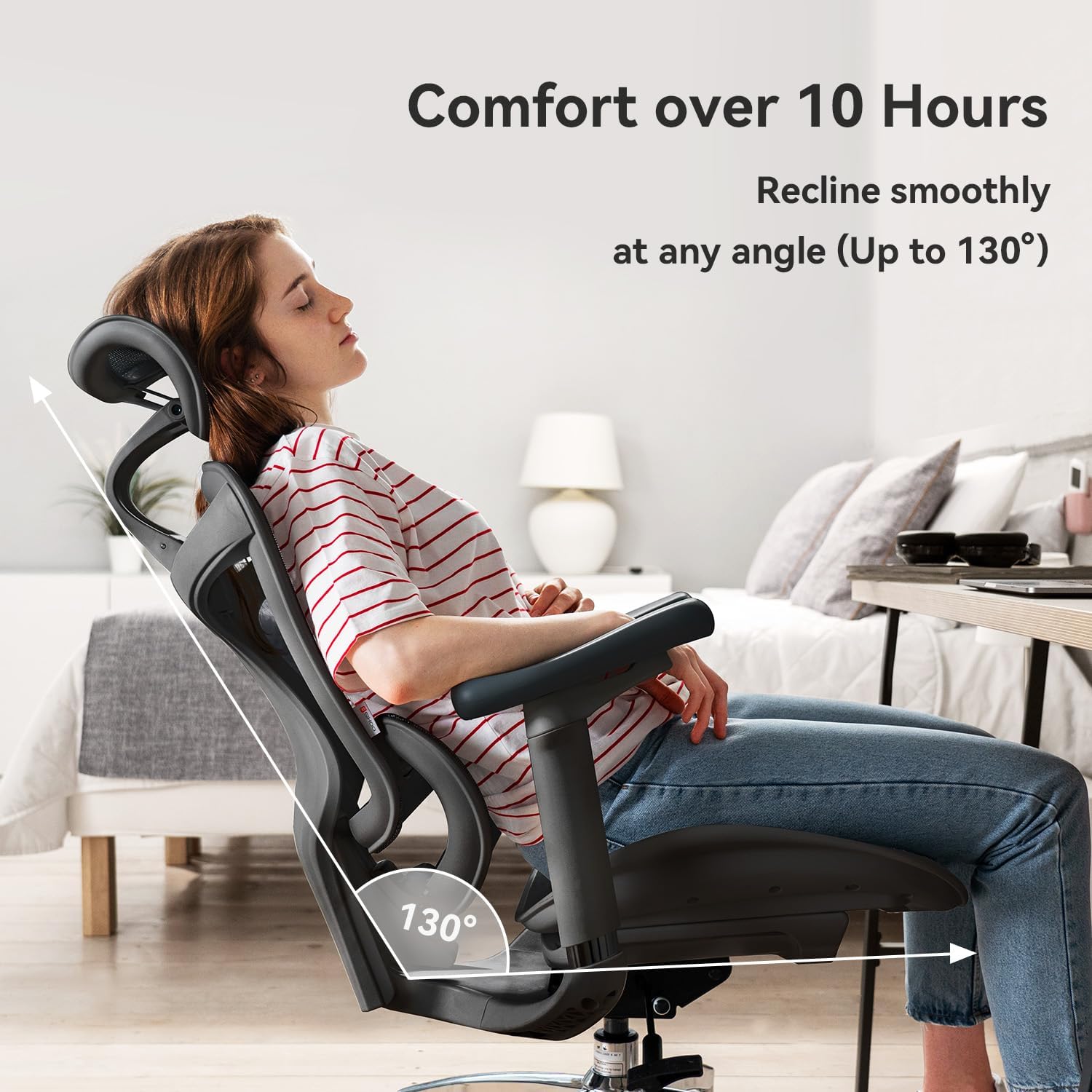
If you have been shopping for an ergonomic chair under $800, you have almost certainly come across two names: SIHOO (also spelled Sihoo) and Hbada (often written as HBADA or 黑白调). Both brands have become best-sellers on Amazon, offering premium features at mid-range prices.
But which one is actually better? Is SIHOO’s dynamic lumbar technology worth the extra money? Does Hbada’s recline + footrest combo deliver on its promises? And how do these two brands compare across their different model lines?
In this guide, I will break down the key differences between SIHOO and Hbada, comparing their flagship models (Doro C300/Doro S300 vs E3/E3 Pro), their entry-level options (M18 vs P53), and everything in between. By the end, you will know exactly which brand belongs in your home office.
Quick Answer: SIHOO vs Hbada — Which One Is Better?
Here is the short version if you are in a hurry:
- Choose SIHOO if: You prioritize posture correction, advanced lumbar support (dynamic/self-adapting systems), precision engineering, and a more “technical” sitting experience. SIHOO chairs are designed for people who take sitting seriously — coders, designers, writers, and anyone spending 6+ hours a day at a desk.
- Choose Hbada if: You value relaxation features (built-in footrest, plush cushioning), a more lounge-friendly experience, and a chair that adapts to both work and rest modes. Hbada chairs are designed for hybrid workers who want one chair for everything — focused work, video calls, and casual lounging.
Both brands offer excellent value, but they cater to different sitting styles. Let me explain why.
Brand Overview: SIHOO (西昊)
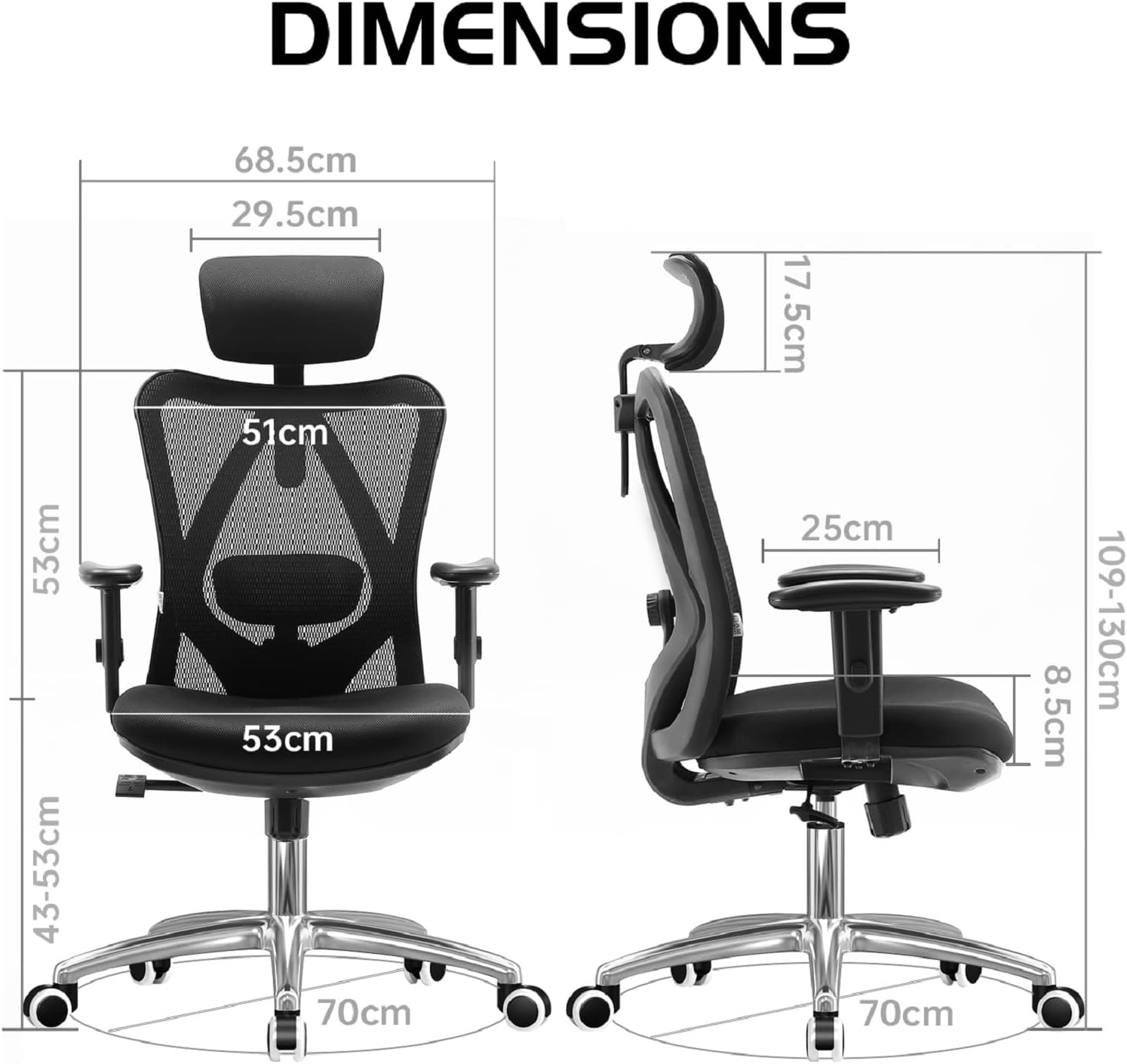
SIHOO is a Chinese ergonomic furniture brand that has gained international recognition for its high-quality, feature-rich office chairs. The brand’s philosophy centers on posture support, adjustability, and ergonomic engineering.
SIHOO’s product range spans multiple price tiers: entry-level models like the M18, mid-range options like the M57, and premium flagships like the Doro C300 and Doro S300. The brand is known for its dynamic lumbar systems, breathable mesh materials, and precision engineering.
Key Strengths of SIHOO:
- Advanced lumbar support (self-adapting/dynamic systems)
- Breathable mesh construction
- Precision engineering with tight tolerances
- Strong warranty coverage (3–5 years on premium models)
- Firm, posture-focused seating experience
- Wide range of models across price points
Brand Overview: Hbada (黑白调)
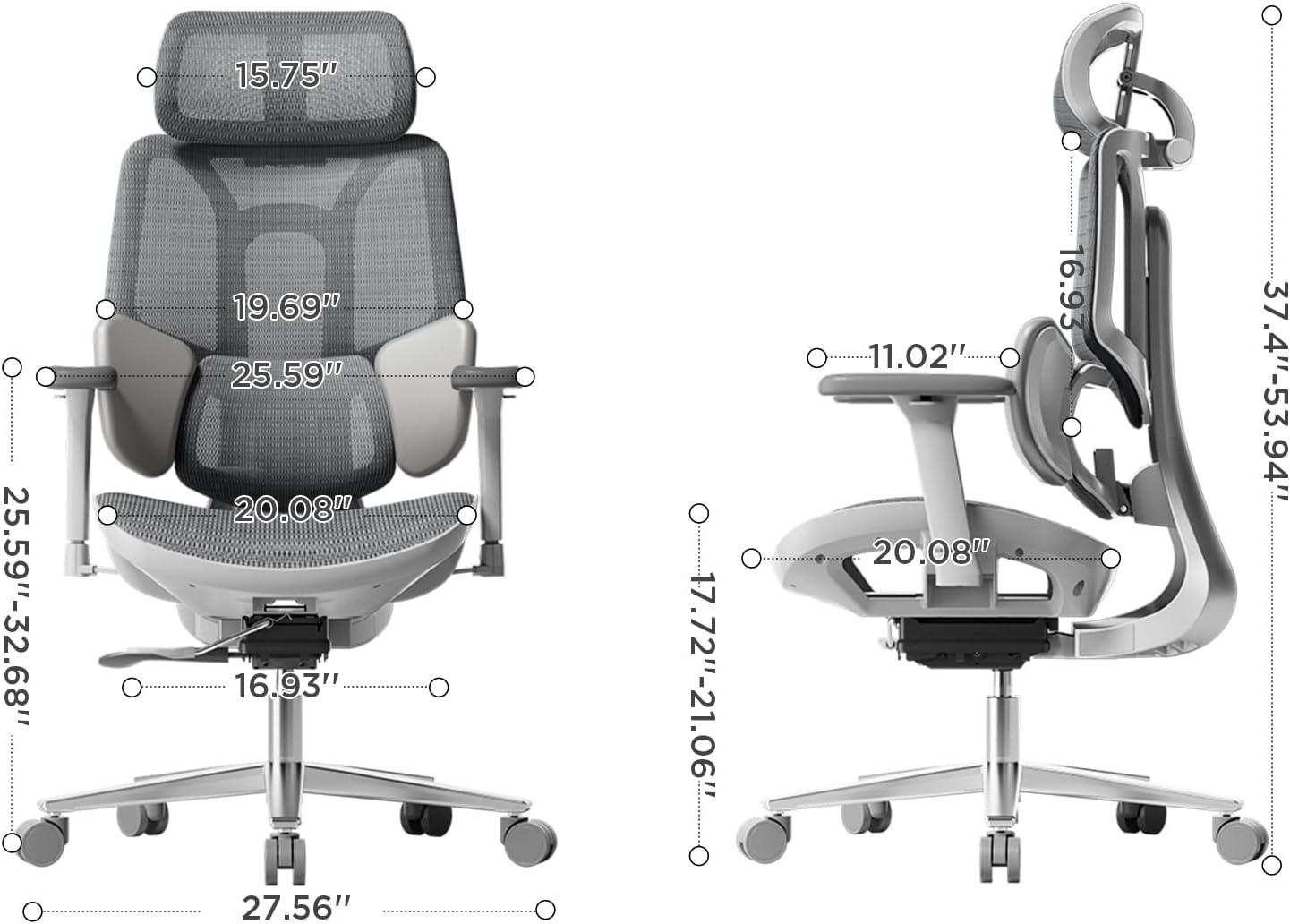
Hbada is another major player in the ergonomic chair space, known for blending comfort with functionality. The brand’s chairs often feature plush cushioning, wide headrests, and built-in footrests — appealing to users who want a chair that works for both work and relaxation.
Hbada’s flagship E3 Pro has been praised by TechRadar as a “quality chair at an approachable price,” specifically noting its suitability for taller and larger users. The brand emphasizes adjustability, breathable mesh, and recline features.
Key Strengths of Hbada:
- Built-in footrest on many models
- Plush, cushion-friendly seating
- Wide, comfortable headrests
- Good for taller/larger users
- Lounge-friendly recline (135°+)
- Competitive pricing
Comparison Table: Flagship Models
FeatureSIHOO Doro S300 / C300Hbada E3 Pro
| Price | $700–$800 (on sale) | $550–$710 (on sale) |
| Warranty | 3–5 years | 1 year |
| Lumbar Support | Dynamic self-adapting dual-axis system | Height-adjustable wrap-around lumbar |
| Armrests | 6D (height, width, depth, pivot, rotation +) | 4D (height, width, depth, pivot) |
| Headrest | Adjustable (3D) | Wide adjustable (included) |
| Footrest | Not on C300; S300 has optional | Built-in, padded |
| Recline | 135° with multi-lock | 135° with tilt lock + footrest |
| Seat Material | German-imported mesh (firm, breathable) | Breathable mesh + foam cushion |
| Seat Sensation | Firm, springy, supportive | Plush, welcoming, lounge-friendly |
| Assembly Time | ~40 minutes | ~25–30 minutes |
| Weight Capacity | 300 lbs | ~300 lbs |
Detailed Comparison: SIHOO Doro S300/C300 vs Hbada E3 Pro
These are the flagship models from each brand, representing their best engineering and features. Let’s compare them in detail.
1. Lumbar Support (Winner: SIHOO — for precision)
SIHOO’s Dynamic Lumbar System: The Doro S300 features a dual-axis dynamic lumbar system that adapts to your posture in real time. As you lean forward to type or recline to think, the lumbar curve shifts to maintain contact with your spine. Users describe it as “feeling like the chair is constantly reminding me to sit better — but without nagging.”
Hbada’s Lumbar Support: The E3 Pro offers a height-adjustable wrap-around lumbar support that can be locked or left unlocked. In unlocked mode, it pivots with your movements, providing dynamic support. However, it lacks the depth adjustment and precision of SIHOO’s system.
Verdict: If you have specific lower back pain or want the most advanced lumbar support, choose SIHOO. If you prefer a simpler, more forgiving system, Hbada is still good.
2. Armrests (Winner: SIHOO)
SIHOO’s Doro S300 features 6D armrests — an industry-leading level of adjustability that includes height, width, depth, pivot, rotation, and lateral movement. Hbada’s E3 Pro offers 4D armrests (height, width, depth, pivot), which are still excellent but less versatile.
However, TechRadar notes that Hbada’s armrests are “too mobile” — they move more easily than intended, which some users find frustrating.
3. Seating Experience (Tie — different philosophies)
SIHOO: “From the moment you sit in the S300, the sensation is clear: this chair isn’t trying to be soft. It’s trying to hold you — to shape itself around your spine… The mesh suspension gives a certain rebound that prevents fatigue while keeping you alert.”
Hbada: “Sliding into the E3 Pro feels welcoming. Unlike the Sihoo’s firm mesh, this chair greets you with a plush, foam-padded seat and a gentle contour under the thighs… Users describe the 135° tilt as ‘perfect for reading,’ ‘ideal for post-lunch downtime.'”
Verdict: Choose SIHOO if you want a chair that keeps you alert and engaged. Choose Hbada if you want a chair that feels like a comfortable lounge seat.
4. Footrest and Recline (Winner: Hbada)
Hbada’s E3 Pro comes with a built-in padded footrest that extends when you recline. This makes it ideal for taking breaks, reading, or even napping between work sessions. The 135° recline combined with the footrest creates a lounge-chair experience that SIHOO’s C300 (no footrest) cannot match.
However, TechRadar notes that the footrest “is too loose” and can feel slightly unstable when extended.
5. Build Quality and Warranty (Winner: SIHOO)
SIHOO offers a 3–5 year warranty on its premium models (extendable to 5 years with registration). Hbada offers only a 1-year warranty on the E3 Pro. This is a significant difference for a product you plan to use daily for years.
Multiple reviewers note that SIHOO’s build quality feels more “precise” and “tight,” with better-machined components and no wobble.
Entry-Level Comparison: SIHOO M18 vs Hbada P53
For budget-conscious buyers, both brands offer entry-level models. Here is how they compare:
FeatureSIHOO M18Hbada P53 Standard
| Price | ~$300–350 | ~$250–300 (on sale) |
| Lumbar Support | Adjustable (height) | Adjustable (height) |
| Headrest | Adjustable | Wider, more comfortable |
| Seat Material | Mesh | High-density foam |
| Weight Capacity | 330 lbs | ~275 lbs |
| Height Range | 5’6″ – 6’2″ | 5’5″ – 6’0″ |
SIHOO M18 Highlights: Reviewers praise the M18 for its four-point support system (head, back, hips, hands), breathable mesh, and robust 330 lb weight capacity. One Amazon reviewer notes: “The cushion is firm but comfortable… the tilt feature is nice, it tilts far enough that the chair sort of becomes a cradle — I’ve fallen asleep in it a few times.” The M18 is suitable for users between 5’6″ and 6’2″.
Hbada P53 Highlights: The P53 features a wider seat (540mm vs 500mm on SIHOO M56) and a thicker 100mm foam cushion, making it more comfortable for larger users. However, it has a lower weight capacity and less adjustability than the SIHOO.
SIHOO vs Hbada: Feature-by-Feature Summary
Lumbar Support — Winner: SIHOO
SIHOO’s dynamic/self-adapting lumbar systems are more advanced, offering real-time adjustment as you move. Hbada’s lumbar is height-adjustable but less precise.
Armrests — Winner: SIHOO
SIHOO offers 6D armrests on premium models (vs 4D on Hbada). The extra adjustability is valuable for users with specific shoulder or elbow needs.
Seat Comfort — Tie (different preferences)
SIHOO uses firm, supportive mesh that keeps you alert. Hbada uses plush foam that feels more welcoming. Neither is objectively better — it depends on your preference for firm vs soft seating.
Breathability — Winner: SIHOO
SIHOO’s German-imported mesh is highly breathable. Hbada’s mesh is good but often paired with foam, reducing airflow.
Footrest / Relaxation Features — Winner: Hbada
Hbada includes built-in footrests on many models, making them better for lounging and breaks. SIHOO’s C300 lacks this feature entirely.
Warranty — Winner: SIHOO
SIHOO offers 3–5 years on premium models. Hbada offers only 1 year.
Assembly Difficulty — Winner: Hbada
Hbada assembly takes ~25–30 minutes. SIHOO’s more complex designs take ~40 minutes.
Price — Winner: Hbada (slightly)
Hbada models are typically $50–100 less expensive than comparable SIHOO models, especially when on sale.
Which Brand Is Better for Specific Use Cases?
For Back Pain / Posture Correction: Best Choice: SIHOO
SIHOO’s dynamic lumbar systems and posture-focused engineering make it the better choice for users with existing back pain. The chair actively encourages proper spinal alignment.
For Long Work Days (8+ Hours): Best Choice: SIHOO
The firm, supportive mesh and precision engineering of SIHOO chairs are better suited for all-day focused work. The chair’s design keeps you alert and engaged.
For Hybrid Work + Relaxation: Best Choice: Hbada
If you want one chair for work, video calls, reading, and casual lounging, Hbada’s footrest and plush cushioning are ideal.
For Taller Users (6’0″+ ): Best Choice: Hbada
TechRadar notes that the Hbada E3 Pro is “designed with the bigger and taller community in mind.” It fits taller individuals well, whereas SIHOO’s height range tops out around 6’2″.
For Gamers: Best Choice: Tie
Gamers benefit from both brands: SIHOO’s armrest adjustability is great for mouse/keyboard positioning; Hbada’s recline and footrest are great for between-match relaxation. Choose based on your priority.
For Hot Climates / Breathability: Best Choice: SIHOO
SIHOO’s German-imported mesh is highly breathable and less prone to trapping heat than Hbada’s foam + mesh combination.
For Tight Budgets (Under $300): Best Choice: SIHOO M18
The SIHOO M18 offers better adjustability and a higher weight capacity than comparably priced Hbada entry models. However, Hbada’s P53 is often cheaper when on sale.
Frequently Asked Questions (FAQ)
Which is better: SIHOO or Hbada?
SIHOO is generally considered better for posture correction and long work sessions due to its advanced dynamic lumbar systems, superior armrest adjustability (6D), longer warranty (3–5 years), and precision engineering. Hbada is better for hybrid work + relaxation due to its built-in footrest, plush cushioning, and lounge-friendly recline.
Is SIHOO or Hbada better for back pain?
SIHOO is better for back pain. Its dynamic self-adapting lumbar system provides more precise support and actively encourages proper spinal alignment. Hbada’s lumbar is height-adjustable but less targeted.
Which brand has a better warranty?
SIHOO has a significantly better warranty — 3–5 years on premium models compared to Hbada’s 1-year warranty.
Is Hbada good for tall people?
Yes — TechRadar specifically notes that the Hbada E3 Pro is “designed with the bigger and taller community in mind.” It is a great option for users over 6’0″ who find SIHOO’s height range limiting.
Which chair has better armrests?
SIHOO has better armrests — 6D adjustability on premium models vs Hbada’s 4D. However, some users find SIHOO’s armrests “too mobile.”
Can I buy these chairs on Amazon?
Yes. Both SIHOO and Hbada sell through Amazon with Prime shipping. Buying through Amazon often provides easier returns than buying directly from the manufacturer.
👉 Check price for SIHOO M18 on Amazon →
👉 Check price for Hbada E3 Pro on Amazon →
Final Verdict: SIHOO vs Hbada — Which Should You Buy?
After comparing both brands across multiple models and price points, here is my honest recommendation:
Buy SIHOO if: You prioritize posture correction, have existing back pain, spend 6+ hours a day in focused work (coding, writing, design), value precision engineering and a longer warranty, and prefer a firm, supportive seat that keeps you alert. SIHOO is the better choice for people who take sitting seriously.
Buy Hbada if: You want a built-in footrest, prefer plush cushioning over firm mesh, do hybrid work (focused work + casual lounging in the same chair), are taller than 6’0″, or want to spend slightly less while still getting good adjustability.
Still undecided? If you can afford the extra $100–150 and prioritize back health, choose SIHOO — the advanced lumbar support and longer warranty make it the better long-term investment. If you want a chair that works for both work and relaxation, choose Hbada — the footrest and plush cushioning are game-changers for hybrid workers.
👉 See today’s price for SIHOO Doro C300 on Amazon →
Disclosure: This post contains affiliate links. If you purchase through our links, we may earn a commission at no extra cost to you. We only recommend products we have researched thoroughly.