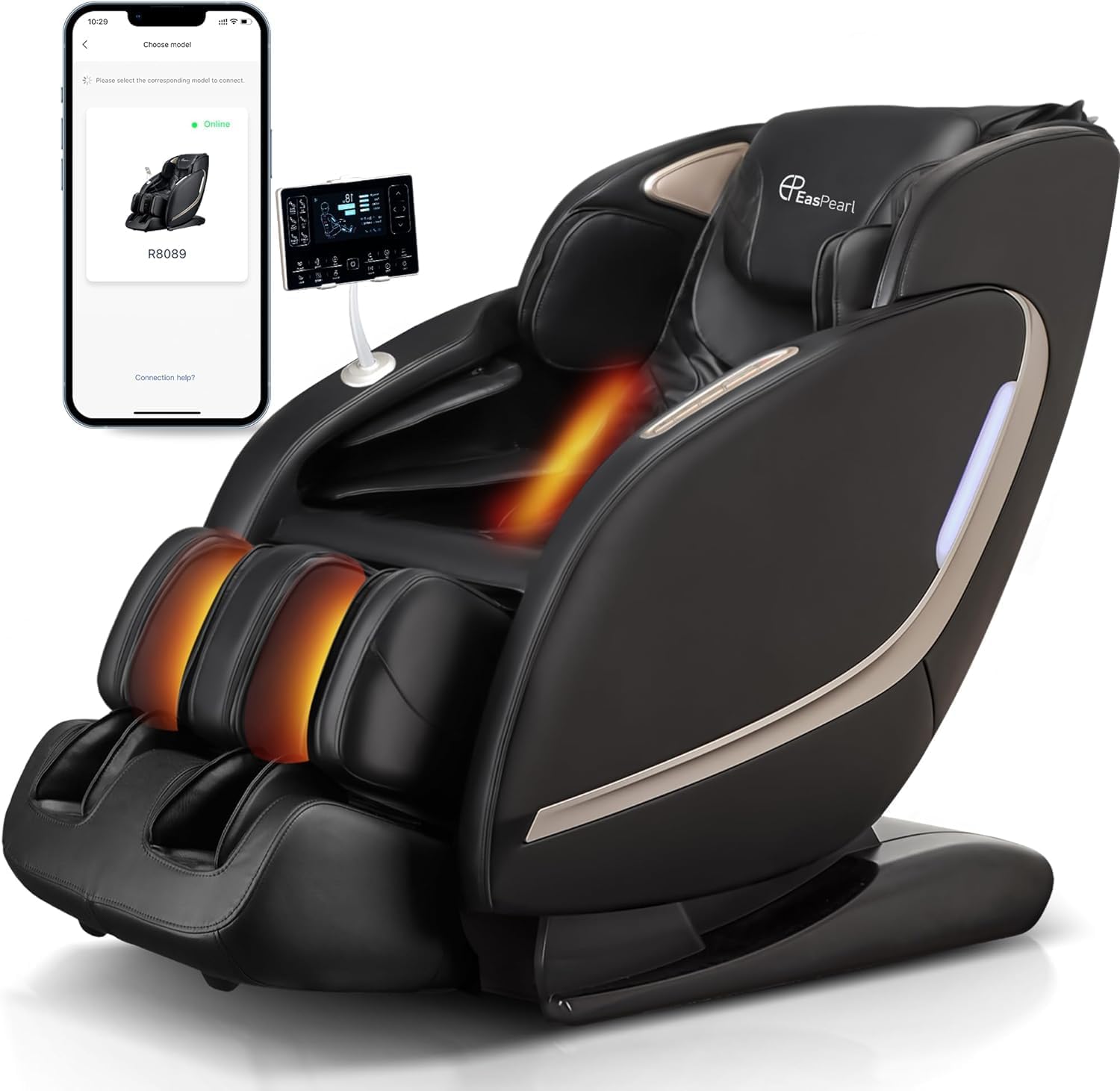
Massage chairs and physical therapy can both be part of a person’s approach to managing back discomfort, but they are not interchangeable treatments. Physical therapy is a professional healthcare service that can include assessment, exercise, education, manual therapy, and other interventions. A massage chair is a consumer wellness device designed to provide mechanical massage at home.
If you’re comparing a massage chair vs physical therapy, the most useful question is not simply which one is “better.” Instead, consider what each option can actually do, what the available evidence shows, how much it costs in your situation, and whether you need professional assessment or primarily want a convenient home massage option.
Key Takeaway: A randomized controlled trial comparing a massage chair with basic physiotherapy for lower back pain found improvements in both groups. The physiotherapy group had greater improvement on the study’s pain and Functional Rating Index measures, while the difference in McGill Pain Questionnaire scores between groups was not statistically significant. The study also found lower treatment costs for the massage-chair group under its specific rental-cost assumptions. The researchers concluded that the massage chair was not a replacement for physiotherapy.
Massage Chair vs Physical Therapy at a Glance
| Consideration | Massage Chair | Physical Therapy |
|---|---|---|
| What it is | Consumer wellness equipment for mechanical massage | Professional healthcare service |
| Assessment | No clinical assessment | Includes professional evaluation within the scope of care |
| Exercise instruction | Generally not a primary function | Can include individualized exercise and movement programs |
| Manual therapy | Mechanical rollers and airbags | May include manual techniques where appropriate |
| Availability | At home whenever the chair is available | Requires appointments or access to a provider |
| Hands-free massage | Yes | Depends on the treatment |
| Home use | Primary environment | Some exercises and self-management can continue at home |
| Primary advantage | Convenient mechanical massage | Professional assessment and individualized management |
What the Research Says About Massage Chairs vs Physical Therapy
The most directly relevant study for this comparison is a randomized controlled trial published in Medicine in 2020. The researchers compared a mechanical massage chair with basic physiotherapy in people with lower back pain.
The trial enrolled 56 participants: 25 were allocated to physiotherapy and 31 to mechanical massage using a massage chair. The researchers evaluated pain using the Visual Analog Scale (VAS), satisfaction using the McGill Pain Questionnaire (MPQ), and functional/quality-of-life changes using the Functional Rating Index (FRI).
Both groups showed statistically significant improvements in the study’s outcome measures. However, when the researchers compared the groups, the physiotherapy group showed greater improvement in VAS pain and FRI scores. The difference in MPQ between groups was not statistically significant.
What the Study Actually Shows
| Outcome | Study Finding | How to Interpret It |
|---|---|---|
| VAS pain | Both groups improved; between-group difference favored physiotherapy | The study did not show the massage chair performing as well as physiotherapy on this measure |
| FRI | Both groups improved; between-group difference favored physiotherapy | The study found greater improvement in this functional measure with physiotherapy |
| MPQ | No significant difference between groups | The study did not detect a statistically significant difference in this measure |
| Cost | Massage-chair treatment was 60.17% of physiotherapy cost in the study | This was based on the study’s specific healthcare and massage-chair rental costs |
The important distinction is that the study does not establish that every massage chair is equivalent to physical therapy, nor does it establish that buying a massage chair is always cheaper than receiving PT in the United States. It evaluated one specific intervention, population, treatment period, and cost structure.
Why Physical Therapy Is Different From a Massage Chair
The biggest difference is that physical therapy is not simply a form of massage.
A physical therapist can evaluate movement, strength, mobility, functional limitations, and the patient’s response to different activities. Treatment can then include exercise, education, movement training, and selected manual techniques or other interventions when appropriate.
For chronic low back pain, the American Physical Therapy Association’s clinical practice guideline recommends exercise-based interventions including trunk strengthening and endurance work, multimodal exercise, aerobic exercise, and other forms of exercise depending on the patient’s presentation.
This makes physical therapy fundamentally different from a massage chair: the chair delivers a predetermined mechanical intervention, while physical therapy can adapt the intervention to the individual.
Assessment and Individualization
A massage chair cannot perform a clinical assessment of why your back hurts.
A physical therapist may evaluate movement patterns, strength, mobility, functional limitations, and other factors relevant to the treatment plan. That information can then influence the exercises or other interventions selected.
This distinction becomes particularly important when back pain is persistent, recurrent, associated with leg symptoms, or interfering significantly with normal activities.
Exercise and Movement Training
Exercise is an important part of contemporary low-back-pain management. A massage chair does not replace an individualized exercise program.
Current clinical guidance emphasizes active management rather than relying exclusively on passive treatments. NICE recommends exercise programs for people with low back pain or sciatica and recommends that manual therapy, when used, be part of a treatment package that includes exercise.
Education and Self-Management
Physical therapy can also include education about movement, activity, pacing, exercise, and self-management.
A massage chair can provide a convenient home massage experience, but it does not teach you how to modify movement or build strength.
How Massage Chairs Fit Into a Home Routine
A massage chair has a different value proposition.
Instead of providing assessment and individualized rehabilitation, it provides a convenient way to receive mechanical massage at home.
Depending on the model, features can include:
- Roller massage along the back track.
- Airbag compression around areas such as the shoulders, hips, calves, or feet.
- Heat in selected areas.
- Reclining positions for a more comfortable massage posture.
- Body scanning on some models to adjust roller positioning.
- Multiple massage programs with different movement patterns and intensities.
- Foot and calf massage on some full-size models.
These features can make a massage chair useful as a home relaxation and massage tool. They should not, however, be confused with the individualized assessment and active rehabilitation components of physical therapy.
Massage Chair vs Physical Therapy: Cost
Cost is one of the reasons this comparison is attractive to shoppers, but it is also one of the easiest areas to overstate.
The 2020 randomized trial calculated a monthly physiotherapy cost of $166.82 and a monthly massage-chair rental cost of $100.38 under the study’s specific cost assumptions. The massage-chair intervention therefore represented 60.17% of the physiotherapy cost in that study.
Important: Do not interpret the study’s 60.17% figure as a current U.S. physical-therapy price comparison. The researchers used the costs applicable to their study and compared them with the rental cost of the massage system used in the trial. Insurance, location, visit frequency, deductibles, copays, and cash-pay rates can all change the economics of PT.
Buying a Massage Chair Is a Different Calculation
If you purchase a massage chair, you pay the purchase price upfront rather than a monthly rental fee.
For example, a hypothetical $2,500 chair used for five years would have a simple purchase-price average of approximately $42 per month before considering electricity, maintenance, repairs, financing, resale value, or the possibility that the chair does not last the entire period.
That calculation can be useful for personal budgeting, but it should not be presented as proof that buying a massage chair is cheaper than physical therapy for every person.
Convenience: Where Massage Chairs Have a Clear Practical Advantage
Convenience is one of the strongest reasons consumers consider a massage chair.
At-Home Availability
A massage chair can be used at home without making an appointment or traveling to a clinic.
For people who enjoy massage and have enough space for a dedicated chair, this can make it easier to incorporate massage into an evening or relaxation routine.
No Per-Session Provider Fee
Once you own a massage chair, there is no additional professional-session charge every time you turn it on. There are still ownership costs, including the initial purchase, electricity, maintenance, and potential repairs.
Multiple Household Users
A massage chair can potentially be used by several people in the same household, although each person should use the chair according to its size, weight, intensity, and safety requirements.
This is one of the major differences from individual PT sessions, which are delivered to one patient at a time.
Where Physical Therapy Has an Important Advantage
Physical therapy is particularly different when the goal is more than temporary comfort.
- Professional assessment: A therapist can evaluate movement and functional limitations.
- Individualized exercise: Exercises can be selected and progressed according to the person’s needs.
- Movement retraining: Treatment can address movement patterns and functional goals.
- Progress monitoring: The treatment plan can change based on response.
- Education: Patients can learn strategies for self-management and activity.
- Integration of treatments: Manual therapy and other approaches can be combined with exercise when appropriate.
These functions cannot be replicated by simply sitting in a massage chair.
Can a Massage Chair Replace Physical Therapy?
Generally, no. A massage chair and physical therapy serve different purposes.
The randomized trial that directly compared the two interventions concluded that the massage-chair system was cost-effective but that pain control and disability improved more with physiotherapy, and the authors explicitly stated that the massage chair was not a replacement for physiotherapy.
That conclusion also makes sense from a treatment-design perspective. A chair provides mechanical massage. Physical therapy can include assessment, exercise, education, movement training, and selected manual interventions.
For someone who already has a physical-therapy plan, a massage chair may be considered a separate home comfort or massage option, but it should not automatically replace the active components of the rehabilitation plan.
Can Physical Therapy Replace a Massage Chair?
In terms of healthcare treatment, physical therapy covers functions that a massage chair does not provide.
However, PT does not necessarily provide the same convenience as owning a massage chair. A massage chair can be used at home and can provide a relaxing mechanical massage without an appointment.
Therefore, these products and services can coexist without one needing to replace the other.
Massage Chair vs Physical Therapy for Different Situations
| Situation | What to Consider |
|---|---|
| New or unexplained back pain | Consider professional evaluation rather than relying only on a massage device. |
| Persistent or recurring pain | A treatment plan may be more useful than passive massage alone. |
| Need for exercise guidance | Physical therapy provides individualized exercise and movement guidance. |
| Want convenient home massage | A massage chair provides a dedicated at-home massage option. |
| Limited space or budget | A massage chair may not be practical because of its size and upfront cost. |
| Already working with a PT | Ask your clinician whether additional home massage fits your individual plan. |
What About Chronic Low Back Pain?
Chronic low back pain deserves a different discussion from a simple “massage versus therapy” comparison.
Current clinical guidance generally emphasizes active management, including exercise and self-management. The APTA clinical practice guideline recommends exercise interventions for chronic low back pain, including trunk strengthening and endurance, multimodal exercise, aerobic exercise, and other approaches based on the clinical presentation.
NICE similarly recommends exercise programs and advises that manual therapy, including massage, should be used only as part of a treatment package that includes exercise.
This does not mean massage is useless. It means that massage should not automatically be treated as the entire management strategy for persistent low back pain.
A massage chair can therefore be viewed as one possible comfort-oriented home tool rather than a complete rehabilitation program.
What About Sciatica?
Sciatica is another situation where it is important not to assume that every type of back or leg discomfort has the same cause.
A massage chair may feel comfortable for some people, but a chair cannot determine whether symptoms are related to nerve-root irritation, another spinal condition, or a different cause.
If you have persistent leg pain, numbness, weakness, or other neurological symptoms, a massage chair should not be used as a substitute for professional assessment.
When a clinician determines that exercise or other conservative management is appropriate, a massage device may be considered separately based on individual tolerance and professional advice.
What Features Matter If You Decide to Buy a Massage Chair?
If your main reason for buying a massage chair is home comfort rather than replacing PT, focus on features that affect the actual massage experience.
1. Roller Type
Massage chairs commonly use 2D, 3D, or 4D roller systems. These terms describe how the rollers move and how much control the chair provides over roller movement.
Do not assume that a higher-numbered roller system automatically makes a chair appropriate for your particular back problem. Fit, intensity adjustment, and comfort are equally important.
2. Track Design
S-Track, L-Track, and SL-Track designs provide different coverage patterns.
If back and glute coverage matters to you, check the manufacturer’s actual track description and dimensions rather than relying only on the marketing label.
3. Intensity Adjustment
A chair with multiple intensity levels can be useful because people have different pressure preferences.
More pressure is not necessarily better. The chair should feel comfortable rather than causing sharp or excessive pain.
4. Body Scanning
Some chairs use body-scanning technology to estimate the user’s shoulder or body position before beginning a massage program.
This can be useful for fit, but it is still important to check the chair’s recommended user height range and physical dimensions.
5. Heat
Heat is common in massage chairs and may make a session feel more relaxing. Check which body areas are heated and whether the temperature can be adjusted.
6. Recline and Clearance
Do not forget the physical requirements of the chair. Some models require substantial rear clearance, while space-saving designs may move the chair forward as they recline.
Measure your room before buying.
7. User Fit
Height, shoulder width, hip width, weight capacity, leg length, and foot size can all affect how a massage chair feels.
A chair with impressive specifications is not necessarily a good fit if its massage zones do not align comfortably with your body.
How to Use a Massage Chair Alongside Physical Therapy
If you are already receiving physical therapy and are considering a massage chair, the most sensible approach is to treat the chair as a separate home-use tool rather than replacing your prescribed program automatically.
- Follow your clinician’s treatment plan.
- Ask whether massage is appropriate for your specific condition.
- Start with comfortable settings rather than maximum intensity.
- Pay attention to how your body responds.
- Continue prescribed exercises and activity unless your clinician tells you otherwise.
- Stop using the chair if it consistently increases symptoms.
The goal should be to add a convenient home massage option without allowing passive massage to replace the active components of rehabilitation.
Massage Chair Safety Considerations
Massage chairs apply mechanical pressure and may also recline, heat, compress, and move the body in different ways. They are not appropriate for every medical situation.
Before using one, read the manufacturer’s safety instructions and contraindications. If you have recently had surgery, have a significant injury, have a condition that affects your bones, circulation, implanted medical devices, or other medical concerns, ask your healthcare professional whether massage-chair use is appropriate.
- Start at a lower intensity when using a new chair.
- Do not assume that stronger pressure produces better results.
- Stop if the massage causes significant or unusual pain.
- Follow the manufacturer’s recommended session settings.
- Do not use the chair as a substitute for evaluation of unexplained or worsening symptoms.
Massage Chair vs Physical Therapy: Frequently Asked Questions
Is a massage chair as effective as physical therapy?
The available direct randomized trial does not support saying that the massage chair is equivalent to physical therapy. In that study, both groups improved, but the physiotherapy group showed greater improvement in VAS pain and FRI scores. The study did not find a significant between-group difference in MPQ.
Can a massage chair replace physical therapy?
No. A massage chair provides mechanical massage, while physical therapy can include assessment, exercise, education, movement training, and individualized treatment. The randomized trial’s authors specifically concluded that the massage chair was not a replacement for physiotherapy.
Is a massage chair cheaper than physical therapy?
It can be cheaper depending on how frequently you receive PT, your insurance coverage, local prices, and the chair you purchase. One randomized trial found that the massage-chair rental cost used in that study was 60.17% of the physiotherapy cost. That figure should not be treated as a current universal U.S. cost comparison.
Can a massage chair help with back pain?
A randomized controlled trial found improvements in lower-back-pain outcomes in both its massage-chair and physiotherapy groups. However, the study found greater improvement in some outcomes with physiotherapy. This supports viewing massage chairs as a possible home massage option, not as a universal treatment for every type of back pain.
Is physical therapy only for serious injuries?
No. Physical therapy can be used for a range of musculoskeletal conditions and can include exercise, education, movement training, and other interventions. For chronic low back pain, current APTA guidance emphasizes exercise-based interventions.
Can I use a massage chair while doing physical therapy?
Possibly, but it depends on your individual condition and treatment plan. If you are currently receiving PT for a specific problem, ask your physical therapist whether massage-chair use is appropriate and whether any settings or positions should be avoided.
Is massage enough for chronic low back pain?
Massage may be useful as part of a broader approach, but current guidance does not support relying on massage alone as the entire management strategy for chronic low back pain. NICE recommends that manual therapy such as massage be used as part of a treatment package that includes exercise.
Should I buy a massage chair instead of starting physical therapy?
If you have persistent, unexplained, severe, or function-limiting back pain, a massage chair should not be viewed as a substitute for professional assessment. If your main goal is simply convenient home massage and you have no reason to seek clinical evaluation, a massage chair may be considered as a separate wellness purchase.
Massage Chair vs Physical Therapy: Bottom Line
The two options solve different problems.
- Physical therapy provides professional assessment, individualized exercise, education, movement training, and selected therapeutic interventions.
- A massage chair provides convenient, repeatable mechanical massage at home.
- The available direct RCT found improvement in both groups, but greater improvement in certain pain and functional measures with physiotherapy.
- The same study found lower costs for the massage-chair intervention under its specific rental-cost assumptions.
- A massage chair should not automatically replace physical therapy, particularly when assessment, exercise, or rehabilitation is needed.
If your main priority is professional assessment and an individualized plan for persistent back pain, physical therapy offers capabilities that a massage chair cannot provide. If your priority is convenient home massage and relaxation, a massage chair can fill a different role.
For some people, the two can coexist: professional care and active rehabilitation when needed, plus a massage chair as an optional home massage tool.
Related Massage Chair Guides
- 👉 Massage Chairs Hub — Browse our massage-chair buying guides, comparisons, and reviews.
- 👉 Best Massage Chair for Back Pain — Compare massage-chair features for back-focused use.
- 👉 Best Massage Chair for Chronic Pain — What to consider when shopping for a massage chair for chronic pain.
- 👉 Massage Chair vs Massage Gun — Compare full-body massage chairs with targeted percussion devices.
- 👉 Are Massage Chairs Worth It? — Evaluate cost, features, space, and practical ownership considerations.
- 👉 How Much Should You Spend on a Massage Chair? — Understand massage-chair pricing and feature differences.
- 👉 Massage Chair Features Checklist — Learn which chair features matter before buying.