
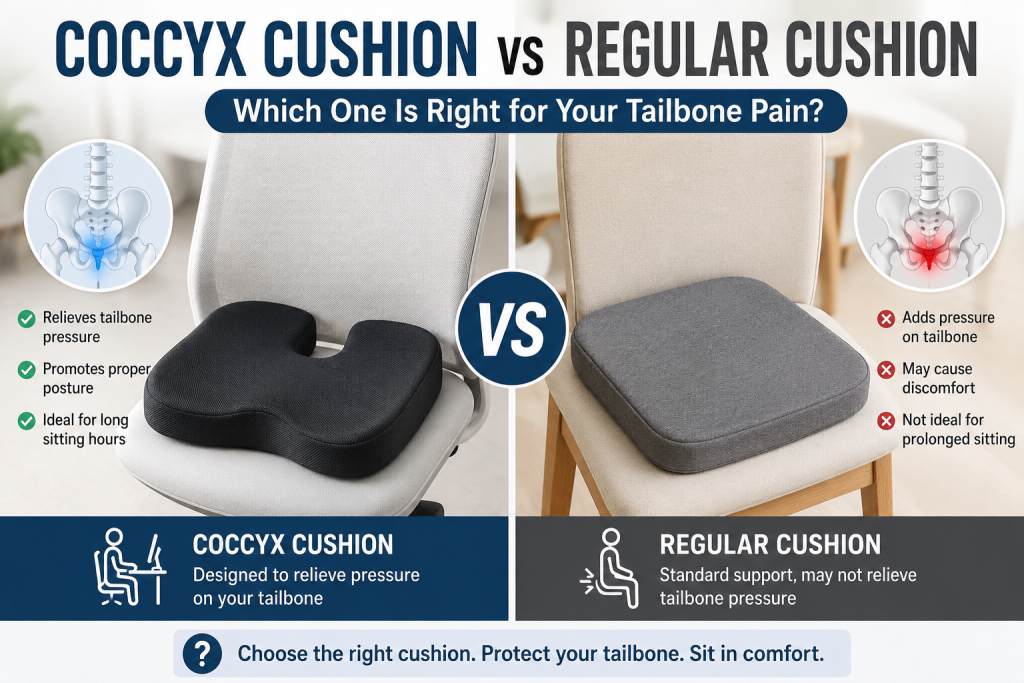
You sit down at your desk, and within an hour, a dull ache at the base of your spine turns into a sharp, nagging pain. You shift, you squirm, you try a different angle — nothing helps. Your first instinct might be to buy a standard seat cushion, one of those soft foam pads that promises “all‑day comfort.” But if your pain is centered on your tailbone (coccyx), a regular cushion could actually make things worse.
The difference between a coccyx cushion and a regular cushion is not just marketing — it’s geometry and physics. A regular cushion adds padding, but it still allows direct pressure on your tailbone. A coccyx cushion is designed with a U‑shaped or V‑shaped cutout that physically removes pressure from your tailbone, letting it “float” while your weight is distributed to your sitting bones and thighs. This single design difference can be the line between chronic pain and comfortable sitting.
In this guide, I will explain how each type works, when you need a coccyx cushion, when a regular cushion is fine, and how to choose the right one for your body and your pain. All recommendations are available on Amazon US with genuine customer reviews.
Quick Answer: Coccyx Cushion vs Regular Cushion — What’s the Difference?
A coccyx cushion (also called a tailbone cushion or orthopedic seat cushion) has a U‑shaped or V‑shaped cutout at the back. This cutout eliminates pressure on your tailbone, making it essential for people with coccydynia (tailbone pain), post‑childbirth recovery, or after a fall. A regular cushion (memory foam, gel, or basic foam pad) has no cutout — it adds softness but does not offload pressure from the tailbone area.
If you have tailbone pain, a regular cushion will not help and may even worsen your symptoms by allowing your tailbone to press into the foam. If you simply want more comfort for your buttocks or help with sitting on a hard surface, a regular cushion may be sufficient.
The bottom line: Coccyx cushions are medical‑grade tools for pressure relief; regular cushions are general comfort accessories. Choose based on your primary symptom.
Quick Comparison: Coccyx Cushion vs Regular Cushion
| Feature | Coccyx Cushion (Tailbone Cushion) | Regular Cushion (Memory Foam / Gel Pad) |
|---|---|---|
| Cutout | Yes — U‑shape or V‑shape at the back | No — solid surface |
| Tailbone Pressure | Eliminated (floats in the cutout) | Still present; may be worsened by sinking into foam |
| Primary Use | Tailbone pain, coccydynia, post‑surgery, sciatica | General comfort, hard chairs, minor sitting discomfort |
| Material | High‑density memory foam or gel‑infused foam | Memory foam, gel, polyurethane foam |
| Best For | 8+ hour sitting, recovery, chronic tailbone pain | 2–6 hour sitting, general office use, travel |
| Price Range | $25–55 (medical grade) | $15–40 |
How a Coccyx Cushion Works (The Science Behind the Cutout)
Your tailbone (coccyx) is a small triangular bone at the very bottom of your spine. When you sit on a flat surface, your body weight is concentrated on your two sitting bones (ischial tuberosities) and your tailbone. For people with normal anatomy, the sitting bones take most of the load. But if you have a bruised, fractured, or hypersensitive tailbone, even light contact can cause significant pain.
A coccyx cushion removes that contact entirely. The U‑shape or V‑shape cutout creates a void where your tailbone sits. Your weight is transferred to your thighs and the outer edges of your sitting bones, away from the coccyx. This mechanism is called “off‑loading” and is the same principle used in wheelchair cushions for people with pressure sores.
The cutout also helps maintain a neutral pelvic tilt. When a regular cushion compresses unevenly, your pelvis can roll backward, flattening your lower back and increasing disc pressure. A well‑designed coccyx cushion, with its contoured shape and firmer perimeter, encourages your pelvis to stay in a neutral, spine‑friendly position.
When a Regular Cushion Might Be Enough
A regular cushion — whether made of memory foam, gel, or polyurethane foam — adds a layer of softness between you and a hard chair. It can relieve general soreness in your buttocks, reduce pressure on your thighs, and make sitting on a wooden or plastic seat more tolerable. You might be fine with a regular cushion if:
- You have no tailbone pain or history of coccyx injury
- You sit for shorter periods (2–4 hours at a time)
- You simply want to soften a hard chair
- You need a lightweight, portable cushion for travel
However, if you already have tailbone pain, a regular cushion can actually make it worse. Softer foam allows your hips to sink, which can press your tailbone deeper into the seat. And because there is no cutout, the tailbone remains in contact with the surface.
When You Absolutely Need a Coccyx Cushion
You should switch to a coccyx cushion if any of these apply:
- You have been diagnosed with coccydynia (tailbone pain)
- You recently fell onto your tailbone or had a childbirth injury
- You experience sharp, localized pain at the very bottom of your spine when sitting
- You have pain that intensifies the longer you sit, especially on hard surfaces
- You have sciatica that seems to originate from the pelvic area (the cutout can help reduce nerve compression)
- You are recovering from a coccyx fracture or surgery
For these conditions, a regular cushion will not fix the problem. You need pressure off‑loading, not just padding.
What to Look for in a Coccyx Cushion (Buyer’s Guide)
Not all coccyx cushions are created equal. Here are the features that matter most for tailbone pain relief.
1. Cutout Shape — U‑shape vs V‑shape
U‑shape cutouts are standard and work for most people. V‑shape cutouts provide deeper tailbone clearance and are better for severe pain, fractures, or post‑surgery recovery. If you have a very sensitive tailbone, choose a V‑shape cutout like the Aylio cushion offers.
2. Foam Density — High‑density Memory Foam (≥4 PCF)
Low‑density foam (<3 PCF) flattens quickly and stops providing relief. High‑density foam (4–5 PCF) maintains its shape for 2–4 years of daily use. Look for cushions that specify “high‑density memory foam” or “orthopedic grade.”
3. Thickness — 2.5 to 3 inches is ideal
Thicker cushions provide more pressure relief but may raise your sitting height too much for some desks. If you have a low desk, choose 2–2.5 inches. For severe pain, 3 inches is better. The HighBeds W1755 has an extra‑thick 5.12″ design for maximum relief, but measure your desk clearance first.
4. Non‑Slip Bottom
A cushion that slides around is useless. Look for rubberized dots, silicone grips, velcro straps, or carpet‑grip mesh on the bottom. The Everlasting Comfort cushion uses velcro straps to secure to your chair.
5. Removable, Washable Cover
You will sweat, spill coffee, or simply want to keep the cushion clean. A machine‑washable cover is a must. Mesh covers are most breathable; velour is softer but less breathable.
6. Breathability (Gel layer or open‑cell foam)
Memory foam traps heat. If you run hot, choose a cushion with a gel top layer or open‑cell foam like the Purple Simply cushion. Gel‑infused memory foam cushions (ComfiLife, Everlasting Comfort) stay cooler than pure foam.
Best Coccyx Cushions for Tailbone Pain (2026 Picks)
If you have decided that a coccyx cushion is right for you, here are the top options available on Amazon US.
1. ComfiLife Gel Enhanced Coccyx Cushion – Best Overall
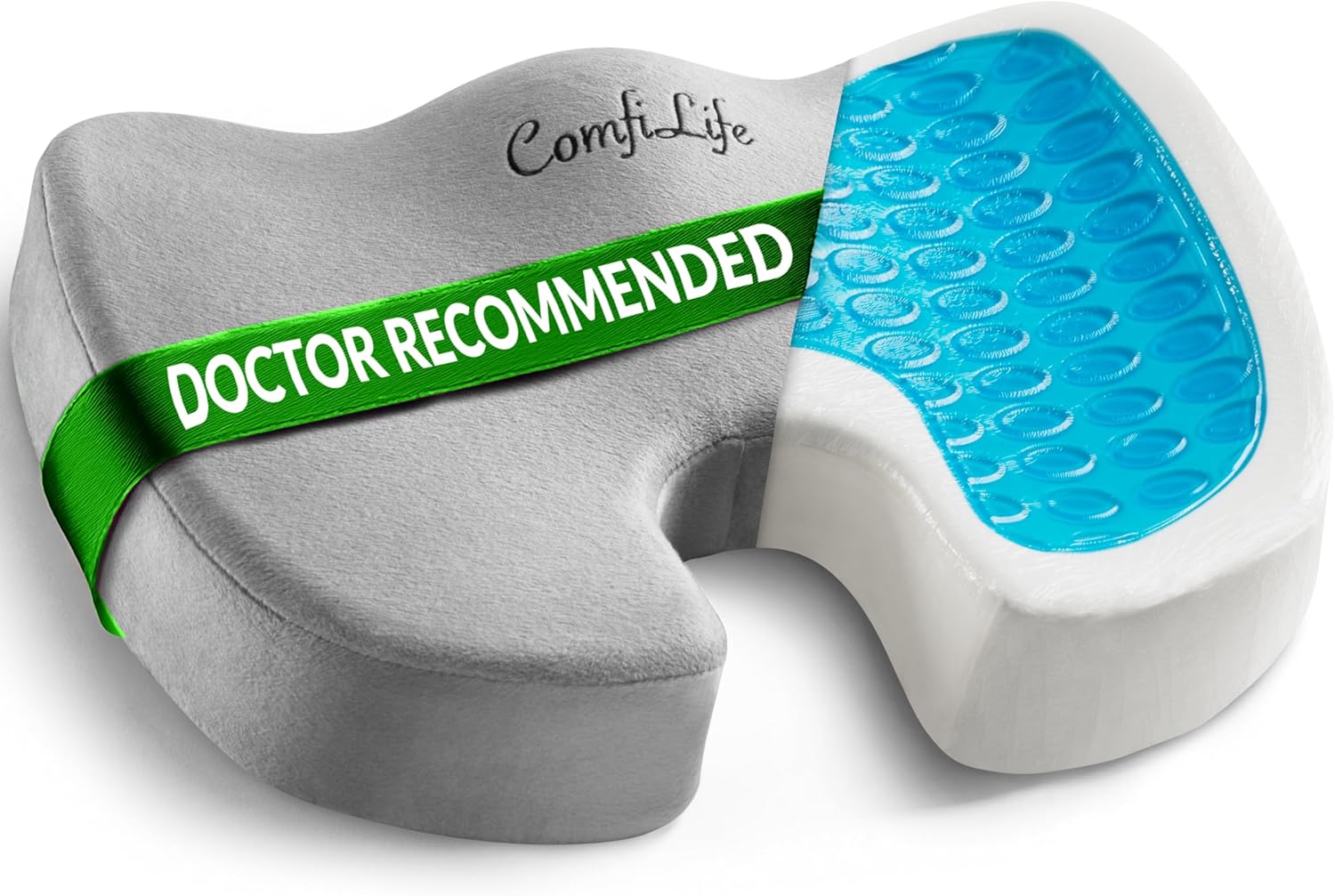

Price: ~$30–40 | Cutout: U‑shape | Material: Gel + memory foam | Thickness: 2.75″
The ComfiLife Gel Enhanced cushion is the most popular coccyx cushion on Amazon, with over 20,000 reviews. It combines a cooling gel layer with high‑density memory foam for pressure relief. The U‑shape cutout relieves tailbone pressure, and the non‑slip rubberized bottom keeps it in place. It is specifically recommended for sciatica and tailbone pain.
✅ Pros:
- Gel + memory foam stays cooler than pure foam
- U‑shape cutout offloads tailbone pressure
- Non‑slip bottom; removable washable cover
- Over 20,000 positive reviews
- Travel‑friendly handle
❌ Cons:
- 2.75″ thickness may raise you too high
- Some users find it too firm initially
🎯 Best for: Most users with tailbone pain or sciatica who want a reliable, well‑tested cushion.
👉 Check price for ComfiLife on Amazon →
2. Everlasting Comfort Memory Foam Coccyx Cushion – Best for Secure Attachment
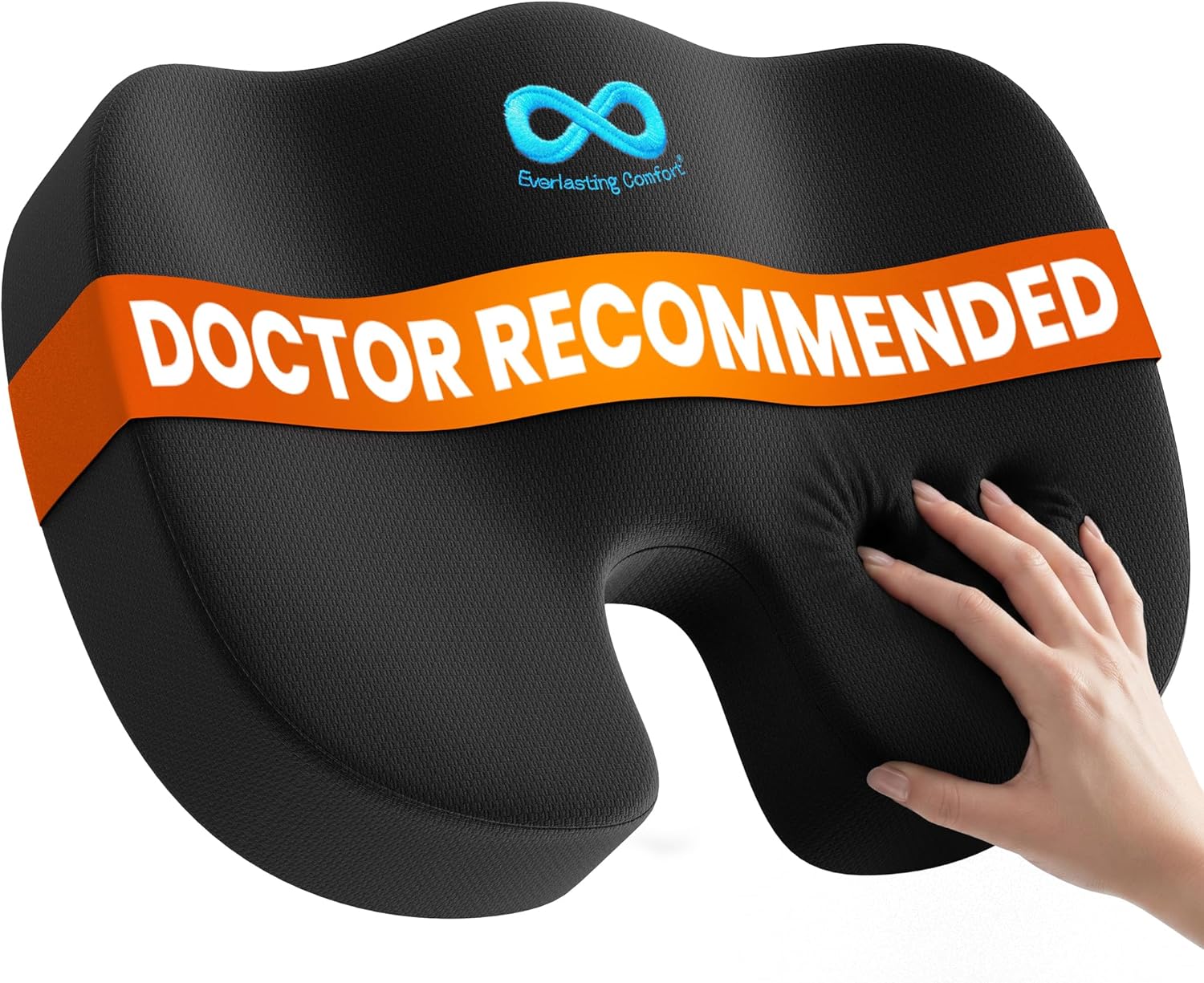

Price: ~$35–45 | Cutout: U‑shape | Material: Memory foam + cooling gel | Thickness: 2.5″
The Everlasting Comfort cushion features gel‑infused memory foam with heat‑responsive technology that conforms to your body. The U‑shape cutout relieves tailbone pressure, and the unique velcro straps keep the cushion firmly attached to your chair — a feature missing on many competitors. The breathable mesh cover is removable and washable.
✅ Pros:
- Velcro straps — cushion won’t slide
- Cooling gel layer reduces heat buildup
- High‑density memory foam, will not bottom out
- Doctor recommended
- Removable, washable mesh cover
❌ Cons:
- 2.5″ thickness may be too high for low chairs
- Some users find it too firm initially
🎯 Best for: Users who need a cushion that stays attached to their office chair, especially if they move around frequently.
👉 Check price for Everlasting Comfort on Amazon →
3. Aylio Coccyx Orthopedic Comfort Foam – Best Deep V‑shape Cutout
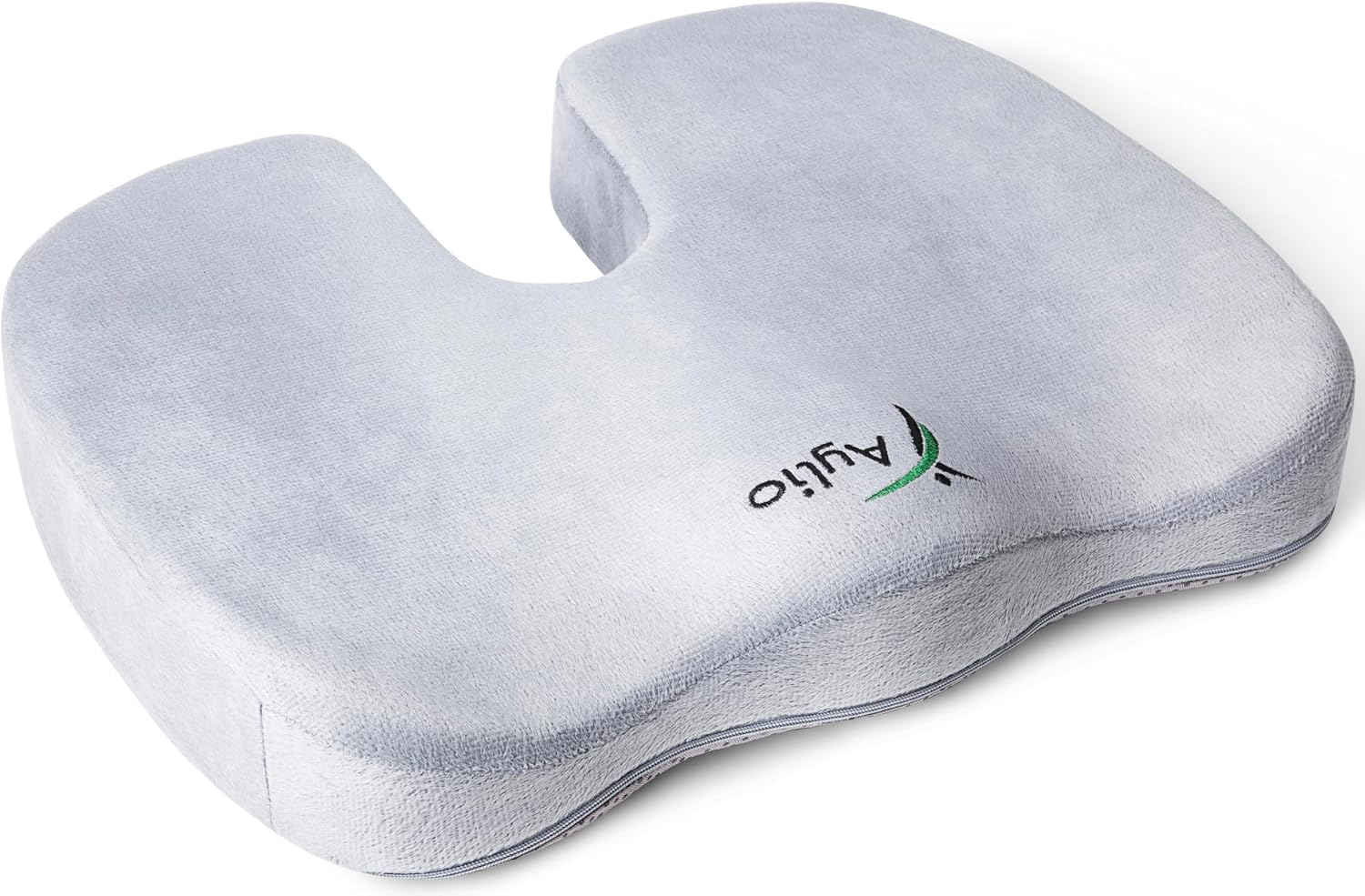

Price: ~$25–35 | Cutout: Deep V‑shape | Material: High‑density foam | Thickness: 2.5″
The Aylio cushion features a deep V‑shape cutout that provides more tailbone clearance than standard U‑shape cushions. This makes it ideal for people recovering from coccyx injuries, childbirth, or surgery where any pressure is intolerable. The high‑density foam is firmer than standard memory foam, providing stable support that will not bottom out.
✅ Pros:
- Deep V‑shape cutout — true tailbone suspension
- High‑density foam — firm, durable, will not flatten
- Great for post‑surgery recovery
- Non‑slip rubber bottom
- Affordable (~$30)
❌ Cons:
- Velour cover is soft but less breathable
- Firm foam may be too hard for some
- No cooling gel layer
🎯 Best for: Recovery from coccyx fracture, childbirth, or surgery; anyone who needs maximum tailbone clearance.
👉 Check price for Aylio on Amazon →
4. Purple Simply Seat Cushion – Best for Breathability (No Tailbone Cutout)
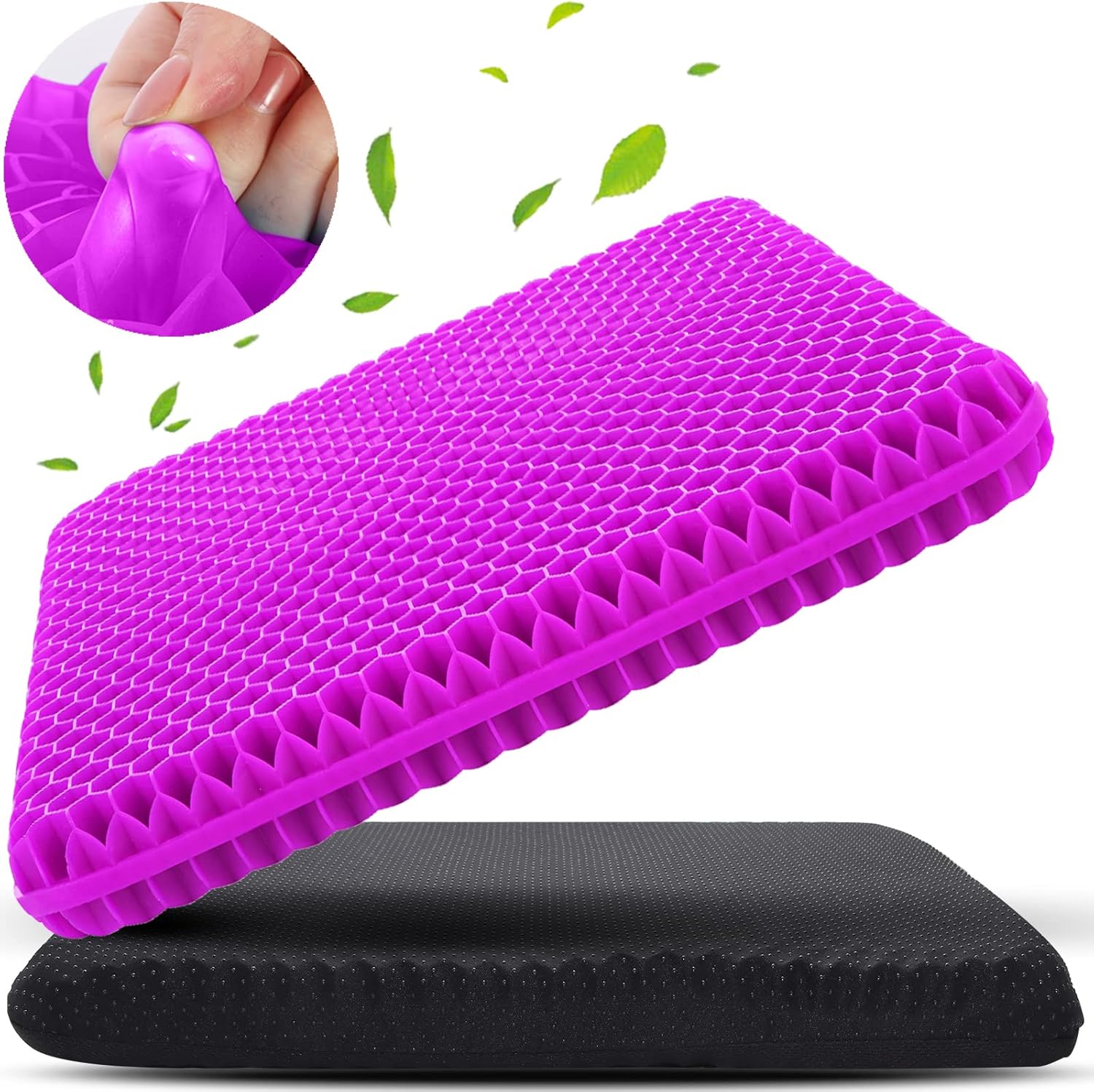

Price: ~$79–99 | Cutout: No (flat grid) | Material: Hyper‑elastic polymer | Thickness: 1.75″
The Purple Simply cushion is technically a regular cushion (no coccyx cutout), but it deserves mention because its open grid design is extremely breathable and provides pressure relief without sinking. If you do not have tailbone pain but want a high‑performance regular cushion, this is a top choice. The hyper‑elastic polymer grid never flattens, and the open channels allow unmatched airflow.
✅ Pros:
- Unmatched breathability — never gets hot
- No foam to flatten — engineered to last
- Thin profile (1.75″) fits under most setups
- Machine‑washable cover
❌ Cons:
- Expensive (~$80–100)
- No coccyx cutout — not for tailbone pain
- The grid texture feels “weird” to some users initially
🎯 Best for: People who run hot, do not have tailbone pain, and want the most breathable regular cushion available.
👉 Check price for Purple Simply on Amazon →
How to Choose: Coccyx Cushion or Regular Cushion?
Use this simple flowchart to decide which type of cushion you need:
- Do you have tailbone pain (coccydynia), a recent fall, or post‑childbirth pain? → Coccyx cushion (U‑shape or V‑shape cutout) — mandatory.
- Do you have sciatica that worsens when sitting? → A coccyx cushion can help reduce pelvic pressure. Try the ComfiLife or Aylio.
- Do you simply feel general soreness in your buttocks after sitting on a hard chair? → A regular cushion (memory foam or gel) may be enough.
- Do you run hot and sweat easily? → Choose a gel‑infused coccyx cushion (ComfiLife, Everlasting Comfort) or the Purple Simply regular cushion.
- Do you sit 8+ hours a day at a desk? → A coccyx cushion is recommended even if your tailbone pain is mild, because it prevents future problems.
Frequently Asked Questions (FAQ)
Will a regular memory foam cushion help my tailbone pain?
No — a regular memory foam cushion has no cutout, so your tailbone will still contact the surface. Softer foam may actually worsen pain by allowing your hips to sink and increasing pressure on the coccyx. You need a coccyx cushion with a cutout.
Can I use a coccyx cushion on any chair?
Yes — most coccyx cushions are designed to work on office chairs, car seats, wheelchairs, dining chairs, and even airplanes. However, check the cushion thickness: a 5″ thick cushion (like the HighBeds) may raise you too high for a desk or car.
What is the difference between a U‑shape and V‑shape cutout?
U‑shape is standard and works for most people. V‑shape provides deeper tailbone clearance and is better for severe pain, fractures, or post‑surgery recovery. Choose V‑shape if you have a very sensitive tailbone.
How long does a coccyx cushion last?
High‑density foam cushions (4–5 PCF) last 2–4 years of daily use. Low‑density foam may flatten within 6–12 months. The HighBeds cushion uses 1.8 PCF foam engineered to last 5–10 years. Replace the cushion when you notice permanent flattening or loss of support.
Can a coccyx cushion help with sciatica?
Yes — the cutout reduces pressure not only on the tailbone but also on the surrounding soft tissues, which can help relieve sciatic nerve compression in some cases. Many users with sciatica report improvement using a coccyx cushion, especially the ComfiLife model designed for sciatica.
Is a gel or memory foam coccyx cushion better?
Hybrid gel‑memory foam cushions (ComfiLife, Everlasting Comfort) offer the best of both worlds: cooling from the gel and contouring from the foam. Pure memory foam can trap heat, and pure gel pads may be too firm. For most users, a hybrid is the best choice.
Can I use a coccyx cushion if I’m pregnant?
Yes — many pregnant women use coccyx cushions to relieve tailbone pressure caused by the extra weight and shifting pelvis. Choose a cushion with a deep cutout and medium firmness. Always consult your doctor for specific medical advice.
Final Verdict: Which Cushion Should You Buy?
After comparing coccyx cushions and regular cushions, here is my simple recommendation:
👉 If you have tailbone pain, a recent tailbone injury, or post‑childbirth soreness: ComfiLife Gel Enhanced Coccyx Cushion (best overall) or Aylio Deep V‑shape Cushion (for maximum clearance).
👉 If you need a cushion that stays attached to your office chair: Everlasting Comfort (velcro straps).
👉 If you do NOT have tailbone pain and just want general comfort / breathability: Purple Simply Seat Cushion (no cutout, but unmatched cooling).
Most important advice: If you have persistent tailbone pain that does not improve with a cushion, see a doctor. Coccydynia can sometimes be caused by infection, fracture malunion, or other conditions that require medical treatment. A cushion is a tool, not a cure.
👉 See today’s price for ComfiLife Coccyx Cushion on Amazon →