
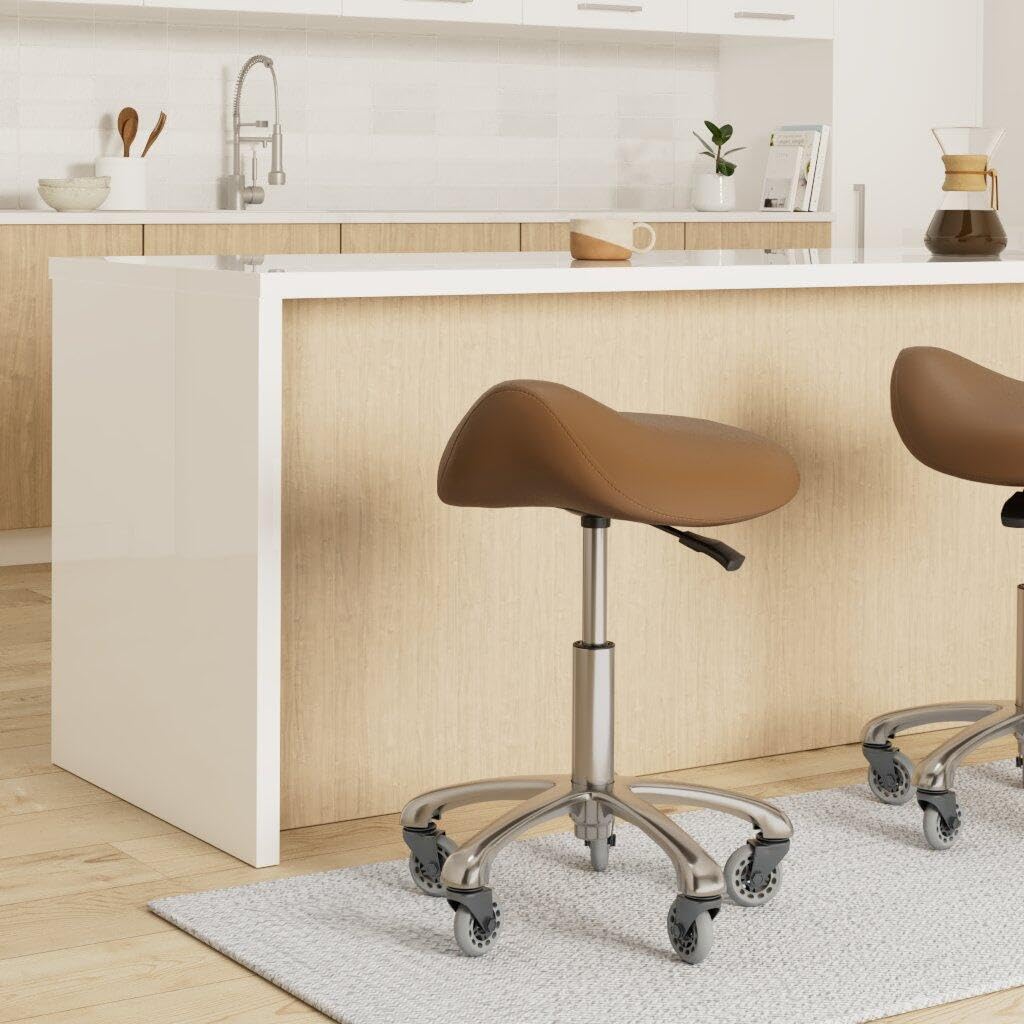
Choosing a saddle stool for all-day sitting is about more than finding a curved seat. The right model should fit your desk height, support your working posture, allow comfortable leg positioning, and provide enough cushioning for your typical work session.
In this guide, we compare six saddle stool options for desk work, beauty services, clinical environments, and other tasks that involve frequent sitting. We focus on seat design, height adjustment, back support, mobility, and practical buying considerations so you can decide whether a saddle stool suits your workspace.
Quick Take
A saddle stool may suit people who need an upright, mobile seating option for hands-on work or a height-adjustable workstation. However, seat shape, desk height, individual fit, and the ability to change positions matter more than any single ergonomic claim.
For long computer sessions, consider whether you also need a backrest, arm support, and a conventional ergonomic chair for alternating between seating positions.
In This Guide
Quick Comparison: Best Saddle Stools for Sitting All Day
The options below cover several common preferences, including thick cushioning, a backrest, a heavy-duty design, and a wider adjustment range. Product specifications and availability can change, so confirm the current Amazon listing before purchasing.
| Product | Main Appeal | Backrest | Check Before Buying |
|---|---|---|---|
| ANWBROAD Ergonomic Saddle Stool | Everyday mobile seating | No | Seat width and maximum load |
| Saddle Stool with Backrest and Footrest | Backrest and foot support | Yes | Backrest adjustment and seat height |
| YEEZEE Saddle Stool | Cushioned seat | No | Actual cushion construction and seat dimensions |
| VEVOR Saddle Stool | Heavy-duty option | No, based on the model described here | Model-specific capacity and base construction |
| Professional Saddle Stool with Wheels | Mobile professional use | No, based on the model described here | Base material, dimensions, and load rating |
| Antlu Saddle Stool with Back Support | Adjustable backrest | Yes | Backrest range and fit at your workstation |
Note: The product names above identify the options discussed in this guide. Capacity, height range, certifications, materials, and current pricing should be verified against the exact model and its latest listing. They are not universal specifications for every product sold under a similar name.
Are Saddle Stools Good for Sitting All Day?
A saddle stool has a contoured seat designed to position the legs on either side of the seat rather than on a broad, flat cushion. Depending on the design and how it is adjusted, it may encourage a more upright sitting position and make it easier to move close to a desk or work surface.
That does not mean every saddle stool is comfortable for a full workday. Some people like the open leg position, while others find the seat pressure, leg spacing, or lack of back support uncomfortable. The result depends on your body proportions, work tasks, stool dimensions, and sitting habits.
Potential Advantages
- Compact footprint
- Easy access to a work surface
- Height adjustment on many models
- Mobility for hands-on tasks
Possible Drawbacks
- Limited or no back support
- Pressure around the sitting bones
- Leg position may not suit everyone
- May require a desk-height change
Saddle Stools Versus Traditional Office Chairs
A traditional ergonomic office chair generally offers a backrest and may include adjustable lumbar support, armrests, and a broader seat. A saddle stool usually prioritizes a compact, contoured seat and freedom of movement. Neither design is automatically better for every person or every task.
If you spend most of your day typing, reading, or attending video meetings, a supportive office chair may be more practical as your primary seat. A saddle stool may be a useful alternative for short work blocks, elevated desks, or tasks that involve frequently moving around a workstation.
For more options, visit our Best Chairs guide or browse the Saddle Stools guide.
6 Saddle Stools to Consider for Long Work Sessions
1. ANWBROAD Ergonomic Saddle Stool


This ANWBROAD saddle stool is an option for users who want a height-adjustable seat that can move around a workstation. Its contoured cushion and wheeled base are features worth considering for beauty services, studio work, and other tasks that require frequent repositioning.
The backless design keeps the stool compact, but it also means you cannot lean against a backrest when you want to relax. Check the seat dimensions and adjustment range carefully, especially if you are particularly tall or short.
Best suited to: Users who prefer a backless saddle stool and need to move around their work area.
Before you buy
Confirm that the linked listing matches the ANWBROAD model shown in the image. Verify its rated weight capacity, seat size, height range, and included caster type instead of relying on specifications from similar stools.
2. Saddle Stool with Backrest and Footrest


This style combines a saddle-shaped seat with a backrest and footrest. It may be worth considering if you like the saddle seating position but want some additional support when pausing between tasks.
Pay attention to the backrest’s position and whether it actually contacts your lower back when you sit naturally. A backrest alone does not guarantee lumbar support, and a tall minimum seat height may make this design unsuitable for shorter users or low desks.
Best suited to: Workstations where a saddle seat, backrest, and foot support are all useful.
Before you buy
Check the exact seat-height range, backrest adjustment, footrest dimensions, caster brakes, and maximum load. Do not assume all models sold under a generic product name share the same specifications.
3. YEEZEE Saddle Stool

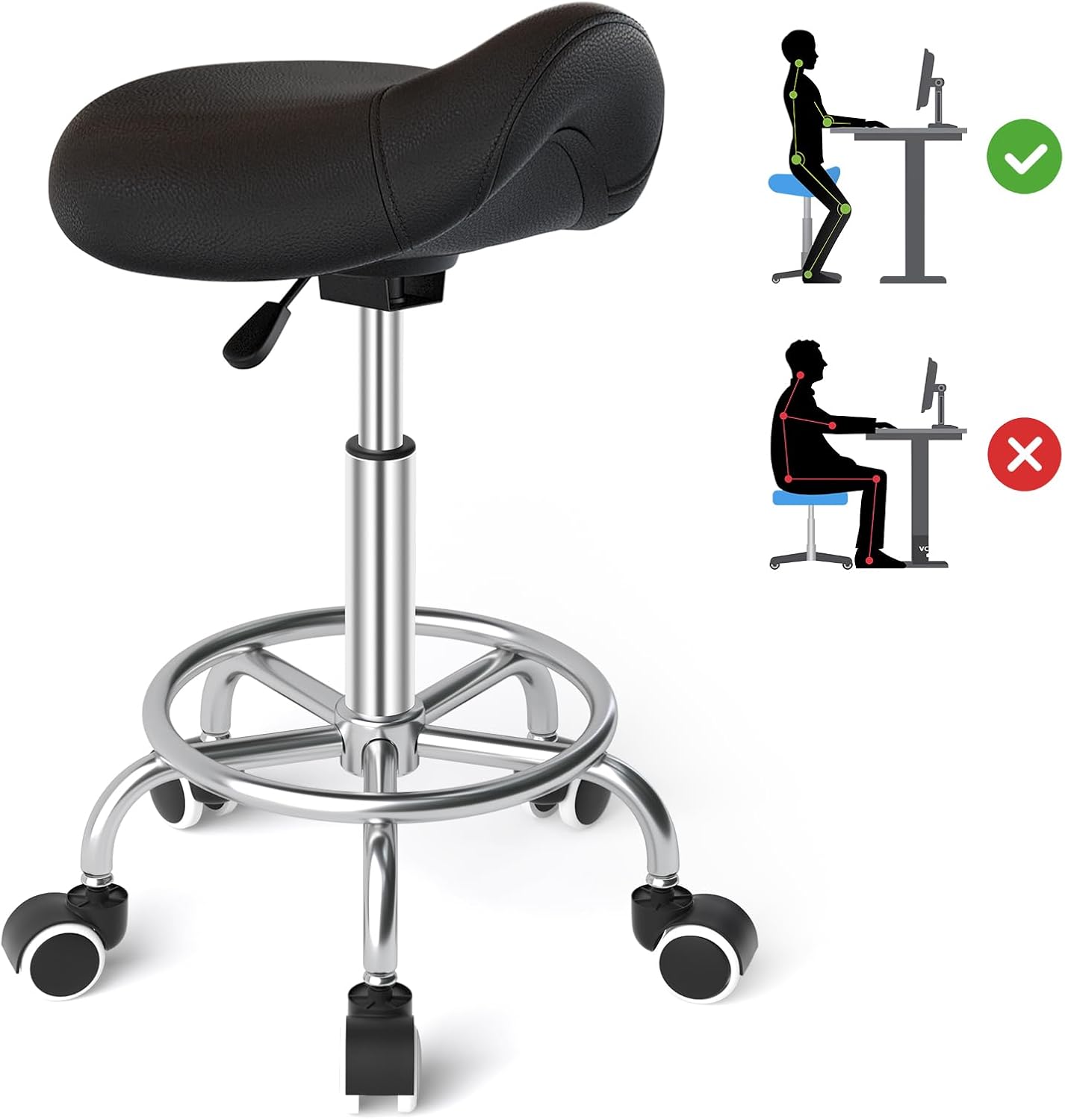
The YEEZEE saddle stool is worth comparing if a padded seat is a priority. Cushion thickness and seat width can influence how the stool feels, but thicker foam is not automatically more comfortable for every user.
For extended use, check the seat’s actual dimensions, upholstery, and height range. A seat that feels soft initially may still be a poor fit if its shape places pressure in the wrong areas or forces your legs into an uncomfortable position.
Best suited to: Buyers who prioritize cushioning and prefer a backless stool.
Before you buy
Verify the seat dimensions, foam description, height adjustment, and weight rating on the current listing. Treat claims about foam thickness or certifications as unconfirmed until they appear in the manufacturer’s documentation or exact product listing.
4. VEVOR Saddle Stool

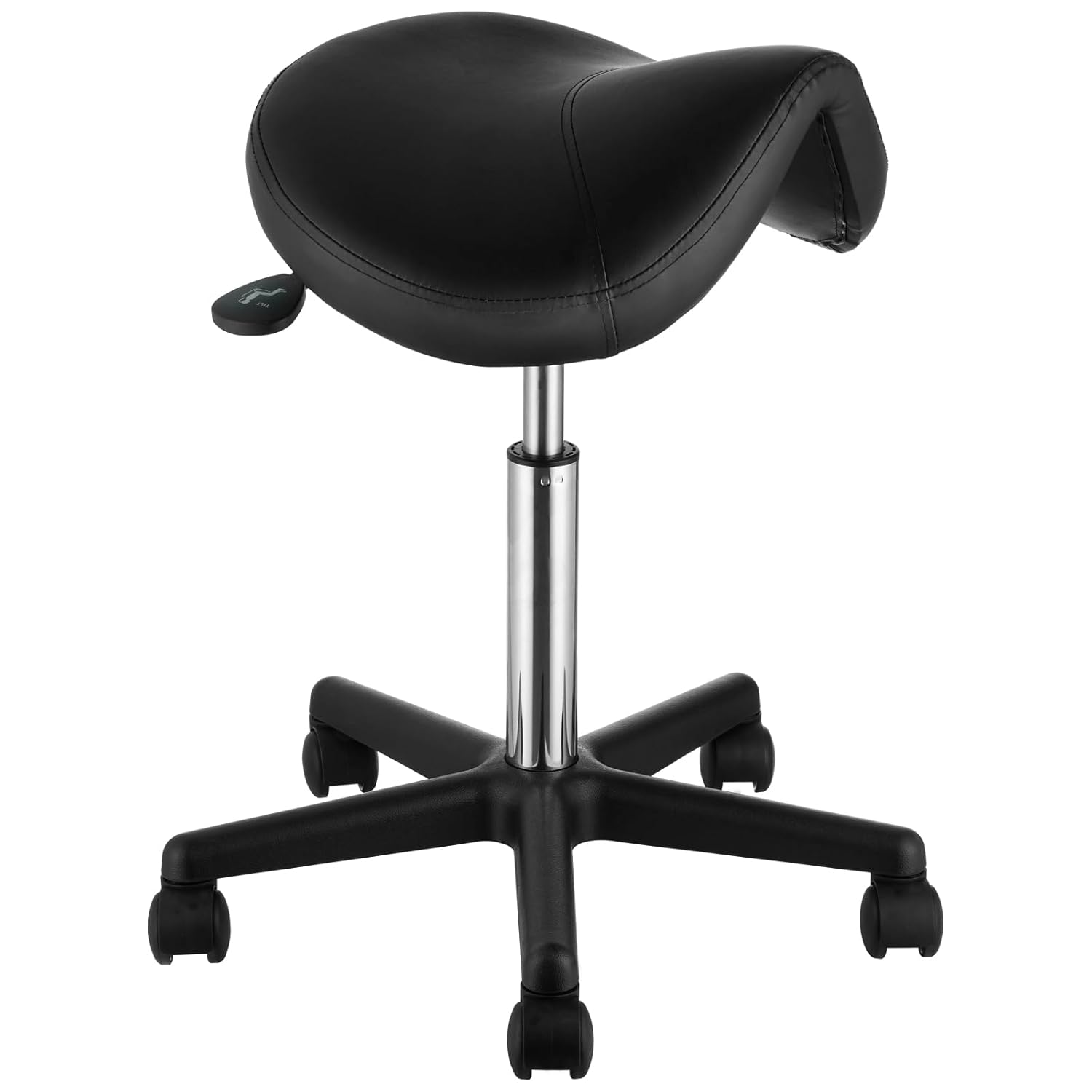
For a stool used frequently throughout the day, the base, gas lift, casters, and rated load deserve as much attention as the cushion. VEVOR sells different types of stools, so make sure the selected model is actually a saddle stool and matches the image and intended use.
A backless design may work for mobile tasks, but it provides no surface to lean against. If you need support during longer seated periods, compare a version with a suitable backrest or consider alternating with an office chair.
Best suited to: Buyers who need a mobile stool and want to compare load ratings and base construction.
Before you buy
Confirm the exact model’s maximum load, base material, seat height, and caster compatibility with your floor. A product’s weight capacity should come from the manufacturer or the listing for that specific model.
5. Professional Saddle Stool with Wheels


A rolling saddle stool can be convenient in a clinic, studio, salon, or workshop where you move between nearby work areas. For frequent daily use, pay attention to the stability of the base, the feel of the casters, the upholstery, and how easily the seat height changes.
Seat width is especially important. A compact seat can make it easier to move close to a work surface, but it may feel restrictive for some users. Check the product measurements rather than judging fit from the product photo alone.
Best suited to: Users who need a mobile seat for professional or task-based work.
Before you buy
The product name is generic, so confirm that the Amazon page matches the intended stool. Check the base material, actual seat diameter, height range, caster type, and published weight capacity.
6. Antlu Saddle Stool with Back Support

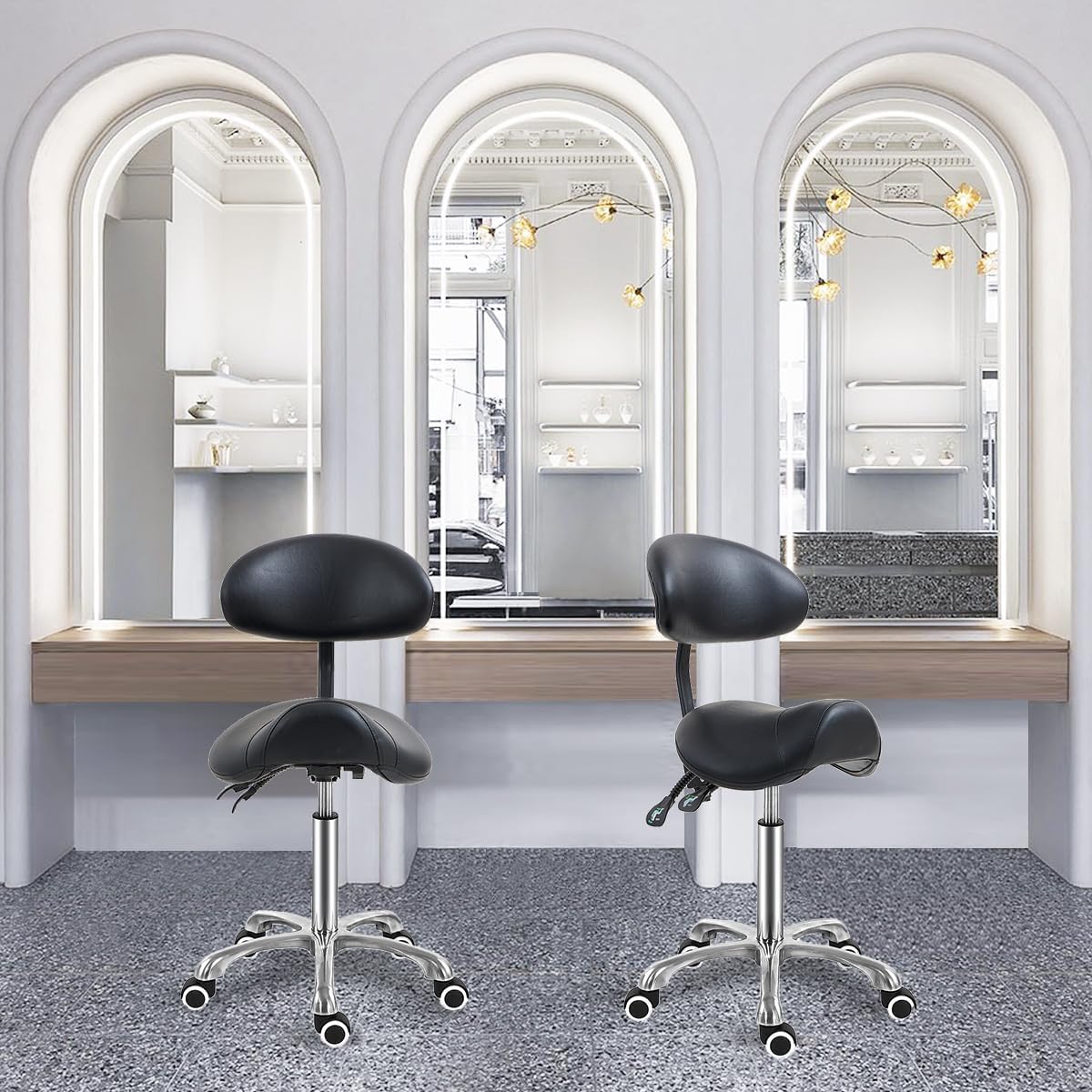
The Antlu saddle stool with back support is worth considering if you prefer a contoured seat but do not want to give up a backrest entirely. This style can be useful for tasks that alternate between leaning toward a work surface and sitting more upright.
The main question is whether the backrest fits your body and allows a comfortable working position. A backrest that is too high, too low, or too far away may not provide the support you expect. Seat height should also match the desk or work surface.
Best suited to: Buyers who prefer a saddle-style seat with a backrest rather than a completely backless stool.
Before you buy
Confirm the exact model, maximum load, seat-height range, backrest adjustment, and assembly requirements. Avoid relying on a quoted recline angle unless the current product documentation confirms it.
How to Adjust a Saddle Stool for Comfortable Sitting
Even a well-made stool can feel uncomfortable if the height or position does not fit your workstation. Use the following steps as a starting point, then make small adjustments based on comfort and the task you perform.
1. Match the seat height to the work surface
Set the height so you can reach the desk or work surface without raising your shoulders or leaning forward excessively. If your feet cannot rest securely, consider an appropriate footrest or a different stool height range.
2. Find a comfortable leg position
Sit with your legs positioned naturally on either side of the saddle. Do not force your legs farther apart than feels comfortable. The seat should not create persistent pressure or numbness.
3. Keep your work within easy reach
Position your keyboard, tools, and frequently used items close enough to avoid repeated reaching or twisting. Adjust your monitor and work surface to suit your seated height.
4. Evaluate any backrest
If your stool includes a backrest, adjust it so you can make contact without having to arch your back or slide forward on the seat. A backrest should not prevent you from reaching your work naturally.
5. Change positions regularly
Alternate between sitting, standing, and moving when possible. There is no single sitting posture that is ideal for everyone or suitable to maintain indefinitely.
Comfort and safety note
Stop using or readjust the stool if it causes persistent discomfort, numbness, or pain. A saddle stool is not a treatment for a back condition. If symptoms continue or worsen, seek appropriate medical advice.
What to Look for in a Saddle Stool for Sitting All Day
1. Seat Shape and Width
Saddle seats differ in curvature, width, depth, and the amount of separation between the legs. A seat that is too narrow may feel restrictive, while one that is too wide can interfere with natural leg movement. Compare the published measurements with your body proportions and preferred sitting position.
2. Height Adjustment
Check both the minimum and maximum seat heights. A stool that rises high enough for a standing desk may be too tall for a conventional desk, while a model intended for a low work surface may not reach a drafting-height table. Measure the height you need before buying.
3. Backrest or Backless Design
A backless saddle stool provides freedom of movement and a compact profile. A model with a backrest gives you another place to rest when the task allows it. Neither is automatically superior: choose based on how you work and whether the support is positioned correctly for you.
4. Cushioning and Upholstery
Seat comfort depends on more than foam thickness. Density, shape, firmness, seat width, and how the material performs over time all matter. PU leather is generally easy to wipe clean, while fabric may feel different against the skin. Check cleaning instructions if the stool will be used in a salon, clinic, or other work environment.
5. Base, Casters, and Weight Capacity
Choose a stable base and a published weight capacity that meets your needs. Casters should suit your flooring and intended use; some users may prefer locking casters or a stationary base for precision tasks. Do not assume that similar-looking stools have the same load rating or durability.
6. Fit for Long Work Sessions
If you regularly work for several hours, consider the full setup rather than the stool alone. Desk height, monitor position, foot support, back support, and opportunities to move can all influence comfort. If possible, test the seating style or buy from a seller with a clear return policy.
Saddle Stool or Ergonomic Office Chair: Which Is Better?
| Consideration | Saddle Stool | Ergonomic Office Chair |
|---|---|---|
| Back support | Often absent; some models include a backrest | Usually includes a backrest |
| Movement around a workstation | Often convenient for close, mobile tasks | Depends on chair size and design |
| Arm support | Usually limited or absent | Often available through adjustable armrests |
| Typical use | Task-based work, studios, clinics, elevated desks | Computer work and longer seated tasks |
| Key buying factor | Seat shape and correct height | Seat fit and adjustable support |
If your main goal is a comfortable computer workstation, compare saddle stools with supportive office chairs rather than assuming one seating style is best for everyone. You can also read our guide to saddle stools and back discomfort for a more focused discussion.
Frequently Asked Questions
Can you sit on a saddle stool all day?
Some people use saddle stools for much of their working day, but comfort varies by person and task. A saddle stool should not be treated as a reason to remain in one position for hours without moving. Consider alternating between sitting, standing, walking, and other suitable seating options.
Which saddle stool is most comfortable for long sessions?
There is no universally most comfortable model. Compare seat width, curvature, firmness, height range, and whether you need a backrest. If possible, test the stool or choose a seller with a reasonable return policy.
Are saddle stools good for lower back pain?
A saddle stool changes how you sit, and some people find that position comfortable. However, it does not reliably prevent or treat lower back pain. Fit, task setup, movement, and individual needs all matter. If sitting causes persistent pain, consider professional advice rather than relying on a particular stool design.
Should I choose a saddle stool with a backrest?
Consider a backrest if you want somewhere to lean during tasks that allow a more relaxed position. Check that it fits your body and does not push you away from your desk. A backrest is not a substitute for correct seat height and a suitable workstation layout.
Can a saddle stool work with a standing desk?
Yes, if the stool reaches a suitable height for your desk and allows you to work without raising your shoulders or leaning awkwardly. Measure your required seat height before buying, and check whether the stool remains stable at its highest setting.
How long does it take to get used to a saddle stool?
Adjustment time varies. Start with shorter sessions and increase use only if the seat feels comfortable. Do not assume persistent soreness or numbness is a normal adaptation process; readjust the stool or stop using it if symptoms continue.
What weight capacity should I look for?
Choose a stool whose published maximum load meets your needs, with attention to the exact model rather than the brand name alone. Also consider seat width, base stability, and the manufacturer’s instructions. Do not assume a stool with a similar appearance has the same capacity.
Is a split-seat saddle stool better for long hours?
Split-seat designs may suit some users, but they are not automatically better for everyone. The gap, seat shape, adjustability, and individual fit all affect comfort. Compare the design with a conventional saddle seat and prioritize a fit that does not cause unwanted pressure.
How long should a saddle stool last?
Lifespan depends on construction, frequency of use, user load, cleaning, and maintenance. Check the warranty, replacement parts, gas-lift information, caster quality, and customer feedback about long-term durability. A precise lifespan cannot be guaranteed from product materials alone.
Final Verdict: Choosing a Saddle Stool for Long Work Sessions
The best saddle stool for sitting all day is the one that fits your body, workstation, and work habits—not necessarily the one with the thickest cushion or the highest advertised weight capacity.
For Mobile Task Work
Consider a backless, height-adjustable model such as the ANWBROAD option, after verifying its exact specifications.
For Backrest Preference
Compare the saddle stool with backrest and footrest or the Antlu model, focusing on actual fit and adjustment.
For Cushioning
Consider the YEEZEE option, but compare seat width, firmness, and the complete seat shape—not thickness alone.
For Frequent Professional Use
Compare the VEVOR and professional-style options by verified capacity, base stability, caster quality, and warranty.
Before purchasing, confirm the exact model, seat dimensions, height range, maximum load, return policy, and current price. If you work at a computer for most of the day, also consider whether an adjustable ergonomic office chair would better meet your need for back and arm support.
Explore More Saddle Stool Guides
Disclosure: SitBetterLab may earn a commission from qualifying purchases made through affiliate links, at no additional cost to you. Product specifications, availability, and prices may change. Always confirm details on the seller’s current product page.