
If your feet cannot rest comfortably on the floor when you sit at your desk, the best office chair footrest for short people can help you create a better-fitting workstation. A chair that is too high for your legs may leave your feet unsupported and make it harder to maintain a comfortable sitting position.
The right footrest provides a stable surface for your feet while allowing your chair to remain at a practical height for your desk. Important factors include the actual platform height, adjustment range, surface size, stability, and available space underneath the desk.
This guide compares adjustable, rocking, and memory foam footrests, explains how to measure the height you need, and covers the setup details that matter most to shorter users.
Quick Answer: Which Footrest Is Best for Short People?
For most shorter users, an adjustable footrest is a sensible starting point when a desk requires the chair to sit higher than the user’s legs comfortably allow. It offers more flexibility than a fixed-height cushion. A memory foam footrest may suit someone who needs a simple, cushioned lift, while a rocking model may appeal to users who prefer gentle ankle movement.
Most Adjustable
HUANUO Footrest
Consider an adjustable version if you need to fine-tune your foot support.
Soft Support
Everlasting Comfort
Consider a foam wedge if you prefer cushioning over mechanical adjustment.
Active Movement
Gaiam Balance Footrest
Explore a rocking-style design if you prefer some movement under your feet.
Before choosing any model, measure the gap between your feet and the floor while seated at your normal working height. Your measurements are more useful than a product label that simply says it is suitable for short people.
Why Shorter Users May Need an Office Chair Footrest
A fixed-height desk can create a mismatch between chair height and leg length. If you raise your chair to position your arms comfortably at the desk, your feet may no longer reach the floor. Lowering the chair can solve that problem, but it may also leave the desk too high relative to your elbows.
A footrest helps bridge this gap by giving your feet another support surface. The goal is not to force every joint into one exact angle. It is to find a comfortable position that lets you sit back in the chair without your feet dangling or the edge of the seat pressing uncomfortably behind your knees.
A well-fitted workstation should allow you to:
- Rest both feet on a stable surface.
- Keep your knees and ankles in a comfortable position without forcing your knees sharply upward.
- Sit back against the chair’s backrest.
- Avoid excessive pressure behind the thighs.
- Move your feet naturally without repeatedly reaching forward.
A footrest is an ergonomic accessory, not a treatment for back or leg pain. If discomfort persists, consider reviewing the entire workstation rather than relying on a footrest alone.
Best Office Chair Footrests for Short People
These five options represent different footrest styles and buying priorities. Product listings can include multiple versions, so verify the exact model, dimensions, height range, materials, and current price before ordering. The recommendations below are based on product type and fit considerations, not a claim that every model has been independently tested.
Option 1
HUANUO Foot Rest
Best for: Users who need adjustable support
An adjustable under-desk footrest may help you fine-tune foot height to suit your chair and desk combination.
- Check the adjustment range.
- Measure under-desk clearance.
- Confirm the exact version.
Option 2
Everlasting Comfort Foot Rest
Best for: Cushioned foot support
A memory foam design is worth considering if you prefer a soft surface and do not need a mechanical height adjustment.
- Check the actual height.
- Consider foam firmness.
- Review cover-cleaning instructions.
Option 3
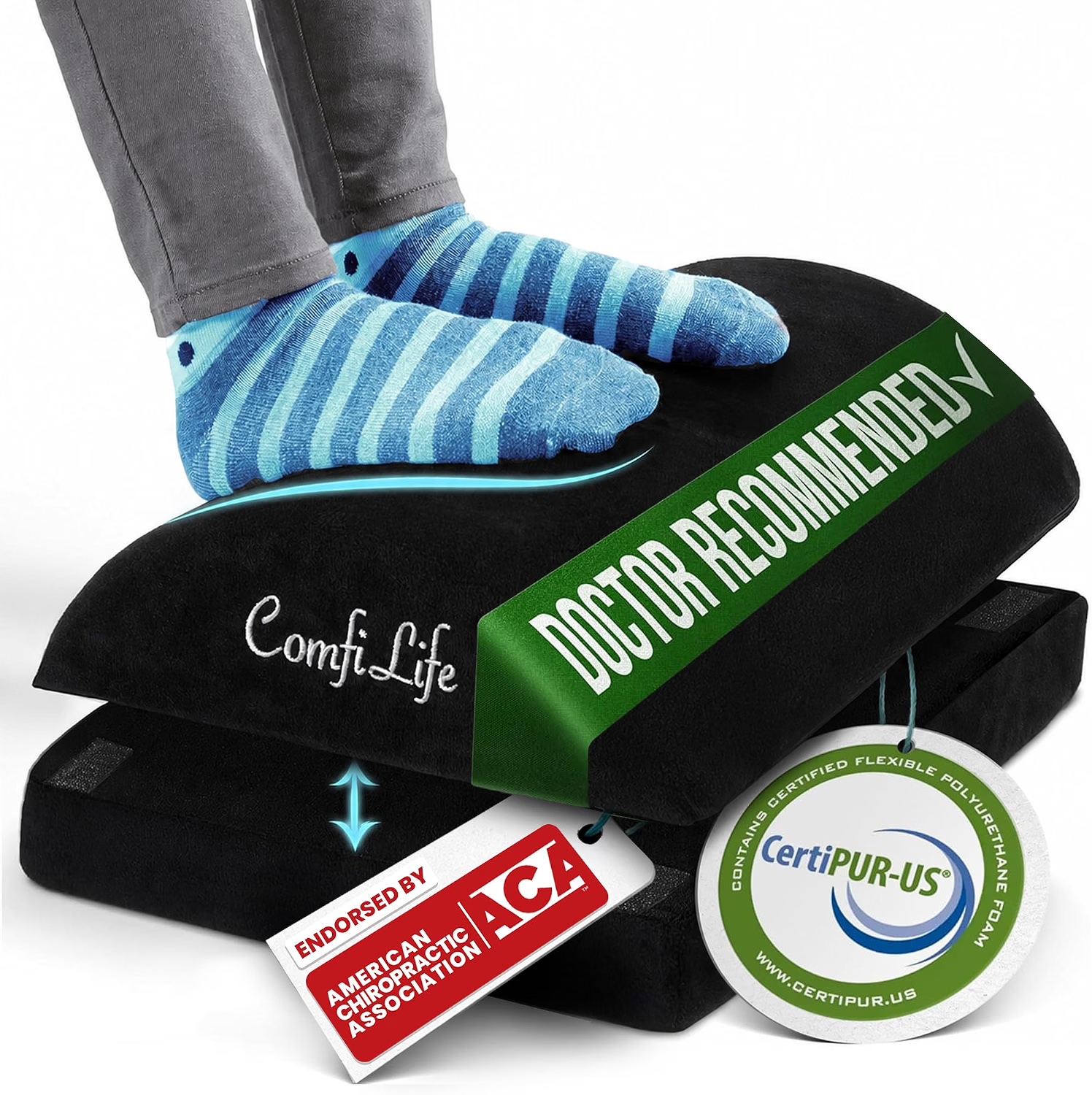
ComfiLife Foot Rest
Best for: Simple foam support
Consider this style if you want a portable cushioned footrest without a complex adjustment mechanism.
- Compare height and depth.
- Check how the cover is cleaned.
- Make sure the foam is not too tall.
Option 4
Gaiam Balance Footrest
Best for: Users who prefer movement
A rocking-style footrest may suit users who like to change ankle position while seated. Confirm the model’s design and dimensions before buying.
- Check the rocking range.
- Look for a stable base.
- Confirm the platform height.
Option 5
Mind Reader Foot Rest
Best for: Compact workspaces
A compact platform may be useful when desk supports, chair legs, or limited floor space restrict your choices.
- Check the platform width.
- Measure usable depth.
- Check stability on your floor.
Adjustable vs. Rocking vs. Memory Foam Footrests
The most useful design depends on the amount of lift you need, your preferred foot position, and the available space under your desk.
| Footrest Type | Main Advantage | What to Check | Best Fit |
|---|---|---|---|
| Adjustable | Allows height fine-tuning | Height range and clearance | Setups with a difficult chair-to-desk fit |
| Rocking | Allows gentle foot movement | Stability and rocking range | Users who prefer movement |
| Memory Foam | Cushioned and simple | Height, firmness, and cleaning | Users who need a modest fixed lift |
| Low-Profile Platform | May fit in tighter spaces | Platform height and usable area | Desks with limited clearance |
Start with height and stability. Extra features matter only after the platform can support your feet at a comfortable level. If your feet need substantial lift, a low-profile or fixed foam design may not provide enough height.
What Height Footrest Should a Short Person Choose?
There is no universal footrest height based on overall body height alone. Two people of the same height may have different inseams, chair settings, desk heights, and sitting preferences.
Measure your setup before choosing a product:
Set your chair for desk use.
Adjust the chair so you can reach the keyboard and mouse without raising your shoulders excessively.
Sit back in the chair.
Keep your back supported and let your legs rest naturally instead of reaching forward to touch the floor.
Measure the vertical gap.
Measure from the floor to the underside of your feet in the position you want to maintain. Use this as an initial guide to the lift required.
Check the product dimensions.
Compare the measured gap with the actual platform height and adjustment range. Allow for any cushion compression.
Test the complete sitting position.
Make sure the footrest does not push your knees too high or force your legs too far forward.
A footrest that is too tall can be just as awkward as one that is too short. Choose a height that supports your feet without creating pressure under your thighs or preventing you from sitting back.
How to Choose a Footrest for a Small Desk
Shorter users often need to consider not just leg length but also the space available around the chair. Desk support bars, chair casters, drawers, and storage units can limit which footrest designs fit comfortably.
Platform Width
Check whether both feet can rest on the platform without feeling crowded.
Platform Depth
Make sure the usable surface supports your feet without requiring you to reach forward.
Desk Clearance
Measure the space beneath the desk, including support bars and drawers.
Floor Stability
Check whether the base grips your floor and stays in place during normal movement.
If your workstation is particularly compact, compare the footrest’s full footprint rather than just its height. A model that fits underneath the desk but interferes with your chair’s movement may not be a good fit.
Pet-Friendly Footrest Materials and Cleaning
If you work from home with a dog or cat, your footrest may collect pet hair and dust. Choose a material that fits your cleaning routine and follow the manufacturer’s care instructions.
- PU leather or vinyl: Smooth surfaces are often easy to wipe clean and remove loose hair from.
- Tightly woven fabric: May be easier to maintain than loose, highly textured upholstery, depending on the material.
- Removable covers: Useful when the manufacturer explicitly permits washing.
- Non-slip base: Can help reduce unwanted movement on suitable floor surfaces.
For everyday maintenance, remove loose hair with a vacuum or lint roller where appropriate. Wipe compatible hard surfaces with a slightly damp microfiber cloth. Avoid soaking memory foam or machine-washing a cover unless the product instructions allow it.
If pets chew or play near desk accessories, keep small detachable components and exposed cables out of reach. Do not rely on chemical deterrent sprays unless they are suitable for the product material and safe for the animals in your home.
How to Set Up Your Footrest Correctly
A footrest is most useful when it works with the rest of your workstation. Set up your chair and desk first, then use the footrest to provide the support your feet need.
- Adjust your chair. Position it so your arms can reach the keyboard and mouse comfortably.
- Position the footrest. Place it close enough that your feet reach it naturally.
- Check your lower body. Both feet should be supported without forcing your knees sharply upward.
- Check the seat edge. Make sure your thighs are supported without excessive pressure behind your knees.
- Review your monitor and input devices. Avoid repeatedly reaching forward or looking down to see the screen.
- Change positions regularly. A comfortable setup should still allow you to move throughout the day.
For more help fitting your workstation, read our guide to desk height for a 5’3″ person. You can also explore our guide to the best footrests for office chairs for more options.
Common Footrest Buying Mistakes
Choosing by body height alone
People of the same height can need different platform heights. Measure your actual chair and desk setup instead.
Buying a platform that is too tall
Excessive lift can push your knees upward and make the seat edge less comfortable against your thighs.
Ignoring the desk layout
Support bars, chair legs, drawers, and casters may limit where you can place the footrest.
Overlooking surface stability
A footrest that slides or rocks more than you want can be distracting. Check the base and floor compatibility.
Expecting a footrest to fix every posture issue
Chair fit, desk height, monitor position, and movement habits still matter.
Frequently Asked Questions
What height footrest is best for a short person?
There is no ideal height based on body height alone. Measure the gap between your feet and the floor after adjusting your chair for comfortable desk use. Compare that measurement with the platform height and adjustment range of the model you are considering.
Can a footrest help if my feet do not reach the floor?
Yes. A suitable footrest can provide a stable surface when your feet cannot comfortably reach the floor. Adjust it so you can sit back in the chair without pushing your knees too high or creating uncomfortable pressure behind your thighs.
Are rocking footrests suitable for short people?
They can be, particularly if you like small amounts of ankle movement while sitting. Check the platform height, base stability, and rocking range. If you prefer a completely stable surface, a fixed or locking design may be a better fit.
Is memory foam or an adjustable footrest better?
An adjustable footrest offers more control over height, while a memory foam wedge provides a simple cushioned surface. If you are unsure how much lift you need, adjustment can be useful. If you have measured your setup and need only a modest fixed lift, foam may be sufficient.
Should I lower my office chair instead of using a footrest?
Lowering the chair may solve the problem if your desk and arm position remain comfortable. If lowering it makes the desk too high relative to your elbows, a footrest may help you keep the chair at a more practical working height while supporting your feet.
How do I clean a footrest that collects pet hair?
Remove loose hair with a vacuum or lint roller where suitable, then clean the surface according to the manufacturer’s instructions. Avoid soaking foam or washing removable covers unless the product care instructions permit it.
Can I use an office footrest with a standing desk?
A conventional under-desk footrest is primarily intended for seated use. If you want a platform for changing foot position while standing, choose a product specifically suitable for that use and make sure it will not create a slipping or tripping hazard.
What is the ideal angle for an office chair footrest?
There is no single angle that suits everyone. Start with a flat or gently angled surface that allows your feet and ankles to rest comfortably. If you choose a tilted or rocking design, make sure the movement feels controlled and does not force your feet into an uncomfortable position.
Final Verdict: Choosing the Right Footrest
The best office chair footrest for short people is the one that fits your actual chair, desk, and leg length. For a difficult chair-to-desk fit, start by comparing adjustable models. If you need a simple cushioned lift, consider a memory foam footrest. If you prefer movement, explore a rocking design with a suitable height and stable base.
Before ordering, measure the gap between your feet and the floor, check the platform dimensions, and confirm that the footrest fits beneath your desk. Do not rely on a generic height recommendation or a product label alone.
A footrest is one part of a comfortable workstation. Chair height, desk position, monitor placement, keyboard reach, and regular movement all contribute to a better overall fit.