
SitBetterLab Buying Guide
Best Foot Rest for Office Chairs: 4 Top Picks for Comfort
Compare memory foam and adjustable footrests, learn how to choose the right height, and find a comfortable option for your office chair and desk setup.
Even a good ergonomic office chair may not fit every user’s leg length and desk height. If your feet dangle when you sit back in your chair, you may find yourself shifting around, crossing your legs, or sitting forward to reach the floor.
The best foot rest for an office chair provides stable support without forcing your knees too high or pushing your chair away from the desk. Your ideal choice depends on your height, chair settings, desk clearance, and whether you prefer a cushioned surface or an adjustable platform.
Our Quick Recommendations
- Memory foam comfort: ComfiLife Memory Foam Foot Rest
- Adjustable support: Kensington SoleMate Plus
- Cushioned alternative: Everlasting Comfort Foot Rest
- Simple rigid platform: Mind Reader Adjustable Foot Rest
Quick Comparison: Best Foot Rests for Office Chairs
| Product | Best For | Type | Main Consideration | Product Link |
|---|---|---|---|---|
| ComfiLife Memory Foam Foot Rest | Everyday comfort | Memory foam | Soft cushioning | Check Price |
| Kensington SoleMate Plus | Adjustable positioning | Rigid platform | Height and tilt adjustment | Check Price |
| Everlasting Comfort Foot Rest | Cushioned support | Memory foam | Compare size and firmness | Check Price |
| Mind Reader Adjustable Foot Rest | Simple desk setups | Rigid platform | Easy-clean surface | Check Price |
Top Foot Rests for Office Chairs


Best for Cushioned Comfort
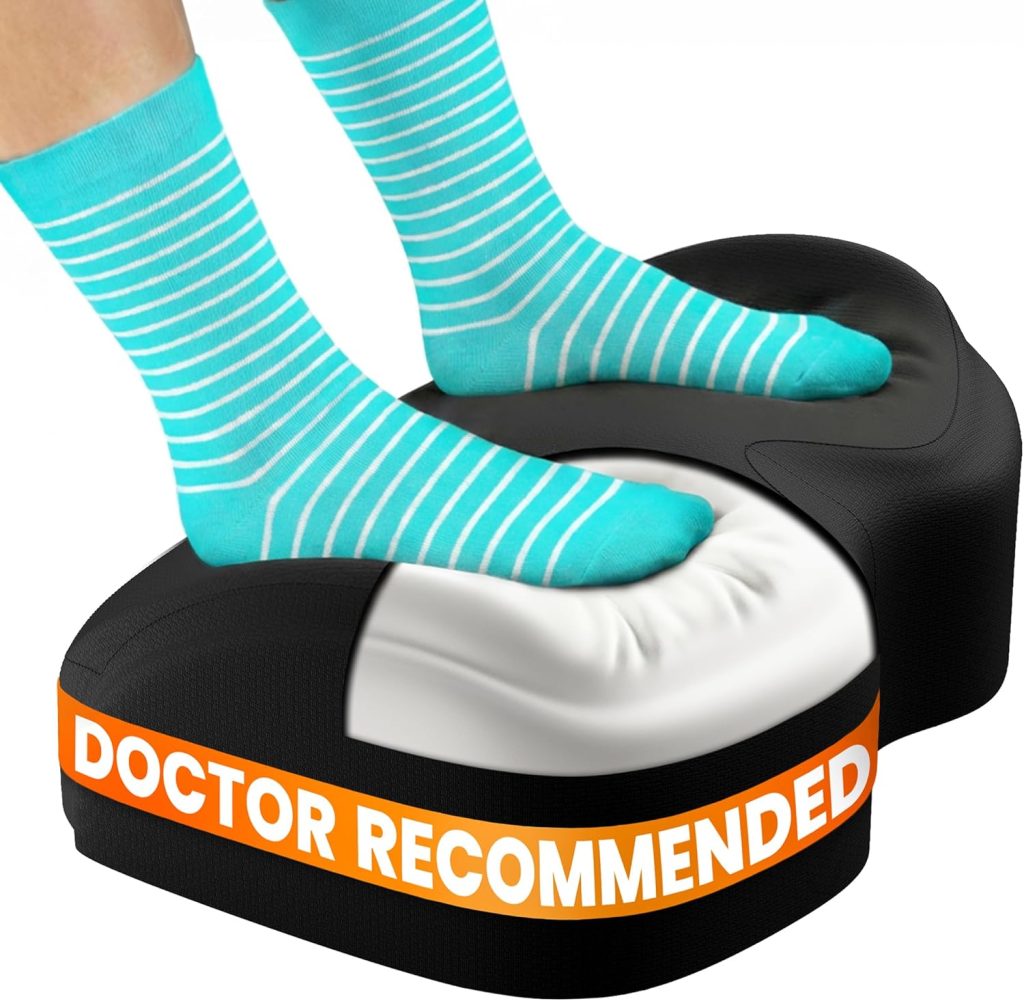
1. ComfiLife Memory Foam Foot Rest
A cushioned footrest is worth considering if you prefer a soft surface under your feet during desk work. This model is an option for home offices where comfort and a simple setup are priorities.
- Type: Memory foam
- Best for: Users who prefer a soft foot support surface
- Check: Product height, dimensions, cover care, and firmness
Potential drawback: A fixed-height cushion may not suit every chair or leg length.


Best for Adjustability
2. Kensington SoleMate Plus
An adjustable platform is useful when you need to fine-tune your foot position. Consider this model if a single-height foam cushion does not provide the fit you need.
- Type: Rigid foot platform
- Best for: Users who want adjustable positioning
- Check: Height settings, tilt range, platform size, and locking mechanism
Potential drawback: A firm surface may not feel as soft as a foam cushion.


Best Foam Alternative
3. Everlasting Comfort Foot Rest
This cushioned option is worth comparing if you prefer a padded surface instead of a hard platform. Compare its dimensions, firmness, and shape with other foam models before deciding.
- Type: Cushioned footrest
- Best for: Users who prefer foam support
- Check: Height, width, cover material, and cleaning instructions
Potential drawback: Cushion firmness and height may not suit every user.


Best for Simple Workstations
4. Mind Reader Adjustable Foot Rest
A rigid footrest may be a practical choice if you want a defined platform that is easy to maintain. Consider this style for home offices, study spaces, and shared desks.
- Type: Rigid platform
- Best for: Users who value straightforward maintenance
- Check: Height positions, platform dimensions, and stability
Potential drawback: A firm surface provides less cushioning than foam.
How to Choose the Right Footrest Height
Step 1: Adjust your chair first.
Position your chair so you can work comfortably without raising your shoulders or reaching excessively for the keyboard.
Step 2: Check whether your feet are supported.
If your feet dangle or you must slide forward to reach the floor, a footrest may help.
Step 3: Measure your setup.
Estimate the distance between the floor and the soles of your feet in your normal seated position. Use this as a starting point when comparing product heights.
Step 4: Test the final position.
Your feet should feel stable, your thighs should remain comfortably supported, and the footrest should not force your knees too high.
Frequently Asked Questions
Do I need a footrest with an ergonomic office chair?
Not necessarily. If your feet rest comfortably on the floor and your sitting position feels supported, you may not need one. A footrest is useful when your chair’s minimum seat height is too high for your legs.
Is foam or plastic better for an office footrest?
Foam provides a softer surface, while rigid platforms offer structured support and are generally easier to wipe clean. Choose based on your comfort preference, fit, and need for adjustability.
Can a footrest help shorter people?
Yes. If your feet do not reach the floor when your chair is at a comfortable working height, a suitable footrest can provide support. Check the height and ensure your knees are not pushed too high.
Can a footrest fix lower back pain?
A footrest may improve comfort if unsupported feet contribute to an awkward sitting position, but it cannot guarantee relief from back pain. Chair fit, desk setup, movement habits, and the cause of the discomfort also matter.
Final Verdict: Which Footrest Should You Choose?
Choose ComfiLife if you prefer a cushioned memory foam footrest.
Choose Kensington SoleMate Plus if adjustable positioning is your main priority.
Compare Everlasting Comfort if you want another foam option to evaluate.
Consider Mind Reader if you prefer a simple, rigid platform that is easy to maintain.
Before ordering, confirm the current product dimensions, adjustment settings, cleaning instructions, and return terms. The best footrest is the one that fits your body and workstation comfortably.
Read also: Are Foot Rests Good for Back Pain?
Affiliate disclosure: SitBetterLab may earn a commission from qualifying purchases made through links on this page, at no additional cost to you. Prices, availability, specifications, and retailer terms may change.