Lumbar Support Buying Guide
Best Adjustable Lumbar Support Pillows for Office Chairs
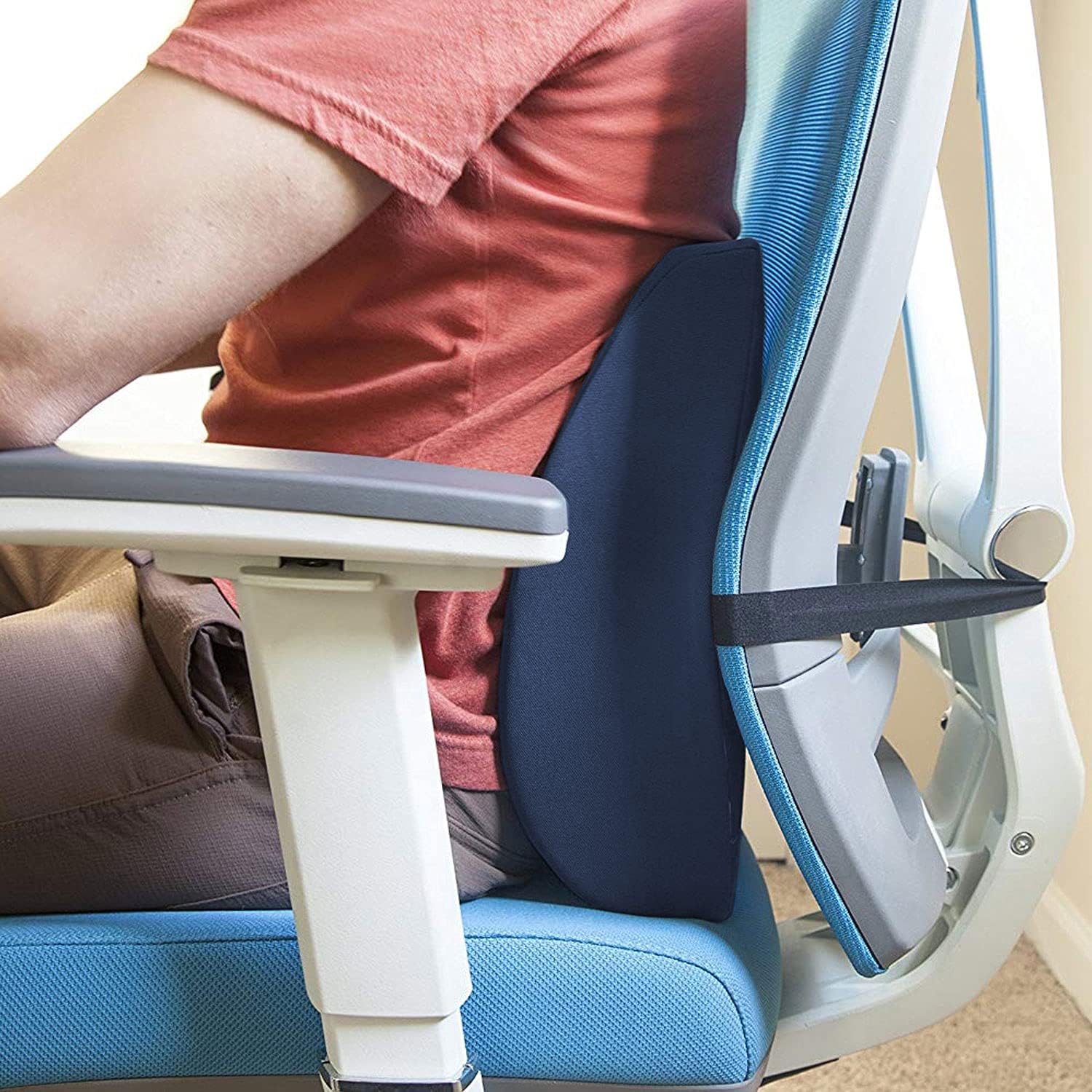
A lumbar pillow should fit your back and your chair—not force you to adapt to an awkward position. This guide explains how to choose adjustable lumbar support based on positioning, strap fit, cushion depth, firmness, and compatibility with your existing office chair.
Adjustable Straps
Chair Compatibility
Firmness & Thickness
If your office chair feels comfortable at first but leaves your lower back feeling unsupported after several hours, an adjustable lumbar support pillow may be worth considering. The challenge is finding one that fits your body, stays in position, and works with the shape of your chair.
Not every product advertised as an adjustable lumbar support pillow offers the same type of adjustment. Some cushions have adjustable straps that help secure them to the backrest. Others feature a movable support pad or a design that lets you change the support position. These differences matter because a cushion that attaches securely may still sit too high, protrude too far, or take up too much seat depth.
This guide focuses on what to look for when choosing adjustable lumbar support for an office chair. Rather than treating every strapped cushion as fully adjustable, we separate attachment adjustments from actual changes to the position or shape of the support.
Quick buying advice
Choose a cushion with a movable support pad if you need to change its height. If you only need to keep a fixed-shape pillow in place, adjustable straps may be sufficient. If your chair already has effective built-in lumbar adjustment, a separate pillow may add unnecessary bulk.
Best Adjustable Lumbar Support Pillows: What to Consider
The right choice depends on the adjustment mechanism you need. The following product options are starting points for comparing designs, not a claim that each model provides independently adjustable lumbar height.
Option 1
DMI Deluxe Adjustable Lumbar Back Support Cushion
A candidate for shoppers who want a movable lumbar pad rather than a cushion with straps alone. Verify the current model’s adjustment mechanism, dimensions, and attachment design before purchasing.
Best for: Buyers prioritizing repositionable lumbar support.
Option 2
Everlasting Comfort Lumbar Support Pillow
A recognizable style of contoured memory foam lumbar pillow to investigate if you prefer a shaped cushion with an attachment system. Check the current listing for strap configuration and available sizes.
Best for: Buyers seeking contoured cushioning and a secured fit.
Option 3
QUTOOL Lumbar Support Pillow
A candidate for shoppers comparing contoured foam cushions with adjustable attachment straps. Confirm the strap arrangement and cushion dimensions for the exact version you intend to buy.
Best for: Buyers comparing a fixed-shape cushion with a secured attachment system.
Option 4
OPTP McKenzie SlimLine Lumbar Support
A slimmer lumbar-support design worth comparing if a thick pillow pushes you too far forward. Check its dimensions and attachment arrangement against your chair before ordering.
Best for: Buyers who need a less bulky support profile.
Product selection note: These are products to compare, not a verified ranking based on hands-on testing. Product availability, model revisions, dimensions, and included straps can change. Review the current listing before making a purchase.
What Does Adjustable Lumbar Support Actually Mean?
Before buying, identify which part of the support you need to adjust. Product listings often use similar wording for features that serve different purposes.
1. Height-adjustable lumbar support
A height-adjustable design lets you move the support area up or down so it sits against your lower back where you need it. Some products achieve this with a separate movable pad; others rely on repositioning the entire cushion.
This feature is particularly useful if a fixed cushion consistently sits too high or too low. Look for clear product instructions showing how the support moves and whether it can stay in the selected position.
2. Adjustable straps
Adjustable straps change how a cushion attaches to the chair. They help accommodate different backrest widths and can reduce slipping when properly fitted.
However, longer straps do not automatically make a lumbar pillow height-adjustable. On many designs, changing the strap length only improves attachment; you must reposition the whole cushion to change its height.
3. Adjustable depth or firmness
Some built-in lumbar systems let you change how far the support projects toward your back. This is different from moving a cushion vertically. A few specialized products may also offer adjustable inserts or other ways to change the support profile.
With a conventional foam pillow, the thickness and contour are generally fixed. If you need less pressure, check the cushion depth and shape rather than assuming the straps will make the support softer or shallower.
| Adjustment type | What it changes | What to verify |
|---|---|---|
| Height adjustment | Vertical support position | Movable pad or repositionable cushion |
| Strap adjustment | Attachment length and fit | Minimum and maximum strap length |
| Depth adjustment | How far support projects forward | Documented depth mechanism |
| Firmness adjustment | Resistance or cushioning feel | Replaceable inserts or adjustable construction |
How to Choose an Adjustable Lumbar Support Pillow
Check the usable adjustment range
Do not rely on the word “adjustable” alone. If you need to move the support vertically, look for a specified adjustment range or a clear demonstration of how the pad moves. If you only need to secure the cushion, check the strap length and attachment method.
Measure your chair backrest before ordering. Pay attention to its width, height, shape, and any integrated side bolsters that might interfere with straps. A cushion may have sufficiently long straps yet still fit poorly on a thick or unusually shaped chair.
Choose a suitable cushion thickness
Thickness is one of the most important details to check when adding lumbar support to an existing office chair. A cushion that projects too far forward can reduce the usable seat depth and make it harder to sit against the backrest.
Compare the product’s stated depth with the space available between your back and the chair. If you already feel pushed forward by your chair’s built-in lumbar support, a thick add-on pillow may make the problem worse.
Consider foam firmness and shape
Firmness is subjective, and a thicker cushion is not necessarily more supportive. A contoured pillow may feel different from a flatter pad even when both use similar foam.
If you prefer a softer feel, look for a shape that distributes pressure comfortably without collapsing excessively. If you prefer firmer support, make sure the contour does not create a concentrated pressure point. Neither preference guarantees pain relief, and comfort depends on the fit between the cushion, your body, and the chair.
Look for a secure attachment system
A lumbar cushion that repeatedly slips down can become frustrating during a workday. Adjustable straps should hold the pillow securely without distorting the backrest or placing excessive tension on mesh fabric.
Dual straps can offer more control over attachment than a single strap on some chair designs, but the result depends on the actual construction. Look for clear photos of the back of the cushion, the buckles, and the attachment points rather than relying on marketing terms alone.
Check breathability and maintenance
If you sit for long periods, a removable cover can make routine cleaning easier. Mesh covers may improve airflow compared with some dense fabric surfaces, although the overall feel also depends on the foam and cover construction.
Check whether the cover is removable and whether the manufacturer specifies machine washing or spot cleaning. Do not assume the foam itself is washable just because the cover can be removed.
How to Position Adjustable Lumbar Support on an Office Chair
Correct positioning is at least as important as the product you choose. A well-made cushion can still feel uncomfortable when it sits too high, pushes too far forward, or interferes with your normal sitting position.
- Sit in your normal working position. Place your feet on the floor or a suitable footrest and sit back against the chair rather than leaning forward to reach your desk.
- Locate the lower-back curve. Identify the area where your lower back naturally curves inward. Use this as a starting point rather than positioning the cushion based on a fixed measurement alone.
- Position the support. Move the pad or cushion so it contacts the lower-back area without forcing your torso forward or creating a concentrated pressure point.
- Secure the straps. Tighten them enough to limit slipping, while avoiding excessive tension on the chair fabric or frame.
- Check your seated position. Make sure you can sit back comfortably, maintain a relaxed posture, and use the seat without feeling crowded toward the front edge.
- Reassess after a short period. If the support feels intrusive or causes discomfort, reposition it or try a different depth or shape instead of assuming you must get used to it.
For a more detailed explanation of comfortable support placement, see our guide to lumbar support and the related article on how lumbar support should feel. Replace these example internal destinations with the exact published article URLs if they differ on your site.
Adjustable Lumbar Pillow vs. Built-In Office Chair Support
A separate lumbar pillow is not always the best solution. The right choice depends on whether your current chair is basically suitable and simply needs a small adjustment, or whether its backrest design does not fit your body.
| Feature | Add-on lumbar pillow | Built-in lumbar support |
|---|---|---|
| Installation | Usually attaches with straps or another mounting method | Integrated into the chair |
| Height adjustment | Depends on whether the cushion can be repositioned | Depends on the chair mechanism |
| Depth adjustment | Usually limited by fixed cushion thickness | Available on some adjustable models |
| Portability | Can often be moved between compatible chairs | Stays with the chair |
| Main limitation | May slip, add bulk, or reduce seat depth | Adjustment range may not suit every user |
If you like your existing chair and only need a different support position, an add-on cushion may be a practical and economical option. If the backrest, seat depth, or overall chair dimensions are wrong for you, replacing the chair may be more effective than adding more padding.
Explore our office chair guide for lower-back comfort if you are considering a chair with built-in adjustments rather than a separate pillow.
Common Buying Mistakes to Avoid
Assuming adjustable straps mean adjustable height
This is an easy mistake to make when shopping online. Straps generally control attachment, not necessarily the height of the lumbar pad itself. Check the product’s instructions and images to confirm exactly what can be moved.
Choosing a cushion that is too thick
A deep cushion may push your torso away from the backrest, change your sitting position, and leave less room on the seat. Compare dimensions before buying, particularly if your chair has a shallow seat or a pronounced built-in lumbar curve.
Ignoring the chair’s backrest design
Wide, padded, mesh, and heavily contoured chair backs can require different attachment approaches. Check whether the straps can pass around the chair and whether the pillow will remain centered during ordinary movement.
Buying based on pain-relief claims alone
A lumbar cushion can change how your back is supported while sitting, but it is not a guaranteed treatment for back pain. Choose based on fit, comfort, adjustability, and compatibility instead of assuming a product will correct posture or eliminate symptoms.
Frequently Asked Questions
What is the difference between adjustable lumbar support and an adjustable lumbar pillow?
Adjustable lumbar support is a broad term that can refer to a built-in chair mechanism or a separate cushion. An adjustable lumbar pillow is an add-on product, but its adjustment may involve only the straps or the position of the entire cushion. Check whether the lumbar pad itself can move independently.
Should a lumbar support pillow be high or low?
Start by positioning it against the inward curve of your lower back. The ideal position varies with your body proportions, cushion shape, and chair design. The support should feel comfortable rather than forcing your torso into an unnatural position.
Are adjustable lumbar support pillows suitable for mesh office chairs?
Some are, but compatibility depends on the chair frame, mesh tension, and attachment design. Check the manufacturer’s instructions before attaching straps to a mesh backrest, and avoid tightening them enough to distort or damage the material.
Is a thicker lumbar pillow better?
Not necessarily. A thicker cushion projects farther forward and may reduce usable seat depth. The best thickness is the one that provides comfortable contact without pushing you away from the chair back.
Can a lumbar support pillow help with lower-back discomfort?
It may improve sitting comfort for some people by providing additional support, but results vary. Persistent, worsening, or unexplained pain should not be managed with a cushion alone; seek appropriate medical advice when needed.
How do I stop my lumbar pillow from sliding down?
Check whether the straps fit the chair back securely, position the pillow before tightening the straps, and confirm that the cushion is compatible with the backrest shape. If it continues to slip, a different attachment design may be more suitable.
Final Verdict: Choose Adjustability That Solves Your Fit Problem
The best adjustable lumbar support pillow is not necessarily the thickest or the one with the most straps. It is the one that places support where you need it, stays securely attached, and works with your chair without reducing your usable seat depth.
If you need to change support height, prioritize a genuinely repositionable pad. If your main concern is slipping, focus on strap range and attachment stability. If your chair already pushes your back forward, consider a slimmer profile—or an office chair with better-integrated lumbar adjustment.
Before buying: confirm the product dimensions, adjustment mechanism, strap compatibility, return policy, and current specifications on the manufacturer’s or retailer’s listing.
Disclosure: SitBetterLab may earn a commission from qualifying purchases made through affiliate links, at no additional cost to the buyer. Product specifications and availability may change. This article is for general informational purposes and is not a substitute for individualized medical advice.