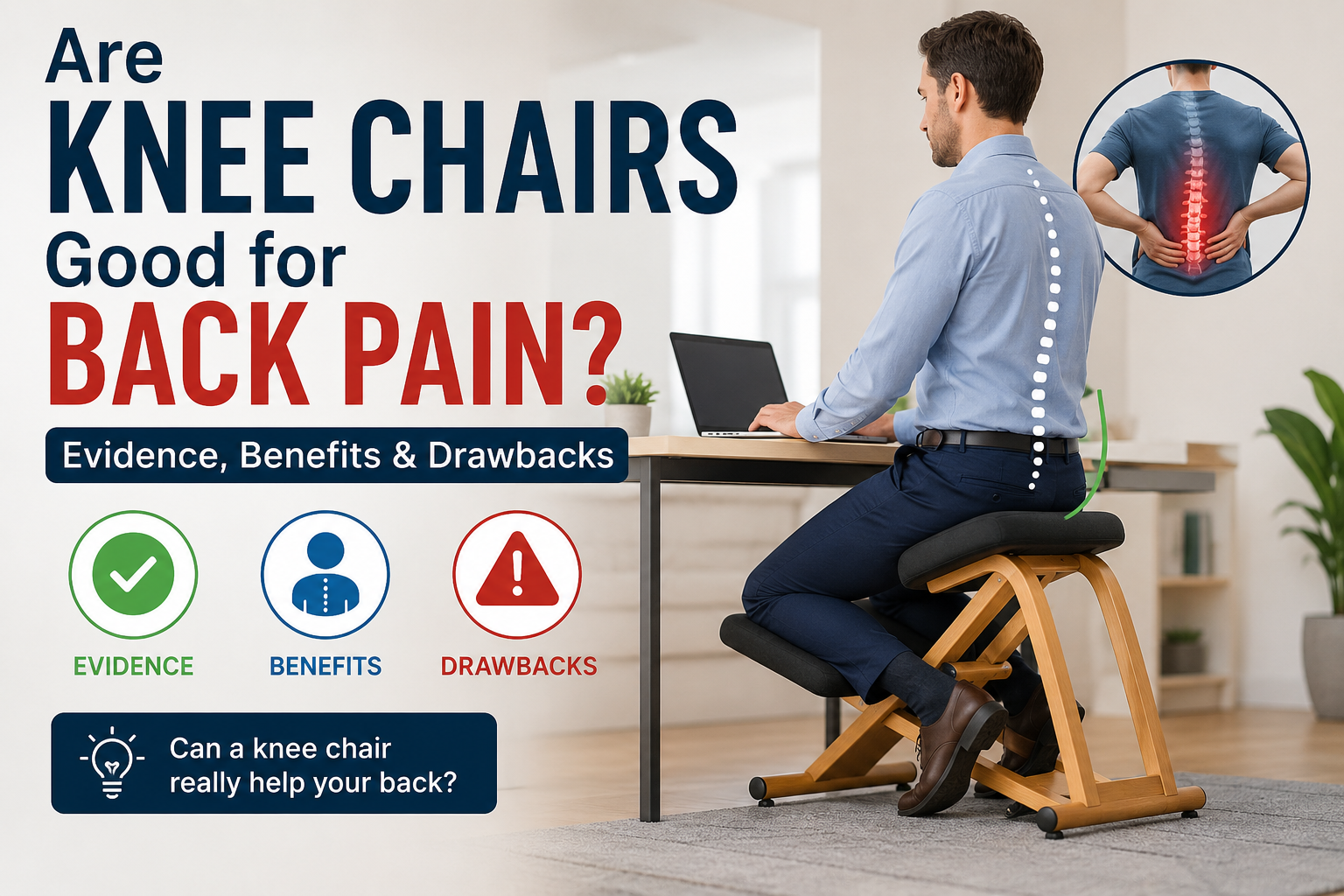
You have likely seen them: stool‑like chairs with a sloping seat and padded knee rests, often used by artists, designers, or in ergonomic offices. They look unconventional, and the name “knee chair” makes many people wonder if kneeling all day is comfortable — or even safe. The real question is: can a kneeling chair actually help your back pain, or is it just another ergonomic fad?
The short answer: for many people with sitting‑related lower back pain, a properly adjusted kneeling chair can provide significant relief. However, it is not a magic cure, and it is not suitable for everyone. This guide examines the biomechanics, clinical evidence, real‑user experiences, and situations where a kneeling chair may — or may not — help your back.
Quick Answer: Do Knee Chairs Help Back Pain?
Yes — for many individuals, kneeling chairs reduce lower back pain by opening the hip angle, tilting the pelvis forward, and preserving the natural S‑curve of the spine. A 2015 study found that kneeling chairs reduce lumbar lordosis (the inward curve of the lower back) compared to conventional office chairs, which can alleviate compression on spinal discs. Users often report less back fatigue and improved posture after a 1‑2 week adaptation period.
However, kneeling chairs are not a universal solution. They place some weight on the shins and knees, which can be uncomfortable for people with knee problems or poor circulation. They also require a gradual transition and proper desk height adjustment to avoid new pain in the neck or upper back.
Biomechanics: How a Knee Chair Changes Your Sitting Posture
To understand why a kneeling chair might help your back, you first need to know what happens when you sit in a standard office chair. With your thighs parallel to the floor, your hips are forced into a 90‑degree angle. This rolls your pelvis backward (posterior pelvic tilt), flattening your lower back into a damaging C‑curve. This C‑slump increases pressure on your intervertebral discs, stretches spinal ligaments, and leads to chronic lower back pain.
A kneeling chair (also called a knee chair or kneeling stool) changes the geometry entirely. The seat slopes forward (typically 15‑30°), and your shins rest on padded supports. Your thighs angle downward, opening your hip angle to 120‑135°, which tilts your pelvis forward (anterior pelvic tilt). This forward tilt preserves your lumbar lordosis — the natural inward curve of your lower back — and shifts part of your body weight from your spine to your shins and thighs.
The result is reduced disc pressure, relaxed hip flexors, and active engagement of your core stabilizing muscles. Because there is no backrest, your deep trunk muscles must work to keep you upright, which can strengthen them over time and further protect your spine.
What the Research Says: Clinical Evidence
While kneeling chairs have been used for decades, the body of scientific research is smaller than for standard ergonomic chairs, but several studies support their benefits.
2015 Study – Lumbar Lordosis Reduction: A pilot study published in the Annals of Physical and Rehabilitation Medicine found that lumbar lordosis (the inward curve of the lower back) was reduced less when sitting on a kneeling chair as compared with a usual chair. This effect was observed in both chronic low back pain patients and healthy subjects. In other words, kneeling chairs help maintain a more neutral spine than traditional chairs, which is beneficial for back pain.
1999 Study – Disc Pressure: Research using intradiscal pressure measurements showed that kneeling chairs significantly reduced pressure on lumbar discs compared to standard office chairs. The open hip angle (120‑135°) unloaded the spine more effectively than the 90° angle of conventional seating.
User Surveys: While less rigorous, surveys of kneeling chair users consistently report reduced lower back pain, improved posture, and less fatigue during focused work tasks. Many users note that the active sitting required by kneeling chairs keeps them more alert and less prone to slouching.
However, researchers also note that the effectiveness of a kneeling chair depends heavily on proper adjustment and individual body proportions. A poorly fitted kneeling chair can cause new problems in the knees, shins, or upper back.
Pros of Kneeling Chairs for Back Pain
- Preserves natural spinal curve: The anterior pelvic tilt maintains lumbar lordosis, reducing disc compression.
- Reduces lower back strain: Shifting weight to your shins unloads the lumbar spine.
- Encourages active sitting: Without a backrest, your core muscles must stay engaged, strengthening them over time.
- Improves breathing and circulation: The open hip angle reduces compression on your diaphragm and improves blood flow.
- Promotes micro‑movements: Many kneeling chairs have a curved rocker base that encourages small postural shifts, keeping your discs hydrated.
- Can be used with a standing desk: Kneeling chairs are often height‑adjustable and pair well with sit‑stand workstations.
- Lower cost than premium office chairs: Quality kneeling chairs typically range from $100–300, significantly less than high‑end ergonomic chairs.
Cons of Kneeling Chairs for Back Pain
- Shin and knee pressure: The most common complaint. Users often experience discomfort on the shins or knees, especially during the first 1‑2 weeks. Adequate padding and gradual transition are essential.
- No backrest for passive tasks: If you like to recline during phone calls or reading, a kneeling chair offers no support.
- Not suitable for all body types: People with short shins, long thighs, or certain proportions may struggle to find a comfortable fit.
- May aggravate knee problems: If you have patellofemoral pain, runner’s knee, or knee arthritis, the weight on your shins may transfer load to the knee joint. Consult a doctor first.
- Requires desk height adjustment: A kneeling chair raises your seated eye level; your desk and monitor must be raised accordingly to avoid neck strain.
- Initial adaptation period: Most users need 1‑2 weeks to adjust to the new posture and weight distribution. Some never adapt and return to conventional chairs.
Kneeling Chair vs. Ergonomic Office Chair: Which Is Better for Back Pain?
| Feature | Kneeling Chair | Ergonomic Office Chair |
|---|---|---|
| Hip Angle | 120–135° (open) | 90° (unless using seat tilt) |
| Pelvic Tilt | Anterior (forward) — maintains lumbar curve | Posterior (backward) — flattens lumbar curve without lumbar support |
| Back Support | No backrest; relies on pelvic tilt | Adjustable lumbar support + high backrest |
| Weight Distribution | Buttocks + shins | Buttocks + thighs |
| Core Engagement | High — active sitting | Low — passive sitting (with risk of slouching) |
| Best For | Forward‑leaning tasks (typing, drawing, writing) | Stationary tasks, meetings, reclining, programming |
| Adaptation Period | 1‑2 weeks, possible shin soreness | None |
| Knee/Shin Issues | Potential discomfort, requires adequate padding | No direct pressure |
Neither chair is universally “better.” For active, forward‑leaning tasks, a kneeling chair often provides superior lower back relief. For passive, long‑duration sitting where you want to recline, an ergonomic office chair with good lumbar support is likely more comfortable.
How to Use a Kneeling Chair for Back Pain Relief (Without Hurting Your Shins)
Even the best kneeling chair will not help your back if you use it incorrectly. Follow these steps to maximize benefits and minimize discomfort:
- Adjust the seat height so your thighs slope downward at roughly 45°. Your knees should be slightly lower than your hips.
- Position your shins, not your knees, on the padded supports. The pads should contact the front of your shins, just below the kneecap.
- Find your balance so your weight is distributed approximately 80% on your seat and 20% on your shins. You should be able to lift your hands off the desk without falling forward.
- Align your spine: ears over shoulders, shoulders over hips. Your lower back should have a gentle inward curve.
- Raise your monitor to eye level. A kneeling chair raises your seated eye level by 4‑8 inches; if your screen stays low, you will develop neck pain.
- Gradually increase usage — start with 20‑30 minutes, then increase to 1‑2 hours over two weeks.
- Add extra padding if you experience shin discomfort (gel pads, folded towel, or thicker cushions).
- Take breaks every 30‑45 minutes to stand and move. No chair replaces the need for movement.
Who Should NOT Use a Kneeling Chair?
Kneeling chairs are not for everyone. Avoid or consult your doctor before using one if you have:
- Knee arthritis, patellofemoral pain, or runner’s knee — the weight on your shins can transfer load to the knee joint.
- Recent knee surgery or meniscus tear — the flexed knee position may be contraindicated.
- Shin splints or tibial stress fractures — pressure on the shins can exacerbate pain.
- Poor circulation in the lower legs — the pressure may impede blood flow.
- Severe lower back instability — some individuals need the support of a backrest to prevent injury.
If you are unsure, consult a physical therapist or physician before switching.
Frequently Asked Questions (FAQ)
Can a kneeling chair make back pain worse?
Yes — if used incorrectly. Incorrect adjustment (seat too high/low, knees bearing weight instead of shins) can cause new pain in the lower back, upper back, or knees. Also, if you have a specific disc condition (e.g., herniated disc with certain directional preferences), the forward tilt may aggravate symptoms. Always consult a professional if you have a diagnosed condition.
How long does it take to get used to a kneeling chair?
Most users need 1‑2 weeks to adapt. The first few days may feel strange, and you may experience mild shin soreness. By the end of the second week, the majority of users report feeling comfortable and notice improved posture and less lower back pain.
Do kneeling chairs help sciatica?
For some, yes. The open hip angle (120‑135°) reduces pressure on the lumbar discs and can alleviate sciatic nerve compression. Many users with sciatica report relief with kneeling chairs. However, if your sciatica is caused by spinal stenosis or a foraminal disc herniation that is aggravated by forward bending, a kneeling chair may worsen symptoms. Test carefully.
Are kneeling chairs good for herniated discs?
It depends on the direction of the herniation. For a posterolateral herniation (the most common type), the forward tilt and open hip angle can reduce intradiscal pressure and provide relief. For a foraminal or lateral herniation, the same posture may increase symptoms. Consult your spine specialist before using a kneeling chair if you have a diagnosed herniated disc.
Do kneeling chairs hurt your knees?
If you use them correctly — resting your shins, not your kneecaps, on the pads — they should not hurt your knees. However, individuals with pre‑existing knee conditions may still experience discomfort. Adequate padding and gradual transition are essential.
What is the best kneeling chair for back pain?
There is no single “best” model, but look for chairs with: adjustable seat height (to fit your desk), thick high‑density foam padding on both seat and knee rests, a sturdy wood or metal frame, and (ideally) a rocking motion to encourage micro‑movements. Brands like NYPOT, Costway, VEVOR, and Flash Furniture are popular and well‑reviewed on Amazon.
Can I use a kneeling chair if I have a standing desk?
Yes — kneeling chairs work wonderfully with standing desks. Many kneeling chairs have height adjustments that allow you to perch at a semi‑standing height, creating a sit‑stand‑perch ecosystem that keeps you moving throughout the day.
Final Verdict: Are Knee Chairs Good for Back Pain?
After reviewing the biomechanics, clinical studies, and user experiences, here is the bottom line:
For many people with sitting‑related lower back pain, a properly adjusted kneeling chair can significantly reduce discomfort, improve posture, and strengthen core muscles. The open hip angle and anterior pelvic tilt are biomechanically sound solutions to the problem of spinal flattening caused by conventional 90° seating.
However, kneeling chairs are not a magic bullet. They require a 1‑2 week adaptation period, may cause initial shin discomfort, and are not suitable for individuals with certain knee conditions. They also demand that you raise your monitor and desk height to avoid neck strain.
If you decide to try a kneeling chair, invest in a quality model with thick padding, adjustable height, and a sturdy frame. Follow a gradual transition schedule, and listen to your body. For those who adapt, the relief from chronic lower back pain can be life‑changing.
Most important advice: No chair, no matter how well‑designed, can replace movement. Stand up, stretch, and walk every 30‑45 minutes. Your spine needs variety, not static posture — even perfect static posture starves your intervertebral discs.
Related Articles
- How to Sit on a Kneeling Chair: Proper Posture, Common Mistakes & Adjustment Guide
- 7 Best Kneeling Desk Chairs: Ergonomic Picks for Better Posture
- Kneeling Desk Chair vs Office Chair: Which Is Better for Your Back?
- Saddle Stool vs Kneeling Chair: Which One Helps Your Back More?
- Best Ergonomic Chair for Lower Back Pain