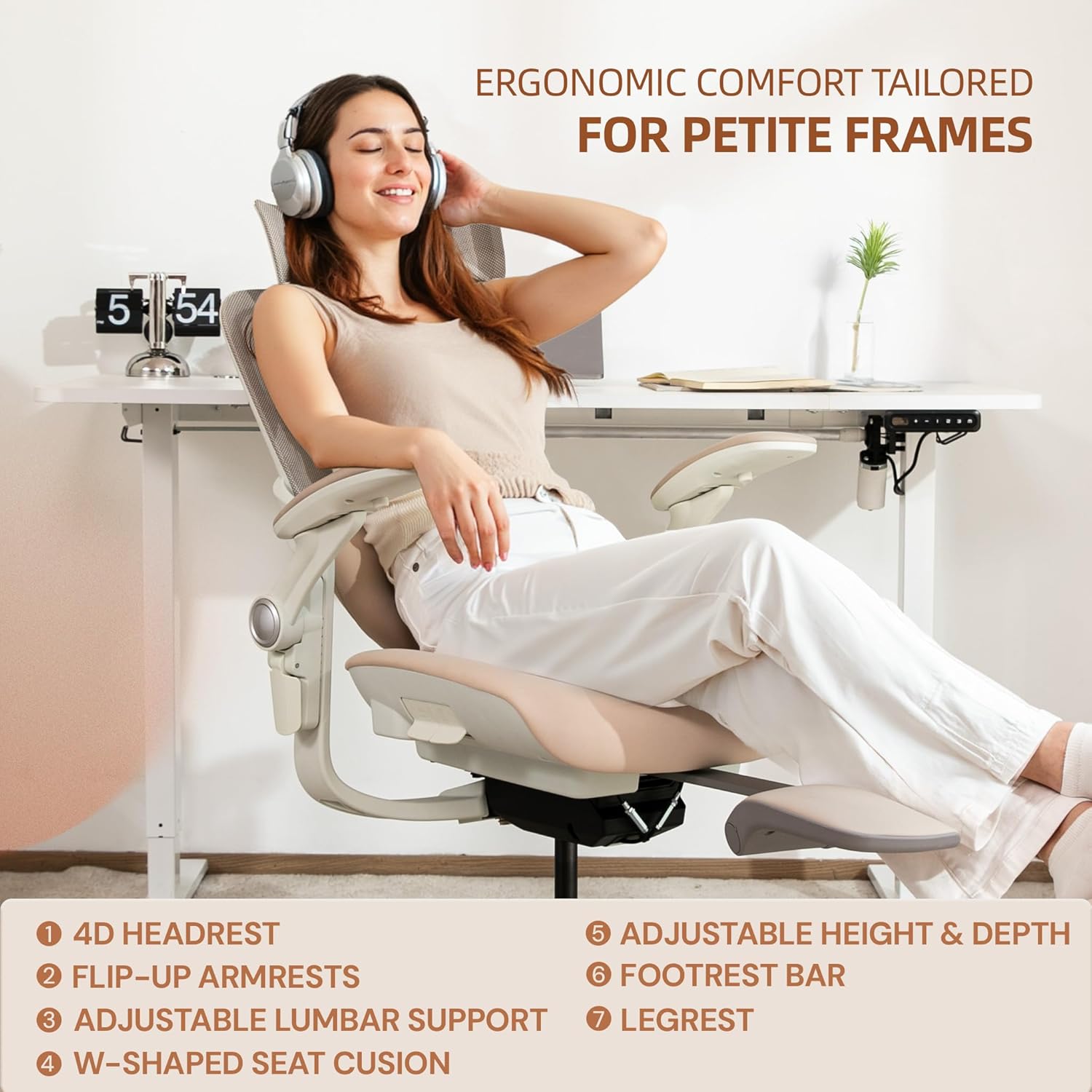
You stand up after a long meeting and your feet feel dead — tingling pins and needles that take minutes to fade. If your office chair makes feet numb, it’s usually not your shoes or your posture alone. The seat edge is likely pressing into the back of your thighs, restricting blood flow and irritating nerves.
That issue gets worse for pet owners who sit cross-legged or perch forward to avoid a cat on the lap or a dog under the desk. The good news? Simple adjustments and a few smart chair features can stop the numbness without kicking your pets out of your workspace.
📌 Why Your Office Chair Makes Feet Numb: Common Culprits
When your feet go numb in an office chair, the problem usually starts at the back of your thighs, not your feet. A seat pan that’s too deep presses into the soft tissue behind your knees. That pressure compresses blood vessels and the peroneal nerve, reducing circulation to your lower legs.
Seat height plays a role too. If the chair is too high, your feet dangle and the seat edge digs into your hamstrings. If it’s too low, your knees end up higher than your hips. That tucked position can pinch the sciatic nerve and force you to sit on the back of your thighs instead of your sit bones.
A lack of lumbar support tilts your pelvis backward. That shift rolls your weight onto the backs of your thighs and increases contact pressure under them. It also encourages slouching, which can compress the spine and aggravate nerve pathways down the leg.
Other common culprits include:
- Prolonged sitting without movement — staying in one position for 45+ minutes reduces circulation and lets pressure build.
- Existing sciatic or piriformis issues — a chair that isn’t adjusted well can make referred numbness worse.
- Poor posture habits — crossing legs, perching on the edge, or leaning to one side creates uneven pressure.
Numbness is a warning sign. Most of the time, it’s mechanical pressure you can fix with seat depth, height, and posture adjustments.
📌 Adjust Your Current Office Chair to Stop Foot Numbness
Start with the basics. Seat height and depth are the two biggest levers for stopping numb feet.
- Set seat height first. Sit fully back in the chair. Adjust the height until your feet rest flat on the floor and your knees form roughly a 90-degree angle. Your thighs should slope very slightly downward, not upward.
- Check seat depth. Slide your hips all the way back. You want about 2–3 fingers of space between the front edge of the seat and the back of your knees. If the pan digs in, shorten the depth if your chair has a sliding seat.
- Add a footrest when the chair can’t go low enough. A firm footrest or even a stack of books supports your feet so pressure doesn’t concentrate behind your thighs. Keep your ankles and knees relaxed.
- Alternate with a standing desk converter. If you sit for long stretches, shift to standing for 10–15 minutes every hour. That changes where pressure hits and often eases tingling fast.
Then fine-tune the rest of your setup. Adjust lumbar support so it sits in the small of your back, not too high. Set armrests low enough that your shoulders stay relaxed and elbows rest near 90 degrees.
Loosen tilt tension enough that you can recline without fighting the chair, but not so much that you slump. Keeping your hips slightly higher than your knees reduces compression under your thighs, which may help prevent numbness from returning.
📌 Key Features to Look for in a New Office Chair (Including Pet Hair Resistance)
When you’re shopping for a chair that won’t compress your thighs and make your feet numb, a few specs matter more than brand name or padding. I’d rather see you get these details right than pick the nicest-looking chair in the showroom.
Start with the seat itself:
- Adjustable seat depth — You want roughly 2–4 fingers of space between the front edge and the back of your knees. If the seat pan is too deep, it presses into the underside of your thighs and eventually numbs your feet.
- A waterfall front edge — That rounded drop reduces pressure behind the knees compared to a hard 90-degree lip. It’s one of the most underrated features for circulation.
- A wide height range — Make sure the cylinder drops low enough for your feet to sit flat. Many chairs bottom out around 18–20 inches, which doesn’t work for shorter legs unless you add a footrest.
Then think about materials if you share your home with shedding pets:
- Tightly woven mesh or leather/faux leather — These resist fur buildup better than loose-knit fabric. Leather wipes clean in seconds, while mesh lets hair fall through less visibly.
- Pet-friendly performance fabrics — Some chairs use scratch-resistant upholstery with a tight weave that’s easier to vacuum. Look for terms like stain-resistant or abrasion-resistant on the spec sheet.
A synchronized tilt, adjustable lumbar support, and an optional footrest can all promote healthy posture and blood flow. But if you’re not replacing your chair yet, a simple wedge cushion or pressure-relief seat pad is a cheap way to test whether seat depth and edge shape are the real culprits.
One red flag: if the numbness doesn’t clear within a few minutes of standing, or you also have leg weakness, pain, or swelling, skip the chair shopping and see a doctor. A new chair won’t fix an underlying nerve or vascular problem.
🔍 Best Office Chairs for Pet Owners in 2026 (That Prevent Numb Feet)
These five chairs balance seat-depth adjustability, a waterfall front edge, and materials that stand up better to pet hair and claws than standard velvet or loose-weave fabric. I focused on models with a low minimum seat depth and a height range that lets you plant your feet flat.
| Chair | Price | Seat Depth | Height Range | Material | Weight Cap | Why It Helps Numb Feet | Pet Hair / Scratch Handling | Check Price |
|---|---|---|---|---|---|---|---|---|
| Steelcase Leap V2 | $1,000–$1,300 | 15.75–18.75″ | 15.5–20.5″ | Brisa faux leather or Cogent fabric | 400 lb | Flexible seat edge and deep depth adjustment reduce thigh pressure | Faux leather wipes clean; tight-weave fabric resists fur | Check Price → |
| Branch Verve | $549 | 15.5–18.5″ | 16.5–20.5″ | Woven polyester fabric | 275 lb | Depth slider and waterfall edge keep knees below hips | Fur clings to fabric; needs vacuum or lint roller | Check Price → |
| FlexiSpot Soutien | $300 | 15.7–18.9″ | 17.3–20.1″ | Mesh back, fabric seat | 300 lb | Adjustable depth plus tilt lock supports leg circulation | Mesh back sheds hair; fabric seat catches some fur | Check Price → |
| Nouhaus Ergo3D | $370 | 16.5–19.5″ | 18.0–21.0″ | Mesh seat and back | 275 lb | Seat glide and recline tension let you shift pressure off thighs | All-mesh design lets hair fall through; vacuum gaps weekly | Check Price → |
| Hinomi H1 Pro | $500 | 15.7–18.9″ | 16.5–20.5″ | Woven fabric seat, mesh back | 300 lb | Adjustable depth plus flip-out footrest supports feet when reclining | Fabric seat traps hair; mesh back is easy to wipe | Check Price → |
Quick Pros and Cons
- Steelcase Leap V2: ✅ Best adjustability and faux leather option | ❌ Expensive
- Branch Verve: ✅ Great depth range for shorter legs | ❌ Fabric grabs pet hair
- FlexiSpot Soutien: ✅ Budget pick with mesh back | ❌ Minimum height slightly high
- Nouhaus Ergo3D: ✅ All-mesh hair falls through | ❌ Deeper minimum seat depth
- Hinomi H1 Pro: ✅ Footrest reduces leg pressure | ❌ Fabric seat needs frequent vacuuming
🔑 How to Keep Your Office Chair Clean from Pet Hair (And Extend Its Life)
Pet hair doesn’t just look bad — it can clog mesh, trap odors, and even interfere with seat-depth or tilt mechanisms. These are my go-to removal tools:
- Rubber gloves (slightly damp): Rub fabric or mesh in short strokes; hair clumps together and lifts out quickly.
- Lint rollers: Best for smooth fabric and leather, but they struggle with woven mesh.
- Pet hair removers with a felt or rubber edge: Reusable and effective on most chair materials.
- Handheld vacuum with brush attachment: Great for weekly deep cleaning around seams and under the seat.
How often you clean depends on the material. Mesh should be vacuumed weekly to keep airflow and tension consistent. Fabric needs a deeper vacuum every two weeks and mild upholstery foam monthly if your pet sheds heavily. Leather or faux leather only needs a damp microfiber wipe weekly, plus conditioning every few months to prevent cracks from pet oils.
A washable, fitted seat cover with a non-slip backing can protect the chair without ruining ergonomics. Avoid thick, plush throws — they tend to bunch under your thighs and subtly change seat depth, which may make foot numbness worse.
To prevent scratches and keep adjustments working smoothly, trim your pet’s claws regularly. Wipe down the gas lift, tilt mechanism, and armrest tracks monthly with a dry cloth. A quick blast of compressed air around the levers stops hair from binding height or depth controls.
❓ FAQ: Office Chair Feet Numbness and Pet-Friendly Seating
Why do my feet go numb when I sit in an office chair?
Numbness usually comes from pressure on the backs of your thighs or compressed nerves behind the knee. A seat that’s too deep presses into that area and restricts blood flow. A seat that’s too high also leaves feet dangling, which pulls your legs against the edge and makes it worse.
Can a footrest help prevent numbness from an office chair?
Yes, often dramatically. A footrest puts your feet on a stable surface so your thighs don’t dig into the seat edge. Look for one with adjustable height and a slight tilt. Even a stack of books works in a pinch, but a proper footrest with padding is more comfortable for long sessions.
What is the best seat depth to avoid leg numbness?
For most people, aim for a seat depth where you can fit two to three fingers between the front edge and the back of your knee. That typically means 16 to 18 inches of depth. If your chair is too deep, add a lumbar cushion to push you forward slightly. If it’s too shallow, you’ll feel unsupported under the thighs.
Are leather office chairs better for pet hair than fabric ones?
Genuine leather and high-quality faux leather resist hair far better than woven fabric. Hair sits on the surface instead of embedding in fibers. A quick wipe with a microfiber cloth usually removes it. The tradeoff: leather can show scratch marks from claws more easily than a tight weave fabric.
How often should I clean my office chair if I have pets?
Vacuum weekly if you have a shedding dog or cat. Spot-clean fabric every two to three weeks with an enzyme cleaner. For leather, wipe down weekly with a damp cloth and condition every two months. Pet hair builds up fast in wheel mechanisms too, so check the casters monthly and snip away wrapped fur.
2 thoughts on “Why Your Office Chair Makes Feet Numb: Causes, Fixes, and Best Chairs for Pet Owners (2026 Guide)”