
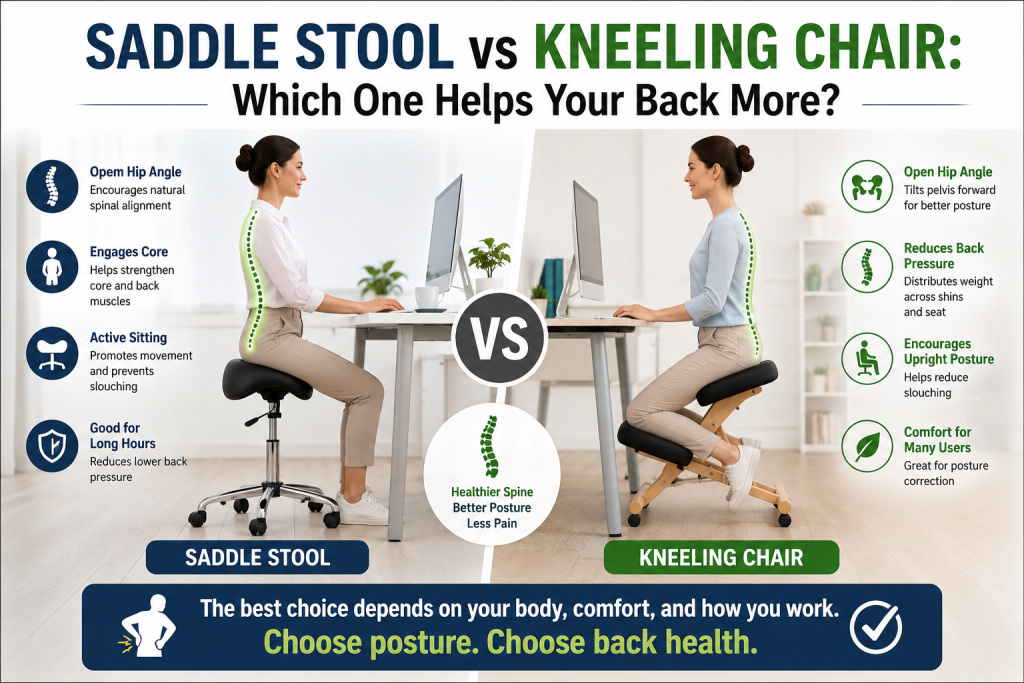
You sit for hours. Your lower back aches. You shift constantly. Maybe you have tried a regular office chair with lumbar support—it helps a little, but you still end the day stiff and sore. Then you hear about kneeling chairs and saddle stools. Both promise to fix your posture. Both claim to relieve back pain. But which one actually works?
After researching dozens of studies and analyzing hundreds of user reviews, the short answer is this: for most people with sitting‑related back pain, a properly adjusted saddle stool is more effective than a kneeling chair. However, neither is a magic bullet—and the wrong choice can create new problems.
This guide breaks down the biomechanics, clinical evidence, real‑user experiences, and practical pros and cons of each seating option. By the end, you will know exactly which one is right for your back.
Quick Answer: Which One Is Better for Your Back?
Saddle stools are generally better for most people with lower back pain. They maintain a natural spinal curve, allow unrestricted movement, and have stronger clinical evidence (p<0.001 in a 2003 study of dental surgeons). Kneeling chairs can also help reduce lower back strain, but they often create new problems—knee pain, shin discomfort, or forward head posture—especially if your workstation is not adjusted correctly.
Key differences at a glance:
- Spinal alignment: Both improve lumbar lordosis compared to flat chairs. Saddle chairs show a slight edge in neck posture research.
- Freedom of movement: Saddle stools allow you to swivel, reach, and even “walk around” while seated. Kneeling chairs lock you in place and limit side reaching.
- Pressure points: Kneeling chairs put weight on your shins and knees; saddle stools put weight on your sit bones (ischial tuberosities).
- Evidence base: Saddle chairs have stronger peer‑reviewed evidence for pain reduction (p<0.001). Kneeling chairs have positive biomechanical data but mixed user outcomes.
- Best use case: Saddle stools excel for active, forward‑leaning tasks (typing, drafting, clinical work). Kneeling chairs work best for short, focused sessions where leg movement is limited.
Let us dive into the details so you can make an informed decision.
Biomechanics: How Saddle Stools and Kneeling Chairs Affect Your Spine
To understand which chair helps your back, you first need to understand what happens when you sit.
The 90‑Degree Problem: Why Traditional Chairs Hurt
Most office chairs force your hips into a 90‑degree angle. This rolls your pelvis backward (posterior pelvic tilt), which flattens your lower back into a damaging C‑curve. This “C‑slump” dramatically increases anterior disc compression, stretches the posterior longitudinal ligament, and leads to chronic back pain[reference:0]. The human spine is naturally shaped like an “S” (lumbar lordosis). When you stand, your pelvis is neutral and this curve is effortlessly maintained. Sitting in a standard chair breaks that curve.
Both kneeling chairs and saddle stools try to solve this problem by opening your hip angle and tilting your pelvis forward (anterior pelvic tilt). But they do it in completely different ways.
How a Kneeling Chair Works
A kneeling chair drops your thighs to a downward angle (usually around 110 to 120 degrees) while your shins rest on a padded block to stop you from sliding forward[reference:1]. This open hip angle reduces posterior pelvic tilt and helps maintain lumbar lordosis. Research confirms that lumbar lordosis is reduced less when sitting on a kneeling chair compared with a usual flat chair[reference:2]. In other words, kneeling chairs help preserve your lower back’s natural curve.
However, the tradeoff is load distribution. Your knees, shins, ankles, and feet now participate more than they would in a normal chair[reference:3]. Your weight is shifted forward onto your shins, which can cause significant discomfort over time.
How a Saddle Stool Works
A saddle stool places your hips in a more open, externally rotated position (often called “hip abduction”), making it easier to sit tall without leaning into a backrest. The saddle‑shaped seat tilts your pelvis forward (anterior pelvic tilt), preserving your lumbar lordosis. Studies have shown that sitting on a saddle chair causes a positive effect of an increase in lumbar lordosis[reference:4]. To maintain this lordosis, an angle of 135° between the hip and trunk is thought to be required—and a saddle chair achieves exactly that[reference:5].
The wider hip abduction (knees spread apart) provides greater spinal stability and postural support. Try it yourself: sit with your knees together and see how far you can slump. Now sit with your knees apart and try to slump again. The difference is noticeable[reference:6].
Key Biomechanical Difference: Pelvis Position
Both chairs tilt your pelvis forward, but the kneeling chair creates an anterior pelvic tilt by shifting your weight forward onto your shins. The saddle stool does it by spreading your legs and supporting your weight on your sit bones. This difference in weight distribution has major implications for long‑term comfort and usability.
What the Research Actually Says
Saddle Chairs: Strong Clinical Evidence
A 2003 study of 25 general practicing dental surgeons—all experiencing lower back pain—found that the saddle chair had a significant positive effect on both lumbar spine range of motion and pain levels at the 0.1% level (p<0.001)[reference:7]. This means the improvement was not due to chance; it was a statistically robust finding. The null hypothesis was rejected: saddle chairs do have an effect on back pain.
A 2007 study comparing the Bambach saddle seat to a standard office chair found that the saddle seat provided reduced levels of lower back discomfort. However, it demonstrated higher discomfort in the lower limbs, particularly the hips and buttocks[reference:8]. This tradeoff—less back pain, more hip/buttock pressure—is a consistent theme in saddle stool research.
A 2021 statistical analysis found a correlation of 0.999 between sitting angle and spinal curvature on a saddle chair, concluding that “no wonder people prefer saddle chair over office chair when it comes to avoid back pain and this article proves the convenience statistically”[reference:9].
A 2013 study specifically noted that sitting on a saddle chair caused a positive effect of an increase of lumbar lordosis[reference:10], confirming that the biomechanical theory translates into measurable spinal benefits.
Kneeling Chairs: Mixed Evidence
Research supports that kneeling chairs improve lumbar lordosis compared to flat chairs. A pilot study published in the Annals of Physical and Rehabilitation Medicine (2015) found that lumbar lordosis was reduced less when sitting on a kneeling chair as compared with a usual chair[reference:11]. The chair effect was found in both chronic low back pain patients and healthy subjects[reference:12].
However, the same study noted that kneeling chairs showed good lumbar lordosis but poor neck posture (forward head position and upper cervical extension). Researchers acknowledged that this likely occurred because the desk height was not adjusted when participants used the kneeling chair, leading them to tilt their heads down to see the screen[reference:13].
The critical detail: In the same study, the saddle chair showed better neck posture than the kneeling chair. And for the saddle chair, and only the saddle chair, they raised the desk height as the manufacturer recommended[reference:14]. The kneeling chair got improper workstation adjustment, then the neck posture results were compared as if they measured the same thing[reference:15]. This underscores a key point: kneeling chairs are not inherently bad for your neck—but they require proper desk adjustment, which many users fail to do.
According to the Canadian Centre for Occupational Health and Safety, a kneeling chair has a fixed seat sloping forward and padded support for knees. It does not have a backrest and places the user in a modified kneeling position[reference:16].
Comparison Table: Saddle Stool vs Kneeling Chair
| Feature | Saddle Stool | Kneeling Chair |
|---|---|---|
| Pelvic Tilt | Anterior (forward)—preserves lumbar lordosis | Anterior—preserves lumbar lordosis (effective) |
| Weight Distribution | Sit bones and thighs | Shins, knees, and feet |
| Common Discomfort | Hips and buttocks (initial) | Knees, shins, ankles |
| Freedom of Movement | High—swivel, reach sideways, “walk around” while seated | Low—limited to forward reaching; side reaching can cause injury |
| Leg Circulation | Good—improves circulation; reduces foot swelling | Poor—constrains movement, can impede circulation |
| Best Use Case | Prolonged, active, forward‑leaning tasks | Short, focused sessions with limited sideways movement |
| Research Evidence | Strong (p<0.001 for pain reduction) | Positive for lumbar spine; mixed for neck (workstation dependent) |
| Desk Adjustment Required | Yes—raised desk height | Yes—raised desk height (often overlooked) |
| Price Range (Quality Models) | $100–500+ | $80–400 |
Saddle Stools: Pros and Cons for Back Pain
✅ Pros
- Preserves natural lumbar curve: The 135° hip angle maintains your spine’s S‑shape, reducing disc pressure. Research shows increased lumbar lordosis when using a saddle chair[reference:17].
- Strong clinical evidence: A 2003 study of dental surgeons with lower back pain found significant pain reduction at the p<0.001 level[reference:18].
- Excellent freedom of movement: You can swivel 360°, reach sideways, and even “walk around” while seated. Saddle seats provide greater mobility and postural stability than kneeling chairs[reference:19].
- Improves leg circulation: The open hip angle reduces pressure on blood vessels and can help reduce foot swelling[reference:20].
- Better for prolonged tasks: Saddle seats are recommended for activities that are prolonged, require forceful hand movements, or involve awkward reaching and viewing postures[reference:21].
- Wider hip abduction provides stability: Spreading your knees apart (abduction) naturally prevents slumping and provides greater spinal stability than sitting with knees together[reference:22].
- Works for many professions: Dentists, hygienists, estheticians, tattoo artists, and office workers have all reported back pain relief using saddle stools.
❌ Cons
- Initial hip and buttock soreness: As your sit bones adapt to bearing more weight, you may experience discomfort during the first 1–2 weeks. The 2007 study noted higher discomfort in the lower limbs, particularly the hips and buttocks[reference:23].
- Requires correct seat width: A saddle that is too narrow will pinch; one that is too wide will splay your legs uncomfortably. Proper fit is essential.
- Perineal pressure: Solid saddle stools can put pressure on the perineal area. Split‑seat designs (like Salli Sway) are recommended, especially for men, to reduce this pressure[reference:24].
- Desk height adjustment needed: Saddle stools raise your seated eye level. You must raise your monitor and potentially your desk. The 2007 study showed that when the workstation was properly adjusted, the saddle chair performed significantly better[reference:25].
- Higher learning curve: Users must learn to sit actively without leaning into a backrest. It takes time to build the core strength to maintain the position comfortably.
Kneeling Chairs: Pros and Cons for Back Pain
✅ Pros
- Preserves lumbar lordosis: Research confirms that kneeling chairs reduce the loss of lumbar curvature compared to standard flat chairs[reference:26]. The chair effect was found in both chronic low back pain patients and healthy subjects[reference:27].
- Encourages active sitting: Without a backrest, your core muscles must engage to keep you upright, which can strengthen your back over time.
- Lower initial cost: Quality kneeling chairs are generally more affordable than quality saddle stools.
- Simple design: Fewer moving parts means less that can break.
- Effective for short, focused sessions: Good for writing, design review, or tasks where upright engagement helps[reference:28].
❌ Cons
- Knee and shin discomfort: The most common complaint. Users report that knee pads are too thin, hurt their shins, and are not easily adjustable[reference:29]. Kneeling chairs can overload knees, shins, feet, or the low back if used too long[reference:30].
- Constrained movement: Kneeling chairs constrain leg movement and impede circulation to the legs[reference:31]. You cannot reach sideways safely; in a kneeling chair you can hurt yourself if you often reach to the side or try to push/pull objects positioned to the side[reference:32].
- Neck posture risk: If your desk height is not adjusted (and it often is not), kneeling chairs can cause forward head posture and upper cervical extension. Research shows that kneeling chairs showed good lumbar lordosis but poor neck posture (forward head position)[reference:33].
- Not ideal for prolonged sitting: Kneeling chairs are best used for defined blocks, not all‑day sitting. Some users also drift into a slouched kneeling position once fatigue sets in, which removes much of the benefit while keeping the pressure[reference:34].
- User inconsistency: Real‑user reviews are mixed. One user reported: “This chair has helped so much. I no longer have back pain”[reference:35]. Another said: “I had terrible back pain with this chair… it proved impossible, and I sent it back after a couple of weeks”[reference:36].
- Difficulty getting in and out: Both kneeling chairs and saddle stools can be a challenge to get in and out of[reference:37], but kneeling chairs can be particularly awkward.
User Experiences: What Real People Say
Saddle Stool User Feedback
A physical therapist who suffered a prolapsed L5/S1 disc injury wrote: “The solution to my problem was to buy a saddle stool. This allows me to sit but still keep my pelvis and spine in an upright position as if I was standing. The stool is fantastic and has helped my back a lot. Once I overcame the initial saddle soreness I found the position really comfortable”[reference:38]. They specifically recommended a split‑seat design (Salli Sway) to take pressure off the perineum, noting this is “a very good feature, particularly for men”[reference:39].
A VEVOR saddle stool user with low back and hip pain reported: “My masseuse recommended since I have low back and hip pain and it’s a game changer!”[reference:40]
A user on a saddle stool summary noted: “The padding is softening up as I use it, but I am certainly glad I ordered the chair with more padding”[reference:41]. This highlights the importance of adequate cushioning.
Kneeling Chair User Feedback
A satisfied user wrote: “I bought this chair after having severe back and hip pain while sitting during my 9‑5. This chair has helped so much. I no longer have back pain. It has helped strengthen my core”[reference:42].
However, a user with a different experience said: “I had terrible back pain with this chair. I hoped I’d get used to it, but it proved impossible, and I sent it back after a couple of weeks. It wasn’t made for me”[reference:43].
A kneeling chair reviewer on Master Massage Equipment noted specific problems: “Knee pads too thin. Hurt my shins. Not easily adjustable. Not sharable for two. Broke within months”[reference:44]. These complaints are common: cheap padding and poor adjustability plague budget kneeling chairs.
How to Choose: Saddle Stool or Kneeling Chair?
Use this simple decision guide based on your situation:
👉 Choose a SADDLE STOOL if:
- You have chronic lower back pain and want the strongest clinical evidence for relief.
- You need to move around your workspace—reaching sideways, swiveling, or navigating around your work area.
- You plan to sit for prolonged periods (4+ hours at a time). Saddle seats are recommended for prolonged activities[reference:45].
- You have knee problems or cannot tolerate pressure on your shins.
- You are willing to invest in a quality model with high‑density memory foam padding and, ideally, a split‑seat design to reduce perineal pressure.
- You are a man (split‑seat saddle stools are strongly recommended to avoid perineal pressure).
👉 Choose a KNEELING CHAIR if:
- You are on a tighter budget and want to test alternative seating without a large investment.
- Your work involves only short, focused sessions (2–3 hours) with minimal sideways movement.
- You have hip issues that make the wide abduction position of a saddle stool uncomfortable.
- You are willing to adjust your desk height properly (raise both the desk and monitor) to avoid neck strain.
- You prefer the simplicity of a backless design and want to actively engage your core muscles without extra features.
👉 Consider BOTH if: You can afford to alternate between seating options throughout the day. The safest plan is often two sitting options used intentionally, not one miracle chair used all day[reference:46]. Research shows that healthy individuals change their sitting posture up to 13 times per hour—roughly every 4‑5 minutes[reference:47]. Static posture, even perfect static posture, starves your spinal discs of nutrients. Variety is the key.
Best Saddle Stools for Back Pain (2026 Amazon Picks)
If you decide to try a saddle stool, here are top options available on Amazon US.
1. DR.LOMILOMI 510 KOA – Best Heavy‑Duty with Backrest (500 lbs)
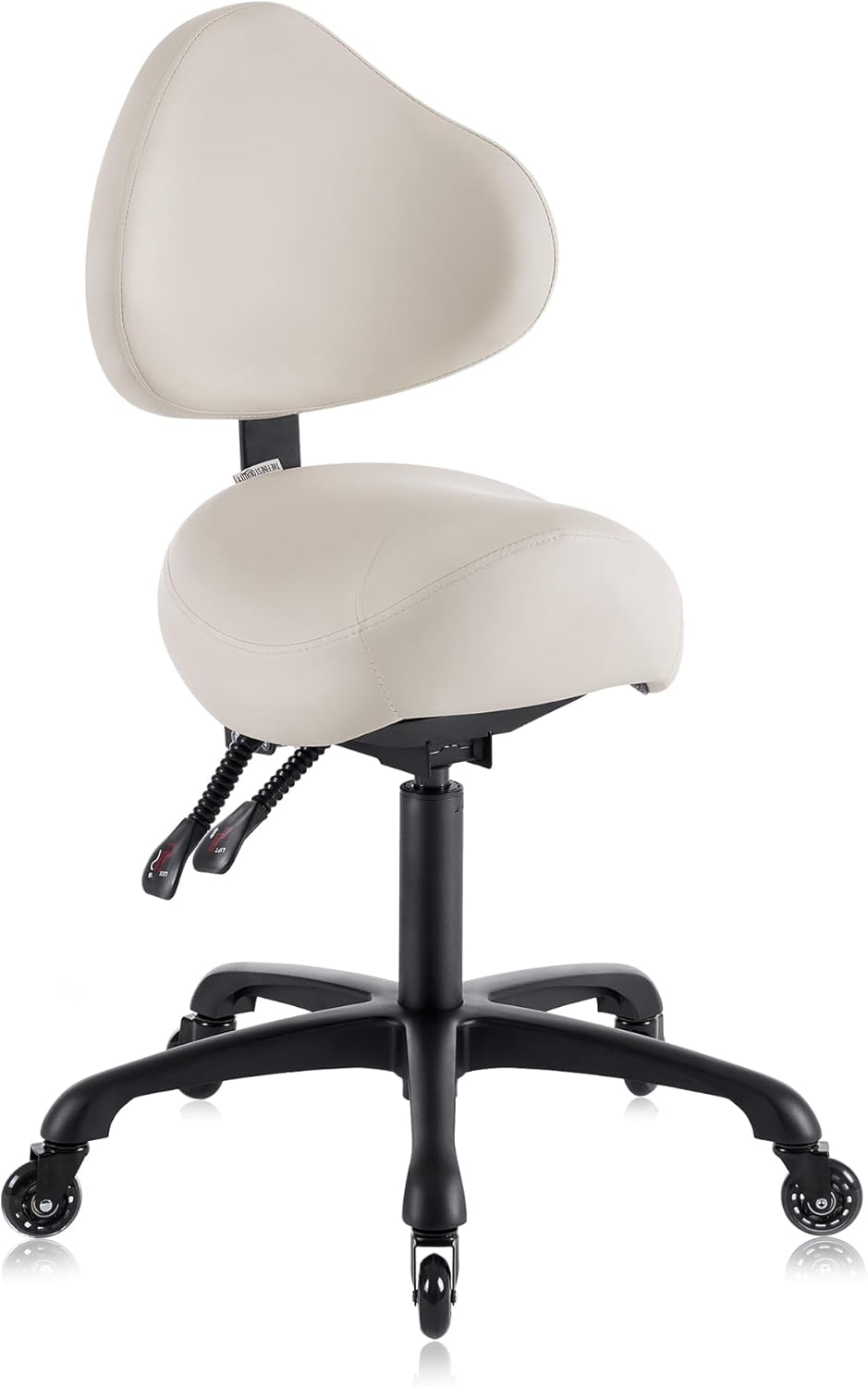

Price: ~$200+ | Weight capacity: 500 lbs | Backrest: Tiltable | Memory foam padding
The DR.LOMILOMI features a 500‑lb weight capacity with an industrial‑grade aluminum base—a rare feat in the saddle chair market. The tiltable backrest allows users to fine‑tune lumbar support throughout the day, and the memory foam top layer over molded foam delivers cloud‑like comfort without bottoming out. This is the best choice for heavy users who need both back support and high weight capacity.
👉 Check price for DR.LOMILOMI Saddle Chair on Amazon →
2. Kaleurrier Ergonomic Saddle Stool with Back – Best Budget with Backrest
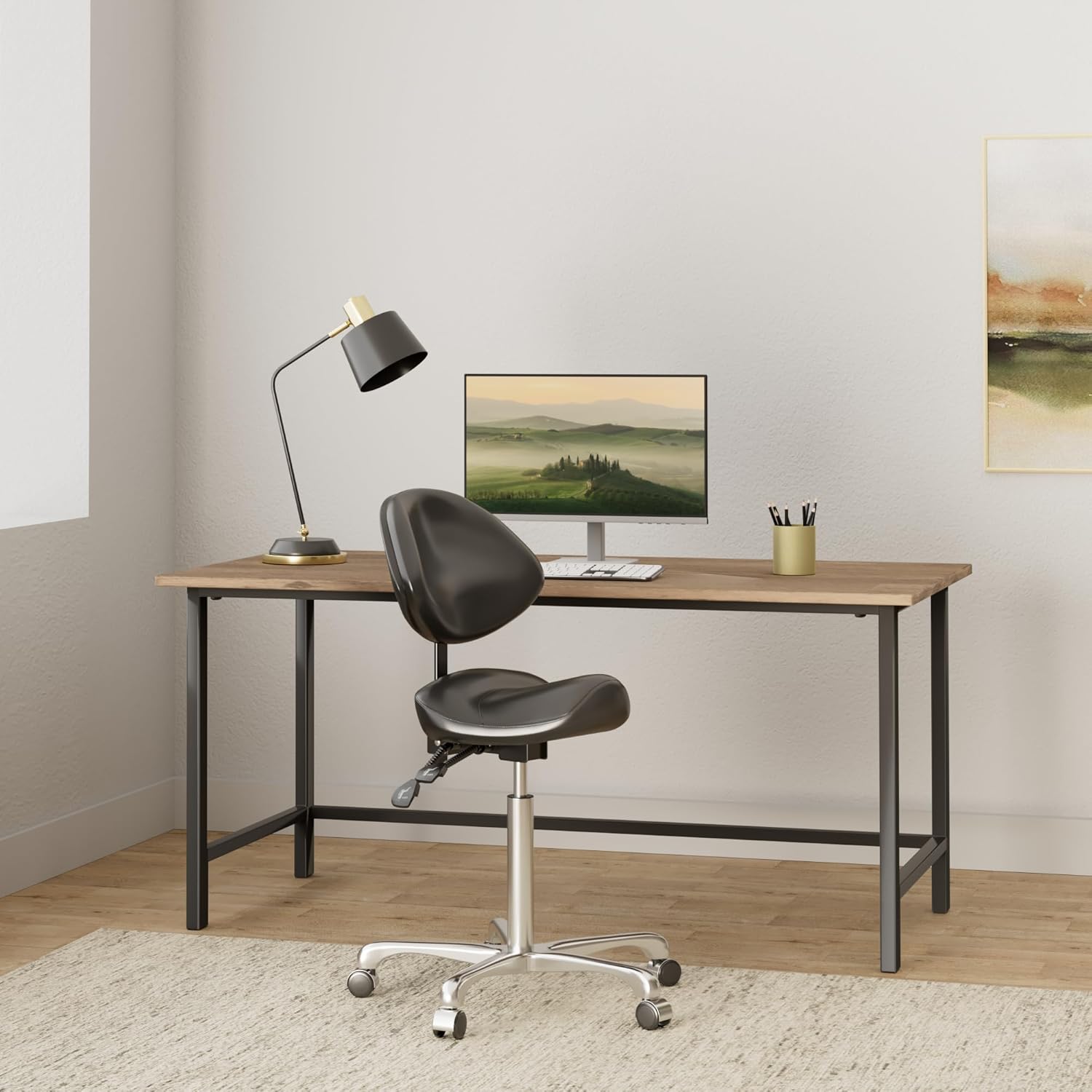

Price: ~$110 | Weight capacity: 350 lbs | Backrest: Fixed | 5‑year upholstery warranty
The Kaleurrier delivers dense sponge padding, a contoured backrest, and a sturdy aluminum base. With a 5‑year guarantee on upholstery and a 20–28 inch height range, it is an excellent budget‑friendly choice for those who want back support without breaking the bank. The backrest is fixed (not tiltable), so fine‑tuned lumbar adjustment is limited, but the value is exceptional.
👉 Check price for Kaleurrier Saddle Stool on Amazon →
3. Antlu Saddle Stool with Back Support – Most Adjustable Backrest
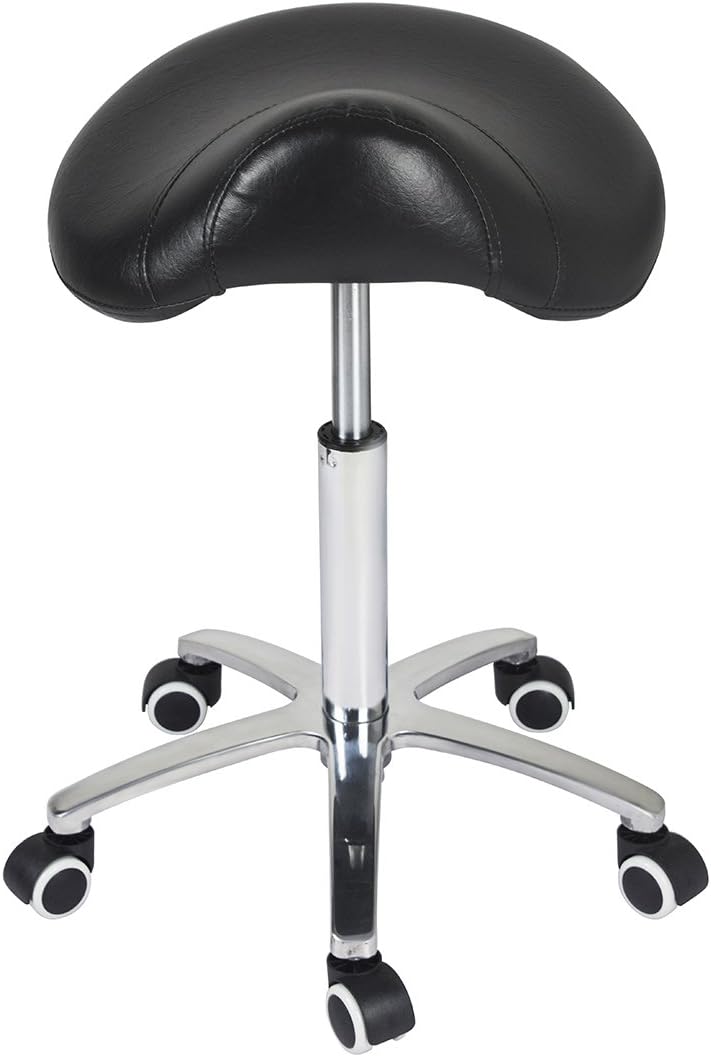

Price: ~$110 | Weight capacity: 400 lbs | Backrest: Tiltable (80°–110°) | Metal base
The Antlu shines with its tilting backrest adjustable between 80° and 110°, providing dynamic lumbar support during extended sessions. With a 400‑lb weight capacity and height adjustment up to 28 inches, this model suits heavier users and taller individuals. The metal base is stronger than plastic competitors. However, some users report quality inconsistencies.
👉 Check price for Antlu Saddle Stool on Amazon →
4. VEVOR Saddle Stool (400 lbs) – Best Heavy‑Duty Backless
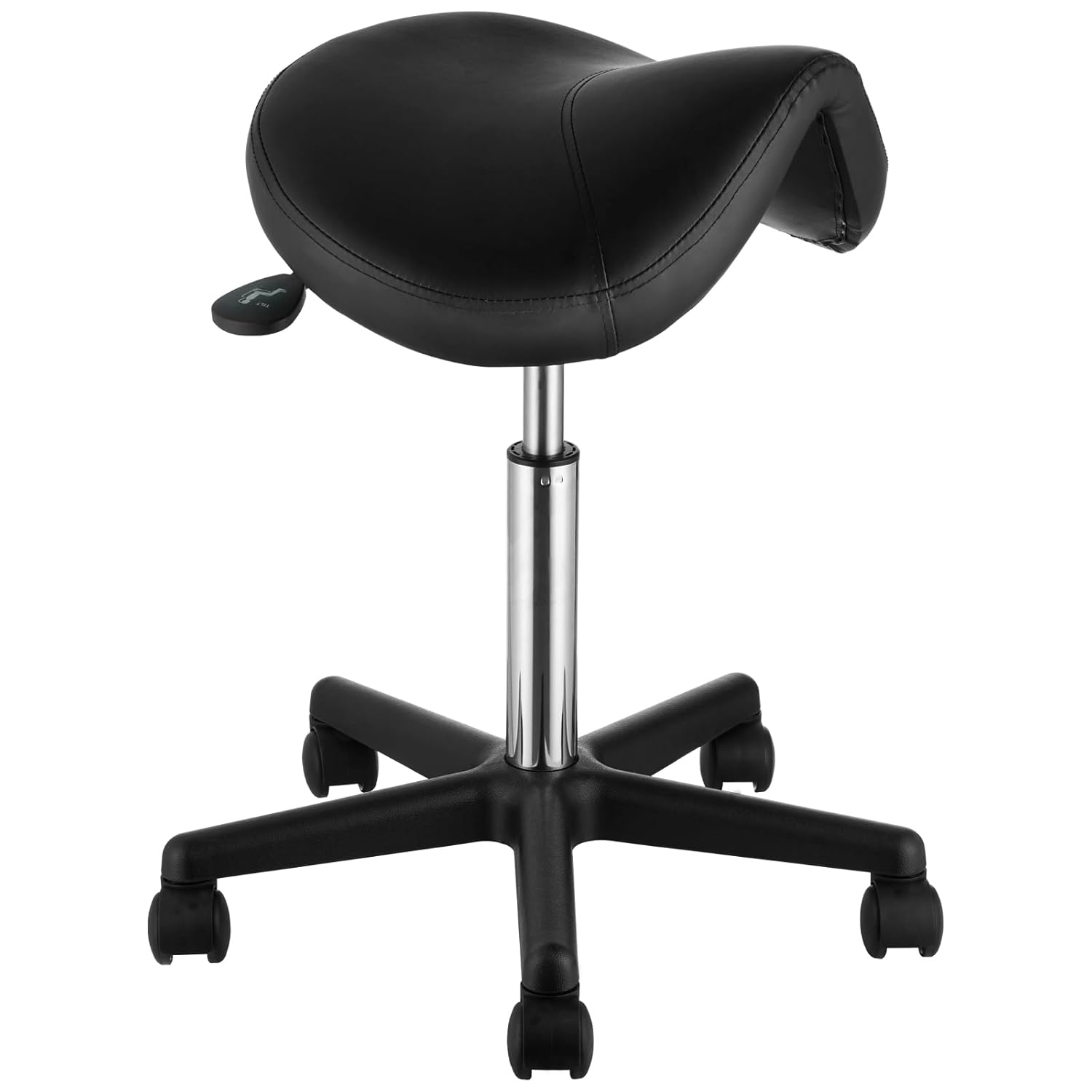

Price: ~$100–140 | Weight capacity: 400 lbs | Backrest: No | Stainless steel base
The VEVOR 400‑lb saddle stool features a widened 5‑star stainless steel base, reinforced structure, and 360° swivel with smooth casters. The thickened PU leather seat promotes a natural sitting posture and reduces pressure during extended sitting. If you prefer a backless design that forces active sitting, this is an excellent choice.
👉 Check price for VEVOR 400‑lb Saddle Stool on Amazon →
Best Kneeling Chairs for Back Pain (2026 Amazon Picks)
If you prefer to try a kneeling chair, these are top options available on Amazon US.
1. NYPOT Adjustable Ergonomic Kneeling Chair – Best Value with Warranty
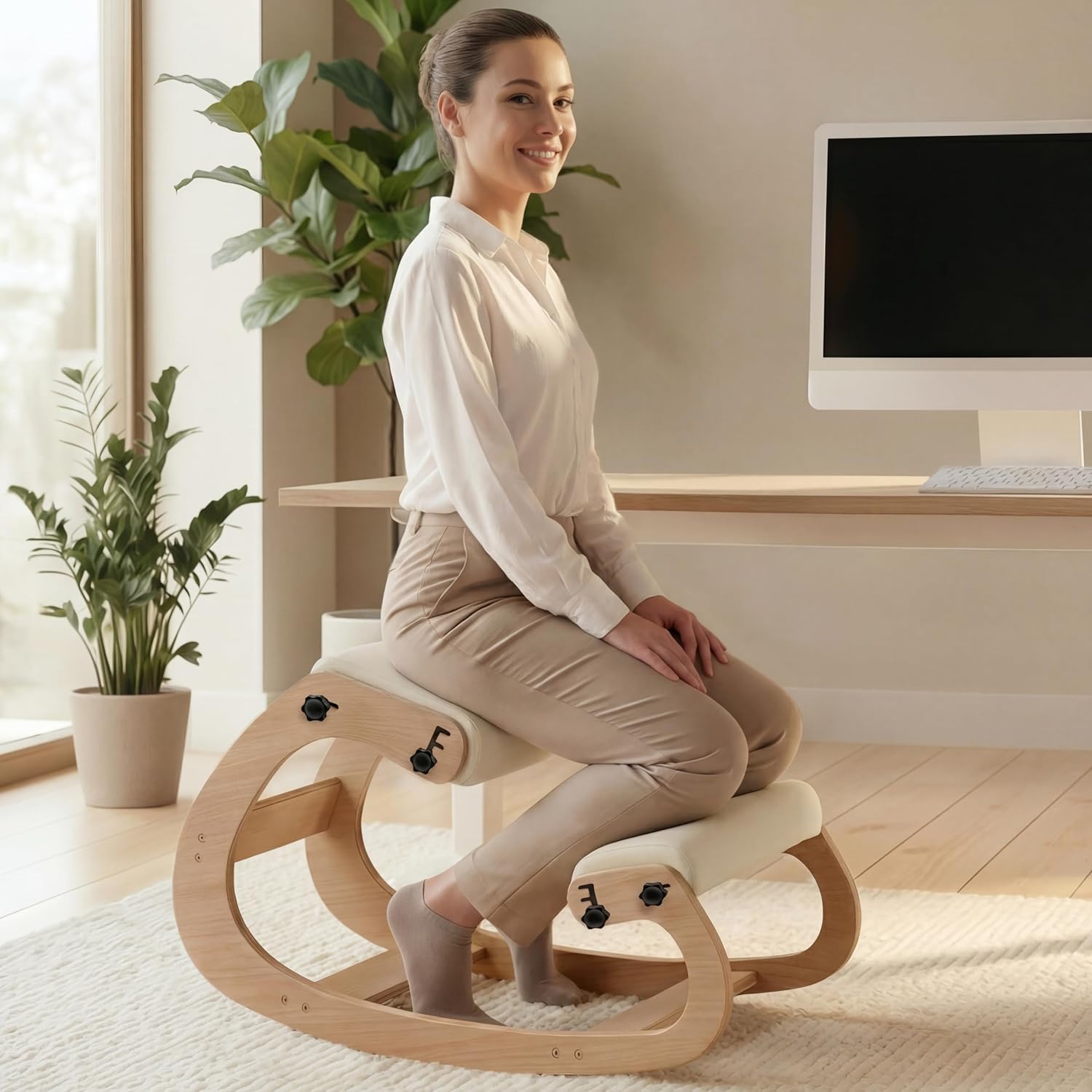

Price: ~$120–150 | Weight capacity: 250 lbs | Features: Adjustable height, rocking motion, 5‑year warranty
The NYPOT kneeling chair combines adjustable seat height, a gentle rocking base, and high‑density sponge cushions to keep your spine aligned. The rocking motion encourages micro‑movements that prevent stiffness and keep core muscles engaged. With a 5‑year warranty and durable wood frame, it offers great value for users who want an active sitting experience without overspending.
👉 Check price for NYPOT Kneeling Chair on Amazon →
2. Master Massage Equipment Ergonomic Kneeling Posture Chair – Best with Back Support
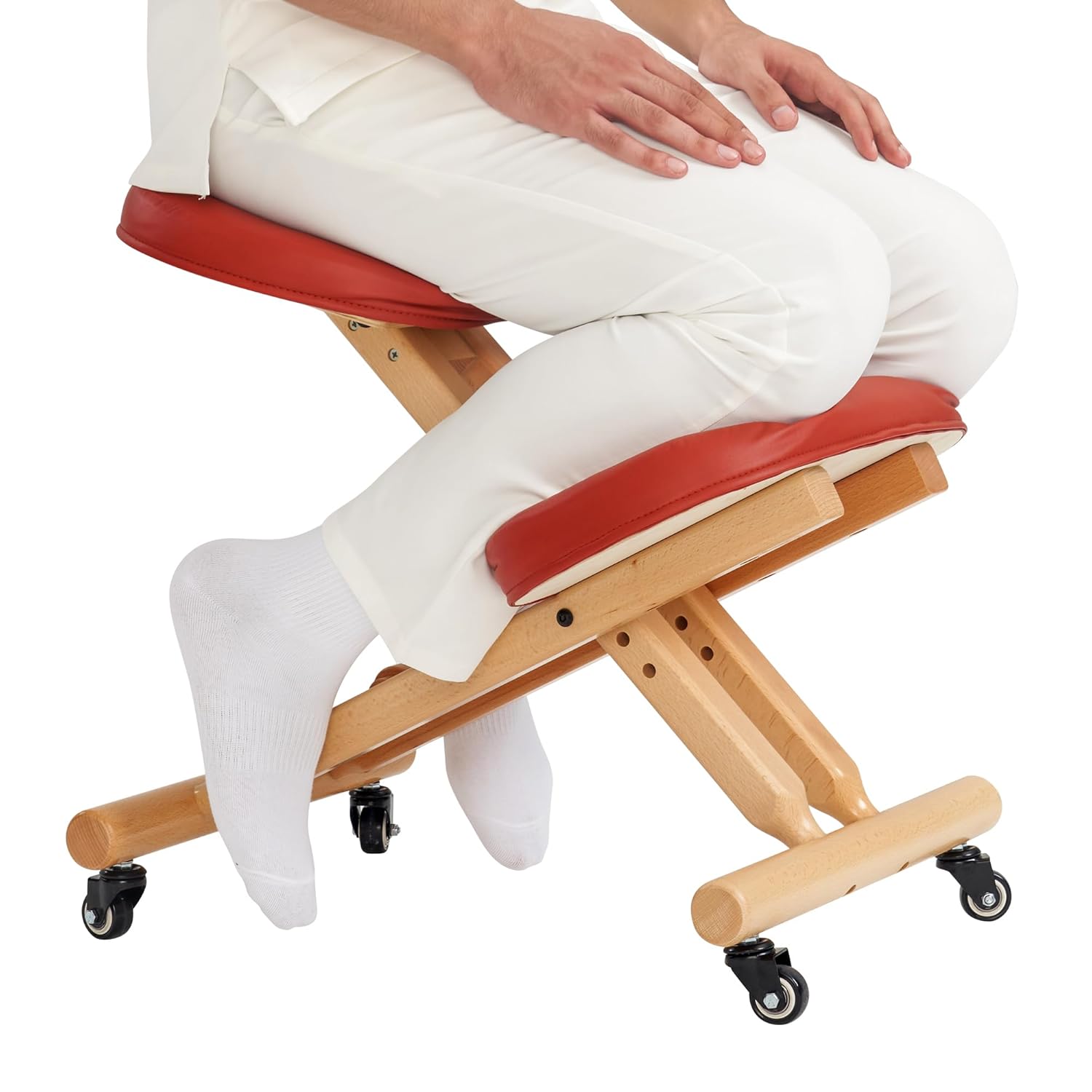

Price: ~$150–200 | Features: Full back support, adjustable seat and backrest angles, padded knee pads
This kneeling chair includes a supportive backrest—a key differentiator from simpler kneeling stools—offering additional lumbar relief and stability. The angled seat naturally encourages your pelvis to tilt forward, aligning your back, shoulders, and neck into a healthier, more upright position. However, user reviews note that the knee pads can be thin and the chair may not be suitable for all body types.
👉 Check price for Master Massage Kneeling Chair on Amazon →
How to Adjust Your Workstation for Alternative Seating
Even the best saddle stool or kneeling chair will not help if your desk is not adjusted correctly. The 2012 Annetts study showed that kneeling chairs got poor neck posture results primarily because the desk was kept at standard height and the monitor was not raised[reference:48].
Here is how to set up your workstation properly:
- Raise your desk: Both saddle stools and kneeling chairs raise your seated eye level. If your desk is at standard height (29–30 inches), you will be looking down at your screen, causing neck strain.
- Raise your monitor: The top of your monitor should be at or slightly below eye level. Use a monitor riser, stack of books, or an adjustable monitor arm.
- Adjust your saddle stool height: Your thighs should slope downward at roughly 45°, with your knees lower than your hips.
- Adjust your kneeling chair height: Your shins should rest comfortably on the knee pads, and your thighs should slope downward. Your knees should not bear excessive weight.
- Use a footrest if needed: If you cannot adjust your desk high enough, a footrest can help maintain proper alignment.
The research is clear: “When you read research on alternative seating, always ask: Did they adjust the workstation? Because if they didn’t, they’re not measuring the chair’s effect. They’re measuring the mismatch between the chair and the workstation”[reference:49]. Do not make that mistake in your own setup.
Frequently Asked Questions (FAQ)
Are saddle stools good for lower back pain?
Yes. A 2003 study of dental surgeons with lower back pain found significant pain reduction (p<0.001) when using saddle chairs[reference:50]. Research also shows that sitting on a saddle chair causes a positive effect of an increase of lumbar lordosis[reference:51]. A 2007 study found that saddle seats provided reduced levels of lower back discomfort compared to standard office chairs[reference:52]. However, the same study noted higher discomfort in the hips and buttocks—a tradeoff that typically resolves with proper cushioning and an adjustment period.
Is a kneeling chair better than a saddle stool for back pain?
For most people, no. While kneeling chairs preserve lumbar lordosis, they often create knee, shin, and neck problems. Research shows kneeling chairs showed good lumbar lordosis but poor neck posture (forward head position) when the workstation was not adjusted[reference:53]. Saddle stools have stronger clinical evidence for back pain relief and offer greater freedom of movement. A 2026 comparison notes that kneeling chairs can open the hips but may overload knees, shins, feet, or the low back if used too long[reference:54].
Do kneeling chairs cause knee problems?
They can. User reviews commonly report shin and knee discomfort, especially with budget models that have thin padding. A kneeling chair puts weight on your shins and knees, which can be problematic for users with existing knee issues. The research notes that kneeling chairs can overload knees, shins, feet, or the low back if used too long[reference:55]. If you have sensitive knees, a saddle stool is likely a better choice.
How long does it take to get used to a saddle stool?
Most users need 1–2 weeks to adapt. Initial discomfort is typically in the hips and buttocks as your sit bones adjust to bearing more weight. One user noted: “Once I overcame the initial saddle soreness I found the position really comfortable”[reference:56].
Can I use a saddle stool or kneeling chair all day?
Yes—but with breaks. The human body is designed for movement, not static sitting. Research shows that healthy individuals change their sitting posture up to 13 times per hour[reference:57]. Alternate between chairs, stand up, and walk around every 30–45 minutes. Kneeling chairs are best used for defined blocks, not as an all‑day replacement for support[reference:58].
Which is better for sciatica: saddle stool or kneeling chair?
Saddle stools are generally better for sciatica because the open hip angle (135°) reduces pressure on the sciatic nerve pathway. The forward pelvic tilt also alleviates hamstring tension that contributes to sciatic pain. One user with sciatica and lower back pain reported that their saddle stool was a “game changer”[reference:59]. Kneeling chairs shift weight onto your shins, which does not directly address sciatic nerve compression.
Do I need a backrest on a saddle stool?
If you have existing lower back pain or prefer to lean back during passive tasks, a tiltable backrest (like the Antlu or DR.LOMILOMI) is helpful. For active sitting where you lean forward (typing, drafting, clinical work), a backless saddle stool may be sufficient and encourages core engagement.
What is the best saddle stool for back pain under $150?
The Kaleurrier Saddle Stool with Back (~$110) offers a contoured backrest, dense sponge padding, a 350‑lb weight capacity, and a 5‑year upholstery warranty. The backrest is fixed (not tiltable), but for the price, it is an excellent value. The Antlu Saddle Stool (~$110) adds a tiltable backrest (80–110°) for dynamic lumbar support.
Final Verdict: Which One Should You Buy for Your Back Pain?
After reviewing the biomechanics, clinical evidence, user experiences, and product options, here is my final recommendation:
👉 Choose a SADDLE STOOL with a TILTABLE BACKREST if: You have chronic lower back pain, need to sit for prolonged periods, want the strongest clinical evidence (p<0.001), and can invest in a quality model with memory foam padding. Best options: DR.LOMILOMI 510 KOA (premium) or Antlu (budget tiltable).
👉 Choose a BACKLESS SADDLE STOOL if: You prefer active sitting, want to engage your core muscles, and your work involves leaning forward (typing, drafting). Best option: VEVOR 400‑lb Saddle Stool.
👉 Choose a KNEELING CHAIR if: You are on a tight budget, your work involves short, focused sessions with minimal sideways movement, and you are willing to properly adjust your desk height to avoid neck strain. Best option: NYPOT Ergonomic Kneeling Chair (5‑year warranty, rocking motion).
Most important advice: No chair, no matter how well‑designed, can replace movement. Standing up, stretching, and walking every 30–45 minutes is more important than any single seating choice. Static posture—even perfect static posture—starves your intervertebral discs of nutrients. The ideal sitting posture is a variable one. Use your saddle stool or kneeling chair as one tool in a movement‑rich system that includes standing, walking, and switching positions. That is what actually helps your back.
👉 See today’s price for DR.LOMILOMI 510 KOA (Top Saddle Stool for Back Pain) on Amazon →