
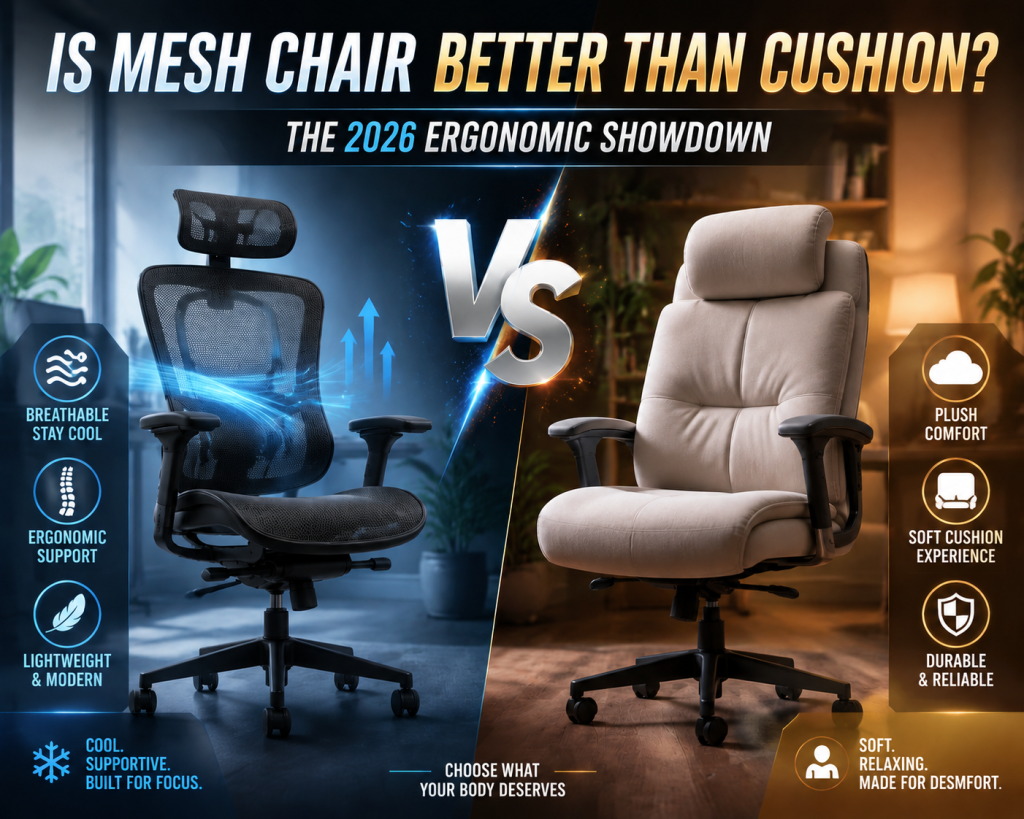
⚡ Quick Comparison: Mesh vs Cushion Office Chairs
| Feature | Mesh Chair | Cushion Chair |
|---|---|---|
| Comfort feel | Firmer, supportive, adaptive | Plush, cushioned, “sofa-like” |
| Breathability | Excellent — open-weave airflow | Poor — retains heat and moisture |
| Lumbar support | Dynamic, adaptive, long-lasting | Static, may compress over time |
| Durability | 5–10 years, retains shape | 3–5 years, foam compresses |
| Best for | Warm climates, long sessions, active sitters | Cooler offices, plush comfort seekers |
| Maintenance | Wipe clean, stain-resistant | Prone to dust, oils, and spills |
| Price range | $40–$200+ | $50–$300+ |
🔬 Mesh vs Cushion: How Each Material Works
Before choosing, it helps to understand what you’re actually sitting on — because the engineering is fundamentally different.
🕸️ Mesh: A Suspended Tension System
Mesh seats and backrests work like a trampoline. A woven polymer fabric (usually elastomeric polyester or nylon) stretches across a rigid frame, and your body weight is distributed across thousands of tiny contact points. There’s no padding to compress — the material flexes and rebounds. High-quality mesh uses multi-layer weaves with different tension zones: firmer under your sit bones, softer at the edges. Premium mesh retains its shape and support over time, making your investment worthwhile.
🧽 Cushion: A Compression System
Foam cushions rely on cellular structure — millions of tiny air pockets that compress under load and (ideally) spring back. The critical spec is density. Low-density foam (under 18kg/m³) feels soft initially but flattens within a year. High-density foam (above 45kg/m³) holds up far better. High-quality ergonomic chairs use molded foam, shaped under high temperature and pressure for greater density and durability.
🌬️ Breathability: The Mesh Advantage
This is where mesh chairs shine brightest. The open-weave design allows air to circulate freely, keeping you cool even during long work sessions. Unlike padded chairs that compress and retain heat, mesh ergonomic chair designs stay cool and supportive — hour after hour.
If you work in a warm office, live in a hot climate, or tend to run hot, mesh is the clear winner.
🦴 Lumbar Support: Which One Protects Your Back Better?
Lumbar support in mesh chairs differs from traditional padded chairs in several important ways.
🔹 Mesh Lumbar Support
- Adaptive: Flexes and conforms to your spine’s natural curvature.
- Breathable: Allows air to circulate, preventing sweat buildup.
- Customizable: Many mesh chairs offer adjustable height, depth, and tension.
- Durable: Maintains shape and functionality for longer periods.
🔸 Traditional Padded Lumbar Support
- Static: Tends to be fixed and may lose form over time.
- Heat-retaining: Traps heat and moisture, leading to discomfort.
- Limited adjustability: Often fixed lumbar pads that may not fit all body types.
- Compresses: Padding may degrade and lose effectiveness over time.
If your primary goal is to protect your back and maintain healthy posture, a mesh office chair with lumbar support is generally the better choice.
🛋️ Comfort: The Cushion Advantage
When it comes to pure, plush comfort, cushion chairs have the edge — at least in the short term. Foam cushions are known for their soft, cushioned feel. They provide better wrapping comfort around the hips and thighs, distributing body pressure evenly. When sitting for extended periods, a foam cushion can reduce fatigue and offer a more “sofa-like” experience compared to mesh seats.
However, there’s a catch. Lower-quality foam can compress, creating a permanent “butt print” that shifts your pelvis and wrecks your posture. When a chair relies on cheap foam that sags under your weight, it stops being a seat and starts acting as a physical bottleneck for your blood flow.
⏳ Durability: Which One Lasts Longer?
Durability depends on the quality of materials used in both types of chairs.
Molded foam cushions are long-lasting and resistant to deformation, ideal for long-term office use. Cut foam cushions are less durable, more affordable, but prone to sagging over time.
🔄 The Hybrid Solution: Best of Both Worlds
You don’t have to choose one material for the whole chair. Many hybrid designs combine a breathable mesh back with a supportive foam seat — giving you the best of both worlds.
Hybrid configuration: Mesh back + foam seat
- Breathability: The mesh back keeps your spine cool and prevents sweat buildup.
- Comfort: The foam seat provides plush cushioning for your hips and thighs.
- Long-term support: You get adaptive lumbar support from the mesh back and pressure relief from the foam seat.
💡 Pro tip: If you spend many hours sitting, a mesh-back chair paired with a foam-padded seat is often the ideal balance.
📋 How to Choose Between Mesh and Cushion
Choose a mesh office chair if:
- You work in a warm office or tend to run hot — mesh keeps you cool.
- You want a chair that lasts 5+ years without significant wear.
- You prefer a firmer, more supportive feel over plush cushioning.
- You want low-maintenance cleaning — mesh wipes clean easily.
- You value a modern, lightweight design.
Choose a cushion office chair if:
- You prefer a plush, cushioned “sofa-like” sitting experience.
- You work in an air-conditioned or cooler environment where heat isn’t an issue.
- You need maximum pressure relief for your sit bones and thighs.
- You want a traditional, executive-style look.
- You’re willing to replace the chair every 3-5 years or invest in high-density molded foam.
💡 Pro tip: Check material quality — high-density foam cushions and premium elastic mesh last longer. Test support by looking for lumbar adjustment and ergonomic contours.
❓ Frequently Asked Questions: Mesh vs Cushion Office Chairs
🏆 Final Verdict: Is Mesh Better Than Cushion?
The short answer: it depends. Neither is universally “better” — the right choice depends on your environment, comfort preference, and budget.
Key takeaways:
- 🌬️ Choose mesh if: You overheat easily, value long-term durability, prefer adaptive lumbar support, or want low-maintenance cleaning.
- 🛋️ Choose cushion if: You prioritize plush comfort, work in a cool environment, need maximum pressure relief, or prefer an executive aesthetic.
- 🔄 Best of both worlds: Look for a hybrid design — mesh back for breathability + foam seat for cushioning. This combination offers the ideal balance for most office workers and is increasingly popular in 2026.
Still undecided? Visit a showroom to test both types. Comfort is highly personal — the best chair is the one that fits your body and keeps you pain-free through your workday.
📚 You May Also Like
- Are Foot Rests Good for Back Pain? (Science Guide)
- Best Foot Rest for Office Chairs: 2026 Ergonomic Guide
- Foot Rest vs Foot Hammock: Which Is Better?
- Do You Need a Foot Rest at Your Desk? (2026 Guide)
- Foot Rest for Circulation: Does It Work? (Evidence)
- Mesh vs Foam Office Chair: Which One Is Right for You?
- Best Massage Chair Brands in 2026: Top Picks for Every Budget