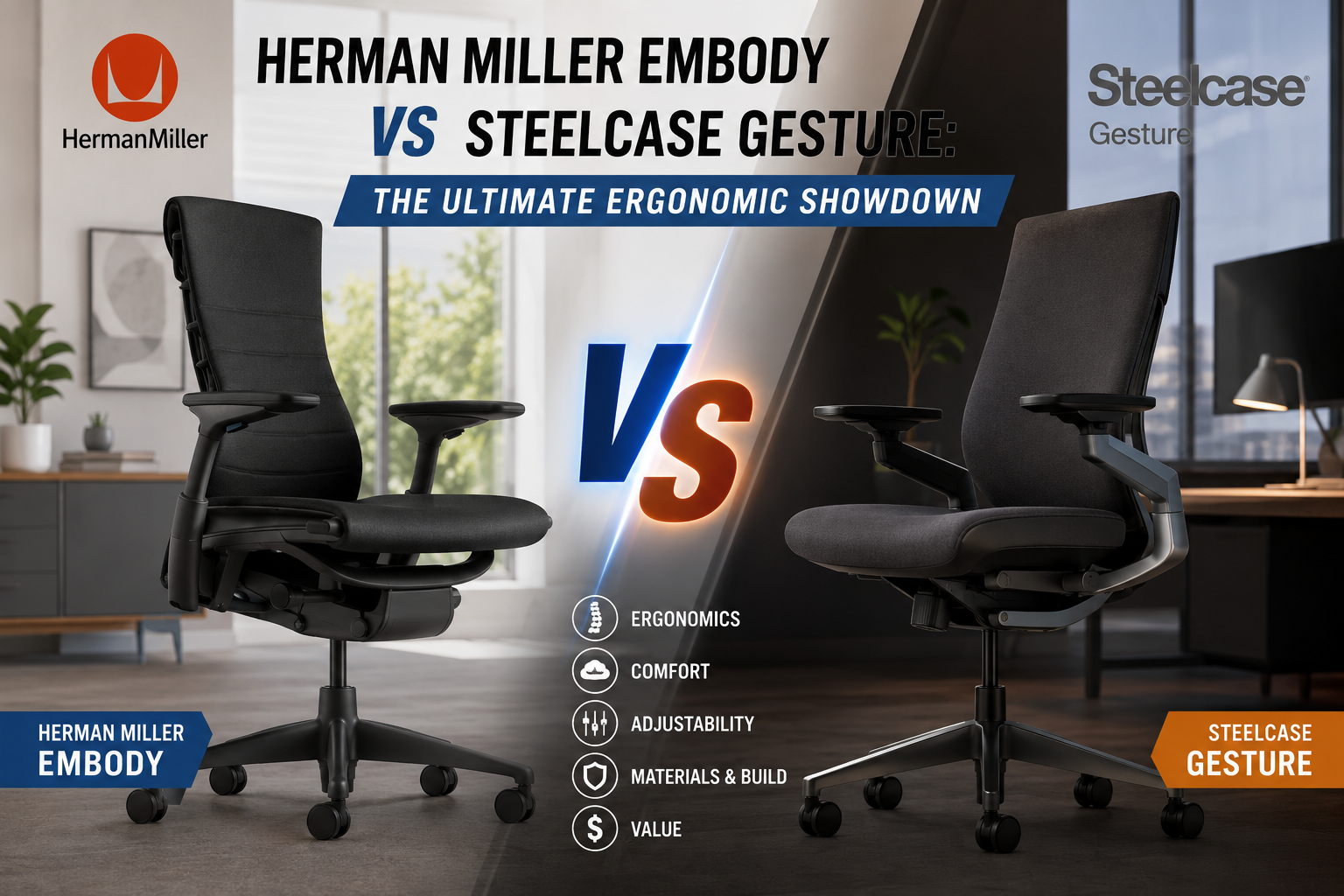
🎯 Design Philosophy: Adapt vs. Guide
The fundamental difference between these two chairs comes down to their core design goals.
🔹 Steelcase Gesture: The Chameleon
The Gesture was designed after Steelcase conducted a global study of how people actually sit while using modern technology — phones, tablets, laptops, and multiple monitors. The conclusion: people don’t sit still. They lean forward, slouch, recline, cross their legs, and even sit sideways. The Gesture is built to adapt to you, supporting your body in virtually any position you adopt. Its 360-degree armrests track with your arms whether you’re typing, swiping a phone, or reclining. Think of it as a chair that follows you rather than correcting you.
🔸 Herman Miller Embody: The Spinal Architect
The Embody was developed with input from physicians and PhDs in biomechanics, with a focus on promoting circulation, relieving pressure points, and aligning your spine. Its design philosophy is more clinical and prescriptive. The chair uses a Pixelated Support system — hundreds of small, dynamic points that adjust to your micro-movements and distribute weight evenly across your back and seat. The Embody doesn’t just accommodate your posture; it encourages you to sit in a healthier, more aligned position. It’s designed to guide your body toward better ergonomics.
⚡ Quick Comparison: Embody vs Gesture at a Glance
| Feature | Herman Miller Embody | Steelcase Gesture |
|---|---|---|
| Design Philosophy | Posture guidance & spinal alignment | Posture adaptation & dynamic movement |
| Back Technology | Pixelated Support — 134 independent flexors | 3D LiveBack — mimics spinal motion |
| Armrests | Wide range, but no depth adjustment | 360-degree “mechanical arm” adjustability |
| Seat Depth | Clunky adjustment | Intuitive dial, adjustable while seated |
| Recline | Best-in-class — smooth, deep, effortless | 4 tilt limiter positions |
| Headrest | ❌ Not available | ✅ Optional, highly adjustable |
| Warranty | 12 years | 12 years |
| Starting Price | ~$1,700+ | ~$1,499 |
| Best For | Deep work, back pain relief, spinal health | Multi-device work, varied postures, versatility |
🛋️ Comfort & Support: Two Very Different Experiences
🔹 Steelcase Gesture
The Gesture’s comfort comes from its adaptability. The 3D LiveBack technology flexes with your spine as you move, maintaining contact with your back in every position. The seat is comfortable and supportive, and the 360-degree armrests provide extensive versatility.
Key strengths:
- ✅ Exceptional armrest adjustability — industry-leading
- ✅ Supports a wide range of postures
- ✅ Intuitive, on-the-fly adjustments
- ✅ Headrest option available
Potential drawbacks:
- ❌ The seat padding can feel firm in the tailbone area for some users
- ❌ Lumbar support is considered adequate but not exceptional, even with the optional adjustment
🔸 Herman Miller Embody
The Embody’s comfort is driven by its Pixelated Support system — hundreds of tiny, responsive points that adjust to your micro-movements and evenly distribute pressure. The seat is wide, flexible, and allows cross-legged sitting. The recline mechanism is widely regarded as one of the best in the industry.
Key strengths:
- ✅ Best-in-class recline
- ✅ Widest range of back movement of any chair in its class
- ✅ Excellent pressure distribution
- ✅ Build quality holds up well over time
Potential drawbacks:
- ❌ Tailbone pressure can develop over extended sessions
- ❌ Lumbar is pronounced and not adjustable enough for some users
- ❌ No headrest option
- ❌ Seat depth adjustment is clunky for the price
🛠️ Adjustability: Which One Fits You Best?
Both chairs offer extensive adjustability, but their strengths lie in different areas.
🔹 Steelcase Gesture
- Armrests: 360-degree “mechanical arm” adjustability — height, width, depth, and angle
- Seat depth: Intuitive dial adjustment that can be done while seated
- Tilt: 4 tilt limiter positions for flexible recline
- Headrest: Optional, with height and angle adjustment
- Lumbar: Optional adjustable lumbar support
- Overall: Highly intuitive, easy to adjust on the fly
🔸 Herman Miller Embody
- Armrests: Wide height and width range, but no depth adjustment
- Seat depth: Adjustable, but clunky compared to the Gesture
- Tilt: Best-in-class recline — smooth, deep, and effortless
- Headrest: ❌ Not available
- Lumbar: Pronounced, but not adjustable enough for some users
- Overall: More tailored, with a steeper learning curve
📊 Pros & Cons Side by Side
✅ Herman Miller Embody — Pros
- Best-in-class recline — smooth, deep, effortless
- Widest range of back movement of any chair in its class
- Excellent pressure distribution — Pixelated Support system
- Build quality remains pristine after years of use
- Wide, flexible seat — allows cross-legged sitting
- Strong spinal support — supports from sacrum to thoracic spine
❌ Herman Miller Embody — Cons
- Tailbone pressure can develop over extended sessions
- Lumbar is pronounced and not adjustable enough
- No headrest option — a noticeable omission at this price point
- Seat depth adjustment is clunky for a $2,000 chair
- Armrests lack depth adjustment — surprising for a flagship chair
- Steeper learning curve to dial in the perfect fit
✅ Steelcase Gesture — Pros
- Unmatched armrest adjustability — 360-degree “mechanical arms”
- Supports every posture — leans, reclines, cross-legged
- Intuitive, on-the-fly adjustments — easy to use
- Headrest option — with height and angle adjustment
- Seat depth adjustment is intuitive and can be done while seated
- 12-year warranty — industry-leading coverage
- Adapts to modern multi-device workstyles
❌ Steelcase Gesture — Cons
- Seat padding can feel firm in the tailbone area
- Lumbar support is adequate but not exceptional, even with the optional adjustment
- Higher starting price than some competitors
- Less focused on spinal correction — more about adaptation than guidance
- May not suit users who prefer a more prescriptive ergonomic approach
💰 Price & Value: Which One Is Worth the Investment?
Both chairs are premium investments, but their pricing structures differ slightly.
🔹 Steelcase Gesture
- Starting price: ~$1,499
- Fully loaded: Can reach ~$2,456 with all options
- What’s included: 360-degree armrests, seat slider, tilt lock, and lumbar support come standard
- Headrest: Optional add-on
- Warranty: 12 years
- Value proposition: Best for users who value arm versatility and posture adaptability
🔸 Herman Miller Embody
- Starting price: ~$1,700+
- Fully loaded: Can exceed $2,000 depending on fabric and options
- What’s included: Pixelated Support system, best-in-class recline, wide seat
- Headrest: ❌ Not available
- Warranty: 12 years
- Value proposition: Best for users who prioritize spinal health and back pain relief
💡 The bottom line on value: The Gesture is generally the more cost-effective option, especially considering its standard features. The Embody, while more expensive, offers a unique pressure-distribution system and an unmatched recline experience. Both hold their value well in the secondary market, thanks to their 12-year warranties and reputation for durability. If you’re on a tighter budget, consider refurbished options from trusted sellers.
🎯 Who Should Buy Which?
✅ Choose the Steelcase Gesture if:
- You frequently switch between devices — phone, tablet, keyboard, multiple monitors
- You change postures often — leaning, reclining, sitting sideways
- You want unmatched armrest adjustability — 360-degree “mechanical arms”
- You need a headrest — the Gesture offers an optional headrest
- You prefer intuitive, on-the-fly adjustments
- You want the most versatile chair for a wide range of work styles
✅ Choose the Herman Miller Embody if:
- You suffer from back pain and want a chair that actively supports spinal health
- You value pressure distribution and want to avoid pressure points
- You want the best-in-class recline experience
- You prefer a prescriptive ergonomic approach — a chair that guides your posture
- You don’t need a headrest — the Embody doesn’t offer one
- You’re willing to invest in a chair that encourages healthy sitting over the long term
❓ Frequently Asked Questions
🏆 Final Verdict: Which One Should You Buy?
The Herman Miller Embody and Steelcase Gesture are both exceptional chairs — but they serve different needs.
Choose the Steelcase Gesture if: You’re a dynamic worker who switches between devices and postures throughout the day. You want the most versatile armrests on the market and the option of a headrest. You prefer a chair that adapts to you rather than one that corrects you.
Choose the Herman Miller Embody if: You suffer from back pain or want to proactively protect your spine. You value pressure distribution and spinal alignment. You want the best-in-class recline and don’t need a headrest. You prefer a chair that guides you toward healthier sitting over the long term.
Our guidance: If you can, try both chairs in person. The feel of an ergonomic chair is highly personal — what works for one person may not work for another. Both chairs are long-term investments in your health and productivity, so taking the time to test them is well worth the effort.
📚 You May Also Like
- Best Executive Office Chair Under $300: 7 Picks That Look and Feel Premium (2026)
- Best Ergonomic Chair Under $300: 5 Picks That Punch Above Their Weight
- Executive Office Chair vs Ergonomic Chair: Which One Is Right for You?
1 thought on “Herman Miller Embody vs Steelcase Gesture: The Ultimate Ergonomic Showdown (2026)”