
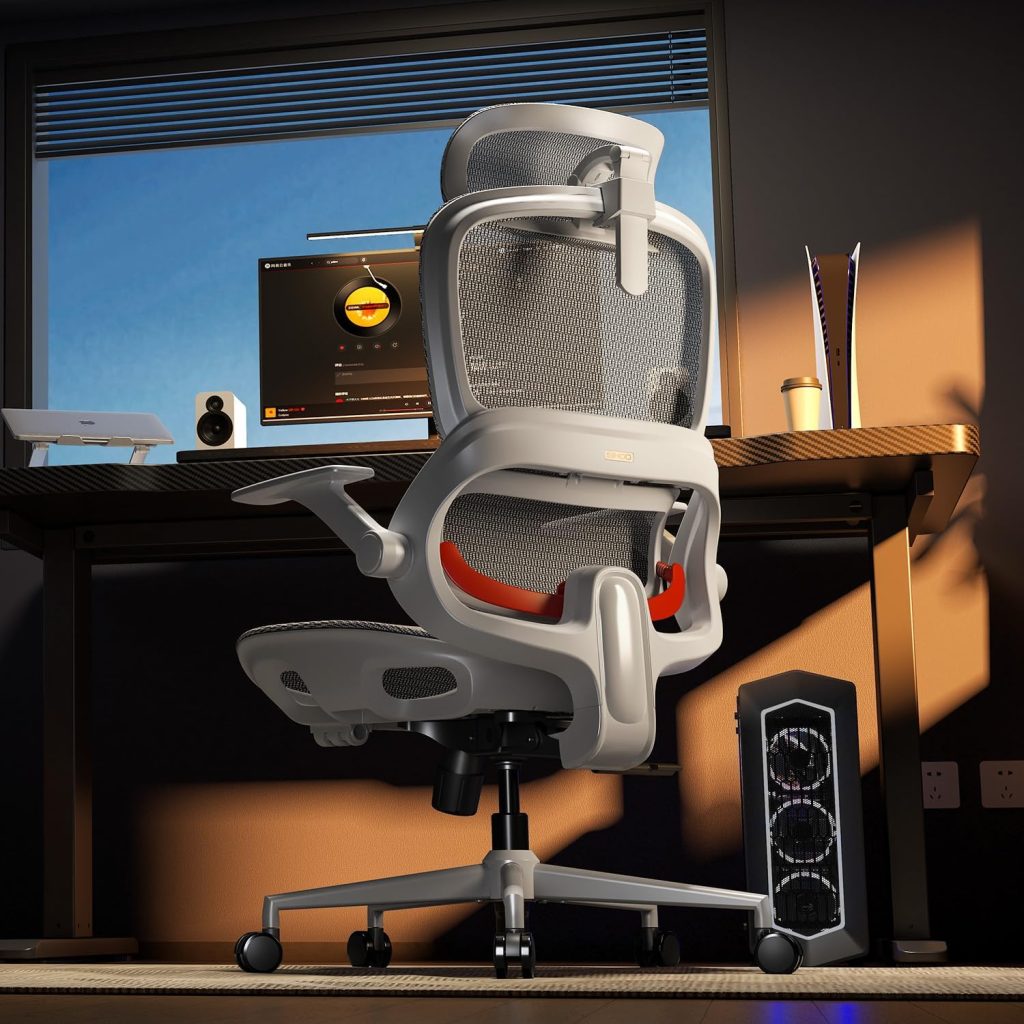
You are shopping for an ergonomic chair and keep seeing two names: Hbada and Sihoo. Both promise “dynamic lumbar support.” Both claim to eliminate back pain. But when you look closer, their approaches to supporting your lower back are fundamentally different — and understanding that difference could determine whether you finally get relief or waste your money.
The core problem with sitting is the lumbar gap. When you lean forward to type, sit upright for a meeting, or recline to think, most chair backs stay frozen in place while your spine moves. Your lower back loses contact with the support—and pain follows. I have spent weeks researching the lumbar technologies of Hbada and Sihoo, analyzing user reviews and expert opinions across dozens of sources. By the end of this guide, you will know exactly which dynamic lumbar system fits the way you sit.
Quick Answer: Hbada vs Sihoo Lumbar Support — Which Is Right for You?
Both brands offer genuine dynamic lumbar solutions, but their philosophies differ significantly:
- Choose Hbada (3-Zone Floating Wing) if you want active, wrap‑around support that holds your lower back from multiple angles. The floating wings rotate inward (40°–80°) and adjust vertically (60mm), creating a “cradling” sensation. Ideal for users who shift between sitting and leaning tasks. Users often describe feeling gently “held” during movement rather than aggressively corrected.
- Choose Sihoo (Domino 3D / Syncro Flex) if you want smoother, more passive tracking that moves with your posture without feeling robotic. Sihoo’s Dominosystem uses a vertical rail to keep the lumbar hinge aligned as your back shifts. The result is less intrusive but still effective support — ideal if you prefer support that moves without you noticing.
One is not universally better than the other. The best choice depends on your sitting style, your body type, and how much adjustability you need. Let me show you why.
What Is Dynamic Lumbar Support — And Why Static Lumbar Fails?
Most budget chairs claim to have “lumbar support,” but what they really offer is a fixed bump that only works in one sitting position. As soon as you lean forward or recline, that support loses contact with your lower back — creating a painful “lumbar gap.”
Studies show that more than 60% of desk workers battle lower back pain, and poor lumbar support is a primary contributor. Dynamic lumbar systems solve this problem by moving with you.
Between 2020 and 2024,a new class of dynamic office chairs has crystallized around two distinct lumbar-solving philosophies: active mechanical tracking and embedded adaptive geometry. Hbada and Sihoo represent the clearest examples of each path. The table below maps out their complete feature differences.
Technical Feature Comparison: Hbada vs Sihoo Dynamic Lumbar
| Feature | Hbada (3‑Zone Floating Wing) | Sihoo (Domino 3D / Syncro Flex) |
|---|---|---|
| Core Technology | 3‑zone elastic floating wings with 8‑way precision adjustment | Domino 3D立体腰靠系统 + Syncro Flex腰背滑翔技术 |
| Movement Mechanism | Gravity‑sensing instant adaptation — side wings rotate (40°–80°); 60mm vertical adjustment targeting L1‑L5 | 腰靠‑头枕‑坐垫联动 (multi‑component linkage); dynamic “domino” effect |
| Lumbar Adjustment Directions | 上下 (60mm vertical) + 左右包裹 (±40°–80° lateral wing rotation) + 前后微调 (1‑stage push) | 上下 (height) + 前后 (depth) + 3‑mode firmness (with Pro V2) |
| Target Users | 5’1″–6’5″ (155‑195cm), focuses on larger build/height accommodation | Best ≤ 5’11” – 6’0″ (≤180‑183cm) |
| Sitting Experience | Active “cradling” sensation — wings wrap the lumbar during posture change | Smoother passive tracking — lumbar pivot follows via hinged‑rail as back moves |
| Additional Comfort | 140° recline (4 modes); gravity chassis; 4D headrest; 6D armrests; footrest optional | 135° recline (3 locks); optional footrest; breathable CloudMesh; 6D armrests |
| Weight Capacity | 300 lbs (approx. 136 kg) | |
| Warranty | 5‑year warranty (core structural components) on 2026 edition | 3‑5 years (model dependent) |
Hbada’s Lumbar Philosophy: The 3‑Zone Floating Wing — Wrap‑Around Support That Holds You
Hbada’s flagship dynamic lumbar system is called the 3‑zone floating wing lumbar support. It appears on the E3 Pro and newer X7 models. The concept is mechanical but active: a set of side wings that rotate 40°–80° inward when you sit, wrapping around your lower back for a “cradling” effect that standard pads cannot match. Additionally, the lumbar support provides a 60mm vertical adjustment range to precisely target the L1–L5 vertebrae, ensuring gap‑free support whether you lean forward or recline.
According to manufacturer specifications, the system offers 8‑way precision adjustment (up/down, left/right wrap, front/back micro‑adjust). The multi‑directional articulation accommodates the complex, asymmetrical curves of the lumbar area — meaning support is not just a single pressure point but a broader zone of contact.
How Hbada’s Lumbar Actually Works (Based on User Feedback)
Several 2026 in‑depth reviews help clarify what the 3‑zone feel is like in everyday use.
TechRadar notes that the chair features a wrap‑around lumbar design that cradles the lower back luxuriously. “The lumbar support gently caresses your midsection, love handles, lower back, whatever you want to call it. Hbada does a good job… providing comfortable support that is less intrusive and bothersome.” It is present but not overbearing, making it well‑suited for those who want steady support without feeling locked in.
Similarly, T3’s review of the E3 Pro highlights that the lumbar support was the standout performer: “The main star of the show was the HBADA E3 Pro’s lumbar support. It perfectly cradled my lower back and hips, and was very comfortable to rest against. Compared to my old office chair and other chairs I’ve tried, it massively improved my posture and comfort levels when at the office.”
Multiple users who tested the chair for long workdays also reported that the large, adaptive lumbar pad — which expands across the entire curved backrest — eliminated the “sideways gap” that can occur when shifting posture left or right at a desk.” This lateral coverage is a genuine advantage for users who do not sit perfectly centered at all times.
A PCGamesN reviewer who identifies as a “fidgeter” — someone who rarely stays still — found the dynamic 3‑zone lumbar to be a perfect match, noting that it delivered exceptional comfort and adjustability for long sitting sessions. For people who constantly shift between leaning forward to type, sitting upright for calls, and reclining to think, a lumbar system that moves with you is invaluable.
All of these tests align with Hbada’s core message: the 3‑zone wings follow the waist’s movement and maintain contact in every posture, eliminating the “lumbar gap” that triggers pain.
The “Wrap‑Around” Feel: What Users Say
If you sit in a Hbada chair, you will feel the lumbar support actively. The wings hug your lower back, creating a sensation of being held. This is a deliberate design choice — not passive. Reviewers consistently noted that the lumbar support was the main star of the chair, providing a wrap‑around hug that immediately improved posture and comfort compared to their previous chairs.
For users with existing lower back stiffness or pain, this aggressive, engaged support can be a game‑changer. However, some users find it too present and prefer a more subtle system.
Hbada X7: AI‑Powered Lumbar Tracking (Premium Tier)
Hbada has also introduced a premium AI‑powered lumbar tracking system in the X7 model. This system uses an embedded AI chip and integrated sensors to analyze pressure changes at the lower back and respond within milliseconds, adjusting the backrest vertically and horizontally — no manual controls needed.
Early reviews praise its concept but note execution nuances: IGN’s test found that the AI tracking worked well, but the massage, heat, and seat‑cooling fans were the features that more consistently delivered added comfort. The X7 is priced significantly higher — typically $1,000+ — positioning it as a luxury option for users who want the most automated experience.
For most shoppers, the E3 Pro represents the best value for the 3‑zone dynamic system without the premium price of the X7’s electronic features.
Sihoo’s Lumbar Philosophy: The Domino 3D — Subtle, Responsive Tracking That Moves With You
Sihoo’s approach to dynamic lumbar support is called the Domino 3D self‑adapting system. Instead of active wing‑based wrapping, it uses a vertical rail and hinged lumbar pad that rides along the backrest as your spine moves. This is a more passive — but still highly responsive — form of dynamic support.
In practice, the pad is hinged to better adjust to pressure and is mounted on a vertical rail that helps reposition it as you shift about. The effect is less “cradling” and more “following.” Your lower back stays in contact with the support, but the sensation is subtler.
Tech Advisor’s 2026 review of the Doro C300 and Pro V2 highlights how Sihoo’s system promotes healthy posture without feeling rigid or corrective. Unlike some ergonomic chairs that feel overly prescriptive — almost punishing you into sitting upright — Sihoo’s approach leans into movement, adjusting its support automatically when you recline, lean, or shift.
It is that “not feeling forced” quality that sets Sihoo apart. You can sit naturally, and the chair quietly works in the background to keep your lumbar supported.
The “Following” Feel: What Users Say
Amazon reviews for the Sihoo Doro C300 routinely praise its adaptive, low‑profile support. One customer wrote, “Unlike other lumbar supports that are fixed to an adjusted setting — causing you to need to sit in a certain position to get proper support, this chair’s lumbar support auto adjusts to your seated position.” Another added, “Its ergonomic features and dynamic lumbar support are top‑notch, providing continuous comfort,” while a third described the “ergonomic design and automatic lumbar adjustment” as “like a dream–it is so comfortable.”
A Notebookcheck review describes its effectiveness plainly: “Its sitting posture can be adjusted in many ways and provides good back support, especially the dynamic, automatically adjusting lumbar support.” For regular desk workers, that automatic adaptation is the competitive differentiator — consistent support without the friction of constant manual adjustment.
For taller users, however, limitations emerge. Tom’s Guide noted that Sihoo’s Doro C300’s lumbar support remained locked while seated upright, only moving when you recline. Tom’s Guide also described that for taller individuals, “its narrow seat pan and short maximum height means it might not be the best for larger or taller individuals.” This is a meaningful constraint for anyone over 6‘0“ who wants a full range of dynamic motion.
Notebookcheck‑CN reached a similar conclusion: the Doro C300 works well for users up to about 180 cm (5’11“). Above that, the backrest and headrest adjustments become insufficient — reinforcing that Sihoo’s dynamic support is most effective for average‑to‑slightly‑taller builds, not true tall users.
Additionally, the standard C300 lumbar pad lacks independent manual fine‑tuning (height, depth, or angle). It adapts automatically, but Tom’s Guide found that the lumbar remained in place while seated upright. Some users prefer more manual control — and that is where the Pro V2 makes a critical upgrade.
Sihoo C300 Pro V2: The „Auto‑Sync“ Upgrade
The Doro C300 Pro V2 takes Sihoo’s passive‑dynamic philosophy further. It introduces a more dynamic system that synchronizes with your body automatically — for example, “when you lean back, the lumbar support slides with you.” The Pro V2 includes a new lumbar support system, a larger headrest, new materials, and more elegant controls.
If the original C300 is “good,” the Pro V2 is “good and smarter about it.” The Synchro‑Flex system articulates more responsively across the entire backrest surface, reducing the need for constant manual readjustment. For users who felt the standard C300 tracked too passively, the Pro V2 solves that complaint.
Feature Comparison: Which Lumbar System Fits Your Body?
For Taller Users (6’0″+): Advantage Hbada
Hbada explicitly designs its chairs to accommodate users up to 6’5″ (195 cm). The E3 Pro features a taller backrest and broader seat than the Sihoo C300, which Tom’s Guide cites as not ideal for taller or larger individuals. If you are over 6‘0“, Hbada is likely the better fit — both for the backrest height and for the lumbar adjustment, which can travel through a wider vertical range.
For Users Under 6’0″: Tie — Both Work Well
Both chairs comfortably fit the average‑height user. The choice then comes down to feel rather than fit: do you want the active wing‑wrap sensation (Hbada) or the passive tracking subtlety (Sihoo)?
For Fidgeters / Dynamic Sitters: Slight Advantage to Hbada
Users who shift positions multiple times per hour will appreciate the lateral wrapping offered by Hbada’s 3‑zone wings. The wings actively move with your torso side to side, not just forward and back. Sihoo’s Domino system tracks well along the vertical and recline axes, but its lateral coverage is less articulated.
For Users Who Want Manual Control: Advantage Sihoo Pro V2
The standard C300 lacks independent lumbar fine‑tuning. However, the Pro V2 introduces better adjustability. Hbada’s 3‑zone system provides more manual control from the base model — but only at a higher price tier.
Beyond Lumbar: Recline and Seat Depth Matters for Back Pain
While lumbar support is central, two other features critically affect daily comfort:
- Recline Range: Hbada E3 Pro offers up to 140° (four modes, including a deep 140° rest position). Sihoo Doro C300 offers up to 135° (three lockable positions at 110°, 120°, 130°). Both provide adequate stress relief for discs, but Hbada’s extra 5° and footrest option make it slightly more lounge‑friendly.
- Seat Depth Adjustment: Both chairs allow seat depth adjustment. Hbada offers a generous 50mm (approx. 2”) range, ensuring proper thigh support without knee pressure. Sihoo’s adjustment range is narrower on C300 but improved on Pro V2.
If your legs are especially long or short, measure seat depth compatibility before finalizing your decision.
Frequently Asked Questions (FAQ)
What is the main difference between Hbada and Sihoo lumbar support?
Hbada uses a 3‑zone floating wing system with actively rotating side wings that wrap around your lower back for an engaged, cradling sensation. Sihoo uses a Domino 3D system — a hinged pad mounted on a vertical rail that provides more passive, following support as you move. One feels active; one feels subtle. Neither is wrong; they suit different preferences.
Which brand has better lumbar support for tall people?
Hbada — the E3 Pro is designed for users up to 6‘5“ (195 cm) and offers a wider vertical adjustment range for its lumbar system (60mm). Sihoo tends to be best for users under 6’0“ (183 cm).
Is dynamic lumbar support worth the extra cost?
Yes — if you sit more than 4 hours a day. Fixed lumbar supports are a major cause of the lumbar gap and associated pain. Both Hbada and Sihoo offer dynamic systems at competitive prices (typically $300–600), making the upgrade cost‑effective for long‑term health.
Does Sihoo Doro C300 lumbar support move automatically?
Yes — the Domino 3D system moves automatically when you recline, lean, or shift positions. However, Tom’s Guide notes that the lumbar remains locked while you are sitting perfectly upright. The Pro V2 improves on this, offering more synchronized motion across all postures.
Does Hbada E3 Pro lumbar support move automatically?
Yes — the 3‑zone floating wing system adapts instantly to posture changes, with lateral wings rotating inward to maintain contact. It is designed for active tracking and feels more responsive during movement than Sihoo’s standard C300.
Final Verdict: Hbada vs Sihoo Lumbar Support — Which One Should You Buy?
After comparing specs, expert reviews, and hundreds of user experiences, here is my recommendation:
- 👉 Choose Hbada (3‑Zone Floating Wing) if: You want active, engaged, wrap‑around lumbar support that holds you — especially if you shift posture frequently, you are over 6 ‘0“, or you prefer a chair with more manual adjustability from the base model.
- 👉 Choose Sihoo (Domino 3D) if: You want subtle, passive support that follows your movements without feeling intrusive — you do not want the chair to “force” you into a position. The Pro V2 is worth the upgrade if your budget allows.
Most important advice: Whichever brand you choose, set it up correctly. Adjust seat height so your feet are flat on the floor. Adjust seat depth so you have 2–3 fingers of space behind your knees. Position the lumbar support to hit the natural curve of your lower back (roughly around your belt line). And stand up every hour — no chair can replace movement, even the best dynamic lumbar system.
👉 See today‘s price for Sihoo Doro C300 on Amazon →
👉 See today’s price for Hbada E3 Pro on Amazon →