Standard desks sit around 29 to 30 inches high. If you’re 5 feet tall, that often forces your shoulders up toward your ears and leaves your feet dangling. The right desk height for 5 foot person usually lands between 22 and 24 inches for seated work — but it’s more personal than a single number.
I’ve adjusted desks for shorter adults, and the wrong height shows up fast: tight neck, achy wrists, and lower-back pressure. pet owners notice it too. Leaning over a too-tall desk after floor play with a dog or cat can turn a stiff setup into a daily strain.
Here’s how to find a height that fits your frame, posture, and routine.
📌 Why Desk Height Matters for a 5-Foot Person (Especially Pet Owners)
If you’re 5 feet tall, a standard desk is usually too high. Your keyboard and mouse sit above your natural elbow height, so you’ll unconsciously shrug your shoulders or reach forward. That leads to neck tension, shoulder fatigue, and wrist strain after just an hour or two.
When the desk is too high, you also tend to sit on the edge of your chair or tilt your pelvis forward just to get your forearms level. Short-statured users often end up with feet dangling or hips pulled out of neutral. Both positions compress the lower back and make proper lumbar support nearly useless.
standing desks create a similar problem. The lowest setting on many models is still around 28–30 inches. For a 5-foot person, that can mean wrists bent upward and elbows flared out. Even a few inches of mismatch changes how you hold your shoulders all day.
Pet owners face an extra layer. You might be mid-task and suddenly bend down to scoop a small dog, adjust a cat’s bed, or reach sideways to offer a treat. If your desk already forces awkward posture, those frequent pet interactions add repeated low-back bending and reaching. Over time, that combo makes it harder to reset into a neutral position.
📌 Ideal Desk Height Range for a 5-Foot Individual
Most standard desks sit between 29 and 30 inches high. For someone 5 feet tall, that’s almost always too tall. Your elbows end up below the work surface, so your shoulders hunch and your wrists bend upward just to reach the keyboard.
The better seated range is 22 to 25 inches from floor to desktop. That assumes a chair height that lets your feet rest flat and your knees bend at about 90 degrees. Your forearms should be parallel to the floor with elbows at 90 to 100 degrees.
For standing use, aim for a desktop around 34 to 38 inches. Many adjustable desks go lower — some down to 22 or 24 inches — which works well if you alternate between sitting and standing or if you’re shorter than 5 feet.
To find your exact number, measure from the floor to your elbow while sitting or standing with shoulders relaxed. Subtract about 1 inch for keyboard height. That’s your target desk surface.
- Sitting: 22–25 inches
- Standing: 34–38 inches
- Measure floor to elbow, then subtract 1 inch
If your current desk is fixed at 29–30 inches, a footrest and adjustable keyboard tray can help, but a height-adjustable desk is the cleaner fix.
🔑 How to Adjust Standing Desks and Chairs for Short Users
For a 5-foot frame, seat height usually needs to drop to 15–16 inches to keep knees and hips at 90 degrees. If your chair won’t go that low, add a 2–4 inch footrest under your feet. Check that your thighs are parallel to the floor and your feet are fully supported — not dangling, not pressed against the front edge.
Then set your desk around your elbow height, not your standing height. Most 5-foot users I’ve worked with sit comfortably at a desktop height of 22–24 inches and stand at 35–38 inches, but measure your own elbows with shoulders relaxed. Program both heights as presets so switching is a one-tap change.
- Armrests: lower them until forearms rest parallel to the floor; if they prevent the chair from sliding under the desk, remove them or flip them back.
- Lumbar support: place it in the curve of your lower back, not mid-back. Height-adjustable lumbar is worth it for shorter torsos.
- Seat depth: slide the seat pan back until you can fit 2–3 fingers between the front edge and the back of your knees. A depth of 16–17 inches usually fits shorter legs better.
When standing, use an anti-fatigue mat to reduce pressure on your feet and a footrest bar or small step to alternate which leg takes your weight. If the mat is thick, adjust your standing preset up by the mat’s thickness so your elbows stay level. Small corrections like this keep short-statured users from reaching, shrugging, or locking knees.
🔍 Best Ergonomic Desks for 5-Foot People with Pet-Friendly Features
For someone 5 feet tall, I look for these specs in a pet-friendly desk:
- Minimum height: 24 inches or lower—ideally 22″ to 23.5″ including the desktop. Standard 29–30″ desks cause shoulder strain.
- Adjustability: electric lift from about 24″ to 48″ is easiest to set; manual crank works on a budget but takes longer to adjust.
- Surface: high-pressure laminate or bamboo with a matte or textured finish resists scratches from cat claws and dog nails.
- Cable management: built-in tray and leg channels keep cords off the floor and away from chewing.
- Under-desk space: no center crossbar, at least 28″ clear width for a pet bed, 42″+ for a crate.
- Stability: wide steel legs, leveling feet, and a rear crossbar prevent wobble when a 60-pound dog leans against the side.
Electric sit-stand desks with memory presets are worth the extra cost if you alternate between sitting and standing. Manual crank models cost less but are slow to adjust multiple times a day. If you keep a pet bed underneath, measure the height of the bed plus your seated thigh clearance before buying—desks that go very low can leave less room below.
📌 Monitor, Keyboard, and Accessory Setup for Short Stature
Your monitor is the first thing to fix. For a 5-foot person, the top of the screen should sit at or slightly below eye level, roughly 20–24 inches from your face. A monitor arm with 5–8 inches of vertical travel helps because many standard stands sit too tall.
Keep your keyboard and mouse on the same surface, close to your body. Your elbows should stay near 90 degrees and wrists flat. A keyboard tray with negative tilt can prevent wrist extension, especially if the desk is even slightly high.
If you use a laptop, add a laptop stand or riser. Raising the screen 5–7 inches brings it closer to eye level without forcing you to look down. Pair it with an external keyboard and mouse so your arms stay relaxed.
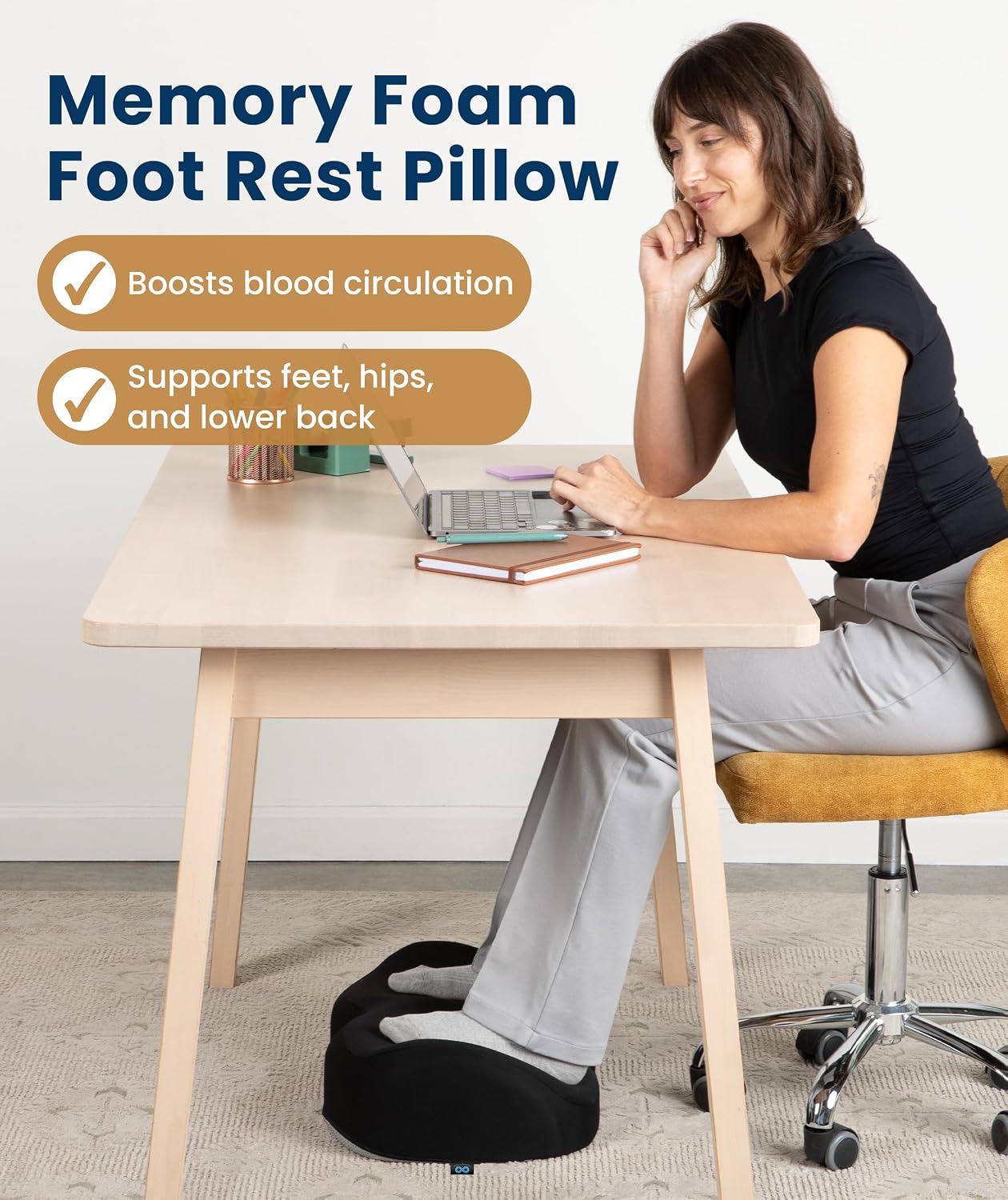
For your feet, use a footrest around 4–6 inches high. This supports shorter legs without raising desk height. A firm seat cushion (1–2 inches) can also help if your chair seat is too deep or too low.
Pet-friendly accessories matter too:
- Washable keyboard cover — keeps fur, dander, and crumbs out of switches.
- Cord protectors or spiral wraps — prevent curious paws from chewing cables.
- Anti-fatigue mat — cushions your feet if you use a standing desk at a lower height.
❓ FAQ: Desk Height for a 5 Foot Person
What desk height is recommended for someone who is 5 feet tall?
Most 5-foot users feel comfortable with a seated desk surface between 22 and 25 inches from the floor to the top of the keyboard tray or desk edge. That range helps keep your elbows near 90 degrees and your wrists flat. Your chair height and torso length can shift the ideal number slightly, so test with your feet flat and shoulders relaxed.
Can a standard standing desk go low enough for a 5-foot person?
It depends on the model. Many sit-stand desks only lower to 27–29 inches, which is still too high for seated keyboard work if you’re 5 feet tall.
For standing, most adjustable desks work fine because a 5-foot user typically needs the desktop roughly 35 to 38 inches high for typing. Look for a desk with a minimum height of 24 inches or less if you want one surface for both sitting and standing.
Do I need a footrest if I’m 5 feet tall and use a standard desk?
Usually, yes. A standard fixed desk is 29–30 inches high, so to get your elbows aligned you’ll need to raise your chair — which often leaves your feet dangling.
A footrest brings the floor to your feet and helps you keep your knees near 90 degrees. It’s a practical fix, but not as good as lowering the desk or using a keyboard tray because your thighs may still press against the underside of the desktop.
How can I make a too-tall desk work for a 5-foot person without buying a new one?
Two low-cost moves help most. Start with an under-desk keyboard tray that drops your typing surface to 22–25 inches from the floor. Then adjust your chair so your wrists are flat while you type, and add a footrest if your feet lose contact with the ground. Moving your monitor lower and closer also reduces neck strain. These changes won’t make the desk shorter, but they fix your main contact points.
Are there pet-friendly ergonomic desks that work well for short users?
Yes. For a 5-foot person with pets, the best setup is usually a sit-stand desk with a low minimum height around 22–24 inches, a stable steel base, and cable management that keeps cords off the floor.
A smooth laminate or sealed wood top is easier to wipe clean of pet hair and paw prints. Rounded corners and a heavier base also reduce the risk of tipping if a dog bumps into the desk.
1 thought on “Desk Height for 5 Foot Person: 2026 Ergonomics & Best Desks”