Long-Haul Driving Guide
Best Seat Cushions for Truck Drivers
Long hours behind the wheel can make seat comfort a priority. The right truck driver seat cushion should fit your seat, stay securely in place, and provide a comfortable balance of support and cushioning without interfering with driving position or vehicle controls.
Finding the best truck driver seat cushion is not simply about buying the thickest memory foam pad. A cushion that works in an office chair may be too narrow, too tall, or too unstable for a semi-truck seat. Long-haul drivers also need to consider heat buildup, repeated use, ease of cleaning, and whether the cushion changes their view of the road or access to the pedals.
This guide compares several cushion styles and product options worth investigating, including truck-oriented designs, memory foam cushions, gel-and-foam combinations, and coccyx cushions. These are research-based buying suggestions rather than products we have personally tested in a truck cab. Check the current listing and measure your own seat before purchasing.
Quick Comparison: Truck Driver Seat Cushions
| Option | Style | Best for Comparing | What to Check |
|---|---|---|---|
| japiroc X-Large Truck Seat Cushion | Truck-oriented memory foam | Drivers who need a wider seating surface | Exact dimensions, attachment method, and fit with the truck seat |
| Truckules XL Truck Seat Cushion | Large truck-oriented cushion | Drivers comparing a larger cushion for everyday use | Current size, foam details, cover care, and return terms |
| Elmara Semi-Truck Cushion Set | Seat cushion and lumbar support set | Drivers considering separate seat and back support | How the back pillow attaches and whether it suits the seat shape |
| ComfiLife Gel Enhanced Seat Cushion | Memory foam with a gel layer and coccyx cutout | Drivers comparing a more general-purpose cushion | Whether it is wide and stable enough for the truck seat |
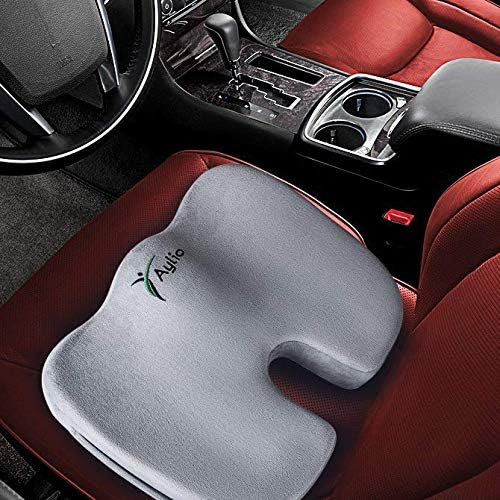
| Aylio Coccyx Seat Cushion | Contoured foam with a tailbone cutout | Drivers who want to compare a coccyx-style shape | Opening position, overall height, and seat coverage |
These are options to investigate, not a hands-on ranking. Product versions, availability, materials, and dimensions may change. Confirm the details on the current listing before ordering.
1. japiroc X-Large Truck Seat Cushion — A Truck-Oriented Option
A truck-oriented cushion is a sensible starting point if a standard office cushion does not cover enough of your semi-truck seat. The japiroc X-Large Truck Seat Cushion is one product to compare when looking for a larger memory foam design marketed for truck drivers.
The main question is fit. Commercial truck seats vary in width, depth, contour, and suspension design, so a product described as “extra large” is not automatically a match for every Freightliner, Peterbilt, Kenworth, International, or other truck seat.
- Potential fit: Drivers who need to compare a larger cushion footprint with a standard seat pad.
- Check before buying: Listed width and depth, cushion height, foam construction, and any straps or securing features.
- Possible drawback: A larger or thicker cushion may change your seating position and reduce usable seat space.
Check japiroc Truck Cushions on Amazon
2. Truckules XL Truck Seat Cushion — Compare Size and Daily Practicality
Truckules XL is another truck-oriented option to investigate. For drivers who spend many hours in the same seat, a cushion’s everyday practicality matters as much as its initial softness. A removable cover, secure base, and dimensions that fit the seat can be more useful than a long list of comfort claims.
Read the current product listing carefully. Confirm which features belong to the exact model you are buying, including any stated foam certification, replacement covers, straps, or warranty terms.
- Potential fit: Drivers comparing larger truck-specific cushions for regular use.
- Check before buying: The actual size, cover-washing instructions, attachment method, and warranty exclusions.
- Possible drawback: A cushion that covers too much of the seat may interfere with the seat’s contours or built-in features.
3. Elmara Semi-Truck Cushion Set — Seat and Lumbar Support Together
Some drivers prefer a two-piece set that combines a seat cushion with a separate lumbar pillow. The Elmara Semi-Truck Seat Cushion and Lumbar Support Set is an option to compare if you want to evaluate both components together rather than buying them separately.
The advantage of a set is convenience, but the back pillow still needs to fit your body and the seat. A lumbar cushion that pushes your torso too far forward or changes your position against the backrest can be counterproductive. You should be able to reach the steering wheel naturally and maintain a stable driving position.
- Potential fit: Drivers who want to compare seat cushioning and separate lumbar support in one purchase.
- Check before buying: The attachment system, adjustability, cushion dimensions, and whether both pieces can be used independently.
- Possible drawback: A two-piece set may take more time to position, and the lumbar pillow may not suit every seat contour.
Check Elmara Cushion Sets on Amazon
4. ComfiLife Gel Enhanced Seat Cushion — A General-Purpose Alternative
The ComfiLife Gel Enhanced Seat Cushion is a familiar style of foam cushion with a gel layer and a rear coccyx cutout. Although it is not exclusively a semi-truck product, it can be included in your comparison if its dimensions and shape suit your seat.
The gel layer changes the cushion’s construction and feel, but it should not be treated as a guarantee of cooling during a long shift. The more important questions are whether the cushion stays in place, whether the opening aligns with your tailbone, and whether the overall height works with the truck’s seat and controls.
- Potential fit: Drivers who want to compare a general-purpose gel-and-foam cushion.
- Check before buying: Width, depth, height, base grip, and the exact cutout shape.
- Possible drawback: An office-oriented cushion may not provide enough seat coverage for a wider truck seat.
5. Aylio Coccyx Seat Cushion — For Drivers Comparing a Tailbone Cutout
Aylio’s coccyx-style cushion is worth comparing if your priority is a rear opening rather than a flat padded surface. This shape is intended to leave space around the tailbone, but it works only if the opening is positioned correctly for your body.
For a truck driver, fit is especially important because the cushion must work with the seat’s existing contour. Check whether the front edge supports your thighs comfortably, whether the cushion is wide enough, and whether the cutout remains in the right place as you sit back against the seat.
- Potential fit: Drivers who want to compare a contoured foam cushion with a tailbone cutout.
- Check before buying: Overall height, opening position, base grip, and compatibility with the seat’s usable surface.
- Possible drawback: A pronounced contour or thick profile may not suit every driver or seat.
How to Choose the Best Semi Truck Seat Cushion
1. Measure the actual seat
Measure the usable width and depth of your seat before ordering. Do not rely on a universal-fit label alone. Some semi-truck seats have pronounced side bolsters, contoured surfaces, integrated controls, or suspension features that affect how a cushion sits.
Compare the product’s listed dimensions with the part of the seat you actually use. The cushion should sit flat and stable rather than overhanging the edges or bunching up around the sides.
2. Choose foam based on support, not just softness
Memory foam can conform to your body, but different formulations vary in firmness and compression. A cushion that feels plush for a few minutes may compress more than you prefer during a longer drive. Conversely, very firm foam may feel uncomfortable.
Look for clear product information about the material and thickness, then check the return policy. Avoid assuming that a product is durable simply because the listing calls it “high density” or “heavy duty.”
3. Consider heat and airflow
Cab temperature, seat upholstery, clothing, and personal preference all affect how warm a cushion feels. A mesh cover or open-grid design may allow more airflow around the seating surface, while dense foam may feel warmer to some drivers.
Gel is not automatically cooler. If heat is a major concern, compare the actual cover material, construction, and cleaning requirements rather than choosing by the word “cooling” alone.
4. Make sure it stays in place
A cushion that slides can be distracting and may change your sitting position. Check for a non-slip underside or an appropriate securing system. Make sure any straps do not obstruct seat controls, suspension movement, seat belts, or other safety-related components.
5. Check how much height it adds
A thicker cushion raises your hips relative to the steering wheel, pedals, mirrors, and windshield. Even a comfortable cushion may be unsuitable if it changes your driving position too much.
After fitting the cushion, recheck your seat adjustment, view of the road, mirror settings, steering-wheel reach, and pedal access while the vehicle is parked. Do not use a cushion that makes you sit unstably or interferes with safe control of the vehicle.
6. Look for practical maintenance features
Truck seats see regular use, so a removable cover can be helpful. Confirm whether it can be machine-washed or requires spot cleaning. If you switch between trucks, consider the cushion’s weight, portability, and how easily it can be removed and repositioned.
Truck-Specific Cushion vs. Regular Car Seat Cushion
| Feature | Truck-Oriented Cushion | General Car or Office Cushion |
|---|---|---|
| Seat coverage | May offer a wider or longer base; verify dimensions | May be designed around smaller or flatter seats |
| Attachment | May include straps or other securing features | May rely mainly on a non-slip base |
| Support style | May offer a larger seat pad or combined lumbar support | Often emphasizes general cushioning or a tailbone cutout |
| Main limitation | “Truck” in the name does not guarantee a fit for every cab | May be too small, too thick, or poorly shaped for a particular truck seat |
Do Truck Drivers Need a Seat Cushion or Lumbar Pillow?
They serve different purposes. A seat cushion changes the surface beneath your hips and thighs, while a lumbar pillow adds support behind the lower back. Some drivers prefer one; others may find a carefully fitted combination more comfortable.
Before adding both, adjust the original seat first. If the factory seat is worn, unstable, or no longer functioning correctly, an extra cushion may not solve the underlying problem. A pillow that pushes you too far forward can also make it harder to maintain a comfortable driving position.
If your main concern is tailbone contact, compare a cushion with a rear cutout. Our guide to coccyx cushions explains the differences between cutout designs and regular seat pads.
Frequently Asked Questions
What is the best seat cushion for truck drivers?
The best option depends on your truck seat, body size, preferred firmness, and driving position. Start by comparing a truck-oriented cushion such as japiroc or Truckules with a general-purpose foam option. Measure your seat and verify the current product details before choosing.
Can I use an office chair cushion in a semi truck?
Possibly, if it fits the seat securely and does not interfere with your driving position or vehicle controls. Office cushions may be narrower or shaped differently from commercial truck seats, so check dimensions and stability before using one on the road.
Is memory foam or gel better for long-haul driving?
Neither is universally better. Memory foam varies in firmness and compression, while a gel layer changes the cushion’s construction and feel. Compare the entire design—including thickness, cover, base grip, and fit—rather than choosing by material alone.
Should a truck seat cushion have a tailbone cutout?
A coccyx cutout may suit drivers who prefer to leave space around the tailbone, but it is not necessary for everyone. Check that the opening aligns with your body and that the surrounding surface supports you comfortably. A poorly positioned cutout may not help.
How thick should a truck driver seat cushion be?
There is no single ideal thickness. A thicker cushion may provide more material between you and the seat, but it also raises your sitting position. Choose a height that maintains stable support and safe access to the steering wheel, pedals, and mirrors. See our seat cushion thickness guide for more details.
Can a seat cushion fix back pain from truck driving?
A cushion may improve comfort for some drivers, but it cannot guarantee relief or correct every cause of back pain. Seat adjustment, breaks, movement, and the condition of the original seat also matter. Persistent or worsening pain should be discussed with a healthcare professional.
Final Recommendation
When shopping for a semi truck seat cushion, prioritize fit and safe positioning before extra features. Compare truck-oriented options such as japiroc X-Large and Truckules XL if you need a larger cushion footprint. Consider the Elmara two-piece set if you want to compare seat and lumbar support together, or investigate ComfiLife and Aylio if a general-purpose cushion better suits your seat.
Before ordering, verify the dimensions, materials, return policy, and current product availability. Once installed, make sure the cushion stays in place and does not interfere with seat adjustment, visibility, steering-wheel reach, pedal access, or other vehicle safety features.
Explore More Seat Cushion Guides
Affiliate disclosure: As an Amazon Associate, SitBetterLab earns from qualifying purchases. This article is for general informational purposes and does not promise medical benefits or replace professional advice.