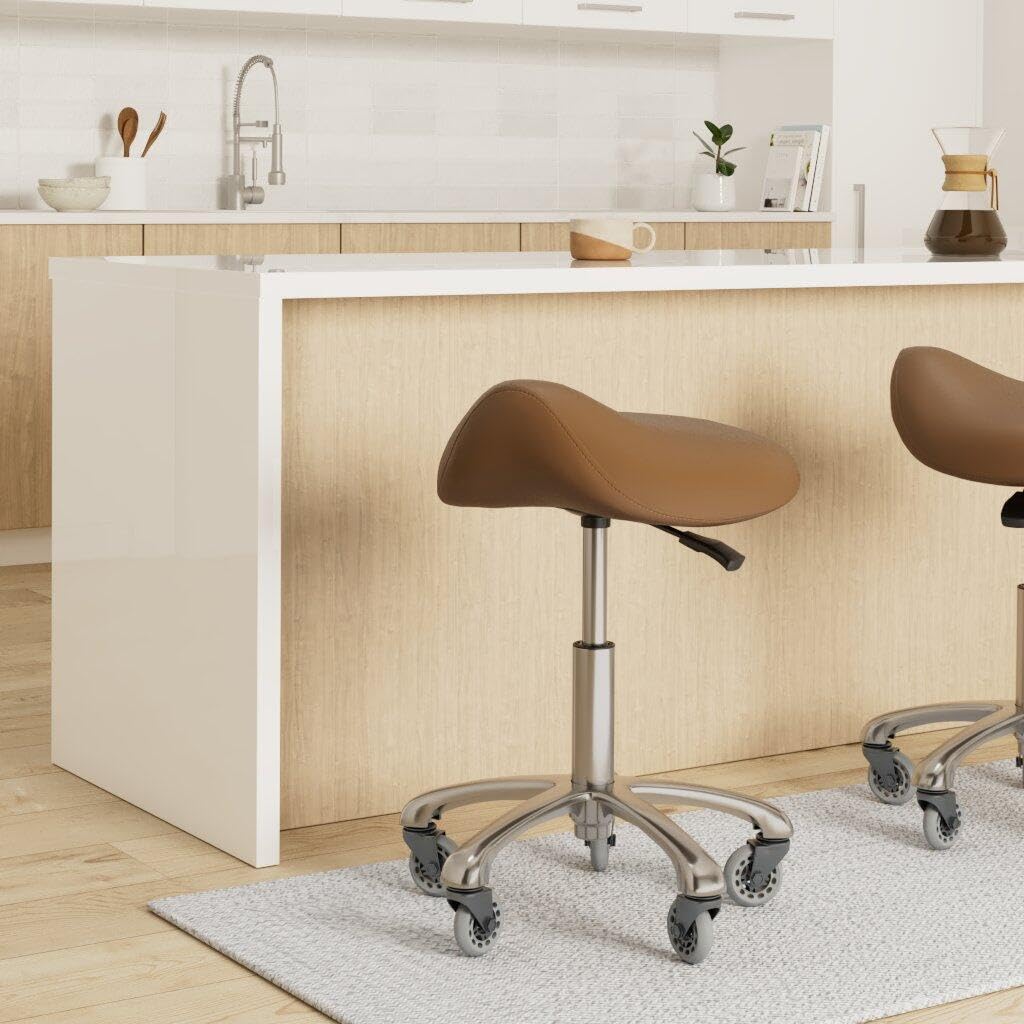
The best saddle stool for a standing desk gives you a comfortable place to perch between standing sessions without taking up the space of a full-size office chair. The right model should offer a suitable height range, a supportive saddle-shaped seat, stable construction, and enough adjustability for your workstation.
Not every saddle stool is designed for a standing desk. Some models are intended for standard desk heights, while others have taller gas lifts or adjustable footrests for elevated work surfaces.
This guide explains what to look for, how to match stool height to your desk, and which product types are worth comparing before you buy.
Quick Picks: Which Saddle Stool Should You Consider?
- Best for active sitting: A saddle stool with a contoured seat and smooth height adjustment.
- Best for a smaller budget: A basic adjustable saddle stool with a stable base and a clearly stated weight limit.
- Best for extended use: A model with suitable seat padding, durable upholstery, and a height range that fits your desk.
- Best for taller work surfaces: A drafting-height or extended-height saddle stool with a compatible footrest.
- Best for frequent movement: A mobile model with casters suitable for your floor type, or a stationary base if stability is your priority.
Check current manufacturer specifications and availability before treating any model as a match. Prices and product configurations can change.
Explore More Saddle Stool Guides:
Looking for more options? Visit our
Saddle Stools Guide
to compare saddle seating options for standing desks, office work, and active sitting.
Why Use a Saddle Stool With a Standing Desk?
A standing desk makes it easier to change working positions, but standing continuously can still be tiring. A saddle stool provides an intermediate position between standing upright and sitting in a conventional office chair.
1. Alternate Between Sitting and Standing
A saddle stool can make it easier to switch positions during computer work. Instead of remaining on your feet for long stretches, you can perch when you need a break and stand again when comfortable. Changing positions regularly is generally more practical than trying to maintain one posture throughout the day.
2. Encourage a More Open Sitting Position
The sloping, split, or curved surface of a saddle seat may encourage a more open hip position than some conventional chairs. However, the result depends on seat shape, seat height, body proportions, and how you position yourself. A saddle stool does not automatically guarantee correct posture or prevent back pain.
3. Save Space in a Home Office
Many saddle stools have a smaller footprint than full-size office chairs. This can be useful in a compact workstation where you need room to move around your desk. If you work around pets, a wipeable seat surface may also be easier to maintain than textured fabric.
4. Support Active, Flexible Work Habits
A saddle stool is best viewed as one option in a varied workstation setup, not a replacement for all other seating. You may still prefer a conventional ergonomic chair for long focused sessions that require back support. The goal is to find comfortable positions you can alternate throughout the day.
Saddle Stools Worth Comparing for Standing Desks
Rather than choosing by brand name alone, compare each stool’s intended use, adjustment range, seat shape, base design, and published weight capacity. The following product searches can help you compare available options. Confirm the exact model and specifications on the current listing before purchasing.
Height Adjustment
1. Focal Upright Saddle Seating — For Active Workstations
Focal Upright seating is worth comparing if you want a perch-style seat designed around movement and an upright workstation. Check the specific model’s height range, seat design, base configuration, and compatibility with your desk before deciding whether it suits your setup.
What to check: Minimum and maximum seat height, stability at full extension, comfort for your preferred sitting position, and the manufacturer’s recommended usage.
2. Adjustable Saddle Stools — For Budget-Conscious Buyers
A basic adjustable saddle stool may be sufficient if you want an occasional perch without investing in a premium ergonomic seat. Compare the frame, gas lift, padding, base diameter, and return policy instead of assuming that a low price means good value.
What to check: A clearly stated weight rating, smooth height adjustment, stable construction, and whether the stool reaches your required working height.
3. Salli Saddle Chairs — For Specialized Ergonomic Seating
Salli is a brand to investigate if you are interested in specialized saddle-style seating. Its different designs may vary in seat construction, adjustment features, and intended use, so compare the exact model rather than assuming every chair in the range has the same features.
What to check: Seat shape and width, upholstery or seat material, height range, available adjustments, warranty, and total cost.
4. Drafting-Height Saddle Stools — For Elevated Work Surfaces
If your standing desk is frequently raised, a drafting-height saddle stool may be a better starting point than a standard-height model. Some stools also include a foot ring, which can provide a place to rest your feet when the seat is elevated.
What to check: Actual seat height at the lowest and highest settings, footrest position, base stability, and whether your feet can rest securely when seated.
5. Compact Mobile Saddle Stools — For Flexible Work Areas
A compact stool with casters can be convenient if you move between work surfaces or need to reposition your seat frequently. Rolling is not always the safest choice, however, especially on uneven floors or when the seat is at its maximum height.
What to check: Caster compatibility with your floor, base width, maximum load, wheel movement, and whether a stationary model would be more suitable for your needs.
How to Choose the Right Saddle Stool Height
Height compatibility is one of the most important factors when choosing a saddle stool for a standing desk. A stool can have a comfortable seat and still be unsuitable if it cannot reach the correct position for your workstation.
| What to Measure | What to Look For |
|---|---|
| Desk height | Measure the work surface at the height you actually use. |
| Seat height range | Make sure the stool adjusts high and low enough for your body and desk. |
| Elbow position | Your shoulders should remain relaxed and your elbows comfortably aligned with the work surface. |
| Foot support | At an elevated seat height, check whether a foot ring or another stable foot support is needed. |
| Knee and hip position | Choose a position that feels comfortable and does not force your hips or knees into an awkward angle. |
Do not choose a stool based on desk height alone. Two people using the same desk may need different seat heights because of their leg length, torso proportions, and preferred working posture.
For more workstation setup advice, see our guide to desk height for shorter users.
Saddle Stool Buying Checklist
Seat Design
Look for a shape that fits your body without creating uncomfortable pressure on your thighs or groin.
Height Adjustment
Compare the published minimum and maximum seat heights with your desk setup.
Base and Stability
Check the base footprint, frame construction, and stability at the seat height you intend to use.
Weight Capacity
Use the manufacturer’s stated weight limit. Do not infer capacity from appearance or brand reputation.
Seat Material
Consider padding, breathability, cleaning requirements, and the durability of the upholstery.
Return Policy
A suitable trial or return policy can be valuable because saddle seating feels different from a conventional chair.
Are Saddle Stools Comfortable for All-Day Work?
Not necessarily. Saddle stools encourage a different sitting position, and comfort varies with seat shape, padding, body proportions, and individual preference. Some people appreciate the freedom of movement; others prefer the backrest and broader support of a conventional ergonomic chair.
If you are new to saddle seating, begin with shorter sessions and change positions when you feel discomfort. Avoid treating a saddle stool as a substitute for movement breaks or as a medical solution for back pain.
If you spend most of your day at a computer, compare your options with our office chair guides before committing to a specialized seat.
Saddle Stool vs. Traditional Office Chair
| Feature | Saddle Stool | Traditional Office Chair |
|---|---|---|
| Back support | Often limited or absent | Available on many models |
| Movement | Can encourage active perching | Depends on chair design and adjustments |
| Space requirement | Often compact | Usually larger |
| Best use | Perching and changing positions | Longer seated sessions when suitable support is needed |
Neither option is automatically better for everyone. The best choice depends on your desk, the length of your work sessions, the support you need, and which positions you can maintain comfortably.
Frequently Asked Questions
Is a saddle stool good for a standing desk?
It can be a useful option if you want to alternate between standing and perching. The key is choosing a model that reaches the correct height for your desk and provides a comfortable, stable sitting position.
How tall should a saddle stool be for a standing desk?
There is no single correct height for every user. Measure your desk at its working height, then choose a stool with an adjustment range that lets you keep your shoulders relaxed, your elbows comfortably positioned, and your feet supported when seated.
Can a saddle stool help with lower back discomfort?
A saddle seat may encourage a more open hip position, which some people find comfortable. Results vary, and a saddle stool is not a guaranteed treatment for back pain. If pain persists or worsens, seek appropriate medical advice.
Are saddle stools suitable for long work sessions?
Some users can work comfortably on a saddle stool for extended periods, while others need more cushioning or back support. Start with shorter sessions, alternate positions, and choose a conventional ergonomic chair when it provides the support you need.
Should I choose a saddle stool with wheels?
Wheels can make repositioning easier, but they are not essential. Consider your floor surface, the stool’s stability, and whether you would feel safer with a stationary base. Check the manufacturer’s guidance for use at elevated seat heights.
What weight capacity should I look for?
Choose a stool whose published weight capacity comfortably meets your requirements. Verify the limit for the exact model and configuration, including any extended-height version, rather than relying on a general product category description.
Final Verdict: Choosing the Best Saddle Stool for a Standing Desk
The best saddle stool for a standing desk is the one that fits your desk height, feels comfortable for your body, and remains stable during normal use. Start by measuring your workstation, then compare seat shape, adjustment range, weight capacity, materials, and return terms.
If you want an active perch, explore saddle-style seating. If your desk is particularly high, prioritize a drafting-height model with appropriate foot support. If you need back support for long computer sessions, keep a conventional ergonomic chair in consideration.
Before You Buy
Confirm the exact model, seat-height range, maximum weight capacity, current price, and return policy on the seller’s listing. These details matter more than a product’s marketing label.
Disclosure: As an Amazon Associate, SitBetterLab may earn from qualifying purchases. Product availability, specifications, and prices may change; verify details with the manufacturer or seller before buying.
2 thoughts on “Best Saddle Stool for Standing Desk: Top Picks”