
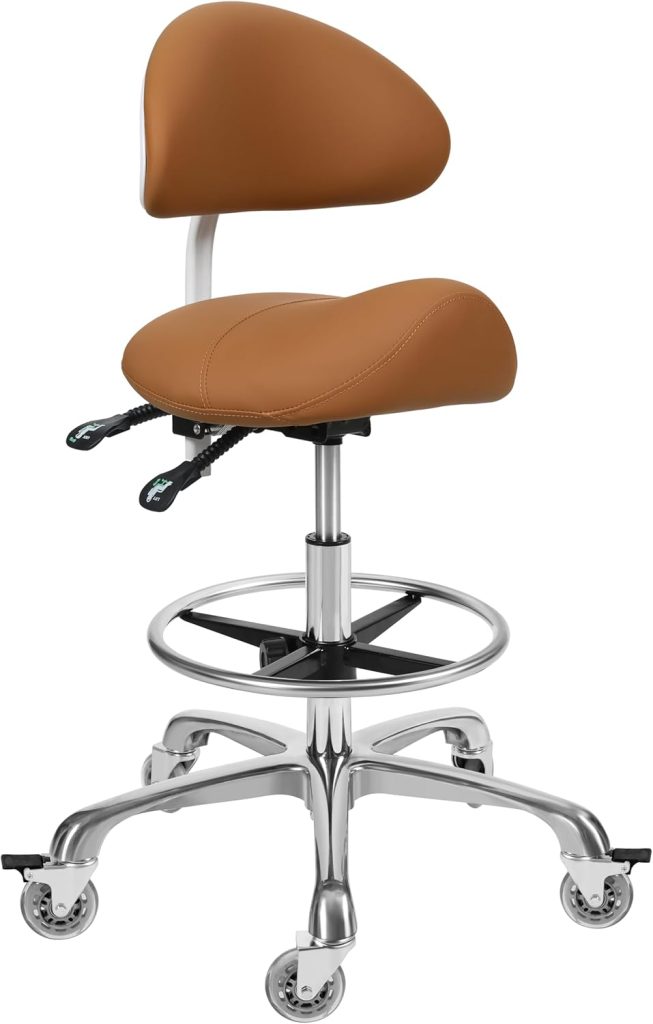
Looking for the best saddle chairs with backrests? A saddle-shaped seat can encourage a different sitting position from a conventional office chair, while a backrest provides an additional contact point when you want support. The right choice depends on your desk height, body proportions, preferred seat shape, and how long you plan to sit.
This guide explains what to look for in a saddle chair with back support, compares several product options to investigate, and outlines the measurements worth checking before you buy. Product specifications, availability, and prices can change, so confirm the details on the current listing.
What Is a Saddle Chair with a Backrest?
A saddle chair has a contoured seat inspired by a riding saddle. Depending on the design, the seat may encourage the thighs to angle outward and downward rather than rest in the same position as they would on a flat office-chair seat. Models with backrests add a surface against which you can rest part of your back.
Not every chair marketed as an ergonomic stool has a saddle-shaped seat. A medical drafting stool may have a round or square padded seat, while a sit-stand stool may use a rocking base and have no backrest at all. Check the actual seat shape and product specifications before choosing a chair for this category.
Saddle seat
A contoured seat designed for a more open leg position than many flat seats.
Height adjustment
A suitable adjustment range helps match the seat to your desk and body.
Back support
A backrest offers an additional support point, although its size and adjustability vary by model.
Who Should Consider a Saddle Chair with Back Support?
This type of seating may be worth considering if you:
- Prefer a contoured seat instead of a conventional flat office-chair seat.
- Work at a counter, drafting table, adjustable desk, or specialized workstation.
- Want a compact seat that allows frequent changes in position.
- Need a backrest but do not necessarily want the size or recline mechanism of a full office chair.
A saddle chair is not automatically more comfortable or more ergonomic for everyone. Some users may find the seat shape unfamiliar or experience pressure around the inner thighs. If you need substantial lumbar support, adjustable armrests, or a reclining backrest for extended computer work, compare saddle chairs with conventional ergonomic chairs before deciding.
Important: A saddle chair is a seating option, not a treatment for back, hip, or tailbone pain. Comfort varies by individual. If a position increases pain or numbness, stop using it and consider getting advice from a qualified healthcare professional.
Saddle Chairs with Backrests: Options to Compare
The options below cover different approaches to saddle-style and elevated seating. They are starting points for product research, not a claim that every model has been independently tested or that every listing is currently available. Confirm the seat shape, backrest design, height range, warranty, and return policy before purchasing.
1. HÅG Capisco 8106
A distinctive saddle-style chair with a backrest, designed to support several sitting positions and a range of working heights.
Check before buying: lift height, seat depth, backrest adjustment, desk compatibility, and total cost.
2. Grace&Grace Saddle Stool with Back Support
A saddle-stool style option to investigate if you want a contoured seat, rolling base, and a separate back-support component.
Check before buying: the exact model, backrest adjustment range, base material, weight capacity, and return conditions.
3. Dental or Medical Saddle Stool with Back
Professional-use saddle stools may offer height adjustment and rolling mobility for clinical, studio, or workstation tasks.
Check before buying: whether the seat is genuinely saddle-shaped, the minimum and maximum seat heights, and whether a footring is included.
4. Split-Seat Saddle Stool with Backrest
A split-seat design may appeal to shoppers who want a different shape from a traditional one-piece saddle seat.
Check before buying: the seat configuration, adjustment controls, published capacity, and whether the backrest moves independently.
5. Adjustable Saddle Stool with Back Support
A broader search is useful when price matters most and you are willing to compare several brands and configurations.
Check before buying: seat dimensions, height range, gas-lift specifications, caster type, warranty, and recent customer feedback.
Quick Comparison: What Matters Most?
| Feature | What to Check | Why It Matters |
|---|---|---|
| Seat shape | One-piece saddle or split seat | Affects fit and pressure distribution. |
| Seat height | Published minimum and maximum | Must match your desk and leg length. |
| Backrest | Height, depth, angle, and locking controls | Determines how you can position the support. |
| Base and casters | Base diameter, floor compatibility, and stability | Important for safe movement and use at height. |
| Weight capacity | Manufacturer’s published limit | Do not assume capacity from appearance or price. |
| Returns and warranty | Return window, warranty length, and exclusions | Useful if the seat shape does not suit you. |
How to Choose the Best Saddle Chair with Backrest
1. Measure Your Desk and Required Seat Height
Start with the height of your work surface and the position you want to maintain while seated. A chair suitable for a standard desk may not rise high enough for a counter or standing desk. Check the manufacturer’s seat-height range rather than relying on labels such as “drafting” or “extra tall.”
When seated, aim for a stable position in which your feet are supported by the floor or a suitable footrest. Your knees and hips should feel comfortable, and you should not need to slide forward to reach the desk.
2. Check the Shape and Width of the Saddle
Saddle seats vary in width, contour, padding, and the amount of space between the thighs. A narrow seat may feel restrictive to some people, while a wider or split design may suit others. Use the published dimensions and, where possible, buy from a seller with a clear return policy.
3. Evaluate the Backrest Adjustments
Do not assume every backrest is adjustable. Some provide a fixed support pad; others allow height or depth adjustment. Check whether the backrest can be positioned without pushing your torso too far forward, and whether its shape matches the kind of support you want.
4. Look at the Base, Casters, and Foot Support
A rolling base can be convenient at a workstation, but casters should suit your flooring and the chair should remain stable at the height you use. For taller desks, check whether a footring is included, adjustable, or sold separately. Do not assume a footring is present just because a product is described as a drafting stool.
5. Verify Capacity, Warranty, and Return Terms
Confirm the stated weight capacity and warranty for the exact model and configuration. Some product families include several versions with different lifts, bases, or upholstery. If possible, choose a retailer that clearly explains returns, particularly if you have not used a saddle seat before.
Saddle Chair with Backrest vs. Traditional Office Chair
| Consideration | Saddle Chair with Backrest | Traditional Office Chair |
|---|---|---|
| Seat design | Contoured saddle profile | Usually a broader, flatter seat |
| Back support | Varies by model; may be compact | Often offers a larger backrest |
| Typical use | Perching, specialized work, or selected desk setups | General computer work and longer seated sessions |
| What to prioritize | Seat fit, height, and backrest position | Seat depth, lumbar adjustment, recline, and armrests |
Neither design is universally better. If you want to compare more conventional seating options, see our Best Chairs guide. If you are shopping specifically for a standing desk, read our saddle stool for standing desk guide as well.
Are Saddle Chairs with Backrests Good for Long Hours?
Comfort over a long workday depends on the seat’s dimensions, how well it fits your body, your desk setup, and whether you change positions regularly. A backrest may offer additional support, but it does not guarantee that a saddle chair will remain comfortable for several hours.
If you are new to saddle seating, start with shorter sessions and increase use only if the position feels comfortable. Alternate between sitting, standing, and moving around instead of treating any chair as a reason to remain still throughout the day.
If your main concern is back discomfort, our related guide Are Saddle Stools Good for Back Pain? discusses potential benefits and limitations without treating any seating style as a guaranteed solution.
Frequently Asked Questions
Are saddle chairs with backrests ergonomic?
They may suit people who prefer a contoured seat and an active sitting position. Ergonomic fit depends on the user’s body, workstation, adjustment options, and comfort rather than the chair category alone.
Does a saddle chair with a backrest help lower back pain?
Some people may find a particular saddle chair comfortable, while others may not. There is no guarantee that a saddle seat or backrest will relieve lower back pain. Choose a position that feels comfortable and seek professional advice for persistent or worsening symptoms.
Can I use a saddle chair with a standing desk?
Yes, if the chair’s seat-height range matches your desk and your body. Measure your work surface and check the chair’s published minimum and maximum seat heights before buying.
Is a backrest necessary on a saddle stool?
Not for everyone. A backrest provides an additional support point, while a backless stool may be smaller and allow more freedom of movement. Your preference, task, and comfort should guide the choice.
What weight capacity should I look for?
Choose a model whose manufacturer-published capacity meets your needs. Verify the specification for the exact chair configuration instead of relying on a general product-family description or a marketplace title.
How do I know whether a chair is a true saddle chair?
Look closely at the seat shape and the manufacturer’s product description. A drafting stool or medical stool may have a backrest and adjustable height without having a saddle-shaped seat.
Final Verdict: Choosing the Right Saddle Chair with Backrest
The best saddle chair with a backrest is the one that fits your body, reaches the correct working height, and provides the kind of support you actually need. Prioritize seat shape, adjustment range, backrest positioning, stability, and return terms over marketing claims.
Before choosing a model, compare its specifications with your workstation and read recent customer feedback. If you are still exploring saddle-style seating, visit our Saddle Stools Guide for more options, and use our Best Saddle Stool for Standing Desk guide to compare choices for elevated work surfaces.
Affiliate disclosure: SitBetterLab may earn a commission from qualifying purchases made through affiliate links, at no additional cost to you. Product specifications, availability, and prices may change. Always confirm the current listing and manufacturer’s information before purchasing.