EXECUTIVE CHAIRS HUB
Best Executive Office Chairs
Explore executive office chairs for long workdays, adjustable lumbar support, short and tall users, big and tall users, footrests, and modern ergonomic workspaces.
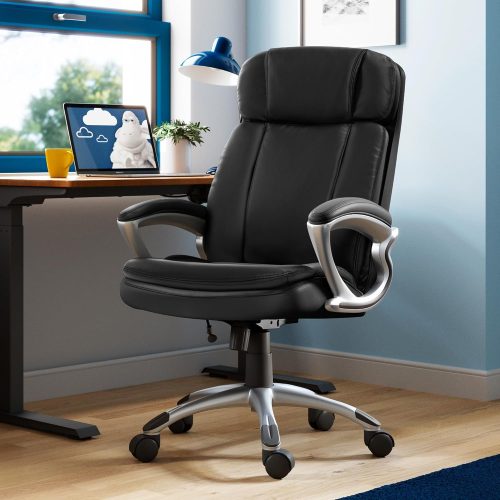
Executive office chairs combine a professional, high-back appearance with the features people expect from a dedicated desk chair. However, not every executive chair is designed for the same type of user or workday.
Some shoppers prioritize a traditional padded executive design, while others need adjustable lumbar support, a shallower seat, a lower seat height, a footrest, greater weight capacity, or better support for long hours at a desk. This hub brings those different buying needs together so you can find the most relevant guide before choosing a chair.
Explore Executive Office Chairs
Executive Office Chair Guides
Start with the guide that matches the way you use your chair. These pages cover specific executive-chair features and body-fit requirements rather than treating every executive chair as the same type of product.
Best Executive Office Chair for Long Hours
Compare executive-style chairs for extended desk sessions, with attention to seat depth, lumbar support, armrests, recline, and breathability.
Executive Office Chair with Adjustable Lumbar Support
Focus on chairs that allow you to change the position, pressure, depth, or movement of the lumbar-support system.
Best Executive Office Chair with Footrest
Explore reclining executive-style chairs with integrated footrests for reading, breaks, relaxation, and alternative working positions.
Best Executive Office Chair for Short People
Find executive-style and ergonomic office chairs that can better accommodate shorter users through lower seat heights, adjustable seat depth, adjustable armrests, and properly positioned lumbar support.
Best Executive Office Chairs for Tall People
Compare executive chairs by seat height, seat depth, backrest dimensions, and other fit considerations for taller users.
Best Executive Office Chairs for Big and Tall Users
Focus on published weight capacity, seat width, seat depth, seat height, armrest dimensions, and overall chair fit.
What Type of Executive Office Chair Do You Need?
| Your Priority | What to Look For | Recommended Guide |
|---|---|---|
| 8+ hour workdays | Seat-depth adjustment, lumbar support, armrest adjustment, recline, and breathable materials | Long Hours |
| Lower-back support | Adjustable lumbar height, depth, pressure, or dynamic support | Adjustable Lumbar |
| Relaxing or reclining | Deep recline, integrated footrest, headrest, and padded support | Footrest |
| Shorter body | Lower seat height, shorter or adjustable seat depth, adjustable lumbar support, and armrests that can fit a smaller frame | Short People |
| Taller body | Higher seat range, longer seat depth, and appropriate backrest dimensions | Tall Users |
| Higher weight capacity | Published capacity, wider seat, deeper seat, and stronger frame construction | Big & Tall |
How to Choose an Executive Office Chair
The word “executive” describes a style of office chair more than a specific ergonomic standard. Before choosing a chair, compare the features that affect how it will fit your body and your workday.
1. Start With Your Sitting Time
If you sit for one or two hours at a time, a simpler executive chair may provide enough adjustment. If you spend most of your workday seated, prioritize seat fit, lumbar support, armrests, and recline.
2. Check Seat Dimensions
Seat width and seat depth affect how well the chair fits your body. A very deep seat can be problematic for shorter users, while taller users may need additional seat depth and a higher seat range.
3. Short Users Should Check Minimum Seat Height
If you are around 5’0″, 5’2″, or 5’4″, pay particular attention to the chair’s minimum seat height. A seat that remains too high can make it difficult to keep your feet comfortably supported.
Seat depth is equally important. A shorter user may benefit from a shorter seat pan or adjustable seat depth that allows the back to remain against the backrest without excessive pressure behind the knees.
4. Look Beyond “Lumbar Support”
A product listing can say that a chair has lumbar support without explaining whether the lumbar section is fixed or adjustable. Check whether the manufacturer specifies height, depth, pressure, firmness, or dynamic movement.
5. Consider Recline and Armrests
For long work sessions, being able to change position is useful. Adjustable armrests can also help you maintain a more comfortable relationship between your chair, keyboard, desk, and monitor.
6. Match the Chair to Your Body Size
Do not choose an executive chair solely by its overall appearance. Check the published weight capacity, seat dimensions, seat-height range, and other fit measurements that are relevant to your body.
Executive Chair vs. Ergonomic Office Chair
Traditional executive chairs typically emphasize a high-back silhouette, substantial padding, and a formal appearance. Ergonomic office chairs tend to emphasize adjustability and movement.
Modern office-chair design increasingly overlaps these categories. Some ergonomic chairs now offer leather or upholstered finishes and a more executive appearance, while some executive-style chairs include adjustable lumbar systems, seat-depth adjustment, multi-directional armrests, and dynamic recline.
Important:
Do not assume that a larger or more heavily padded executive chair will automatically provide better support for long workdays. Published dimensions and adjustment features are more useful when comparing chairs for extended daily use.
Executive Office Chair Features to Compare
Seat Depth
Important for matching the seat to your thigh length, especially for shorter and taller users.
Lumbar Support
Check whether the support is fixed, adjustable, or dynamic.
Armrests
More adjustment can make it easier to position your arms at the desk.
Recline
Useful for changing position during long work sessions.
Seat Height
Especially important for shorter and taller users.
Weight Capacity
Always compare the manufacturer’s published rating.
Executive Chairs for Lower-Back Support
If lower-back support is your main reason for shopping for an executive chair, start with the adjustable-lumbar guide rather than selecting a chair based only on its high-back design.
You can also explore the broader SitBetterLab guide:
Best Office Chair for Lower Back Pain
.
What Makes a Good Executive Chair for Daily Use?
A good daily-use chair should fit your body, your desk, and the amount of time you spend seated. There is no single executive-chair specification that guarantees comfort for every user.
Instead, use the published measurements and adjustment features to narrow the choices. Seat depth, seat height, lumbar positioning, armrest range, recline, and weight capacity are particularly useful specifications to compare.
Executive Office Chair FAQ
What is an executive office chair?
An executive office chair is generally a larger, high-back office chair associated with a formal or professional workspace. Many models use substantial padding and upholstery, although modern executive-style chairs can also use mesh and ergonomic adjustment systems.
Are executive chairs good for long hours?
Some are, but the executive style alone does not determine long-hour suitability. For extended desk work, compare seat depth, lumbar support, armrests, recline, materials, and body-size fit.
What is the difference between an executive chair and an ergonomic chair?
Executive chairs generally emphasize appearance, high-back support, and substantial upholstery, while ergonomic chairs place greater emphasis on adjustability and movement. Many modern chairs combine features from both categories.
What executive chair is good for short people?
Shorter users should compare minimum seat height, seat depth, armrest range, and lumbar position. A chair that is too high or too deep can make it difficult to maintain a comfortable seated position. See our
executive office chairs for short people guide
for more specific fit considerations.
What executive chair is good for tall people?
Tall users should compare seat height, seat depth, backrest dimensions, and armrest positioning. Our dedicated
executive chairs for tall people guide
focuses on those measurements.
What executive chair is suitable for big and tall users?
Big and tall users should check the manufacturer’s weight capacity and seat dimensions rather than relying on the “executive” label. See our
Big & Tall executive chair guide
for more specific considerations.
Find the Right Executive Office Chair for Your Needs
Start with the feature that matters most to you, then compare the actual dimensions and adjustment mechanisms before buying. Use the individual guides above to narrow your search.
Editorial Disclosure:
This hub organizes SitBetterLab’s executive office chair guides by common buying needs, body size, and chair features. Product specifications, availability, prices, configurations, and warranties can change, so verify current manufacturer information before purchasing.