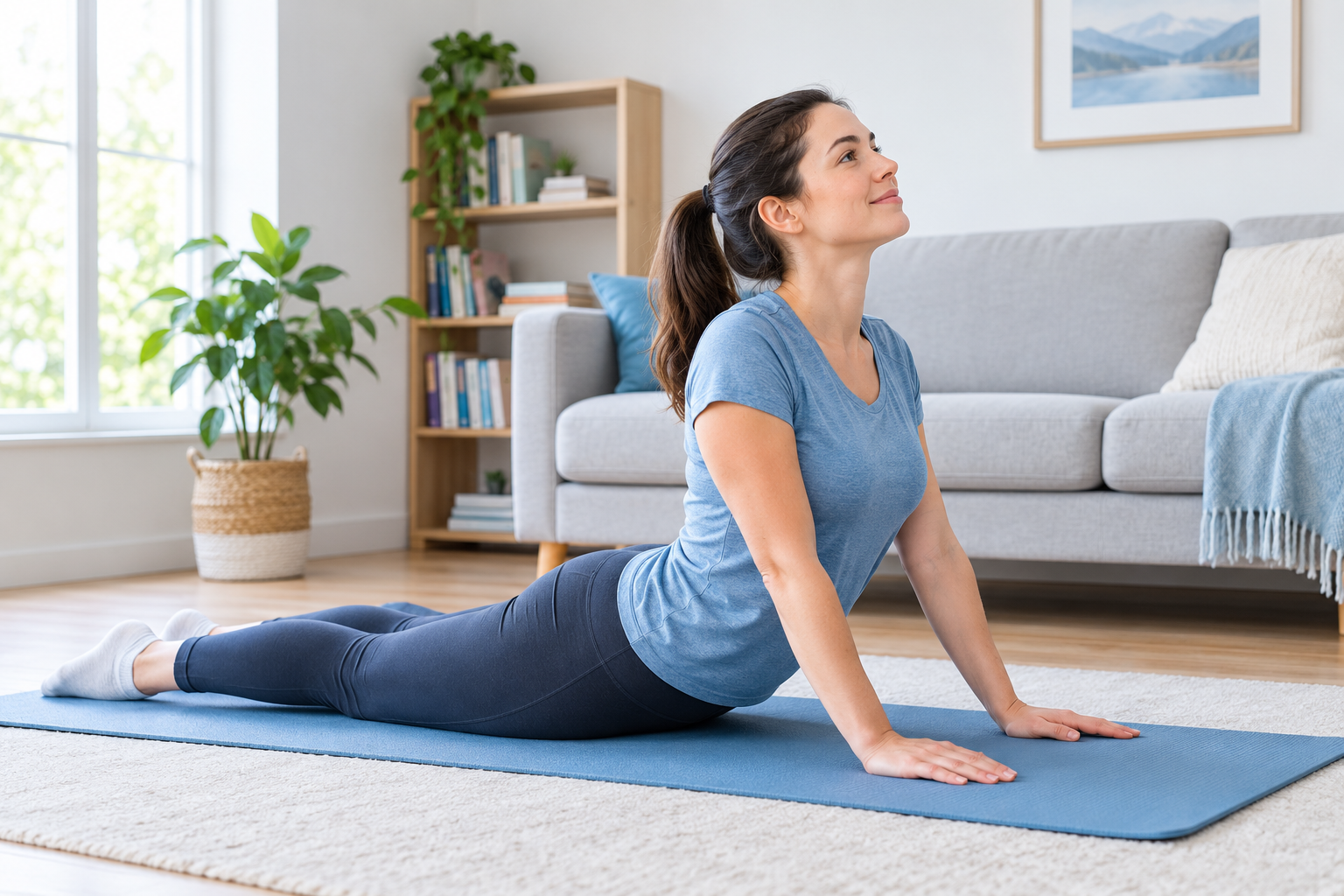
Looking for back pain relief exercises at home? Gentle movement may help some people manage mild back stiffness and discomfort, especially when prolonged sitting or limited movement is part of the problem. The right approach depends on the cause of your symptoms, so start slowly and avoid movements that make your pain worse.
This guide covers seven gentle movements you can try at home, how to perform them, and when exercise may not be appropriate. These movements are not a diagnosis or a guaranteed treatment, and you do not need to complete every exercise in one session.
Before You Start: Is It Safe to Exercise With Back Pain?
Gentle activity is often preferable to prolonged bed rest for uncomplicated back discomfort, but exercise is not appropriate for every symptom or injury.
- Start gently: Use a small, comfortable range of motion instead of forcing a stretch.
- Monitor your symptoms: Stop any movement that increases pain, causes sharp pain, or sends symptoms farther down an arm or leg.
- Do not push through: Avoid heavy lifting, forceful twisting, and aggressive stretching while symptoms are unexplained or worsening.
- Choose a comfortable surface: Use a stable floor mat or a supportive bed if getting down to the floor is difficult.
Seek urgent medical care if back pain occurs with new loss of bladder or bowel control, difficulty urinating, numbness around the groin or saddle area, or rapidly worsening leg weakness. Prompt medical assessment is also important for severe pain after a significant injury, fever with back pain, or other concerning symptoms.
7 Back Pain Relief Exercises to Try at Home
1. Easy Walking
Best for: People who feel stiff after sitting and can walk comfortably.
Walking is a simple way to add movement without needing special equipment. It may be easier to tolerate than floor exercises when your back feels stiff.
- Put on comfortable shoes and choose a level, uncluttered surface.
- Begin with a slow pace and relaxed arm movements.
- Keep your stride natural rather than deliberately stretching your legs.
- Continue for a few minutes if comfortable, then gradually build up as tolerated.
Tip: If long walks aggravate your symptoms, try shorter walks with rest breaks instead. Stop if walking causes increasing pain, weakness, or numbness.
2. Pelvic Tilts
Best for: Gentle movement of the lower back and pelvis.
Pelvic tilts involve small movements rather than a deep stretch. They can help you explore a comfortable range of motion while lying on your back.
- Lie on your back with your knees bent and feet flat on the floor.
- Relax your shoulders and breathe normally.
- Gently tighten your abdominal muscles and tilt your pelvis so your lower back moves slightly toward the floor.
- Release slowly and return to a comfortable neutral position.
- Repeat a few times if the movement feels comfortable.
Do not force your lower back flat against the floor or hold your breath. Skip this movement if lying on your back increases your symptoms.
3. Cat-Cow Movement
Best for: People who tolerate gentle spinal movement on their hands and knees.
This exercise alternates between mild rounding and gentle arching of the back. Keep the movement small and controlled.
- Start on your hands and knees, with your hands under your shoulders and knees under your hips.
- As you breathe out, gently round your back without forcing your head downward.
- As you breathe in, slowly return toward a neutral position and allow a small, comfortable arch if tolerated.
- Move slowly between positions for several repetitions.
Avoid pushing into the end of either position. If kneeling hurts your knees or the movement aggravates your back, choose a different exercise.
4. Single Knee-to-Chest Stretch
Best for: People who find a gentle lower-back or hip stretch comfortable.
This stretch is not suitable for everyone. It may aggravate some conditions, so use a small range and stop if symptoms worsen.
- Lie on your back with both knees bent and feet resting on the floor.
- Slowly bring one knee toward your chest, holding behind the thigh if that is more comfortable.
- Stop when you feel a mild stretch, not pain.
- Hold briefly while breathing normally, then lower the leg slowly.
- Repeat on the other side only if comfortable.
Do not pull forcefully on your knee or hold the stretch if it causes shooting pain, tingling, or numbness.
5. Gentle Standing Back Extension
Best for: People who feel comfortable standing and extending their back slightly.
Some people prefer standing movements to floor exercises, particularly after sitting for a long time. However, back extension can worsen symptoms for others.
- Stand with your feet about hip-width apart.
- Place your hands on your hips for support.
- Keep your knees relaxed and gently lean your upper body backward by a small amount.
- Return to an upright position without bouncing.
- Repeat only if the movement feels comfortable and does not increase symptoms.
If standing upright is difficult or this movement increases your pain, do not force it. A healthcare professional or physical therapist can help identify movements appropriate for your symptoms.
6. Gentle Hip Flexor Stretch
Best for: People who experience hip-front tightness after prolonged sitting.
The hip flexors are muscles at the front of the hips. A gentle stretch may improve comfort for some people, but tight hip flexors are not necessarily the cause of back pain.
- Stand in a staggered stance with one foot in front of the other, holding a sturdy chair or counter for balance.
- Bend both knees slightly and keep your torso upright.
- Gently shift your weight forward until you feel a mild stretch at the front of the rear hip.
- Hold briefly while breathing normally, then return to the starting position.
- Switch sides if comfortable.
Avoid leaning backward or pushing your hips forward aggressively. If balancing is difficult, skip this exercise or ask a professional for a safer variation.
7. Gentle Abdominal Bracing
Best for: Practicing controlled trunk-muscle engagement without heavy loading.
Abdominal bracing is a low-intensity way to practice engaging the muscles around your trunk. It should not involve straining or holding your breath.
- Lie on your back with your knees bent, or sit comfortably in a supportive chair.
- Breathe in normally.
- As you breathe out, gently tighten your abdominal muscles as if preparing for a light cough.
- Continue breathing while maintaining the gentle contraction for a few seconds.
- Relax fully and repeat a few times if comfortable.
This is not a maximal abdominal contraction. Stop if you feel increased pain, pressure, or discomfort.
A Simple 5–10 Minute Routine
If you want a manageable starting point, choose only the movements that feel comfortable. You do not need to complete the full list.
| Movement | Starting amount | Purpose |
|---|---|---|
| Easy walking | 2–5 minutes | Gentle general movement |
| Pelvic tilts | 3–5 repetitions | Comfortable pelvic movement |
| Cat-cow | 3–5 slow cycles | Gentle spinal mobility |
| Abdominal bracing | 3–5 gentle holds | Controlled trunk engagement |
This is an example, not a prescribed treatment plan. Begin with less if needed, and do not continue simply to reach a target number of repetitions.
What If Your Back Hurts After Sitting or Standing?
Prolonged sitting, standing, or remaining in one position can contribute to discomfort for some people. Instead of relying on one stretch, consider changing positions regularly and adjusting your workspace.
- After sitting: Stand up and take a short, comfortable walk if you can.
- During desk work: Adjust your chair and screen so you can work without repeatedly leaning or twisting.
- During long periods of standing: Change your stance, take movement breaks, and use a footrest if it helps you stay comfortable.
- When exercising: Choose movements that do not reproduce or intensify your symptoms.
For more workspace-specific guidance, see our guide to lumbar support for desk chairs and our article on choosing the best office chair for a bad lower back. These resources address seating and workspace comfort rather than replacing medical evaluation.
Common Mistakes to Avoid
- Stretching through pain: A stronger stretch is not necessarily more effective.
- Trying every exercise at once: Start with one or two comfortable movements so you can monitor your response.
- Staying in bed for long periods: For many uncomplicated cases, gentle everyday activity is preferable to prolonged bed rest, provided it is safe and tolerated.
- Assuming all back pain has the same cause: A movement that helps one person may aggravate another person’s symptoms.
- Ignoring persistent or worsening pain: Exercises are not a substitute for assessment when symptoms are severe, recurrent, or not improving.
When Should You Seek Medical Advice?
Arrange a medical assessment if your back pain is persistent, keeps returning, interferes with normal activities, follows an injury, or is accompanied by symptoms such as fever, unexplained weight loss, or pain that is worse at night. Seek urgent care for new bladder or bowel problems, numbness around the groin or saddle area, or rapidly progressing weakness.
If you have a known spinal condition, recent surgery, osteoporosis, a significant injury, or pain radiating down a leg, ask a qualified healthcare professional which movements are appropriate before starting a new routine.
Frequently Asked Questions
What is the best exercise for back pain relief at home?
There is no single best exercise for everyone. Gentle walking, pelvic tilts, or small-range cat-cow movements may be reasonable starting options for some people. The right choice depends on your symptoms and whether the movement is comfortable.
Can I relieve back pain in five minutes?
A few minutes of gentle movement may help some people feel less stiff, but it cannot guarantee pain relief. Avoid rushing, forcing a stretch, or continuing when symptoms worsen.
Should I stretch if my lower back hurts?
Only if the stretch feels comfortable and does not worsen your symptoms. Some back problems respond poorly to particular directions of movement. Stop if you experience sharp pain, spreading pain, numbness, or tingling.
Is walking good for back pain?
Walking can be a useful low-impact activity for many people with uncomplicated back discomfort. Start with a short, comfortable distance and increase gradually if tolerated. If walking consistently worsens your pain, seek professional advice.
How long does it take for back pain to improve?
Recovery varies depending on the cause, severity, and individual circumstances. Some episodes improve over days or weeks, while other conditions need specific treatment. If pain is severe, worsening, persistent, or accompanied by concerning symptoms, do not rely on home exercises alone.
Final Thoughts
The most practical approach to back pain relief exercises at home is to start gently, choose movements that feel comfortable, and change your routine based on your symptoms. Walking, small-range mobility exercises, and gentle trunk engagement may be useful starting points for some people, but no routine is right for every cause of back pain.
Prioritize safe movement over the number of repetitions. If your symptoms worsen, persist, or include warning signs, seek appropriate medical advice rather than trying to exercise through them.
Health disclaimer: This article is for general educational purposes only and is not a substitute for individualized medical advice, diagnosis, or treatment.
2 thoughts on “Back Pain Relief Exercises at Home: 7 Gentle Moves”