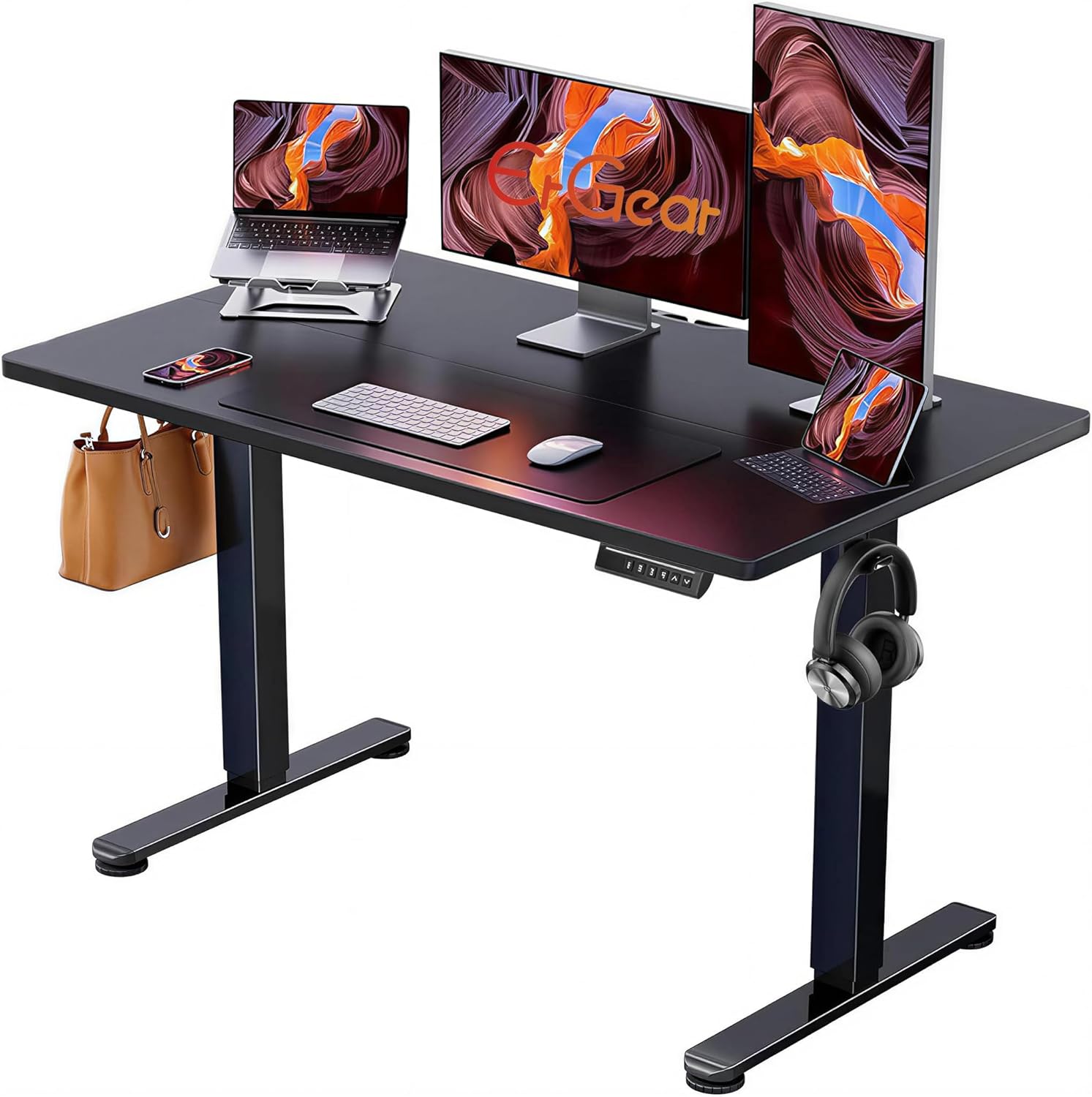
✅ Benefits of Standing Desks
Standing desks are most effective at one thing: reducing sedentary time. Office workers typically spend 70–80% of their working hours sitting. Sit-stand desk users have been shown to reduce workplace sitting time by 78–84 minutes per day, with no increase in leisure-time sitting. That’s a meaningful reduction in sedentary behavior that can add up over time.
🩸 Reduces sedentary time
- Sit-stand desks reduce prolonged sitting time by 23.5%
- Standing desk converters decrease workplace sedentary time and improve perceived productivity
- Reductions in sitting time are sustained over extended periods
💪 Improves posture & reduces pain
- Standing desks improve craniovertebral angle and reduce muscle fatigue in the neck and shoulders
- Alternating posture between sitting and standing improves lower back pain
- Stand-biased desk users experience significantly less lower back discomfort
🧠 Cognitive & performance benefits
- Alternating between sitting and standing produces shorter reaction times and greater visual attention
- Standing increases alertness and improves visual task performance
- Active workstations improve reasoning scores compared to sitting
- People performing intellectual activities in a standing position report better productivity and satisfaction
🔥 Calorie burn & metabolic health
- Standing burns more calories than sitting
- Active workstations increase energy expenditure by 15–36% without impairing academic performance
- Replacing workplace sitting with standing or light-intensity activity has beneficial implications for cardiometabolic health
A standing desk intervention over several months alleviates musculoskeletal discomfort and post-work fatigue, with benefits coming from increasing standing time by at least 30 minutes per day.
🦴 Does a Standing Desk Improve Posture?
Yes — but only if you use it correctly and maintain proper ergonomic form.
🔹 What the evidence shows
- For people with forward head posture, using a standing desk significantly increases the craniovertebral angle — meaning the head moves into a more neutral, aligned position
- Moving from sitting to standing improves alignment of the entire spine, relieves pressure, and helps prevent musculoskeletal issues such as neck and shoulder pain
- Sitting to standing creates a more neutral spinal posture
🔸 But posture isn’t automatic
- Standing with poor form — leaning, locking knees, or shifting weight unevenly — can worsen posture problems
- Proper form requires ankles, hips, shoulders, and ears aligned; weight evenly distributed; knees unlocked
- Adding contact points like balance boards or anti-fatigue mats enhances postural stability and encourages movement
📐 Proper standing desk posture checklist:
- Desk height: 38–42 inches depending on your height
- Elbows at 90° angle, wrists straight, hands in line with forearms
- Top of monitor at or just below eye level, about an arm’s length away
- Shoulders relaxed and low
- Weight evenly distributed between both legs
- Knees slightly bent — never locked
The takeaway: A standing desk can significantly improve posture, particularly for people with forward head posture. But the desk itself doesn’t fix posture — it simply enables better alignment if you actively maintain it.
⚖️ Standing Desk vs Sitting Desk: The Real Comparison
This isn’t a battle between sitting and standing. It’s a battle between static posture and movement.
🪑 The case against sitting
- Prolonged sitting increases risk of cardiovascular disease, type 2 diabetes, cancer, and premature mortality
- Sitting more than 12 hours a day increases CVD risk by 22% per hour beyond that
- Office workers sit 60–85% of their work time
- The risk remains elevated even with regular moderate-to-vigorous exercise
- Sitting for extended periods more than doubles the risk of diabetes and CVD
🧍 The case against standing all day
- Prolonged static standing places significant mechanical load on heels, ankles, and plantar fascia
- Extended standing can cause blood to pool in the lower extremities, increasing risk of orthostatic circulatory disorders
- Prolonged standing is associated with varicose veins, lightheadedness, and elevated heart rate
- Back and leg complaints can start after just 40 minutes of standing
- Simply standing more doesn’t reduce heart disease risk — prolonged standing is associated with higher risk
What the data actually says:
- Workers who use stand-biased desks stand more and sit less during their workday, and experience significantly less lower back discomfort
- Sit-stand desk interventions effectively reduce workplace sedentary time over extended periods without increasing sedentary behavior during leisure time
- When given the option to use sit-stand desks, participants choose to stand for about 47 minutes on average once a day
- The healthiest approach is not all-standing or all-sitting, but frequent alternation between postures
The takeaway: Both sitting all day and standing all day are harmful. The optimal solution is not choosing one over the other — it’s switching between them regularly.
🎯 Who Should Buy a Standing Desk?
✅ A standing desk is a good investment if:
- You sit 6+ hours a day. The primary benefit is breaking up prolonged sitting
- You have lower back or neck pain. Alternating postures reduces discomfort
- You’re willing to alternate. The benefits come from switching between sitting and standing, not standing all day
- You have forward head posture. Standing desks significantly improve craniovertebral angle
- You want to burn extra calories. Standing burns more calories than sitting
- You want to improve your energy and focus. Alternating postures improves reaction times and attention
❌ A standing desk may NOT be right if:
- You plan to stand all day. Prolonged standing has its own health risks
- You have existing circulatory issues. Extended standing can worsen varicose veins and orthostatic conditions
- You have chronic foot or joint pain. Static standing loads the heels, ankles, and plantar fascia
- You’re not willing to take movement breaks. Standing still is almost as bad as sitting still
- You work on highly demanding cognitive tasks. Some people find intense concentration easier in a seated position
🧭 How to Use a Standing Desk Correctly
Start slow and build up:
- Start by standing for 30–60 minutes a day and gradually increase
- Aim for a total of 2–4 hours of standing per day, broken into short intervals
Follow a proven ratio:
- The 20/8/2 rule: For every 30 minutes — sit for 20 minutes, stand for 8 minutes, move for 2 minutes
- Another guideline: 40 minutes sitting / 20 minutes standing — plus a few minutes moving away from the desk
- Standing for 15–30 minutes every hour is the ideal balance
Use ergonomic accessories:
- Anti-fatigue mats reduce discomfort from prolonged standing
- Balance boards encourage movement and improve postural stability
- A standing footrest allows you to shift weight
- Consider perching — semi-sitting on a tall stool — to avoid extremes
💡 The single most important rule: Change your posture before you feel discomfort. Don’t wait until your back hurts to sit down or stand up.
🏆 Final Verdict: Are Standing Desks Worth It?
Yes — but only if you use them correctly.
Standing desks are one of the most effective tools available for reducing workplace sedentary time. The evidence is clear: they reduce sitting by 78–84 minutes per day, improve posture, reduce lower back pain, and can even enhance cognitive performance — when used as part of an alternating routine.
But standing all day is not the goal. Prolonged static standing carries its own risks: foot pain, circulatory issues, and musculoskeletal strain.
The ideal use pattern:
- Stand for 2–4 hours per day in short intervals
- Follow the 20/8/2 rule — or similar alternating patterns
- Use ergonomic accessories like anti-fatigue mats and balance boards
- Change postures before you feel discomfort
- Take movement breaks away from the desk
A standing desk is worth the investment if you’re committed to using it as part of a movement-rich routine. If you’re just going to stand still for hours, it’s not worth it. The desk is a tool — but the real benefit comes from what you do with it.
📚 You May Also Like
- Are Foot Rests Good for Back Pain? (Science Guide)
- Best Premium Standing Desks in 2026: 5 High-End Picks That Are Worth the Investment
- Best Ergonomic Chair Under $300: 5 Picks That Punch Above Their Weight
- Haworth Soji Review 2026: Best Value Ergonomic Chair Under $700?
3 thoughts on “Are Standing Desks Worth It? Complete Ergonomic Analysis (2026)”