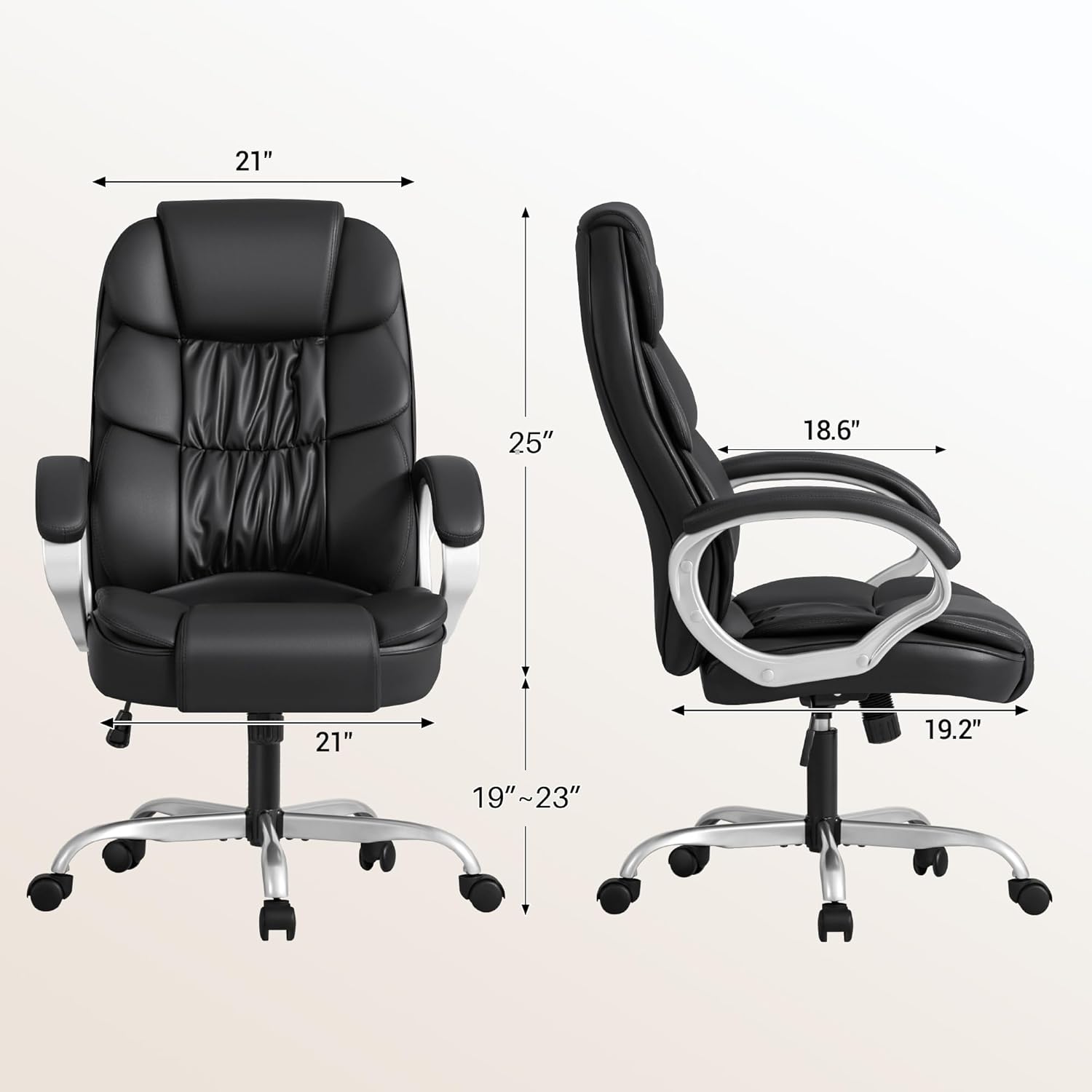
How high should a footrest be? The right height depends on your chair, lower-leg length, shoes, and normal sitting position. For many desk workers, a footrest raised a few inches off the floor can help support the feet, but there is no single height that works for everyone.
The goal is simple: keep both feet supported, your thighs comfortable, and your knees in a relaxed position without pressure behind them. This guide explains how to measure your ideal footrest height, adjust it to your desk, and choose a practical design for a home office, including homes with pets.
Quick Answer: How High Should a Footrest Be?
A footrest should be high enough to support your feet when your chair is adjusted for comfortable desk work. For many people, that means a platform a few inches above the floor, but your measured foot-to-floor gap is a better starting point than a universal height recommendation.
- Keep both feet fully supported rather than letting your heels dangle.
- Avoid raising your knees so high that your thighs feel cramped.
- Choose a height that does not create pressure behind your knees.
- Consider an adjustable footrest if you share a desk or change chairs.
Looking for product options? Start with our guide to the best footrests for office chairs.
Why Footrest Height Matters
Your chair and desk should work together. If you raise your chair to reach a desk comfortably but your feet no longer rest on the floor, a footrest can fill the gap. Without adequate support, you may shift around, perch on the edge of the seat, or place extra pressure beneath your thighs.
A footrest can also be useful when a desk is too high to accommodate your arms and shoulders at a comfortable chair height. Instead of lowering the chair until your shoulders rise toward the keyboard, you can keep the chair at a workable height and support your feet below.
Feet Supported
Both feet should have a stable surface instead of hanging freely.
Comfortable Knees
Your knees should feel relaxed, without being pushed too far upward.
Supported Thighs
Avoid a setup that creates uncomfortable pressure beneath your thighs or behind your knees.
A footrest is not a substitute for adjusting your chair, desk, or monitor. It is one part of a workstation setup. If you are also choosing a chair, our office chair guides can help you explore different seating options.
Typical Ergonomic Footrest Height
Many footrests sit a few inches above the floor, and some adjustable models offer several height settings. However, the correct setting depends on how high your chair needs to be for desk work and how far your feet are from the floor in that position.
| Setup | What to Check | Practical Approach |
|---|---|---|
| Feet nearly reach the floor | Whether your feet feel supported throughout the work session | Try a low-profile footrest or use no footrest if support is already comfortable. |
| A small gap under your feet | The vertical distance from your shoe soles to the floor | Choose a footrest that fills the gap without raising your knees excessively. |
| A larger gap under your feet | Whether the chair must remain high for desk access | Look for a model with a wider height-adjustment range and a stable base. |
| Several people share one workstation | Differences in chair settings and lower-leg length | Use an adjustable model that can be reset for each person. |
A knee angle close to 90 degrees is a useful starting reference, not a rigid rule. The important point is to avoid a cramped position and keep your feet supported. If a particular height causes discomfort, adjust the setup instead of trying to force your body into a fixed measurement.
How to Measure Your Ideal Footrest Height
The most useful measurement is the gap beneath your feet while you are sitting at your normal working height. Measuring while standing or while your chair is in a different position can give you a misleading result.
Step-by-Step Measurement
- Wear the shoes you normally use at your desk.
- Adjust your chair so you can reach the desk without raising your shoulders or stretching forward.
- Sit with your back supported and your feet in a natural position.
- Measure the vertical distance from the bottom of your shoe soles to the floor.
- Choose a footrest that can accommodate the measured gap and adjust it until both feet feel stable.
- Work in the setup for a short period, then reassess comfort and make small adjustments if needed.
For example, if your shoes sit about 3 inches above the floor when you are seated comfortably, a footrest that can provide support around that height is a sensible starting point. This is an example rather than a universal recommendation; your final setting may differ based on the footrest’s shape and how your legs rest on it.
Do not rely only on the advertised overall height of a footrest. Some products have angled surfaces, thick cushioning, or multiple positions. Check the manufacturer’s listed platform height and adjustment range before buying.
Fixed, Rocking, or Adjustable: Which Footrest Is Best?
The best footrest style depends on whether you need a specific height, prefer movement, or want a surface that is easy to clean. Start with fit and stability, then compare materials and features.
A simple option when a single platform height fits your desk and chair.
Check: Platform height, width, stability, and whether the surface is easy to clean.
A tilting surface that allows small changes in foot position while seated.
Check: Whether its fixed height and rocking motion suit your leg position.
Useful when you need to fine-tune height or share a workstation with another person.
Check: The minimum and maximum height, locking mechanism, and base stability.
If you are unsure which type will fit your setup, compare the models and selection criteria in our best footrests for office chairs guide.
Choosing a Footrest for a Home with Cats or Dogs
If pets spend time under your desk, your footrest needs to work around fur, paw marks, occasional bumps, and limited floor space. These considerations are secondary to getting the height right, but they can make daily use easier.
- Easy-clean surfaces: Smooth plastic or other wipeable materials are generally easier to clean than textured fabric or exposed foam.
- Removable covers: If you choose a padded footrest, check whether the cover is removable and follow its care instructions. Do not assume every cover is machine washable.
- Stable base: Non-slip feet and a sturdy frame can help reduce movement when the footrest is nudged.
- Safe edges: Rounded edges and a design without accessible pinch points are useful when pets move around the workstation.
- Enough room: Make sure the footrest leaves space for your feet and does not block your pet’s usual resting area.
No footrest should be treated as chew-proof or claw-proof unless the manufacturer explicitly supports that claim. Keep cords, small detachable parts, and moving mechanisms away from curious pets, and check the product regularly for damage.
If pet hair is a recurring problem, a hard, wipeable surface may be more practical than a deeply textured fabric. If you prefer cushioning, choose a design with care instructions that fit how often you are willing to clean it.
What to Check Before Buying a Footrest
| Feature | Why It Matters |
|---|---|
| Height range | The platform must fit the gap beneath your feet in your normal sitting position. |
| Platform width and depth | Enough room helps you place both feet comfortably without balancing on an edge. |
| Tilt or rocking function | Movement may be useful if you like changing your foot position during the day. |
| Non-slip base | Helps keep the footrest in place on your floor surface. |
| Material and cleaning | Consider dust, pet hair, spills, and the manufacturer’s care instructions. |
| Adjustment mechanism | Settings should be easy to change and secure during use. |
Before purchasing, check the current product dimensions, adjustment range, materials, and warranty information. Product specifications and prices can change, so use the manufacturer’s current listing rather than relying on a general price estimate.
Compare Footrest Options
Once you know the height you need, compare available models by adjustment range, surface type, stability, and cleaning requirements.
Common Footrest Height Mistakes
Choosing a Footrest Before Adjusting Your Chair
Set your chair for comfortable desk access first. Then measure the gap beneath your feet. Buying a footrest before checking your chair position can leave you with a platform that is too high or too low.
Assuming Every Desk Worker Needs the Same Height
Two people using the same desk may need different footrest heights because their chairs, shoes, and lower-leg lengths differ. Use your own seated measurement as the starting point.
Ignoring the Platform’s Actual Dimensions
A product’s overall height does not always tell you how high your feet will sit. Check the usable platform height, tilt, and adjustment positions before ordering.
Keeping an Uncomfortable Setting
If your knees feel cramped, your feet slide forward, or pressure develops behind your knees, reassess the height and chair position. Make small changes and use the setting that feels stable and comfortable.
Frequently Asked Questions
What is the ideal footrest height for a standard desk chair?
There is no universal ideal height. Measure the gap beneath your feet while sitting at your normal working height, then choose a footrest that supports both feet without raising your knees excessively. Many setups need only a few inches of elevation.
Should my knees be at exactly 90 degrees?
A roughly right-angle knee position is a useful starting point, but it is not a strict requirement for everyone. Aim for a relaxed position with supported feet and no uncomfortable pressure behind the knees.
Can a footrest be too high?
Yes. A footrest that is too high may push your knees upward or make your thighs feel cramped. Lower the platform or reassess your chair position if the setup feels restrictive.
Can a footrest be too low?
Yes. If the platform is too low, your feet may remain unsupported or slide forward. Choose a height that supports your feet in your normal seated position rather than selecting a model based only on appearance.
Should I use a footrest if my feet already reach the floor?
Not necessarily. If your feet rest comfortably on the floor and your chair position feels supportive, you may not need one. A footrest can still be useful if you prefer a different foot angle or a surface that allows gentle movement.
Is an adjustable footrest better than a fixed one?
An adjustable footrest is useful when you need to fine-tune the height, share a desk, or change your workstation setup. A fixed model can work well when its height and platform dimensions already fit your needs.
What footrest material is easiest to clean in a home with pets?
Smooth, wipeable surfaces are generally easier to clean than textured fabric or exposed foam. If you choose a padded model, check whether its cover can be removed and how it should be washed.
How often should I clean my footrest?
Clean it as needed based on dust, spills, and pet hair. Wipe hard surfaces with a suitable cleaner according to the manufacturer’s instructions, and wash removable covers only as directed on their care labels.
Final Recommendation
The best way to decide how high a footrest should be is to measure the gap beneath your feet while your chair is set up for normal desk work. Use that measurement as a starting point, then adjust the platform until your feet are supported and your legs feel relaxed.
Prioritize fit, stability, and enough room for both feet. If you share a workstation, an adjustable model gives you more flexibility. If you work around cats or dogs, consider a surface that is easy to clean and a base that stays in place.
Explore More Footrest Options
Ready to compare designs for your desk? Visit our complete guide to the best footrests for office chairs for more help choosing a style that fits your workspace.
Disclosure: As an Amazon Associate, SitBetterLab may earn from qualifying purchases. Product availability, features, and prices can change; check the current listing and manufacturer specifications before buying.
1 thought on “How High Should a Footrest Be? Ergonomic Height Guide”