
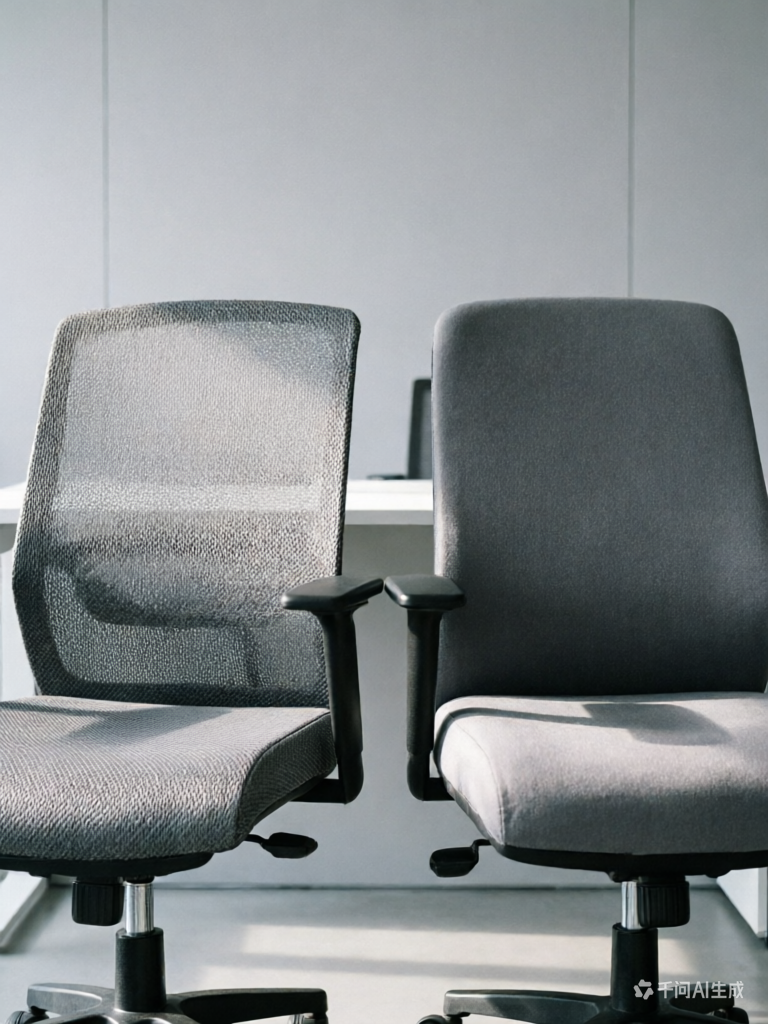
You have been shopping for an ergonomic chair, and you keep seeing two distinct types: chairs with breathable mesh and chairs with plush foam cushions. Both claim to be comfortable. Both claim to be ergonomic. But they feel completely different when you sit in them.
So which one is better? Is mesh really worth the extra money? Does foam make you sweat? And most importantly — which one will actually help with your back pain?
In this guide, I will break down everything you need to know about mesh vs cushion office chairs: comfort, breathability, durability, support, cleaning, and which one is best for different body types and use cases. By the end, you will know exactly which type belongs in your home office.
Quick Answer: Mesh vs Cushion — Which One Is Better?
Here is the short version if you are in a hurry:
- Choose mesh if: You run hot or live in a warm climate, want the most breathable chair possible, prefer firm supportive seating, sit for 8+ hours a day, or want a chair that will last 10+ years without sagging. Mesh is also better if you tend to sweat or want a chair that looks modern and sleek.
- Choose cushion (foam) if: You prefer a plush, “living room” feel; have a bony tailbone or sit bones that get sore on hard surfaces; want a chair that feels cozy and welcoming; are on a tighter budget; or do not sit for extremely long continuous sessions.
Neither is objectively better — they serve different needs. Let me explain why.
What Is a Mesh Office Chair?
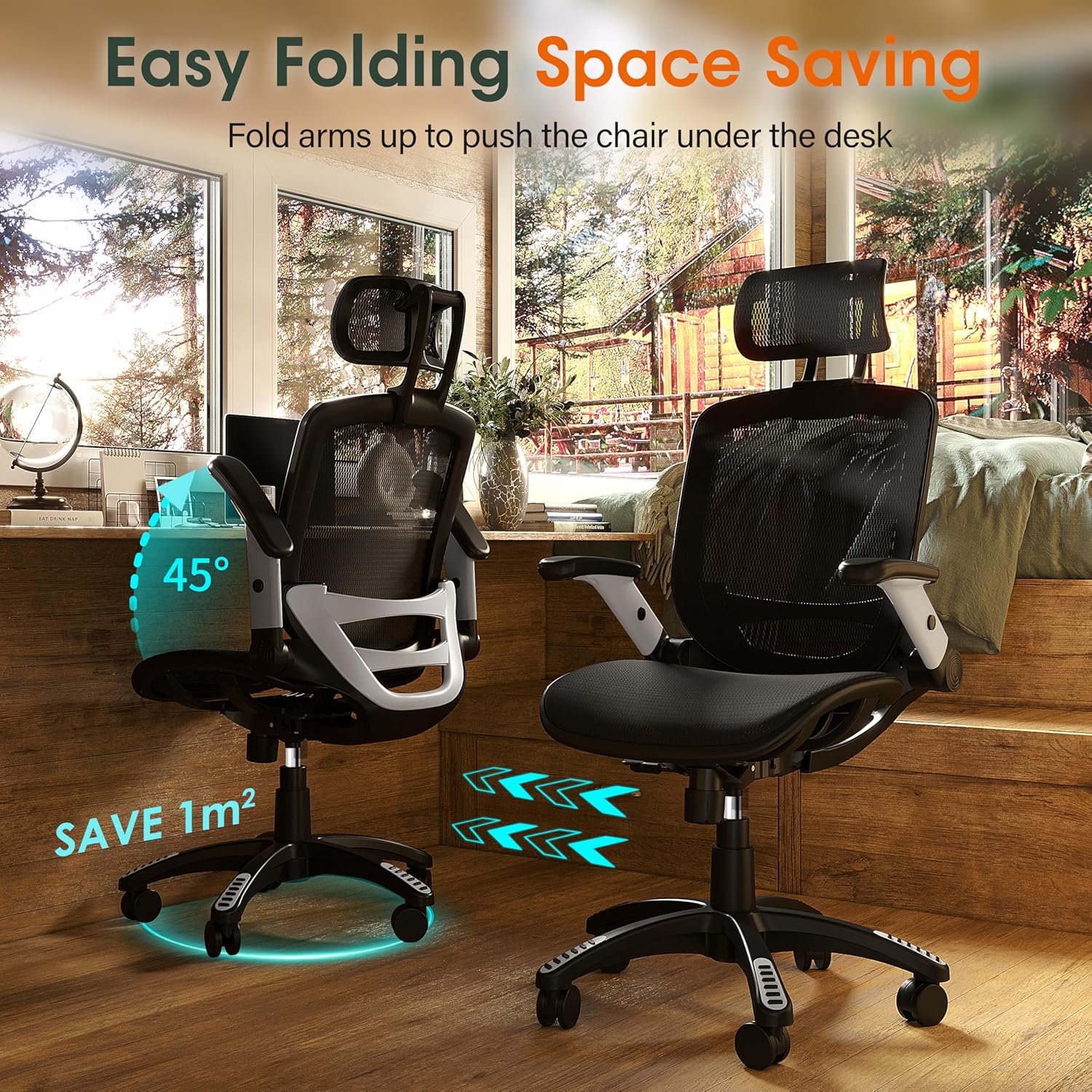

A mesh office chair uses a suspension fabric (usually polyester or nylon) stretched tightly across a frame for the backrest, seat, or both. The mesh is designed to be breathable, flexible, and supportive — like a hammock for your body.
Premium mesh chairs like the Herman Miller Aeron use advanced Pellicle mesh with zoned tension — different areas of the mesh have different levels of tightness to provide support where you need it and flexibility where you don’t.
Common mesh chair examples:
- Herman Miller Aeron (full mesh seat + back)
- Haworth Fern with mesh back option
- SIHOO Doro C300 (mesh back, foam seat)
- Hbada E3 (full mesh or mesh back + foam seat)
- Flash Furniture Marcus (full mesh)
What Is a Cushion (Foam) Office Chair?
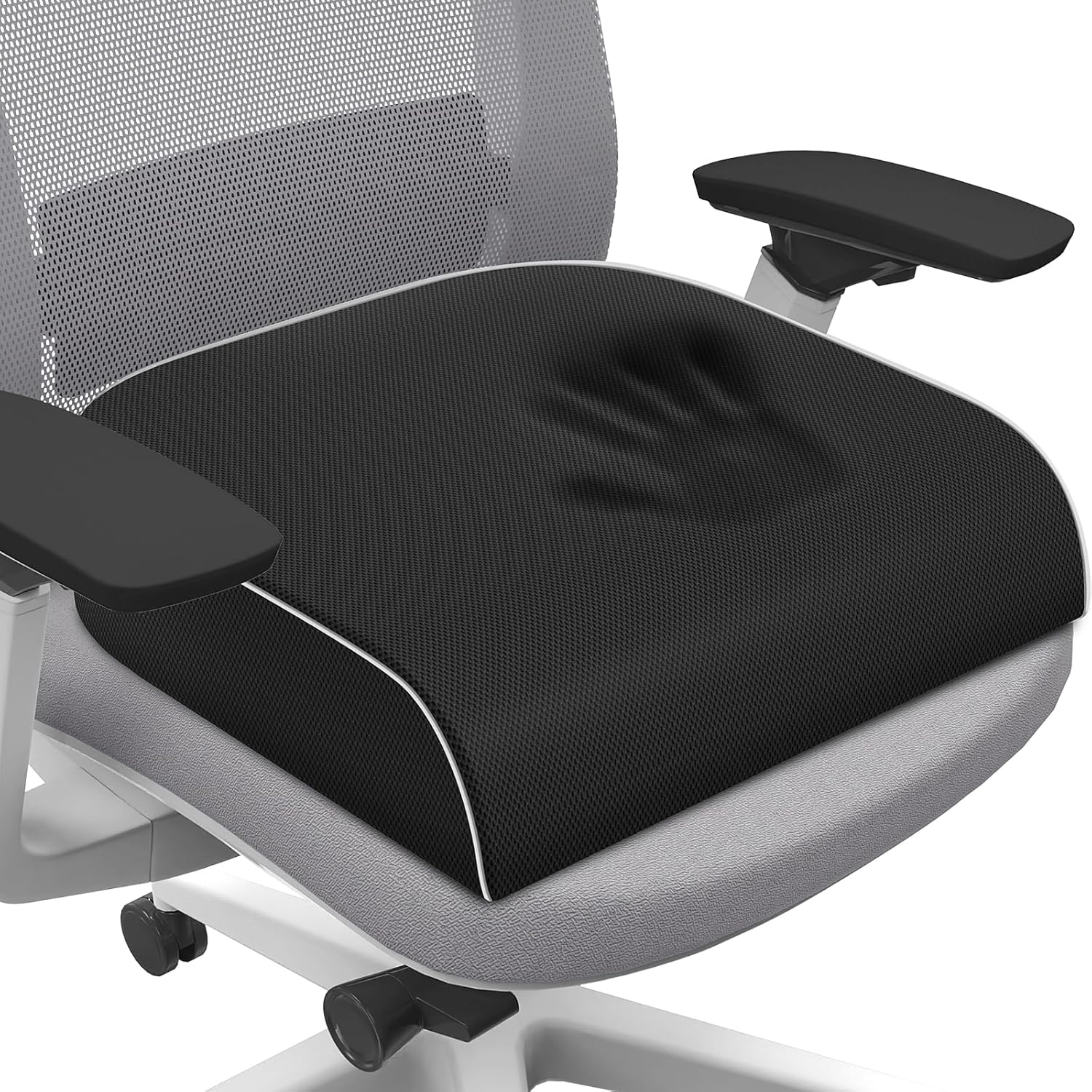

A cushion office chair uses high-density polyurethane foam covered with fabric, leather, or mesh. The foam provides a softer, more traditional seating surface that conforms to your body over time.
Premium cushion chairs use multi-layer foam with different densities — firmer at the base for support, softer on top for comfort. Some, like the Steelcase Leap, feature a flexible seat pan that moves with you.
Common cushion chair examples:
- Steelcase Leap v2 (foam seat + fabric back)
- Steelcase Gesture (foam seat + fabric back)
- Branch Ergonomic Chair Pro (foam seat + mesh back)
- Autonomous ErgoChair Pro (foam seat + mesh back)
- Hbada E3 Pro (foam seat + mesh back)
Comparison Table: Mesh vs Cushion Office Chairs
FeatureMesh ChairCushion (Foam) Chair
| Breathability | Excellent — air flows freely through the seat | Poor — foam and fabric trap heat and moisture |
| Initial Comfort | Firm — may feel “hard” at first, requires adjustment period | Plush — feels soft and welcoming immediately |
| Long-Term Comfort (8+ hours) | Very good — prevents fatigue, keeps you alert | Mixed — can cause sweating and pressure points over time |
| Durability | Very high — mesh does not sag or flatten over time | Moderate — foam compresses and loses shape after 3–7 years |
| Support | Firm, even support across the entire seat surface | Soft, conforming support that molds to your body |
| Cleaning | Easy — wipe down, vacuum, or spot clean | Harder — fabric absorbs spills and stains |
| Noise | Quiet — mesh is silent | Can creak — foam compresses and decompresses |
| Weight | Lighter (full mesh chairs ~30–40 lbs) | Heavier (foam chairs ~45–80 lbs) |
| Price Range | $200–$1,800 (wider range) | $150–$1,500 |
| Best For | Hot climates, long hours, sweaty users, durability | Cool climates, short sessions, plush feel preference |
Detailed Comparison: Mesh vs Cushion
1. Breathability (Winner: Mesh)
This is mesh’s biggest advantage. Air flows freely through the open weave of mesh seats and backrests, carrying away heat and moisture. If you have ever stood up from a foam chair with a sweaty back or damp thighs, you know exactly why this matters.
Mesh: “The Aeron’s Pellicle mesh is 100% open. You can literally see through it. Air moves freely, keeping you cool even during summer months. This is the chair for people who run hot.”
Cushion: “Foam and fabric trap heat and moisture. Even ‘breathable’ fabrics cannot match mesh. After 6–8 hours, you will likely feel the difference — especially on the seat, where your body heat has nowhere to go.”
Verdict: If you live in a warm climate, sweat easily, or sit for long sessions, mesh is the clear winner.
2. Initial Comfort (Winner: Cushion)
When you first sit down, a foam cushion feels soft, welcoming, and familiar — like a couch or car seat. Mesh feels firm, even hard. Many first-time mesh users worry they made a mistake.
Mesh: “Most people need 1–2 weeks to adjust to a mesh seat. The firmness is intentional — it promotes better posture and prevents you from sinking into a slouch. But those first few days can be uncomfortable if you are used to foam.”
Cushion: “Foam feels good immediately. There is no adjustment period. You sit down, and it feels like a chair should feel. This is why most cheap chairs use foam — it sells well in showrooms.”
Verdict: If you want a chair that feels comfortable on day one, choose cushion. If you are willing to adjust for long-term benefits, choose mesh.
3. Long-Term Comfort (Winner: Mesh — for 8+ hour days)
This is where the conversation gets interesting. While foam feels better initially, mesh often feels better after 6–8 hours.
Mesh: “Because mesh does not trap heat, you do not get that sticky, sweaty feeling after hours of sitting. The firm support also prevents the ‘sinking’ sensation that can make you feel tired and sluggish. Mesh keeps you alert.”
Cushion: “After several hours, the foam compresses under your weight. Your sit bones may start to ache. The fabric can feel damp. Many foam chair users end up shifting constantly or standing up more frequently to relieve pressure.”
Real user feedback: “I switched from a foam executive chair to a mesh Aeron. The first week, I regretted it. The second week, I noticed I was less tired at the end of the day. The third week, I could not go back to foam. The mesh just disappears under you — you forget you are sitting.”
Verdict: For full-time desk workers (8+ hours/day), mesh is generally better. For part-time sitters (2–4 hours/day), the difference is less noticeable.
4. Durability and Longevity (Winner: Mesh)
Foam compresses. It is a fact of material science. Every time you sit down, the foam compresses slightly. Over years, it loses its ability to rebound, leading to a flattened, sagging seat.
Mesh: “Quality mesh does not sag. It maintains its tension for 10–15+ years. The Herman Miller Aeron mesh from 1995 is often still in perfect condition. If the mesh does eventually loosen, many manufacturers offer replacement mesh panels.”
Cushion: “Foam typically lasts 3–7 years before significant compression occurs. Heavier users (over 200 lbs) may see flattening in 2–3 years. You can replace foam, but it is often as expensive as buying a new mid-range chair.”
Verdict: If you want a chair that will last 10+ years without degrading, choose mesh. If you are okay replacing your chair every 3–5 years, foam is fine.
5. Support and Posture (Winner: Mesh — for active sitting)
Mesh chairs tend to encourage better posture because they do not let you sink into a slouch. The firm, even support keeps your pelvis in a neutral position.
Mesh: “The suspension creates a ‘hammock effect’ — your weight is distributed evenly across the entire seat surface. There are no pressure points. This encourages active sitting where your body makes micro-adjustments naturally.”
Cushion: “Foam conforms to your body, which sounds good but can actually reinforce poor posture. If you tend to sit with a pelvic tilt (slouching), the foam will mold to that position, making it harder to correct.”
Verdict: For posture correction and back pain prevention, mesh has an edge — but only if the mesh is high-quality with proper tension zones.
6. Cleaning and Maintenance (Winner: Mesh)
Spills happen. Coffee, tea, snacks — all can ruin an office chair.
Mesh: “Wipe mesh with a damp cloth and mild soap. For deeper cleaning, use a vacuum with a brush attachment. Spills go through the mesh rather than soaking in — blot the frame, and you are done.”
Cushion: “Fabric foam chairs absorb spills immediately. Once liquid gets into the foam, it is nearly impossible to remove completely. Stains, odors, and mold can become issues over time. Leather/vegan leather is easier to wipe but cracks and peels.”
Verdict: If you eat at your desk or have kids/pets, mesh is much easier to keep clean.
7. Weight and Portability (Winner: Mesh)
Full mesh chairs are significantly lighter than foam chairs because foam and fabric add substantial weight.
Mesh: “A full mesh chair like the Aeron weighs ~30–40 lbs. Easy to move, lift, and reposition.”
Cushion: “A foam chair like the Steelcase Gesture weighs ~78 lbs. Moving it between rooms is a workout.”
Verdict: If you move your chair frequently, choose mesh.
8. Aesthetics (Tie — personal preference)
Mesh chairs have a modern, technical, “futuristic” look. Cushion chairs look more traditional, cozy, and familiar.
Mesh: “Clean lines, visible suspension, high-tech appearance. Fits modern and minimalist offices well.”
Cushion: “Warm, inviting, traditional. Fits executive offices and home environments where a ‘couch-like’ feel is desired.”
Verdict: Choose based on your office decor and personal taste.
Hybrid Chairs: The Best of Both Worlds
Many modern ergonomic chairs offer a hybrid design: a mesh backrest for breathability + a foam seat cushion for comfort. This combination has become increasingly popular because it addresses the main complaint about full mesh chairs (firm seat) while keeping the breathability advantage.
Popular hybrid chairs:
- SIHOO Doro C300 (mesh back, foam seat)
- Hbada E3 Pro (mesh back, foam seat)
- Branch Ergonomic Chair Pro (mesh back, foam seat)
- Autonomous ErgoChair Pro (mesh back, foam seat)
- Steelcase Leap v2 (fabric back, foam seat — not mesh)
Pros of hybrid: You get breathability where you need it most (your back) and cushion comfort where you want it (your seat). This is often the best compromise for users who want both.
Cons of hybrid: You lose some breathability on the seat (still traps some heat), and you still have foam compression issues over time (though less critical on the seat than the back).
Verdict: For most people, a hybrid chair (mesh back + foam seat) offers the best balance of breathability, comfort, and durability.
Which Is Better for Specific Use Cases?
For Back Pain (Winner: Mesh back + adjustable lumbar)
The backrest material matters less than the lumbar support system. However, mesh backrests tend to be more breathable and provide firmer support. The Steelcase Leap (cushion) is excellent for back pain, as is the Aeron (mesh). The key is adjustable lumbar — material is secondary.
For Long Work Days (8+ hours) (Winner: Mesh or Hybrid with mesh back)
Mesh’s breathability and firm support reduce fatigue and sweating over long sessions. If you must have foam, choose a hybrid with mesh back to at least keep your back cool.
For Gaming (Winner: Hybrid — mesh back + foam seat)
Gamers need both long-session comfort (mesh back) and a plush feel for relaxation between matches (foam seat). Hybrid chairs hit both marks.
For Hot Climates / Summer (Winner: Full mesh)
If you live in Florida, Texas, Arizona, or anywhere with hot summers, full mesh is non-negotiable. Foam in summer is miserable.
For Cool Climates / Winter (Winner: Cushion)
In cold climates, foam’s heat retention is actually a benefit. Mesh can feel cold in winter. Choose based on your local climate.
For Heavy Users (Over 250 lbs) (Winner: High-quality mesh or high-density foam)
Mesh distributes weight evenly and does not compress. However, cheap mesh can sag under heavy weight. Premium mesh (Aeron, Haworth) is excellent. High-density foam (Steelcase Leap with 400 lb capacity) is also good. Avoid cheap foam.
For Budget (Under $300) (Winner: Hybrid or foam)
Cheap full mesh chairs often use low-quality mesh that sags quickly. At this price, a hybrid or foam chair may offer better value and durability.
Pros and Cons Summary
Mesh Office Chair
✅ Pros:
- Superior breathability — no sweaty back
- Very durable — lasts 10–15+ years without sagging
- Easy to clean — spills go through mesh
- Lighter weight — easy to move
- Firm support encourages good posture
- Modern, sleek appearance
❌ Cons:
- Firm feel — requires adjustment period
- Can feel cold in winter
- Premium mesh chairs are expensive
- Cheap mesh sags and loses tension
- Less “cozy” feel than foam
Cushion (Foam) Office Chair
✅ Pros:
- Plush, welcoming feel immediately
- Conforms to your body
- Warm in winter — retains heat
- Traditional, familiar appearance
- Often less expensive than premium mesh
- Good for short sessions
❌ Cons:
- Traps heat — can cause sweating
- Foam compresses over time (3–7 years)
- Difficult to clean — absorbs spills
- Heavier — harder to move
- Can reinforce poor posture
- Fabric can stain and wear
Frequently Asked Questions (FAQ)
Are mesh chairs better than cushion chairs for back pain?
Not necessarily. Both can be excellent for back pain if they have proper lumbar support. The key is adjustability, not material. However, mesh backrests tend to be more breathable, which reduces the discomfort that can come from sweating, and their firm support encourages better posture.
Do mesh chairs hurt your tailbone?
Quality mesh chairs distribute your weight evenly across the entire seat, which can actually reduce pressure on your tailbone compared to foam (which creates a “bowl” effect). However, cheap mesh chairs with poor tension can be uncomfortable. Premium mesh chairs (Aeron, Haworth) are designed specifically to eliminate pressure points.
Do foam chairs make you sweat?
Yes — especially in warm weather or during long sessions. Foam and fabric trap body heat and moisture. If you tend to run hot or live in a warm climate, this is a significant consideration. Mesh is much better for airflow.
How long do mesh office chairs last?
Quality mesh chairs (Herman Miller, Haworth, Steelcase with mesh) last 10–15+ years. The mesh itself does not sag if it is high-quality. Cheap mesh chairs ($200–300) may sag within 1–3 years. You get what you pay for with mesh.
How long do foam office chairs last?
Quality foam chairs (Steelcase Leap, Gesture) last 7–10+ years before significant foam compression. Cheap foam chairs ($150–250) may flatten within 1–2 years. Foam density is the key factor — high-density foam lasts much longer.
Can you replace foam in a cushion chair?
Yes — but it is often expensive. Replacement foam cushions for premium chairs like the Steelcase Leap can cost $150–300 plus installation. For mid-range chairs, it is often cheaper to buy a new chair.
Can you replace mesh in a mesh chair?
Yes — but similarly expensive. Replacement mesh for the Herman Miller Aeron costs $200–400. Many manufacturers offer replacement parts, but the cost is significant.
Which is better for tall people: mesh or cushion?
Neither inherently. Both types have models that fit tall users. However, full mesh chairs like the Aeron Size C have excellent tall-friendly options. The key is looking for seat depth adjustment, tall backrests, and extended height ranges — not the material type.
Which is better for heavy people: mesh or cushion?
Premium mesh is excellent for heavy users because it distributes weight evenly and does not compress. The Aeron Size C supports up to 350 lbs. High-density foam (Steelcase Leap Plus supports up to 500 lbs) is also excellent. Avoid cheap versions of either material.
What is the best hybrid chair (mesh back + foam seat)?
The SIHOO Doro C300, Hbada E3 Pro, and Branch Ergonomic Chair Pro are all excellent hybrid chairs in the $300–600 range. For premium, the Steelcase Leap (fabric back) is not mesh, but many users prefer it. For full mesh hybrid (mesh back + mesh seat), the Aeron and Haworth Fern (mesh option) are top choices.
Final Verdict: Mesh vs Cushion — Which Should You Buy?
After comparing every aspect of mesh and cushion office chairs, here is my honest recommendation:
Buy a mesh chair (full mesh or mesh back) if: You run hot or live in a warm climate, sit 8+ hours a day, want a chair that will last 10+ years, prefer firm supportive seating, want easy cleaning, or have had issues with sweaty backs on foam chairs.
Buy a cushion (foam) chair if: You prefer a plush, cozy feel, live in a cool climate, sit for shorter sessions (2–6 hours), are on a tighter budget, or simply cannot get used to the firmness of mesh.
For most people, the best compromise is a hybrid chair: mesh backrest for breathability + foam seat cushion for comfort. This gives you the best of both worlds: a cool back and a comfortable seat.
My personal recommendation: If you can afford it and sit for long hours, get a premium full mesh chair like the Herman Miller Aeron or Haworth Fern (mesh back). Your back will stay cool, the chair will last 15+ years, and you will adjust to the firmness within two weeks. If you cannot afford premium, get a hybrid chair like the SIHOO Doro C300 or Hbada E3 Pro.
👉 See today’s price for Herman Miller Aeron on Amazon →
👉 See today’s price for SIHOO Doro C300 on Amazon →
Disclosure: This post contains affiliate links. If you purchase through our links, we may earn a commission at no extra cost to you. We only recommend products we have researched thoroughly.