
⏱️ The 20/8/2 Rule: The Gold Standard for Standing Desk Use
The 20/8/2 rule is widely recommended by ergonomic professionals as the optimal pattern for using a standing desk. Here’s how it works:
🔹 The Breakdown
- 20 minutes sitting — in a supportive ergonomic chair
- 8 minutes standing — at your standing desk with proper posture
- 2 minutes moving — walking, stretching, or simply shifting weight
- Repeat throughout the workday
🔹 Why This Ratio Works
- It prevents prolonged static posture in either position
- The 2-minute movement break keeps blood flowing and muscles engaged
- It matches the body’s natural desire to shift positions
- It reduces musculoskeletal discomfort and post-work fatigue
- It’s sustainable for an entire 8-hour workday
📋 How to Implement the 20/8/2 Rule:
- Use a timer or standing desk app with reminders
- Start your day with a 20-minute sitting block, then stand for 8 minutes, then move for 2
- Repeat this cycle approximately 16 times over an 8-hour workday
- This gives you about 2.1 hours of standing and 5.3 hours of sitting total — a balanced ratio
- Adjust slightly based on how your body feels — some days you may need more standing, others more sitting
🌱 Beginner Schedule: How to Start Standing Safely
If you’re new to standing desks, don’t start with the 20/8/2 rule. Your body needs time to adapt to standing — your feet, legs, and back aren’t used to the load. Here’s a gradual transition schedule that minimizes discomfort and injury risk:
📅 Week 1: The Introduction Phase
- Stand for 15–30 minutes, 2–3 times per day
- Start with just 15 minutes in the morning and 15 minutes in the afternoon
- If you feel foot or leg fatigue, stop and sit — don’t push through discomfort
- Focus on maintaining proper standing posture (weight evenly distributed, knees unlocked, shoulders relaxed)
- Use an anti-fatigue mat from day one — it makes a significant difference
📅 Week 2: Building Endurance
- Gradually increase standing time to 30–45 minutes per session
- Aim for 3–4 standing sessions per day
- Listen to your body — foot fatigue is normal, but sharp pain is a warning sign
- Introduce a balance board or standing footrest to encourage weight shifting
- Total daily standing: ~1.5 to 2.5 hours
📅 Week 3: Approaching the Target
- Aim for 45–60 minutes per standing session
- Implement the 20/8/2 rule for part of your day
- Total daily standing: ~2 to 3 hours
- You should now be comfortable standing for longer intervals
- Pay attention to any new aches or pains — they may indicate a posture issue
📅 Week 4 and Beyond: Full Integration
- Aim for the full 20/8/2 rule across your workday
- Total daily standing: 2–4 hours
- This is the “sweet spot” backed by the evidence — enough standing to reduce sedentary time, but not so much that you develop new issues
- Continue to use anti-fatigue mats and other ergonomic accessories
- Listen to your body — if you’re feeling fatigued, reduce your standing time temporarily
💡 Key tips for beginners:
- Start with shorter intervals and more frequent breaks — this is better than long standing sessions
- Use a timer to track your standing time — it’s easy to overdo it when you’re focused on work
- Invest in an anti-fatigue mat from day one — it reduces foot and leg discomfort significantly
- Keep a pair of supportive shoes at your desk — standing in bare feet or thin soles will cause discomfort
- Don’t expect to stand 4 hours on day one — gradual progression is essential
⚠️ Avoid Standing Too Much: The Risks of Overdoing It
If sitting all day is harmful, standing all day must be better — right? Wrong. Prolonged static standing comes with its own set of health risks that are often overlooked in the standing desk hype.
🔴 What happens when you stand too long:
- Blood pooling in the lower extremities — gravity pulls blood downward, which can cause swelling and discomfort
- Increased risk of varicose veins — prolonged standing puts stress on the veins in your legs
- Plantar fasciitis — standing on hard surfaces without proper support strains the plantar fascia
- Lower back pain — standing with poor form (locked knees, leaning, uneven weight) strains the lumbar spine
- Elevated heart rate — standing continuously increases cardiovascular load
🟡 Warning signs you’re standing too much:
- Persistent foot pain that doesn’t improve with rest
- Swelling in your ankles or feet
- Lower back pain that worsens after standing
- Leg cramps or muscle fatigue that lasts more than an hour
- Lightheadedness or dizziness from prolonged standing
- Feeling relieved when you finally sit down — not normal after the adaptation phase
📋 How to avoid overdoing it:
- Set a maximum daily standing time: Most guidelines recommend 4 hours as the upper limit
- Use a timer: It’s easy to lose track of time when you’re focused on work
- Take movement breaks: Don’t just stand still — shift weight, walk in place, or do ankle pumps
- Wear supportive footwear: Standing in work shoes or thin soles will cause discomfort
- Use an anti-fatigue mat: It reduces the load on your feet and legs significantly
- Consider a balance board: Encourages micro-movements that reduce static load
- Sit when you feel pain: Don’t push through discomfort — your body is telling you something
🛒 Products to Help You Stand Correctly
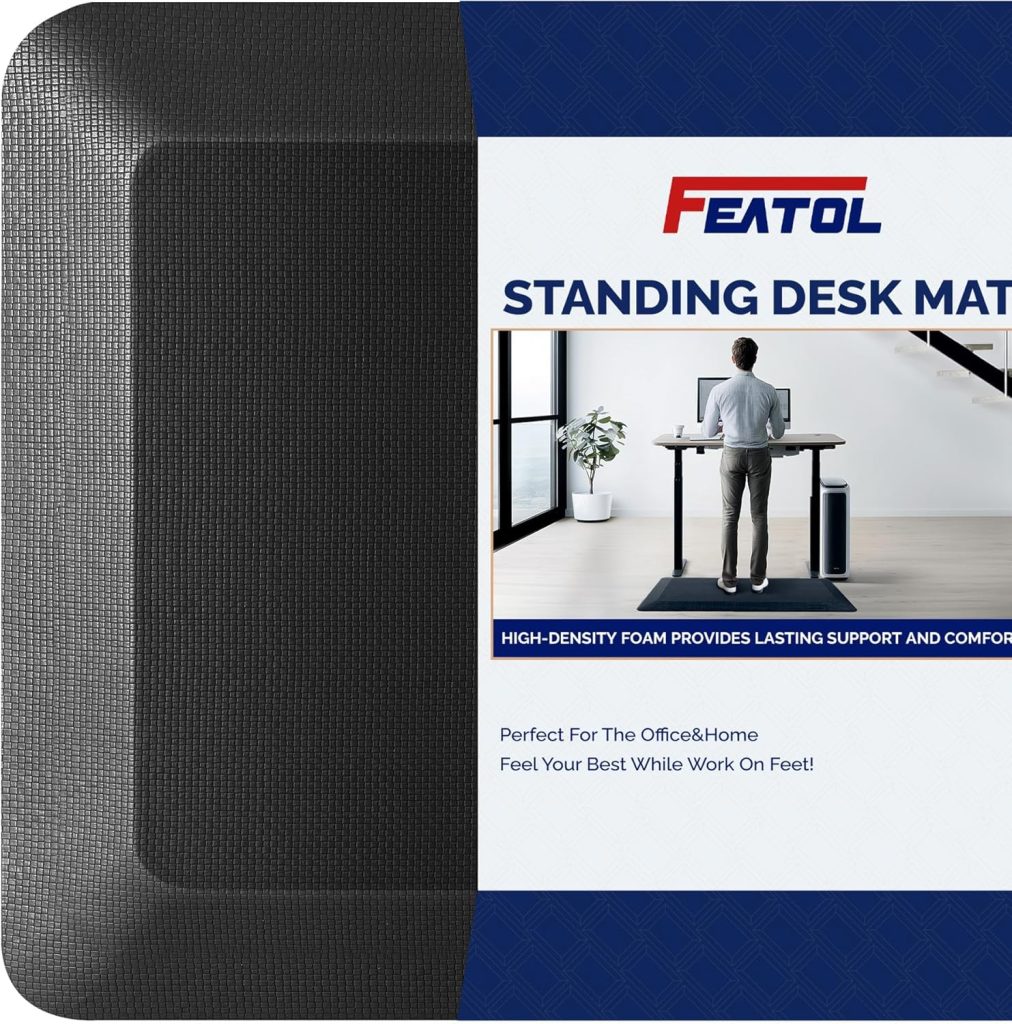
1. Ergonomic Anti-Fatigue Mat — Essential for Standing Comfort
An anti-fatigue mat is the single most important accessory for any standing desk user. It reduces foot, leg, and back fatigue by encouraging micro-movements and providing cushioning for your feet.
- ✅ Reduces foot fatigue during prolonged standing
- ✅ Encourages micro-movements that improve circulation
- ✅ Various sizes to fit any desk setup
- ✅ Available in different materials (foam, gel, rubber)
- ✅ Washable and durable for daily use
2. Standing Desk Timer / Smart Posture Reminder
A timer or smart reminder is the best way to implement the 20/8/2 rule consistently. It helps you alternate between sitting and standing at the right intervals — without having to watch the clock.
- ✅ Programmable intervals for sitting, standing, and movement
- ✅ Visual and audible alerts
- ✅ Compact and portable
- ✅ Battery-powered or USB rechargeable
- ✅ Some models include posture tracking
3. Balance Board / Wobble Board — Encourages Movement While Standing
A balance board or wobble board adds a dynamic element to standing. It forces you to make constant small adjustments, which improves circulation, engages core muscles, and reduces static load on your feet and legs.
- ✅ Encourages micro-movements while standing
- ✅ Improves balance and core strength
- ✅ Reduces static load on feet and legs
- ✅ Compact and stores easily
- ✅ Suitable for use with anti-fatigue mats
❓ Frequently Asked Questions: Standing Desk Duration
🏆 Final Verdict: How Long Should You Stand at a Standing Desk?
Stand for 2–4 hours per day, broken into intervals of 15–30 minutes, using the 20/8/2 rule as your guide.
The evidence and expert consensus are clear: standing for about 2–4 hours per day (not all at once) is the sweet spot. This is enough to significantly reduce sedentary time without introducing the risks of prolonged standing.
Key takeaways:
- ✅ Use the 20/8/2 rule as your daily pattern
- ✅ Don’t start with 4 hours — follow the beginner schedule (weeks 1–4)
- ✅ Use an anti-fatigue mat from day one
- ✅ Limit standing to 4 hours maximum per day
- ✅ Listen to your body — pain is a warning sign, not a challenge to overcome
- ✅ Movement is the key — not standing, not sitting. Shift positions and move regularly
The 20/8/2 rule is the most effective way to implement these guidelines consistently. Use a timer or standing desk app to help you stick to the pattern. Your body will adapt over time, and you’ll find the rhythm that works best for you.
📚 You May Also Like
- Are Standing Desks Worth It? Complete Ergonomic Analysis (2026)
- Standing Desk vs Sitting Desk: Which Is Better? (2026 Ergonomic Comparison)
- Best Premium Standing Desks in 2026: 5 High-End Picks That Are Worth the Investment
- Best Standing Desk for Small Spaces (2026 Guide)