
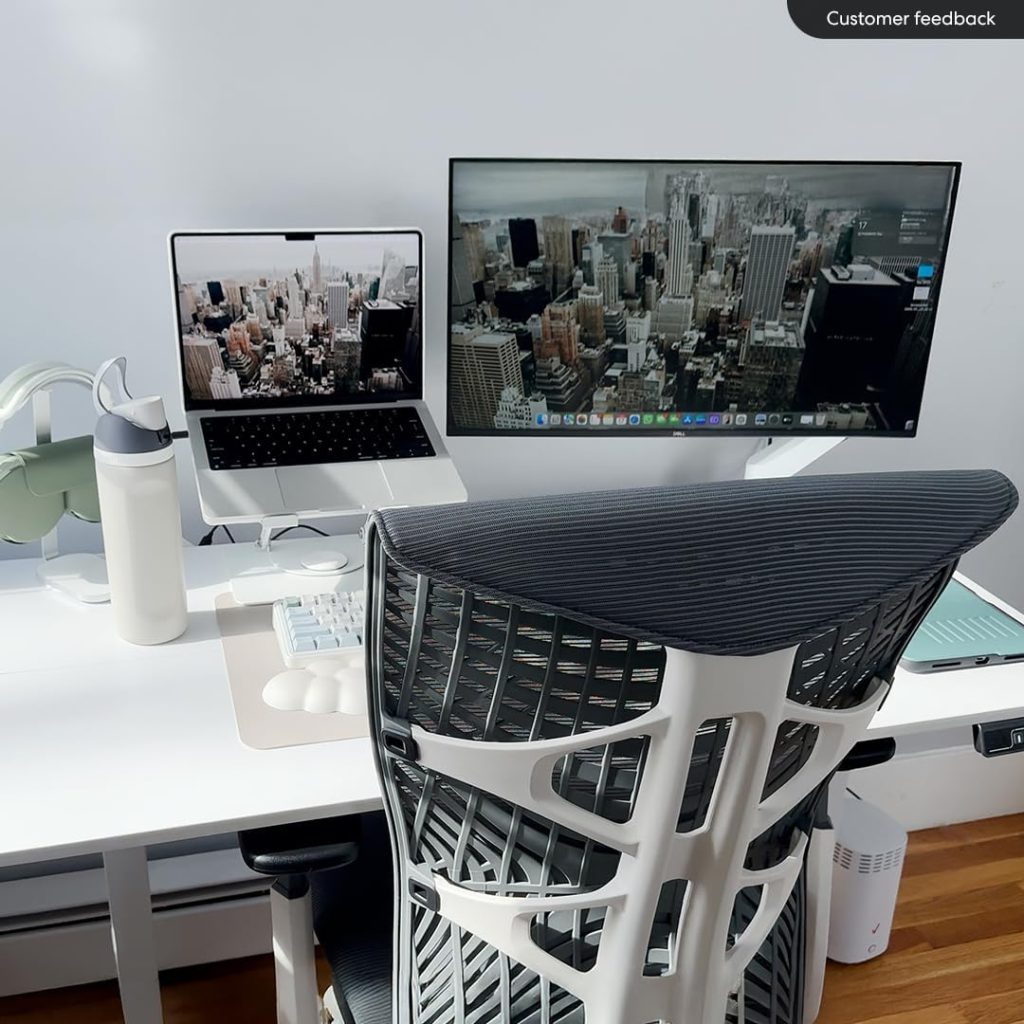
Sitting for eight hours in a cheap office chair is a slow grind. Your lower back stiffens, your shoulders creep up, and by 4 p.m. you’re shifting every few minutes. That’s exactly the problem the ErgoChair 2 was built to fix—adjustable lumbar support, a breathable mesh back, and enough tweakability to fit most bodies.
But here’s the thing: it’s been on the market for years, and 2026 brings a flood of newer ergonomic chairs. Is the ErgoChair 2 still a smart buy, or has it fallen behind? I put it through a full workweek of testing—adjustments, seat comfort, build quality, and price—to give you a straight answer.
🪑 Why an Ergonomic Chair Like the ErgoChair 2 Matters in 2026
Most traditional office chairs fail in the same predictable ways. Thin seat cushions, no real lumbar curve, fixed armrests, and a back angle that never moves push you into a slouched position. Over a full workday, that can turn into lower back tightness, rounded shoulders, and fatigue that lingers long after you log off.
The ErgoChair 2 takes a different route. It centers on adjustability—seat depth, lumbar support, tilt tension, and armrest height can all be tuned to your frame. That flexibility matters whether you’re putting in eight hours at a home office desk or settling in for a long gaming session. At its usual price point, it sits well below many premium ergonomic chairs while still covering the core essentials.
This review digs into the actual specs, how the chair performed during daily comfort testing, what the build quality feels like after months of use, current pricing, and a few strong alternatives if it turns out not to be your best match.
📌 ErgoChair 2 Key Features & First Impressions Overview
The ErgoChair 2 arrives as a fully adjustable ergonomic chair aimed at desk workers. Its spec sheet covers the essentials, so you can fine-tune the fit instead of forcing your body into a fixed position.
- Headrest: Adjusts up/down and tilts to support your neck.
- Lumbar support: Moves vertically and adjusts depth for lower-back contact.
- Armrests: Adjust in height, forward/back, and side angle.
- Seat depth: Slides about 2 inches to match different leg lengths.
- Tilt tension: A dial under the seat sets recline resistance.
- Materials: Breathable mesh back, molded foam seat, nylon frame; supports up to 300 lb.
Unboxing is straightforward. The chair ships in a compact box with clearly labeled hardware packs. Most buyers finish assembly in 20–30 minutes using the included hex key, and the initial build feels sturdy, though armrests have a slight plastic flex if you push hard.
Design-wise, it’s a modern mesh-back silhouette that fits home offices and gaming setups. You can choose from several frame and mesh color combos, including black, grey, and blue accents.
This chair is built for remote workers, gamers, students, and anyone who sits 4+ hours a day. It isn’t a heavy-duty 24/7 task chair, but it handles long work or study sessions without forcing you into one static posture.
📌 Ergonomic Adjustments & Real-World Comfort Testing
After a week of daily 8-hour sessions, the ErgoChair 2’s adjustment range impressed me most. You can fine-tune nearly every contact point:
- Seat height: roughly 18–21″ from the floor, which fits most standard desks.
- Recline: up to 135° with tilt lock at multiple angles.
- Armrests: height and width (side-to-side) adjustments, plus a slight forward slide.
- Headrest: height and angle tweaks, though taller users may want more lift.
- Lumbar support: a firmness dial behind the mesh back; turn it to add or reduce lower-back pressure.
During the week-long test, a 5’4″ tester found the seat depth and lumbar dial let her sit flush against the backrest without knee pressure. My 6’2″ frame needed the headrest at max height and the seat slid forward. A heavier user (around 240 lb) said the mesh back breathed well over long sessions and didn’t trap heat like foam chairs.
Seat cushioning is medium-firm. After six hours, pressure points were manageable, not gone. Compared to a basic task chair, the ErgoChair 2 encourages a more neutral spine, but you still need to adjust it properly. The mesh back’s airflow is a real plus for warm offices.
Overall, this chair won’t magically fix back pain, but it gives you more tools to reduce strain during long desk days.
📌 Build Quality, Materials & Long-Term Durability
Build quality is decent for the price, but it’s not flawless. The current ErgoChair 2 uses a molded nylon frame with an aluminum five-star base.
Most models are rated for up to 350 pounds, though some older listings say 300 pounds, so check your specific version. The standard dual-wheel casters roll smoothly on hard floors and low-pile carpet, but they aren’t rollerblade-style and can mark soft hardwood if you push aggressively.
The mesh back and foam seat are the two materials you’ll notice most over time. The breathable mesh holds tension reasonably well through two years of daily use, though it can stretch slightly around the lumbar area.
The seat cushion is molded foam, not mesh. It feels supportive early on, but after a year or two of 8-hour days, some users report more compression than expected, especially near the front edge.
Warranty coverage typically includes the frame for 5 years and moving parts for 2 years. Customer support is usually responsive by email or chat, but replacement parts can take a couple of weeks during busy periods.
Common long-term complaints from owners include:
- Tilt mechanism can develop a squeak after 6–12 months.
- Armrest pads may peel or loosen with heavy elbow pressure.
- Lumbar support band can lose tension and slide down.
- Gas cylinder may sag gradually if you’re near the weight limit.
Overall, the ErgoChair 2 holds up acceptably for a budget ergonomic chair, but it isn’t a 10-year heirloom.
📌 Pricing & Value for Money in 2026
At $399–$499 (frequent sales drop it to $399), the ErgoChair 2 sits in the mid-range sweet spot for 2026. You’ll find it direct from Autonomous or on Amazon. Compare that with a Herman Miller Aeron at $1,395+ or a steelcase leap at $1,200+, and the upfront savings are clear.
| Chair | Typical Price | Warranty | Est. Cost/Year | Check Price |
|---|---|---|---|---|
| ErgoChair 2 | $399–$499 | 2 years | $71–$100 | Check Price |
| Herman Miller Aeron | $1,395+ | 12 years | $116+ | Check Price |
| Steelcase Leap | $1,200+ | 12 years | $100+ | Check Price |
If you keep the ErgoChair 2 for a realistic 5–7 years of home-office use, the math works out to about $71–$100 per year. Premium chairs may last longer and carry 12-year warranties, but their upfront cost is 2–3 times higher.
Budget chairs under $200 often skip adjustable seat depth, lumbar tension, or durable tilt locks. Many fail within 2–3 years, which can actually cost more per year.
For most home office users in 2026, the ErgoChair 2 is worth the investment if you want solid adjustability without premium pricing. If you sit 8+ hours daily and need 10-year durability, save up for a Leap or Aeron instead.
Check ErgoChair 2 price on Amazon →
⚡ ErgoChair 2 vs Competitors: How It Stacks Up
Stacking the ErgoChair 2 against four popular 2026 alternatives shows it still holds a strong middle ground—more adjustable than most gaming chairs, but not as premium or warranty-backed as a Herman Miller. I compared these five because they cover the most common use cases: budget, gaming, lumbar support, and premium office use. Street prices may shift with sales.
| Chair | Adjustments | Build Materials | Price | Warranty | Check Price |
|---|---|---|---|---|---|
| ErgoChair 2 | 3D armrests, seat depth, tilt tension, adjustable lumbar, headrest | Mesh back, foam seat, aluminum base | ~$499–$599 | 5 yr | Check Price → |
| Secretlab Titan Evo | 4D armrests, built-in lumbar, magnetic headrest, deep recline | High-density foam, leatherette or fabric, steel frame | ~$549–$649 | 5 yr | Check Price → |
| Sihoo Doro C300 | Dynamic lumbar, 4D armrests, seat depth, multi-tilt | Mesh back, foam seat, metal base | ~$379–$449 | 3 yr | Check Price → |
| FlexiSpot OC14 | Adjustable lumbar, 3D armrests, seat depth, recline | Mesh back, foam seat | ~$349–$429 | 3 yr | Check Price → |
| Herman Miller Aeron | PostureFit SL lumbar, adjustable arms, tilt limiter | Pellicle mesh, aluminum base | ~$1,395–$1,795 | 12 yr | Check Price → |
If you’re shopping by need, go budget with the Sihoo Doro C300 or FlexiSpot OC14. Choose the Secretlab Titan Evo for gaming looks and deep recline. For lumbar support, the Sihoo and Aeron are the standouts.
The Aeron wins premium feel and longevity. The ErgoChair 2 still makes sense when you want a headrest, adjustable lumbar, and a lower price than the Aeron — it’s a solid buy under $650, but the competition has caught up.
❓ FAQ: Your ErgoChair 2 Questions Answered
Does the ErgoChair 2 have adjustable lumbar support?
Yes. The lumbar pad moves both up and down plus in and out, so you can dial in lower-back pressure instead of just accepting a fixed curve. It’s a firm but tunable support — not as plush as some memory foam options, but many users prefer that for long desk sessions.
How much weight can the ErgoChair 2 support?
Autonomous rates the ErgoChair 2 at 300 lbs — a solid number for most home-office users. The aluminum base and Class 4 gas lift handle heavier builds better than many budget chairs, though very tall or wide-body users may still want the wider Pro seat.
Is the ErgoChair 2 good for tall or short users?
It fits most people between about 5’2″ and 6’2″ comfortably. Shorter users under 5’2″ may find the minimum seat height a touch high, so a footrest helps. Taller folks over 6’2″ might want a deeper seat or the Pro’s taller backrest.
What is the difference between ErgoChair 2 and ErgoChair Pro?
The Pro generally uses a denser, more breathable mesh, has a smoother recline mechanism, and offers slightly more refined lumbar and armrest adjustability. The ErgoChair 2 remains the better value if you don’t need those extra touches — the core ergonomics are nearly identical.
Can the ErgoChair 2 recline fully flat?
No. The backrest tilts to about 135 degrees, which is plenty for a quick stretch or resting your eyes. It’s not a napping chair, but the tilt tension and lock points feel controlled and stable.
Where can I buy the ErgoChair 2 in 2026 and what warranty is included?
You can buy it directly from Autonomous or through Amazon. Warranty coverage varies by seller and year, but Autonomous typically includes a limited warranty — with the Pro sometimes carrying longer coverage than the standard ErgoChair 2. Always confirm the exact terms at checkout before you commit.