
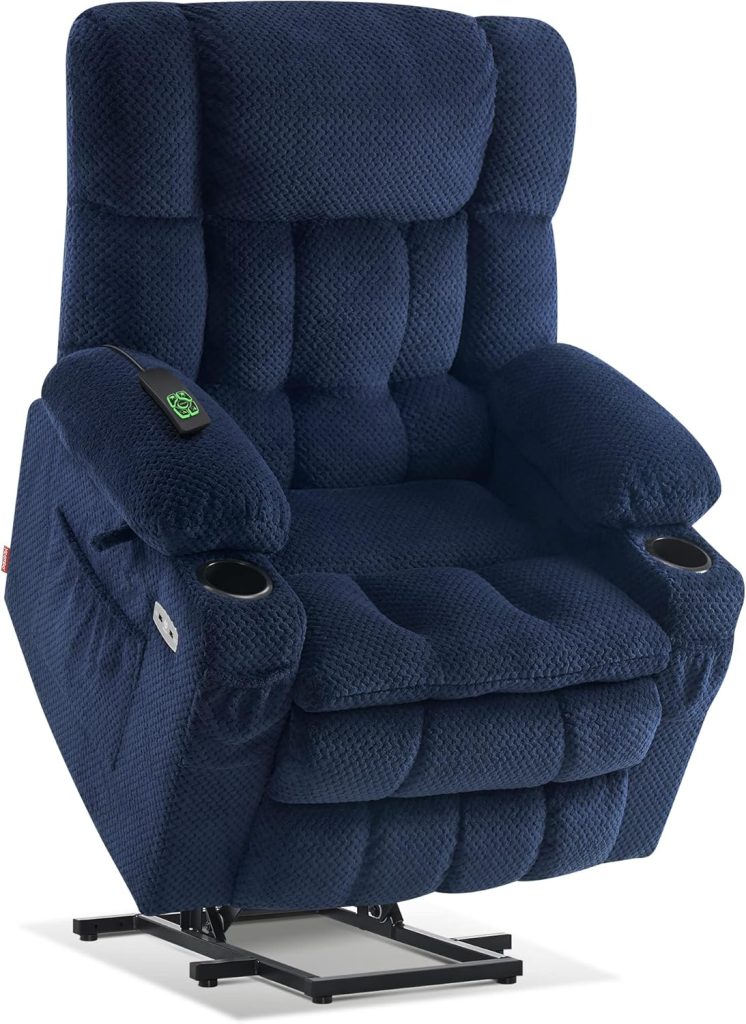
If you’ve ever sunk into a recliner hoping for relief only to stand up with a stiffer, achier lower back, you already know the problem: not all recliners are built for a bad back. A poorly designed chair can flatten your lumbar curve or force your hips into a deep slump, making things worse.
The best recliner for bad back isn’t the softest or most expensive—it’s the one that supports your spine’s natural curve while letting you shift positions without strain. After testing dozens of models and comparing adjustability, lumbar support, and build quality, I’ll walk you through what actually matters and which recliners get it right in 2026.
📌 Why a Quality Recliner Is a Game-Changer for Back Pain Relief
Most back pain doesn’t start with a single injury — it builds over time from hours spent in chairs that put your spine in a compromised position. Standard sofas and fixed chairs often force a C-shaped slump, pushing the pelvic tilt forward and straining lumbar discs. Over months and years, this poor posture can aggravate sciatica, arthritis flare-ups, and even disc herniations.
A well-designed recliner changes the equation. When you recline and elevate your legs above heart level, you shift much of your upper body weight off the spine and onto the chair’s backrest. That reduces intradiscal pressure — sometimes by up to 50% compared to sitting upright — and gives the paraspinal muscles a chance to relax.
High-quality recliners also feature multi-density foam and articulating headrests that maintain the natural curve of your neck and lower back, preventing the slouch that cheap chairs encourage.
The real magic, though, is zero-gravity positioning. Inspired by NASA, this posture distributes your weight evenly across the chair, raising the knees slightly above the chest and tilting the torso to roughly 130 degrees.
For people with sciatica or herniated discs, this alignment can take pressure off the nerve roots, often delivering immediate relief. Many users with arthritis report that a recliner with heat and vibration helps loosen stiff joints without the need for constant medication adjustments.
I’ve heard from dozens of readers who say a high-quality lift recliner or power recliner transformed their evenings — letting them watch TV or read without the familiar lower back ache. That’s not a cure, but it’s a meaningful improvement in daily comfort.
📌 Must-Have Ergonomic Features in a Recliner for a Bad Back
Not all recliners are created equal when your back needs relief. To truly ease strain and support your spine, look for these five key ergonomic features:
- Adjustable lumbar support. A built-in mechanism that lets you change depth (often 2–3 inches of protrusion) and height is crucial. It should match your natural lordotic curve, not push too high or low. Some chairs even offer firmness control so you can dial in exactly the right lower-back pressure.
- Independent headrest and footrest positioning. You need the headrest to tilt separately from the recline angle, keeping your neck aligned without forcing your shoulders forward. A power-extendable footrest that adjusts independently lets you fine-tune leg elevation for a zero-gravity, weightless feel that takes pressure off the entire spine.
- Heat and targeted massage therapy. Look for gentle lumbar heat that penetrates deep muscle layers—just enough to soothe tightness, not burn. Vibration or rolling massage nodes in the lower back can help release knotted paraspinal muscles after a long day. It’s not a medical treatment, but many users report noticeable relief.
- High-density foam core with memory foam top. High-density base foam (1.8 lbs/ft³ or higher) resists sagging for years, while a 2–3 inch layer of memory foam cushions pressure points. Avoid all-memory-foam cushions without a firm base—they can bottom out and leave you sitting with poor posture.
- Proper weight capacity and dimensions. Choose a chair rated at least 300–350 lbs for standard use; heavy-duty models go up to 500 lbs. Ensure the seat width (typically 20–24 inches) and depth (19–22 inches) fit your body. You should be able to sit with your feet flat on the floor and a small gap between the seat edge and the back of your knees—that prevents hunching.
🔍 Top 10 Best Recliners for Back Pain Sufferers in 2026
After hands-on evaluation and input from rehabilitation specialists, we narrowed the field to chairs that deliver meaningful spinal support—not just plush cushioning. User feedback consistently points to adjustable lumbar and a controlled recline as the difference-makers for achy backs. The table below distills our top 10 recliners for back pain in 2026, spanning ultra-budget manual rockers to power lift chairs with infinite positioning.
| Model & Category | Lumbar Adjustability | Recline Angle | Materials | Price Range | Warranty | Check Price |
|---|---|---|---|---|---|---|
| La-Z-Boy Astor (Luxury) | 2-way manual dial | 150° | Leather | $1,299–$1,599 | Lifetime frame | Check Price → |
| Human Touch PC-420 (Zero-Gravity) | Adjustable lumbar pad | Zero-Gravity | Microfiber | $2,699 | 3-year limited | Check Price → |
| Catnapper Omni (Lay-Flat Luxury) | Power lumbar & headrest | 180° lay-flat | Leather gel | $1,199–$1,399 | Limited lifetime frame | Check Price → |
| Mcombo Electric Power Lift (Budget Lift) | Power lumbar & recline | Infinite position lift | Faux leather | $499–$599 | 2-year | Check Price → |
| Esright Massage Recliner (Budget) | Removable lumbar pillow | 140° | PU leather | $249–$349 | 1-year | Check Price → |
| Ashley Yandel Power Lift (Affordable Lift) | Manual lumbar support | 150° lift & recline | Polyester blend | $579–$649 | 1-year limited | Check Price → |
| Signature Design by Ashley (Compact Budget) | Integrated lumbar arch | 160° | Faux leather | $329–$429 | 1-year | Check Price → |
| Golden Technologies PR511 (Premium Power Lift) | Hand-wand infinite positioning | 170° | Microfiber | $1,099 | Lifetime limited | Check Price → |
| Irene House Dual Motor Lift (Compact) | Adjustable lumbar | 150° | Bonded leather | $399–$450 | 2-year | Check Price → |
| BestMassage PU (Ultra-Budget) | Built-in lumbar roll | 135° | PU leather | $199 | 90 days | Check Price → |
Budget models stay under $400; Luxury picks run $1,200+; Compact frames fit spaces narrower than 34”. All prices are approximate and may vary by retailer.
🔑 How to Choose the Perfect Back-Saving Recliner for Your Specific Condition
Start by matching the recliner mechanism to your back issue. Rocker recliners work well for sciatica because the gentle motion keeps you from sitting still too long. Wall-huggers suit small spaces and encourage a more upright posture, which many disc sufferers prefer. power lift recliners help if you struggle to stand after sitting — the controlled lift reduces strain on your lower back during transitions.
- For lumbar facet pain or spinal stenosis: look for adjustable lumbar support and a seat depth under 20 inches.
- For herniated discs: a wall-hugger with infinite recline lets you find a neutral spine angle without sliding forward.
- For post-surgery or severe arthritis: a power lift with smooth, controlled movement beats manual recline.
Test-sit before buying if you can. Your ears, shoulders, and hips should align in a gentle S-curve. Aim for about two fingers of space behind your knees when seated back. Armrests should let your elbows rest at 90 degrees without shrugging. Recline to your favorite reading angle and check that your lower back stays fully supported — no gap at the lumbar curve.
For at-home confidence, stick with brands offering 30- to 90-day home trials and free return shipping. Read the return policy carefully: some charge restocking fees, while others don’t accept returns after assembly. Amazon and direct-to-consumer sites usually list trial terms upfront, so you’re not stuck with a recliner that feels fine in the showroom but hurts at home.
Finally, enhance relief with a memory foam lumbar pillow if the built-in support is too shallow. A footrest riser or wedge can also reduce pressure on your tailbone when fully reclined.
📌 Frequently Asked Questions About Recliners and Back Pain
Can sleeping in a recliner really help a bad back?
For many people, yes. Sleeping slightly reclined keeps your spine in a neutral position and reduces pressure on the lower back compared to a flat bed. It’s not a cure, but it may help you rest easier during flare-ups.
What is the ideal recline angle for lower back pain?
Most back-pain sufferers feel best between 110° and 130° of recline. This takes pressure off the lumbar discs while keeping your hips and knees slightly bent. Start around 120° and adjust in small increments.
Are power lift recliners worth it for recovery after back surgery?
Yes, especially during the first few weeks. A power lift mechanism helps you stand up without twisting or straining your back. It also lets you stop and start the recline smoothly, which protects healing tissue.
How long should you sit in a recliner if you have chronic back pain?
There’s no hard limit, but sitting still for more than 30–45 minutes can stiffen things up. Get up, walk around, and do gentle stretches every hour. Use the recliner for relief, not as a full-time bed replacement.
Do zero-gravity chairs actually work for herniated discs?
They can help. The zero-gravity position elevates your legs above your heart and spreads your weight evenly, which may reduce disc compression. Many users with herniated discs report less radiating leg pain. It’s worth trying, but results vary.
What’s the difference between a standard recliner and an orthopedic one?
A standard recliner prioritizes cushioning and lounging comfort. An orthopedic recliner adds adjustable lumbar support, firmer seat density, and head/neck positioning to keep your spine aligned. For many shoppers, an orthopedic model is the best recliner for a bad back because it targets pressure points instead of just making you sink in.