
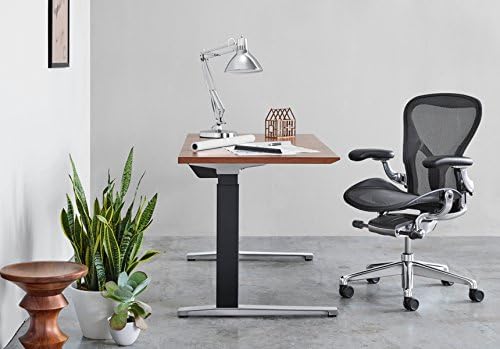
Ergonomic Seating Guide
The best office chair for a shorter person is one that fits their legs, supports their back, and lets them reach the desk without raising their shoulders.
Seat height, seat depth, and adjustable armrests can matter more than the chair’s size or price.
If you are shorter than average, finding a comfortable office chair can be surprisingly difficult. Many chairs have seats that feel too deep, armrests that sit too high, or seat heights that leave your feet dangling. You may end up sitting on the edge of the seat or leaning forward just to reach your keyboard.
The best office chairs for short people are designed—or adjustable enough—to accommodate a smaller frame. The key is to find a chair that lets you sit back against the backrest, keep your feet supported, and position your arms comfortably while working.
In this guide, we explain which measurements matter, compare five office chair models worth investigating, and show you how to adjust your workstation for a better fit.
Quick Answer: What Should Shorter Users Look For?
- Low enough seat height: Your feet should rest on the floor or a suitable footrest.
- Appropriate seat depth: You should be able to sit back without the front edge pressing behind your knees.
- Adjustable armrests: Your shoulders should remain relaxed when your forearms are supported.
- Supportive backrest: The chair should fit your torso rather than forcing you to sit forward.
- Desk compatibility: You should be able to reach the keyboard without stretching or raising your shoulders.
In This Guide
What Makes an Office Chair Good for Short People?
Height alone does not determine whether a chair will fit. Two people of the same height may have different leg lengths, torso lengths, and desk requirements. Instead of choosing a chair based only on a manufacturer’s general height recommendation, compare the actual dimensions and adjustment ranges.
1. A Seat Height That Is Low Enough
Seat height is one of the first measurements to check. If the chair cannot lower enough, your feet may dangle or you may slide forward to reach the floor. Both can make it harder to sit comfortably.
Ideally, you should be able to keep your feet supported while sitting back against the backrest. Your knees and hips should feel comfortable rather than forced into an awkward position.
Check the chair’s minimum seat height, not just its maximum height. Also verify how the manufacturer measures seat height, since measurement methods can vary between products.
2. A Seat Depth That Fits Your Thighs
Seat depth is especially important for shorter users. If the seat is too deep, the front edge may press against the area behind your knees when you sit back. You may compensate by moving forward, which can leave your back unsupported.
Look for a seat that supports your thighs without pressing into the backs of your knees. Some chairs offer adjustable seat depth, allowing you to move the seat forward or backward to better match your leg length.
If seat depth is not adjustable, compare the seat dimensions carefully and check the return policy before ordering.
3. Adjustable Armrests
Armrests that are too high can push your shoulders upward. Armrests that are too wide may force you to reach outward, while armrests that cannot move out of the way may prevent you from sitting close to the desk.
Look for armrests that can be lowered sufficiently for your body and adjusted to a comfortable width. Depending on your desk, forward-and-backward movement or flip-up armrests may also be useful.
The goal is simple: your shoulders should stay relaxed, your upper arms should remain near your body, and your forearms should receive light support when appropriate.
4. A Backrest That Fits Your Torso
A chair designed for a larger frame may have a backrest or lumbar support that does not line up comfortably with a shorter person’s body. The result can be a feeling that the chair pushes against the wrong area of your back.
Look for a backrest that feels supportive when you sit naturally. Adjustable lumbar support can be helpful, but the exact position and shape matter more than the presence of a lumbar cushion alone.
5. A Desk Setup That Works With Your Chair
Sometimes the chair is not the only problem. A desk that is too high may force you to raise your shoulders to type, even when your seat height is correct.
If lowering the chair makes your feet lose contact with the floor, consider a footrest. If the desk is still too high for comfortable typing, a suitable keyboard tray or a different desk arrangement may be needed. Adjusting only one part of the workstation may not solve the fit problem.
5 Best Office Chairs for Short People to Compare
The following models are worth comparing for their potential fit and adjustment options. They are not all specifically designed for petite users, and the exact dimensions and features can vary by configuration. Check the current product listing and manufacturer specifications before purchasing.
Option 1 · Compact Task Chair
Steelcase Series 1
The Steelcase Series 1 is a task chair worth investigating if you want a compact office-chair design with ergonomic adjustment options. Before buying, check whether the exact configuration offers the seat and arm adjustments you need.
Why consider it: It is a useful candidate for shoppers who want to compare an adjustable task chair with basic fixed-seat alternatives.
Check before buying: Verify minimum seat height, seat depth, armrest adjustment range, and seat width. Do not assume that every configuration has the same options.
Option 2 · Adjustable Seat Depth
Steelcase Leap
The Steelcase Leap is worth comparing if seat depth is one of your biggest challenges. Its seat-depth adjustment is particularly relevant for shoppers who find standard office-chair seats too long.
Why consider it: Adjusting seat depth can help you sit back against the backrest while keeping a comfortable amount of space behind your knees.
Check before buying: Compare the chair’s minimum seat height, overall seat dimensions, and armrest range with your measurements. Also confirm the condition and configuration if considering a used or refurbished chair.
Option 3 · Smaller Chair Size
Herman Miller Aeron Size A
The Aeron Size A is the smaller size in the Aeron chair range. It may be worth investigating if you prefer a mesh chair and need a smaller overall chair size.
Why consider it: Choosing the correct size is an important part of getting a chair that fits your body rather than simply buying a standard-size model.
Check before buying: Confirm the manufacturer’s size guidance, seat dimensions, fit, and available adjustments. Size A will not automatically suit every shorter person, and this chair may cost more than budget-oriented alternatives.
Option 4 · Home Office Alternative
SIHOO M18 Ergonomic Office Chair
The SIHOO M18 is a mesh-back chair worth comparing if you want to explore a more budget-conscious home-office option. Its suitability for shorter users depends on the fit of the particular model and your body dimensions.
Why consider it: It gives you another style and price point to compare with more expensive task chairs.
Check before buying: Pay close attention to the minimum seat height, seat depth, armrest design, and whether you can sit back without the seat pressing behind your knees. If the seat is too deep or the armrests are too high, it may not be the right fit.
Option 5 · Adjustable Task Chair
HON Ignition 2.0
The HON Ignition 2.0 is another task-chair range to compare if you want to investigate adjustable seating for a dedicated workstation.
Why consider it: Different configurations may offer different adjustment options, giving you a reason to compare the precise version rather than judging the product name alone.
Check before buying: Confirm seat depth, minimum seat height, armrest movement, and the exact configuration offered by the seller. Make sure the chair accommodates your leg length and desk height before ordering.
How to Compare These Chairs
| Chair | Main Reason to Compare | Key Fit Check |
|---|---|---|
| Steelcase Series 1 | Adjustable task-chair design | Minimum seat height and armrests |
| Steelcase Leap | Seat-depth adjustment | Seat depth and seat height |
| Aeron Size A | Smaller chair size | Manufacturer sizing guidance |
| SIHOO M18 | Home-office alternative | Seat depth and armrest height |
| HON Ignition 2.0 | Configurable task-chair range | Exact model and adjustment options |
These are comparison candidates, not a guarantee that each chair fits every petite user. Before publishing a definitive ranking, verify current dimensions and available adjustments for the exact products you intend to recommend.
How to Measure Yourself for an Office Chair
Measuring your body and comparing those measurements with the chair’s specifications can reduce the risk of buying a chair that is too tall or too deep.
Your Chair-Fit Checklist
- Popliteal height: The approximate distance from the floor to the area behind your knee while seated. Use it as a guide when assessing seat height, while accounting for footwear and foot support.
- Thigh length: Compare the chair’s seat depth with the length of your thighs. You need thigh support without uncomfortable pressure behind the knees.
- Elbow height: Check whether the armrests can support your forearms while your shoulders remain relaxed.
- Desk height: Make sure the desk and keyboard allow a comfortable arm position without raising your shoulders.
- Backrest fit: Check whether you can sit back comfortably and use the backrest without sliding forward.
Manufacturer measurements are not always taken in exactly the same way, so use the dimensions as a screening tool rather than a perfect prediction of comfort. If possible, try the chair in person or choose a seller with a clear return policy.
How to Set Up an Office Chair if You Are Short
Once you have a suitable chair, adjust it around your body rather than trying to adapt your body to the chair.
- Lower the seat as needed. Aim for supported feet and a comfortable seated position. Use a footrest if your desk height requires a higher chair position.
- Check the seat depth. Sit back against the backrest. The seat should support your thighs without pressing uncomfortably behind your knees.
- Adjust the armrests. Keep your shoulders relaxed and your elbows near your body. Lower the armrests or move them out of the way if they interfere with your desk.
- Move close to the keyboard. Avoid leaning forward to reach your mouse or keyboard.
- Position your monitor. Place the screen directly in front of you at a comfortable viewing height to reduce repeated head tilting.
- Change positions regularly. Alternate between comfortable sitting positions and standing or walking breaks instead of holding one position all day.
When a Footrest Makes Sense
A footrest can help if your desk requires you to raise your chair so that your arms can reach the keyboard comfortably, but your feet no longer rest on the floor. Choose one that provides stable support and allows you to sit back against the chair.
However, a footrest does not fix every fit problem. If the seat is too deep or the backrest does not fit your torso, you may still need a different chair.
Frequently Asked Questions
What is the best office chair for a short person?
The best choice depends on your leg length, torso, desk height, and preferred sitting style. Start by comparing minimum seat height, seat depth, and armrest adjustments. A chair that fits your measurements is more important than choosing a particular brand.
How high should an office chair be for a short person?
There is no single ideal seat height for everyone. The chair should allow your feet to rest on the floor or a footrest while you sit comfortably against the backrest. Check the manufacturer’s minimum seat height and compare it with your own measurements.
Is seat depth important for shorter people?
Yes. A seat that is too deep can press behind your knees or make you slide forward to reach the backrest. Adjustable seat depth can help, but a fixed seat may also work if its dimensions fit your legs.
Should shorter people use a footrest?
A footrest may be helpful when the chair needs to be raised to match the desk and your feet no longer reach the floor comfortably. It should provide stable support without making it difficult to sit back in the chair.
Can a regular office chair work for a petite person?
Yes, if the adjustment range and dimensions fit. Some standard office chairs offer low seat heights and adjustable seat depth or armrests. Others may be too large, so check the specifications instead of relying on the chair’s general marketing description.
Is an expensive ergonomic chair always better?
No. A more expensive chair may offer additional adjustments, but those features only help if they match your body and workstation. Compare fit, adjustability, warranty, and return terms before deciding how much to spend.
Buying tip: If you cannot try a chair in person, verify its minimum seat height, seat depth, armrest adjustment range, and return policy before ordering.
Final Thoughts
The best office chairs for short people are not simply smaller versions of standard chairs. They need to fit your leg length, torso, arm position, and desk setup.
Start with minimum seat height and seat depth, then check armrest adjustability and backrest fit. If you need to raise the chair to reach your desk, a footrest may help—but make sure the chair itself still fits your body.
For more options and general ergonomic chair advice, explore our guide to the best ergonomic chairs. If your main concern is discomfort around your neck and shoulders, you can also read our guide to ergonomic chairs for neck and shoulder pain.
Affiliate disclosure: As an Amazon Associate, SitBetterLab may earn from qualifying purchases. This does not affect the price you pay.