
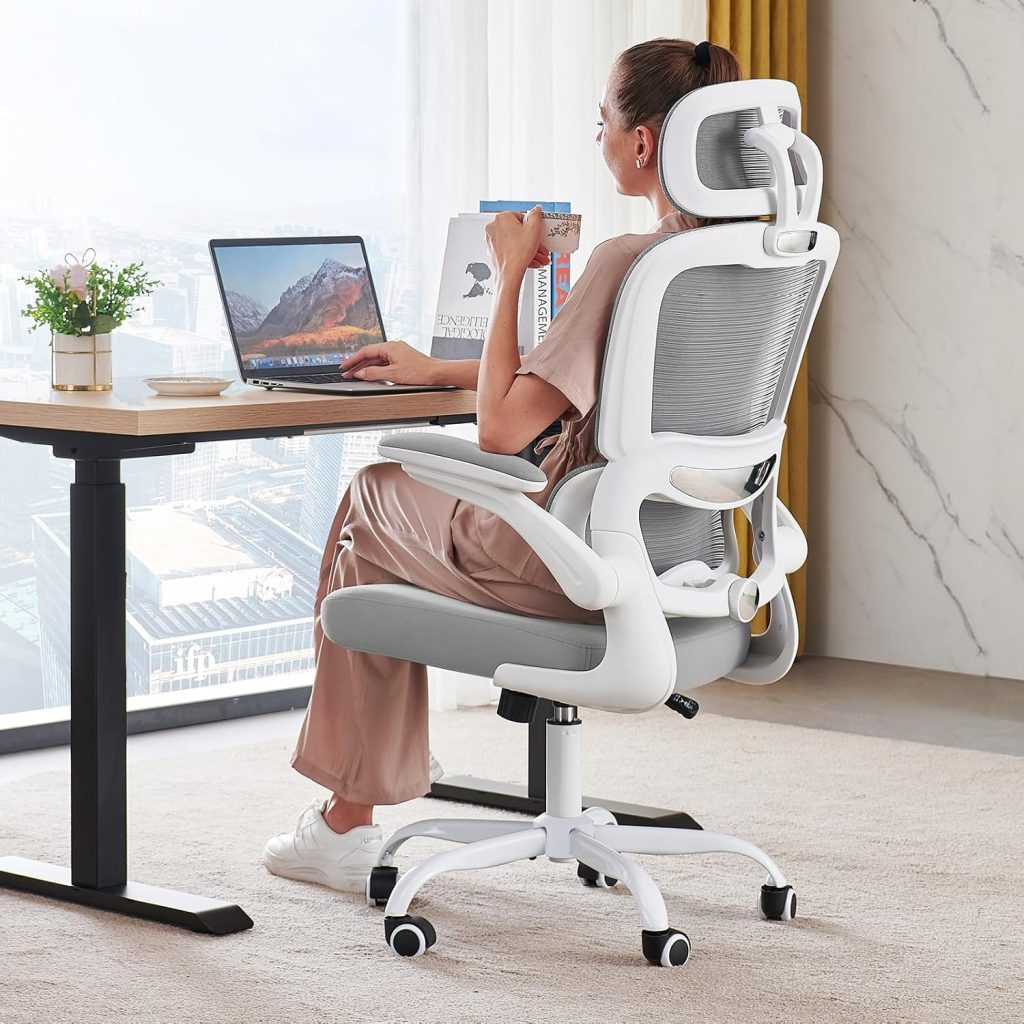
Most office chairs use seat pans between 19 and 22 inches wide. If you have narrow hips, that extra room becomes a problem: you slide sideways, perch on one edge, or feel your sit bones wander off the cushion. The best office chair for narrow hips should keep your pelvis centered without forcing you to grip the armrests.
I’ve spent hours testing chairs with narrower seats, adjustable depth, and lumbar support that doesn’t sit too wide. Those small differences change how your lower back feels at 3 p.m. Here’s what actually matters when you’re shopping.
📌 What to Look for in an Office Chair for Narrow Hips
If your hips are narrow, a standard 20-inch wide seat often leaves you sliding side to side or perching on one edge. The best chairs for narrow hips focus on seat width, depth, and lumbar geometry that actually match your frame.
- Seat width under 18 inches: Look for seats between 16.5 and 18 inches wide. This keeps your thighs aligned without forcing you to brace against the armrests.
- Adjustable seat depth: A depth of 16 to 18 inches works for most narrower frames, but a sliding seat pan lets you shorten it so the edge doesn’t dig into the back of your knees.
- Lumbar support that fits a smaller back curve: Tall or aggressive lumbar pads can push your hips forward. Seek a support that’s height-adjustable and not overly pronounced.
- Adjustable armrests: Width-adjustable or at least height-adjustable armrests let you keep elbows close to your body, so your shoulders stay relaxed instead of flaring outward.
- Firm but contoured cushioning: Narrow sit bones need support distributed evenly. A dense foam base with a subtle contour reduces pressure without creating hard edges.
- Breathable upholstery: Mesh or a woven fabric keeps airflow moving during long sessions, which matters if you sit with legs closer together.
You’ll also want to check the seat cushion’s side bolsters. Aggressive bolsters on “racing” chairs can squeeze narrow hips into an unnatural tilt. A flatter, gently curved pan is usually more comfortable.
📌 Top 5 Office Chairs for Narrow Hips in 2026
These five chairs work well for narrow hips because they keep the seat pan close to your body, reduce leg splaying, and offer adjustments that don’t force a wide stance. I focused on seats about 18 inches or narrower, adjustable lumbar support, and easy Amazon returns.
| Chair | Key Narrow-Hip Spec | Best For | Price | Check Price |
|---|---|---|---|---|
| Herman Miller Sayl | ~17.5-inch seat, 4D armrests | Overall narrow fit, all-day desk work | $600–$800 | Check Price → |
| HON Ignition 2.0 | Mesh back, narrow seat pan, adjustable lumbar height | Breathable lower-back support | $350–$450 | Check Price → |
| Herman Miller Mirra 2 | Adjustable seat depth plus forward tilt | Petite users who lean forward | $800–$1,000 | Check Price → |
| Modway Articulate | Narrow cushion, removable lumbar pad | Budget under $300 | $150–$200 | Check Price → |
| Herman Miller Aeron Size A | Seat width under 18 inches, PostureFit SL | Premium posture support | $1,200–$1,500 | Check Price → |
⚡ Comparison Table: Seat Width, Seat Depth Adjustability, and Price
I compared the five narrow-hip chairs above on the specs that matter most: seat pan width, depth adjustability, lumbar support type, and armrest movement. Narrow seat width is the biggest lever for hip fit — the models below run 16.5 to 18.5 inches across the sitting area. I also flagged chairs with at least 2 inches of seat depth travel, because that lets you pull the pan back so the front edge doesn’t dig into the backs of your thighs.
| Model | Seat Width | Seat Depth Range | Lumbar Support Type | Armrest Adjustability | Price Range | Check Price |
|---|---|---|---|---|---|---|
| Herman Miller Aeron Size A | 16.5 in | Fixed 16 in | Tension-adjustable | Height/width adjustable | $1,200–$1,500 | Check Price → |
| Steelcase Series 1 | 18.5 in | 15.5–18.5 in (3 in range) | Height-adjustable | Height/width adjustable | $500–$700 | Check Price → |
| Herman Miller Sayl | 18.5 in | 15.5–18.5 in (3 in range) | Height-adjustable | Height adjustable | $600–$900 | Check Price → |
| Branch Verve | 18.5 in | 16.5–19.5 in (3 in range) | Height-adjustable | Height only | $500–$650 | Check Price → |
| FlexiSpot Soutien | 18.5 in | 18–20.5 in (2.5 in range) | Height-adjustable | 4D adjustable | $300–$450 | Check Price → |
If hip squeeze is your main complaint, the Aeron Size A is the narrowest option here at 16.5 inches. The Sayl, Series 1, Verve, and Soutien stay at 18.5 inches, which still feels noticeably narrower than the 20-plus-inch seats on many standard chairs. Look for at least a 2-inch depth adjustment if you’re short through the hip or thigh.
🔑 How to Adjust Your Chair for Narrow Hip Support
Even a well-chosen chair needs a few minutes of tuning to support narrow hips. Start with seat depth before anything else. Slide the seat pan until you have a 1–2 finger gap between the front edge and the back of your knees. That keeps your pelvis neutral without forcing you to perch forward.
Next, set the lumbar support. It should rest in the small of your back, not push your hips forward. If you feel the curve pressing into your glutes or lower hip bones, move it up or reduce the tension. The goal is gentle contact, not pressure.
- Seat depth: 1–2 finger gap behind the knees keeps pressure off the hamstrings and lets narrow hips settle naturally.
- Lumbar position: Place support in the lower back curve, not against the pelvis. You shouldn’t feel like the chair is shoving your hips toward the front edge.
- Armrests: Bring them inward until your elbows stay under your shoulders. That prevents your upper arms from flaring out, which often makes narrow hips tilt sideways.
- Feet and knees: Keep feet flat on the floor with knees at roughly 90 degrees. Thigh pressure drops and your hips stop rotating to compensate.
- Seat cushion: If the contour still feels too wide, add a thin, narrow seat cushion with a non-slip base. Avoid thick memory foam — it reduces seat depth and pushes your hips backward.
Make one adjustment at a time and sit for 10 minutes before changing more. A chair that finally fits your narrow hips should feel stable without you bracing against the armrests.
📌 Common Mistakes to Avoid When Choosing a Chair for Small Hips
Small hips make fit mistakes obvious within a few hours. You’ll feel pressure points, numbness, or a deep ache that no lumbar adjustment fixes. These are the most common errors I see—and how to sidestep them.
- Buying a seat wider than 19 inches. Extra width pushes your knees outward and rolls your hips open. That tilts your pelvis and can create lower-back fatigue. For narrow hips, stick with seat widths between 17 and 19 inches.
- Ignoring seat depth adjustment. A seat that’s too deep puts hard pressure behind your knees. You’ll end up perching on the front edge and losing back support. Look for a depth that adjusts down to roughly 16–18 inches.
- Choosing aggressive lumbar support. A protruding lumbar pad can shove your pelvis forward, even if the seat width feels fine. That creates a hollow lower back and tight hip flexors. Pick a chair with mild, height-adjustable lumbar support you can soften or reposition.
- Selecting overly plush cushioning. Soft foam feels good for ten minutes, then your hips sink. That misaligns your spine and makes your thighs work just to stay upright. Medium-firm cushioning with gentle contouring keeps narrow hips stable without pressure points.
🔍 FAQ: Best Office Chairs for Narrow Hips
What seat width is best for narrow hips?
Look for a seat width between 17 and 19 inches. Most standard chairs run 20–22 inches, which leaves too much side wiggle room and encourages perching. A narrower seat keeps your pelvis centered and your thighs supported without extra lateral space.
Can I use an office chair with adjustable seat depth if I have narrow hips?
Yes, and you should. Seat depth adjustment doesn’t narrow the seat itself, but it helps you sit fully back without the front edge pressing into your knees. Pair adjustable depth with a narrow seat pan — ideally under 19 inches wide.
Are gaming chairs good for people with narrow hips?
Most gaming chairs aren’t great. They often have wide bucket seats (20+ inches) and thick side bolsters that push your legs inward. That extra lateral space can force you to sit off-center. If you want a gaming-style chair, look for a compact model with a flat seat and no aggressive bolsters.
What is the most ergonomic office chair for petite users with narrow hips?
My top pick is the Steelcase Series 1. It has a 17.5-inch seat width, adjustable seat depth, and a slim backrest that won’t swallow your frame. The lumbar support sits low enough for shorter torsos, and the armrests adjust inward so you don’t reach. Check Price →
Do I need a special lumbar support for narrow hips?
Not usually. Narrow hips are about seat width, while lumbar support is about spine curvature. The key is getting a chair with adjustable lumbar height and depth so the pad doesn’t sit too wide or too high. A narrow backrest often gives better contact than a wide mesh panel.
How do I measure my hip width to choose the right office chair?
Sit on a firm surface and measure across the widest part of your hips with a tape measure. Add about 1 to 2 inches for sitting comfort without side pressure. That total is your ideal seat width. For many petite users, that lands around 17–19 inches.