
Lumbar Support Comfort Guide
Best Memory Foam Lumbar Support Pillows for Office Chairs
Compare soft and firm memory foam lumbar pillows by pressure feel, rebound, heat retention, cover care, and comfort during everyday desk work.
Quick answer: A memory foam lumbar support pillow can be a good option if you want a cushion that conforms to your lower back instead of feeling like a rigid support bar. The best choice depends on firmness, thickness, shape, and how quickly the foam responds when you move. Soft foam may feel more forgiving, while firmer foam may provide a more defined contact point. Neither is automatically better for everyone.
A memory foam lumbar support pillow is designed to fill some of the space between your lower back and the backrest of a chair. Compared with a rigid plastic support or a taut mesh frame, foam generally offers a more cushioned contact surface. That can make a difference when you spend several hours working at a desk and prefer a softer feel against your back.
However, memory foam cushions are not all alike. Some feel plush and slowly conform to your shape, while others feel denser and provide more noticeable resistance. Thickness, contour, cover fabric, and ventilation can matter just as much as the material label. A pillow that feels comfortable for a short break may also feel too warm, too thick, or too soft during a full workday.
This guide focuses specifically on memory foam comfort and construction—not a general ranking of every type of office-chair lumbar support. Use it to compare foam feel, rebound, heat management, and maintenance before choosing a cushion.
Soft vs. Firm
Heat & Airflow
Washable Covers
Best Memory Foam Lumbar Support Pillows: Options to Compare
The products below are starting points for comparing memory foam lumbar cushions. Product availability, construction, firmness, and included covers can change, so confirm the current listing and specifications before purchasing. These are not presented as independently tested winners.
Option 1 · Everyday Desk Comfort
Everlasting Comfort Lumbar Support Pillow
Consider this option if you want to compare a conventional contoured lumbar cushion for a home-office or computer chair. Pay attention to the current product’s foam construction, thickness, strap design, and cover-care instructions rather than assuming that every version has the same specifications.
What to check: Does the contour fit your lower back? Is the cushion thick enough to fill the gap without pushing your torso too far forward? Can the cover be removed for cleaning?
Option 2 · Compare Contour and Firmness
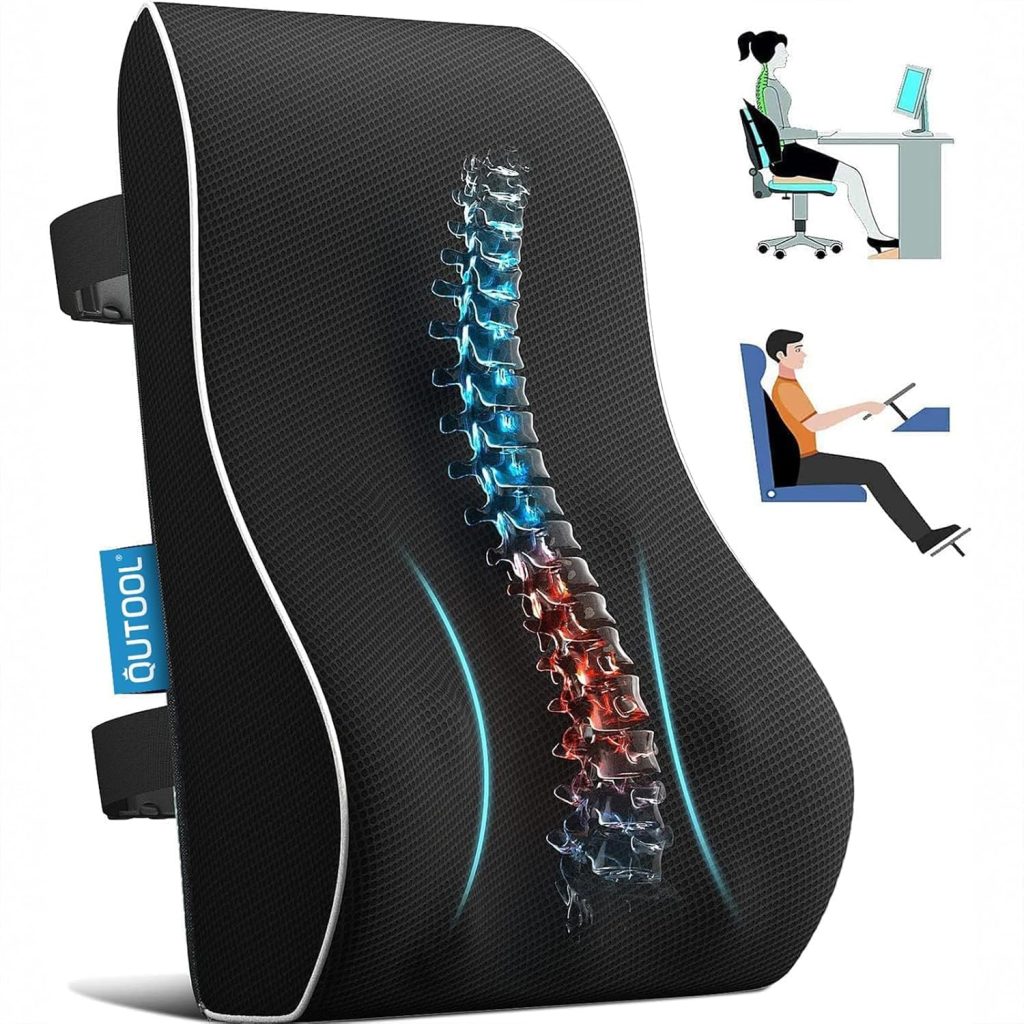
QUTOOL Lumbar Support Pillow
QUTOOL lumbar cushions are another option to investigate when comparing contoured foam support. Check the exact model and current listing to determine whether its dimensions and firmness suit your chair. Avoid choosing by product photos alone: a deep contour or thick cushion can change how far you sit from the backrest.
What to check: Overall thickness, the width of the contact area, strap adjustment, and whether the foam feels supportive rather than simply bulky.
Option 3 · Compare Slimmer Support
OPTP McKenzie SlimLine Lumbar Support
A slimmer lumbar support is worth considering if a thick pillow pushes you forward or makes it difficult to sit against your chair’s backrest. Check the current product materials and dimensions carefully: a lumbar support does not necessarily use slow-rebound memory foam just because it is sold for back support.
What to check: Profile thickness, firmness, shape, and whether the product’s actual material matches your preference for memory foam. Treat this as a profile comparison, not a confirmed memory-foam pick unless the current listing verifies the material.
Option 4 · Find a Softer Feel
Soft Memory Foam Lumbar Pillow Options
If your priority is a softer contact surface, compare memory foam lumbar pillows marketed for pressure-relieving comfort. Read the dimensions and recent buyer feedback to see whether users describe the cushion as plush, supportive, or overly soft. Product labels alone do not establish how a pillow will feel for your body.
What to check: Whether the foam compresses too much under pressure, whether the cushion keeps its shape, and whether the cover allows enough airflow for your workspace.
How Memory Foam Density, Firmness, and Rebound Differ
These terms are related, but they describe different properties. Understanding the distinction can help you avoid choosing a cushion based on one vague label.
| Property | What It Means | What to Look For |
|---|---|---|
| Density | The mass of foam per unit volume. | Published density information, construction details, and credible durability feedback. |
| Firmness | How much the foam resists compression under a given load. | Descriptions of the actual feel, thickness, and how much the cushion compresses when seated. |
| Rebound | How the foam recovers after pressure is removed. | Whether it slowly conforms or returns more quickly when you change position. |
| Thickness | The cushion’s front-to-back depth. | Whether it fills the backrest gap without pushing your body forward. |
Important: Higher density does not automatically mean firmer foam, and a firm pillow is not necessarily more durable. Density, firmness, and rebound should be assessed separately. Many retail listings do not publish enough technical data to compare foam objectively, so avoid treating unsupported density claims as established facts.
Soft vs. Firm Memory Foam Lumbar Support
Soft Memory Foam
May suit people who prefer a gentler, more cushioned contact against the lower back.
- Often feels more forgiving at first contact.
- May compress more under body pressure.
- Can feel insufficiently supportive if it collapses too much.
- Should still maintain a useful shape while seated.
Firm Memory Foam
May suit people who prefer a more defined contact point and less compression.
- May preserve a more noticeable contour under load.
- Can feel too prominent if the cushion is thick.
- May be uncomfortable if it presses into one small area.
- Needs to fit your body and backrest, not just feel firm in your hand.
There is no universally correct firmness. Your body proportions, the curve of your lower back, the chair’s built-in support, and your preferred sitting position all affect the result. If possible, choose a seller with a clear return policy so you can evaluate the cushion in your own chair.
Does Memory Foam Lumbar Support Get Hot?
Memory foam can retain more warmth than an open, breathable mesh support, although the actual experience depends on the foam formulation, cushion design, cover fabric, room temperature, and how much of your back contacts the cushion.
If you tend to feel warm while sitting, look for these details:
- Breathable cover fabric: A removable knitted or mesh-style cover may help air move across the surface, although the foam core can still retain heat.
- Perforations or ventilation channels: These features may improve airflow through parts of the cushion, but their effectiveness depends on the overall design.
- Less bulky construction: A slimmer cushion can reduce how much material sits between your back and the chair.
- Washable cover: This helps with routine maintenance, but washing a cover does not solve heat retention inside the foam.
Cooling claims should be treated cautiously. A cover that feels cool to the touch does not necessarily keep the entire cushion cool during hours of use. If airflow is your main priority, compare memory foam with a dedicated mesh lumbar support before buying.
Buying tip: Do not assume that “gel memory foam,” “ventilated foam,” or “cooling cover” guarantees a cool sitting experience. Check the construction details and look for reviews that specifically discuss warmth during extended use.
Removable Covers and Cleaning
A removable cover is useful for a cushion that you use every workday. Sweat, dust, clothing fibers, and everyday contact can make regular cleaning desirable. Before buying, confirm that the cover actually unzips or can be removed and check its care label.
- Machine-washable cover: Convenient if the manufacturer explicitly permits machine washing.
- Hand-wash or spot-clean cover: Requires more care but may be the specified method for some fabrics.
- Non-removable cover: Can be harder to clean thoroughly; review the manufacturer’s cleaning instructions.
- Foam core: Do not assume the foam itself is machine washable. Follow the product’s care instructions and avoid soaking it unless the manufacturer specifically permits it.
Also check whether a replacement cover is available. If the cover wears out before the foam, a replaceable cover may extend the useful life of the cushion.
Choosing Memory Foam for Different Sitting Positions
Upright Desk Work
Look for a contour that fills the natural gap at your lower back without forcing you into an exaggerated arch. The cushion should not make you slide forward on the seat.
Frequent Position Changes
Consider whether the foam recovers comfortably as you lean back, sit upright, or shift sideways. A highly conforming cushion may feel different as pressure moves around.
Reclined Sitting
Check whether the pillow stays in place and whether its shape remains comfortable when the backrest angle changes. Strap placement and cushion profile become especially important.
A Chair with Built-In Lumbar Support
A thick add-on pillow may compete with the chair’s existing contour. Compare a slimmer cushion or try adjusting the built-in support before adding another layer.
When testing a new cushion, start with a short sitting session and adjust its height until it feels natural. Your lower back should not feel pushed aggressively forward, and the cushion should not create a concentrated pressure point. Comfort is personal; discontinue use if it causes pain, numbness, or worsening symptoms.
How to Check Fit Before You Buy
- Measure the backrest: Check the usable width and height, and note any side bolsters or built-in lumbar contour.
- Check cushion thickness: Consider how far the pillow will move your torso forward when compressed.
- Review the attachment system: Confirm that straps can fit around your chair and that the cushion will stay near the intended position.
- Read the material details: Distinguish genuine memory foam from other polyurethane foam or mixed constructions where the listing provides that information.
- Confirm care instructions: Check whether the cover is removable and whether washing is permitted.
- Review returns and warranty terms: Comfort cannot be reliably judged from product photos or a firmness label alone.
Related SitBetterLab Guides
Explore related topics to compare the cushion with your chair and overall workspace setup.
- Lumbar Support Guides — compare different lumbar support styles and fit considerations.
- Best Office Chair for Lower Back Pain — consider chair fit and built-in support as part of your setup. Verify this URL before publishing.
Frequently Asked Questions
Is memory foam good for lumbar support?
It can be a useful option if you prefer a cushioned surface that conforms to your lower back. The right shape, thickness, and firmness matter more than the memory foam label alone. A cushion that is too thick or too soft may not fit your chair or sitting preferences.
Should I choose a soft or firm memory foam lumbar pillow?
Choose based on how much compression and contact pressure feel comfortable to you. Softer foam may feel more forgiving, while firmer foam may provide a more defined contact point. Neither guarantees better posture or pain relief for every user.
Does higher-density memory foam mean better quality?
Not necessarily. Density is one property of foam, while firmness and rebound describe different characteristics. Durability also depends on the foam formulation, construction, use, and care. Compare verified specifications instead of relying on density alone.
Do memory foam lumbar pillows retain heat?
Some can feel warm during extended use because foam and its cover may limit airflow. A breathable cover or ventilated design may help, but it does not guarantee a cool surface. People who prioritize airflow should compare foam cushions with mesh alternatives.
Can I wash a memory foam lumbar support pillow?
Follow the care instructions for the specific product. Some cushions have removable covers that can be washed, while the foam core generally requires different care. Do not put the entire cushion in a washing machine unless the manufacturer explicitly says it is safe.
Can I use a memory foam lumbar pillow with an ergonomic chair?
Yes, if the cushion fits the chair without interfering with its existing lumbar support. A chair that already has a pronounced lumbar curve may work better without an extra pillow or with a slimmer option. Check your posture and comfort after installation.
How long does a memory foam lumbar pillow last?
There is no reliable lifespan that applies to every model. Foam formulation, frequency of use, heat, storage, and care can affect how a cushion changes over time. Replace it when it no longer holds its useful shape, develops persistent damage, or no longer feels comfortable.
Final Takeaway
The best memory foam lumbar support pillow is not necessarily the softest, firmest, thickest, or most expensive. Look for a contour that fits your lower back, a firmness level that remains comfortable under pressure, a manageable heat level, and a cover you can care for easily.
Before buying, verify the current product’s material, dimensions, cover instructions, and return policy. If a cushion pushes you forward, creates a pressure point, or makes sitting less comfortable, a different profile—or no additional cushion—may be the better choice.
Affiliate disclosure: SitBetterLab may earn a commission from qualifying purchases made through links on this page, at no additional cost to you. Product details and availability can change; verify current specifications with the seller before purchasing.