
Lumbar Support Buying Guide
Best Lumbar Support Pillows for Short People
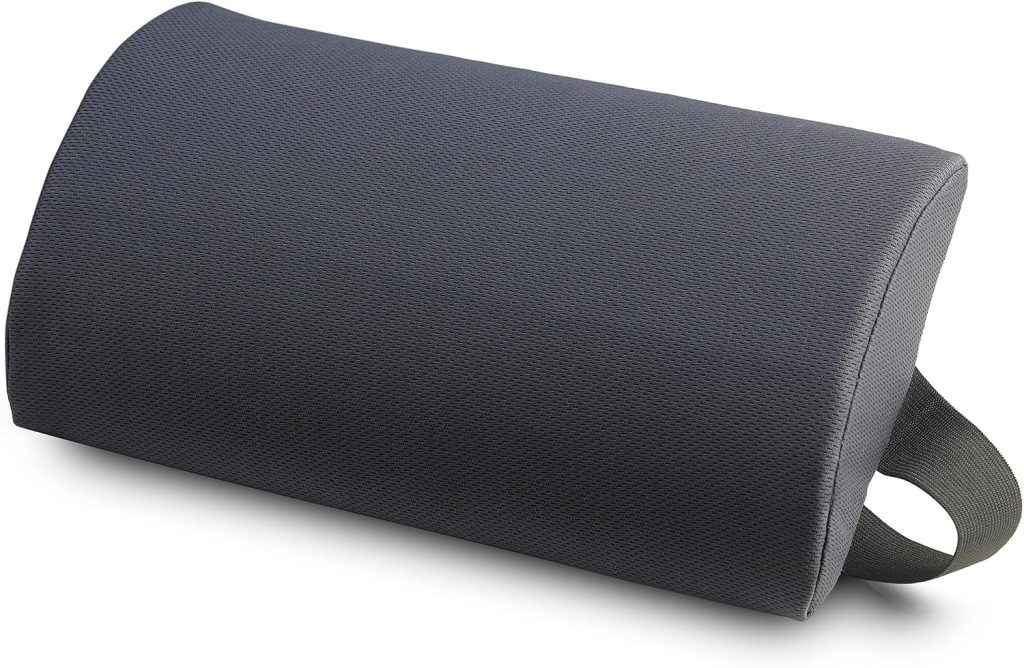
A lumbar pillow that works for one person may sit too high, feel too thick, or push another person away from the chair back. For shorter users and people with a short torso, the right cushion depends on its height, contour, thickness, and compatibility with the office chair.
Low-Profile Designs
Seat Depth
Adjustable Positioning
Finding a comfortable office chair can be difficult when you are shorter than average or have a relatively short torso. A chair’s built-in lumbar support may sit above your natural lower-back curve, while an oversized lumbar pillow can push your upper body forward and make the seat feel even smaller.
A lumbar support pillow for short people should be selected according to body proportions and chair dimensions rather than height alone. The goal is to find a cushion that supports your lower back without interfering with your ability to sit back, keep your feet supported, and use the full seat comfortably.
This guide focuses on the details that matter most for petite users: cushion height, front-to-back thickness, vertical positioning, attachment fit, and compatibility with smaller office chairs. It also explains when a separate lumbar pillow is useful—and when adjusting or replacing the chair may be the better solution.
Quick recommendation
If a standard lumbar pillow sits too high or pushes you forward, start by comparing low-profile cushions with a narrow vertical shape. Prioritize a suitable support position and modest thickness over extra-large cushioning. A height-adjustable cushion can help when its actual adjustment range matches your needs.
What Makes a Lumbar Support Pillow Suitable for Short People?
Not every shorter person needs the same type of lumbar support. Some users have short legs but an average-length torso, while others have a short torso relative to their overall height. Those differences affect how a cushion fits between the chair’s seat and backrest.
A suitable vertical profile
A tall lumbar cushion can extend too far upward, contacting the middle back instead of the intended lower-back area. For someone with a short torso, a more compact cushion may be easier to position without unwanted pressure higher up the back.
Check the cushion’s actual height and shape. A product described as compact or ergonomic is not necessarily short enough for your body, so compare its dimensions with the space available on your chair.
A slim front-to-back profile
Thickness matters because a lumbar pillow adds material between your body and the chair back. A bulky cushion may push your torso forward, reduce usable seat depth, and make it harder to sit against the backrest.
This is particularly important when a chair already has a pronounced lumbar curve or a relatively shallow seat. A slim cushion may be a better starting point than a thick memory foam pillow.
A support position that matches your lower back
The support area should contact the inward curve of your lower back without forcing your torso into an uncomfortable position. The correct position varies by individual, so do not rely on a universal measurement or assume that the center of every pillow belongs at the same height.
Compatibility with a smaller chair
A pillow can be appropriately sized for your body but still fit poorly on the chair. Check the backrest width, shape, attachment points, and the length of the cushion’s straps. If the straps cannot hold it securely, the pillow may slide down or sit off-center.
Best Lumbar Support Pillow Options for Petite Users
The following products are candidates to compare by design and dimensions. They are not presented as independently tested winners for short people. Before buying, verify the current product listing, measurements, attachment system, and whether the cushion can be repositioned as needed.
Option 1
OPTP McKenzie SlimLine Lumbar Support
A slim-profile lumbar support to investigate if a thick cushion pushes you too far forward. Compare its actual height and thickness with your chair before deciding whether it suits your torso.
Best for: Shoppers looking for a less bulky support profile.
Option 2
Everlasting Comfort Lumbar Support Pillow
A contoured foam cushion worth considering if you prefer a shaped support surface. Check the current model’s dimensions and compare its thickness with the space between your back and chair.
Best for: Users who prefer a contoured cushion and a secured attachment.
Option 3
QUTOOL Lumbar Support Pillow
A conventional contoured pillow to compare if you need a cushion that attaches to an existing chair. Confirm its overall height, thickness, and strap arrangement before purchasing.
Best for: Buyers comparing standard contoured lumbar cushions.
Option 4
DMI Lumbar Support Cushion
A candidate for shoppers comparing more compact back-support designs. Product variations can differ, so inspect the exact dimensions and construction instead of assuming every model has the same fit.
Best for: Buyers who want to compare different cushion shapes and sizes.
Important: These product suggestions are starting points for shopping research, not a verified ranking based on hands-on testing. None should be assumed to have a petite-specific fit or independently adjustable height without confirming the specifications of the exact model.
How to Choose the Right Lumbar Pillow for a Short Torso
1. Measure the available backrest area
Before shopping, measure the usable height and width of your chair’s backrest. Identify where your lower back naturally contacts the chair and estimate how much space is available for a separate cushion.
A compact pillow may be easier to position on a small backrest, but the smallest option is not automatically the best. The cushion still needs enough surface area to provide comfortable contact without interfering with your normal sitting position.
2. Compare cushion height and width
Look for the product’s full dimensions rather than relying on labels such as petite, compact, or ergonomic. A tall cushion can extend beyond the area you want to support, while an overly narrow cushion may create a concentrated pressure point.
For a short torso, pay particular attention to the cushion’s vertical contour. Some pillows have a wide central bulge that may not line up with your lower-back curve when attached to a chair with a different backrest shape.
3. Avoid unnecessary thickness
If your chair already has lumbar support, adding a thick pillow can create too much forward pressure. This may make it harder to reach the backrest comfortably and reduce the usable seat depth.
Start by testing the chair without an extra cushion. If you still need additional support, compare thinner designs first and choose a cushion that fills the gap without forcing you forward.
4. Look for useful positioning adjustments
A repositionable cushion may be more useful than one that simply has long straps. Adjustable straps help secure the pillow to the chair, but they do not necessarily let you move the support pad independently.
If your main problem is that the lumbar curve sits too high, check whether the whole pillow can be repositioned and stay in place. If the support needs to move independently, look for a product that explicitly documents a height-adjustment mechanism.
5. Check the return policy
Fit is difficult to judge from product photographs alone. A clear return policy can be valuable when you are unsure whether the cushion’s height, firmness, or depth will work with your chair.
Review the seller’s current terms, including any restrictions on opened products. Do not assume that all cushions have the same return conditions.
Why Standard Lumbar Pillows May Feel Too High
A lumbar pillow can feel too high for several reasons, and body height is only one factor.
- Shorter torso proportions: The vertical distance between the seat and your lower-back curve may be smaller than the cushion’s intended contact area.
- Chair geometry: The chair’s built-in lumbar curve may push the cushion upward or make it difficult to position securely.
- Excessive cushion height: The pillow may extend into the middle back instead of staying around the lower-back region.
- Incorrect placement: The cushion may simply be mounted too high on the backrest.
- Excessive thickness: The cushion may push your torso forward, changing where your back contacts the support surface.
Try repositioning the cushion before buying another product. If it still sits too high, compare a shorter vertical profile or a design with a genuinely movable support area.
Lumbar Support Pillow vs. a Petite-Friendly Office Chair
A lumbar pillow can improve the fit of an otherwise suitable chair, but it cannot correct every problem associated with an oversized seat or backrest. For shorter users, the seat height, seat depth, backrest dimensions, and built-in lumbar adjustment should all be considered together.
| Situation | Potentially useful solution | What to check |
|---|---|---|
| The lumbar curve sits too high | A shorter or repositionable lumbar cushion | Cushion height and adjustment range |
| The cushion pushes you forward | A slimmer pillow or a better-fitting chair | Cushion depth and usable seat depth |
| Your feet do not reach the floor | Appropriate seat-height adjustment or a footrest | Seat height and foot support |
| The seat is too deep | A chair with a shorter or adjustable seat depth | Space behind the knees while seated |
| The built-in support cannot be positioned comfortably | A chair with more suitable lumbar adjustment | Support height, depth, and backrest shape |
If the main problem is the chair’s overall fit, explore our office chair guide for lower-back comfort and related office-chair buying guides before investing in several add-on cushions.
How to Position a Lumbar Pillow When You Are Shorter
- Adjust the chair first. Set the seat height so your feet are supported and your sitting position feels stable. A footrest may help if the chair cannot be lowered sufficiently.
- Sit back in your normal working position. Avoid leaning forward or arching your back just to make contact with the cushion.
- Find your natural lower-back curve. Use the area where your lower back curves inward as a starting point for cushion placement.
- Move the cushion to the appropriate height. If possible, adjust it gradually rather than relying on a fixed measurement intended for someone else.
- Check the forward projection. Make sure the cushion does not push your torso away from the backrest or leave you sitting too close to the front edge of the seat.
- Reassess comfort. If the support creates pressure, discomfort, or an unnatural position, reposition it or try a different shape or thickness.
For more detail on choosing and positioning lumbar support, see our lumbar support resource. For a broader look at office chair fit and lower-back comfort, visit our office chair guide.
Common Mistakes Petite Users Should Avoid
Buying the thickest cushion for more support
More thickness does not automatically mean better support. A bulky pillow can change your seating position and reduce usable seat depth. Start with the smallest amount of additional support that feels comfortable.
Choosing by overall height alone
Two people of the same height can have different torso and leg proportions. Measure your chair and assess where the support needs to sit instead of relying on a general height category.
Confusing strap adjustment with height adjustment
Straps can secure a cushion without changing the position of its support contour. If height is your main concern, verify that the product can actually be positioned where you need it.
Ignoring seat depth and foot support
Lumbar support is only one part of a comfortable workstation. If the seat is too deep or too high, adding a cushion may not solve the underlying fit problem. Check your feet, seat depth, and backrest together.
Frequently Asked Questions
What is the best lumbar support pillow for short people?
The best option depends on your torso proportions and chair dimensions. Start by comparing compact or slim-profile cushions, then verify the actual height, thickness, and attachment method. If the support needs to move vertically, choose a product with a documented repositioning or height-adjustment mechanism.
Can a lumbar pillow help someone with a short torso?
It may help if the chair’s existing support does not line up comfortably with the lower back. A shorter or repositionable cushion may offer a better fit, but the result depends on the individual’s body proportions and the chair’s shape.
Should petite users choose a thin lumbar support pillow?
A thin pillow is a useful starting point when a standard cushion pushes the body forward. However, the correct thickness depends on the gap between your back and the chair. The goal is comfortable contact without excessive forward pressure.
How do I stop lumbar support from sitting too high?
First, reposition the cushion and check whether its straps allow it to stay at the required height. If it still contacts the middle back, look for a shorter cushion or a model with a movable support pad. Also check whether the chair’s own lumbar curve is affecting placement.
Is a lumbar pillow better than buying a smaller office chair?
A pillow can be a practical solution when the chair otherwise fits well. If the seat is too deep, the backrest is oversized, or the built-in lumbar support cannot be positioned comfortably, a chair designed with more suitable dimensions may be a better long-term choice.
Can a lumbar support pillow reduce back pain?
A well-fitting cushion may improve sitting comfort for some people, but it does not guarantee pain relief or treat the cause of back pain. Persistent or worsening symptoms warrant appropriate medical advice.
Final Verdict: Fit Matters More Than Size Labels
For shorter users and people with a short torso, the best lumbar support pillow is one that lines up with the lower back without pushing the body forward. Cushion height, thickness, shape, and chair compatibility matter more than marketing labels such as petite or ergonomic.
Start with a compact or slim-profile design if bulky pillows have not worked for you. If the problem is the support position, prioritize a cushion that can genuinely be repositioned. If your chair is too deep or too large overall, consider correcting the chair fit rather than relying on extra padding.
Before buying: measure the chair, verify the cushion dimensions, check the attachment system, and review the current return policy.
Disclosure: SitBetterLab may earn a commission from qualifying purchases made through affiliate links, at no additional cost to the buyer. Product specifications and availability may change. This article provides general information and is not a substitute for individualized medical advice.