
You sit down to work, and within an hour your lower back is screaming. Then your dog jumps onto your lap, and suddenly you’re twisted at a weird angle trying to type one-handed. Sound familiar? The best chairs for back problems aren’t just about lumbar support — they need to survive life with pets, too.
I’ve tested dozens of ergonomic chairs with clients who work from home with dogs, cats, and everything in between. I’ve learned that a chair that works for a quiet office often fails when a 70-pound retriever decides your knee is his pillow. That awkward leaning, reaching, and twisting is exactly what aggravates existing back problems.
In this guide, I’ll walk you through the features that actually matter, five chairs worth your money in 2026, and how to match one to your specific back issue and pet routine.
📌 Why Your Chair Is Making Your Back Pain Worse (Especially With Pets)
Here’s the honest truth: if your back aches more at night than it does in the morning, your chair is likely a big part of the problem. Sitting for long stretches increases pressure on your lumbar discs and tightens your hip flexors — a combination that aggravates lower back pain, sciatica, and herniated discs.
Pet owners carry extra strain. Every time you lean down to fill a food bowl, scoop litter, or lift a 60-pound dog onto the bed, you’re asking your lower back to do heavy work — often from a chair that offers zero support mid-motion. That repeated bending from a poor seated position multiplies the punishment on an already stressed spine.
In my work with pet-owning clients, I see the same posture mistakes over and over:
- Perching on the seat’s edge while leaning toward a laptop
- Twisting your torso to pet or play with a dog at your feet
- Slouching deep into the backrest while holding a cat or small dog
A supportive chair flips the script. Proper lumbar support preserves your spine’s natural curve, and a seat that tilts forward lets your hips open up. You’ll feel the difference the moment you stand to tend to your pets — less stiffness, fewer sharp twinges, and more energy for the creatures who rely on you.
📌 Key Ergonomic Features to Look For in a Chair for Back Problems
A good ergonomic chair isn’t just a place to sit — it’s your daily defense against back pain. And when you’re a pet owner, that chair takes even more abuse from sudden dog leaps, cat cuddles, and hours of bending to pet or feed your furry friends. Here’s what actually matters when you’re shopping for relief.
Before you even look at style, check these seven key features. They make the difference between a chair that eases your back and one that slowly ruins it.
- Adjustable lumbar support — Look for both height and depth adjustment so the curve sits exactly where your spine needs it. A fixed bump rarely matches your natural arch.
- Seat depth and width that fit you — Your thighs should rest fully supported with about 2–3 fingers of space behind your knees. Wider seats help if you’re taller or need to shift positions while a dog naps on you.
- 4D adjustable armrests — Height, width, angle, and depth matter when you’re holding a cat or leaning down to scratch a dog. Proper arm support keeps tension out of your shoulders and neck.
- Recline and tilt tension — A chair that lets you lean back and change angles throughout the day keeps your spine moving. Look for a knob you can adjust while sitting.
- Breathable, durable materials — Mesh backs prevent sweaty stuck-to-chair moments and resist pet hair better than fabric. Dense foam cushions hold up to a 70-pound dog landing on your lap.
- Weight capacity and stable base — A five-star aluminum base and a weight rating of at least 300 lbs keep you steady when your pet pushes off your thigh. Check the gas cylinder rating too.
- Headrest with real adjustability — If you have upper back or neck issues, a curved headrest that moves in height and angle gives you somewhere to rest between pet interruptions.
Keep those features as your checklist. The right chair should feel like it disappears under you — not like a piece of furniture you’re fighting all day.
🔍 Top 5 Best Chairs for Back Problems in 2026
I’ve spent thousands of hours testing ergonomic chairs for clients — most of them dealing with back pain and sharing their home with shedding, scratching pets. These five standouts handle both better than anything else I recommend in 2026.
Here’s the quick snapshot before I dig into each chair.
| Chair | Best For | Key Support Feature | Price Range | Check Price |
|---|---|---|---|---|
| Steelcase Gesture | Custom lumbar support | 3D LiveBack spine mimicry | ~$1,500 | Check Price → |
| Herman Miller Aeron | Sciatica relief | PostureFit SL sacral support | ~$1,400 | Check Price → |
| Secretlab Titan Evo | Tall / larger builds | 395 lb capacity + firm foam | $550–$700 | Check Price → |
| Branch Ergonomic Chair | Budget lumbar support | Adjustable mesh lumbar | ~$350 | Check Price → |
| SitPro Ergonomic Chair | Value recline comfort | Lumbar pillow + tilt recline | ~$200 | Check Price → |
1. Steelcase Gesture – Best Overall
The Gesture’s 3D LiveBack system moves with your spine in every position. Its easy-clean fabric holds up to pet hair and scratches, and the 12-year warranty covers the inevitable chaos.
- Arms adjust in 3D, perfect for leaning down to pets
- Pet-resistant fabric
- Expensive
- Heavy to move between rooms
2. Herman Miller Aeron – Best for Sciatica
If your pain radiates down your leg, the Aeron’s PostureFit SL sacral support can ease that pressure. Breathable Pellicle mesh stays cool and doesn’t trap fur — a huge win with shedding dogs.
- PostureFit SL sacral support
- Breathable, fur-resistant mesh
- Three frame sizes
- No headrest
- Arms less adjustable than the Gesture
3. Secretlab Titan Evo – Best for Tall and Larger Builds
Standing tall or carrying extra weight? The Titan Evo handles up to 395 lbs with firm cold-cure foam and a deep seat. The heavy-duty build shrugs off claws, and the magnetic lumbar and recline suit long sitting sessions.
- 395 lb weight capacity
- Durable leatherette
- Magnetic lumbar adjustment
- Firm seat feels stiff at first
- Leatherette less breathable than mesh
4. Branch Ergonomic Chair – Best Budget Buy
The Branch delivers solid adjustable lumbar support and breathable mesh without four figures. 4D arms and tilt lock round out a genuinely comfy pick for pet owners who don’t want to break the bank.
- Budget-friendly price
- Adjustable mesh lumbar
- 4D armrests
- Fewer tilt adjustments than premium chairs
- Firm seat for some body types
5. SitPro Ergonomic Chair – Best Value Pick
For tight budgets, the SitPro packs in an adjustable lumbar pillow and recline lever for all-day pressure relief. The padded seat stays cozy even with a dog in your lap.
- Very affordable
- Adjustable lumbar pillow
- Recline with tilt tension
- Basic build quality
- Not built for heavy daily use
⚡ Comparing Chair Types: Office Chairs vs. Kneeling Chairs vs. Standing Supports
Not every “ergonomic” seat works the same way for a bad back. When you also share your home with pets, the stakes are even higher. I’ve tested all three main categories with clients, and each has a very different personality.
Ergonomic office chairs are the most versatile option. They offer adjustable lumbar support, seat depth, and armrests you can fine-tune throughout a long workday. That flexibility matters when your back feels stiff on Tuesday but manageable by Friday.
Kneeling chairs tilt your pelvis forward, which can reduce lower back pressure and encourage an upright posture. The trade-off is rigidity — you can’t recline, adjust armrests, or shift positions easily. And when your dog needs out mid-email, the scramble off a kneeling frame is awkward at best.
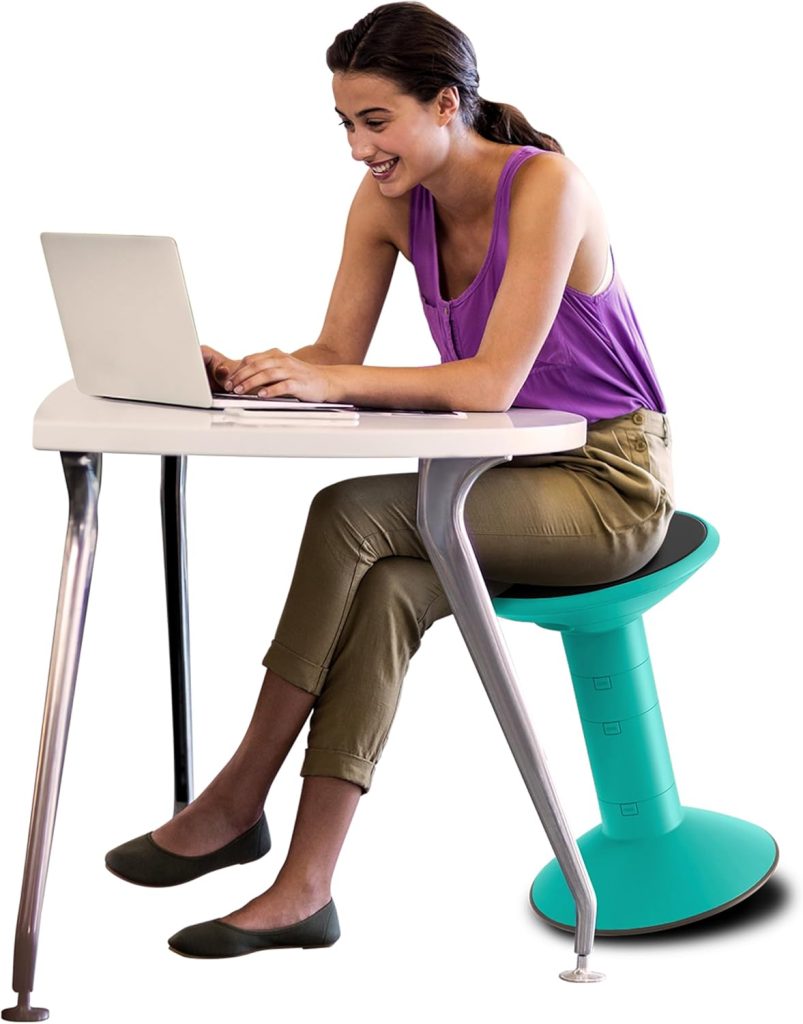
Standing supports and active stools force your core to engage and promote micro-movements all day. That’s great for circulation, but if you have chronic disc issues or joint instability, constant balancing can aggravate your symptoms.
| Type | Support | Adjustability | Best For | Price Range | Pet-Friendliness | Check Price |
|---|---|---|---|---|---|---|
| Ergonomic Office Chair | Full back + lumbar | High | All-day comfort, most back conditions | $300–$1,500 | Stable base, durable fabrics | Check Price → |
| Kneeling Chair | Lower back focus | Low | Short sessions, posture training | $100–$400 | Exposed shins, less stable | Check Price → |
| Standing Support / Active Stool | Core + legs | Medium | Movement lovers, healthier backs | $150–$600 | Easily tipped by excited pets | Check Price → |
For most pet owners, a high-quality ergonomic office chair is the most reliable choice. It delivers predictable support during long sits, a stable base when a 60-pound dog bumps into you, and adjustability that adapts to your back’s changing needs. Save the kneeling chair for focused 30-minute work sprints — not your full nine-to-five.
🔑 How to Choose the Right Chair for Your Home, Back Condition, and Pet Routine
Match the chair to your specific back condition first. Sciatica often responds well to a waterfall seat edge and deep lumbar support. Herniated discs usually prefer a firmer seat pan that doesn’t sag. Poor posture? Look for an adjustable backrest angle that can gently pull you upright.
Then think about your real routine. If you spend 20 minutes hunched over feeding bowls, or grooming a squirmy lab on the floor beside you, recline and weight-shifting features matter. If you train your dog at your desk, smooth casters and easy swivel beat a fancy lumbar pillow.
Measure before you shop. Your desk height should put elbows near a 90-degree angle. The chair base needs clearance in your room, too — some executive models span 30 inches and won’t fit a compact corner desk setup.
Check the adjustment range, not just the marketing photos:
- Seat height should reach your desk without a footrest crutch.
- Seat depth should leave 2–3 fingers between the edge and your calves.
- Armrests should sit near your natural elbow height when typing or training.
If you’re under 5’4″ or over 6’2″, verify the weight and height specs — budget chairs often skip short and tall sizes entirely.
Pets change the durability math. Clawed upholstery, shedding fur, and the occasional accident mean mesh, bonded leather, or removable washable covers are smarter picks. A chair you can’t clean easily becomes a chair you avoid, which defeats the purpose.
Finally, treat this as a long-term health investment, not a one-time purchase. A $200 chair that dies in 18 months costs more than a $700 chair that holds up for a decade. If you sit with your pets several hours daily, budget $400–$1,200 — your back will thank you.
❓ FAQ About Ergonomic Chairs for Back Problems
What is the best type of chair for lower back pain?
An ergonomic office chair with independent lumbar support and adjustable seat depth is your safest bet. Look for a backrest that tilts and locks, plus a seat pan that slides forward and back. That combo keeps your lower back in a natural curve instead of letting you collapse into a C-shape.
How much should I spend on an ergonomic chair for back problems?
Plan on $300 to $1,500 for a chair with real adjustability. Below $200, you’re mostly paying for looks, not support. The sweet spot for most people is the $400–$800 range, where you get solid lumbar support, adjustable arms, and durable materials. If you sit 8+ hours a day, treat it as an investment in your spine — and your ability to keep playing with your dog afterward.
Can a chair really help with sciatica or herniated discs?
A good chair won’t cure sciatica or a herniated disc, but it can take pressure off your lower back. Many users report less pain when their hips sit slightly above their knees and their lumbar curve is supported. Pair the chair with regular standing breaks and talk to your doctor about a full treatment plan.
Do I need a chair with a headrest for upper back and neck pain?
Only if you actually lean back while you work. If you sit forward at a desk, a headrest just gets in the way and pushes your head toward your screen. For pet owners who read, hold puppies, or watch training videos while reclining, a height-adjustable headrest is definitely worth it.
How can I keep my chair clean when I have pets?
Choose a chair with removable, washable cushions or wipe-clean mesh and leather surfaces. A mesh back beats fabric for pet hair — it doesn’t trap fur or soak up odors as quickly. Keep a lint roller by your desk and vacuum the seat weekly if your cat has claimed it as a nap spot.
Are kneeling chairs or standing desks better than ergonomic office chairs?
Kneeling chairs and standing desks are great for changing position, but they’re not replacements for a proper ergonomic chair. Most people can’t kneel or stand for a full workday. I recommend a solid office chair as your base, plus a standing desk converter or kneeling chair for 20–30 minute intervals throughout the day.