If sitting in your office chair makes your hips uncomfortable after a few hours, the seat itself may be part of the problem. A cushion cannot treat the underlying cause of hip pain, but the right seat cushion for office chair hip pain can change how your weight is distributed and make long periods of sitting more comfortable.
The best option depends on more than softness. Cushion shape, thickness, material, chair dimensions, and your preferred sitting position all matter. A thick memory-foam cushion may feel comfortable on one chair but raise the seat too much on another.
This guide compares several popular seat-cushion designs for office use, explains what to look for when shopping, and shows how to position a cushion without creating a new posture problem.
Why a Seat Cushion May Help With Office Chair Hip Discomfort
An office chair places much of your body weight through the pelvis and thighs. If the seat is too hard, too flat, too short, or poorly matched to your body, pressure can become concentrated in uncomfortable areas.
A seat cushion changes the interface between your body and the chair. Depending on its design, it can provide additional padding, distribute pressure over a larger area, or create space around the tailbone and sit-bone region.
A cushion may be worth considering if:
- Your chair feels noticeably harder after several hours of sitting.
- You frequently shift position because one area becomes uncomfortable.
- Your current seat feels too firm or lacks enough padding.
- You need a portable cushion for both work and travel.
However, hip discomfort can have many causes. A cushion is a comfort accessory, not a diagnosis or treatment. If pain is persistent, severe, worsening, follows an injury, or is accompanied by significant numbness or weakness, consider getting professional medical advice.
What to Look for in a Seat Cushion for Hip Pain
There is no single cushion shape that works for everyone. Start by looking at how your existing chair fits you.
- Material:
Memory foam provides a conforming feel, while gel or grid materials can provide a different combination of cushioning, firmness, and airflow. - Shape:
Flat cushions are simple and versatile. Contoured or cutout designs can change where pressure is concentrated. Choose the shape based on your chair and the area that becomes uncomfortable. - Thickness:
A thicker cushion adds more material between you and the chair, but it also raises your sitting height. This matters if your feet already barely reach the floor. - Chair compatibility:
Measure your seat before ordering. A cushion that is too wide or too deep can interfere with the chair’s edges or armrests. - Cover:
A removable, washable cover is useful for everyday office use, especially if you use the cushion for many hours each day. - Stability:
A non-slip bottom can reduce unwanted movement when you shift position.
Top Seat Cushions for Office Chair Hip Pain in 2026
The following options represent different cushion designs rather than one universal solution. Prices can change on Amazon and manufacturer websites, so use the links below to check the current price before buying.
| Cushion | Type | Approx. Price | Best For | Check Price |
|---|---|---|---|---|
| Everlasting Comfort Gel Seat Cushion | Memory foam + cooling gel | ~$50 | Everyday office use | Check Price → |
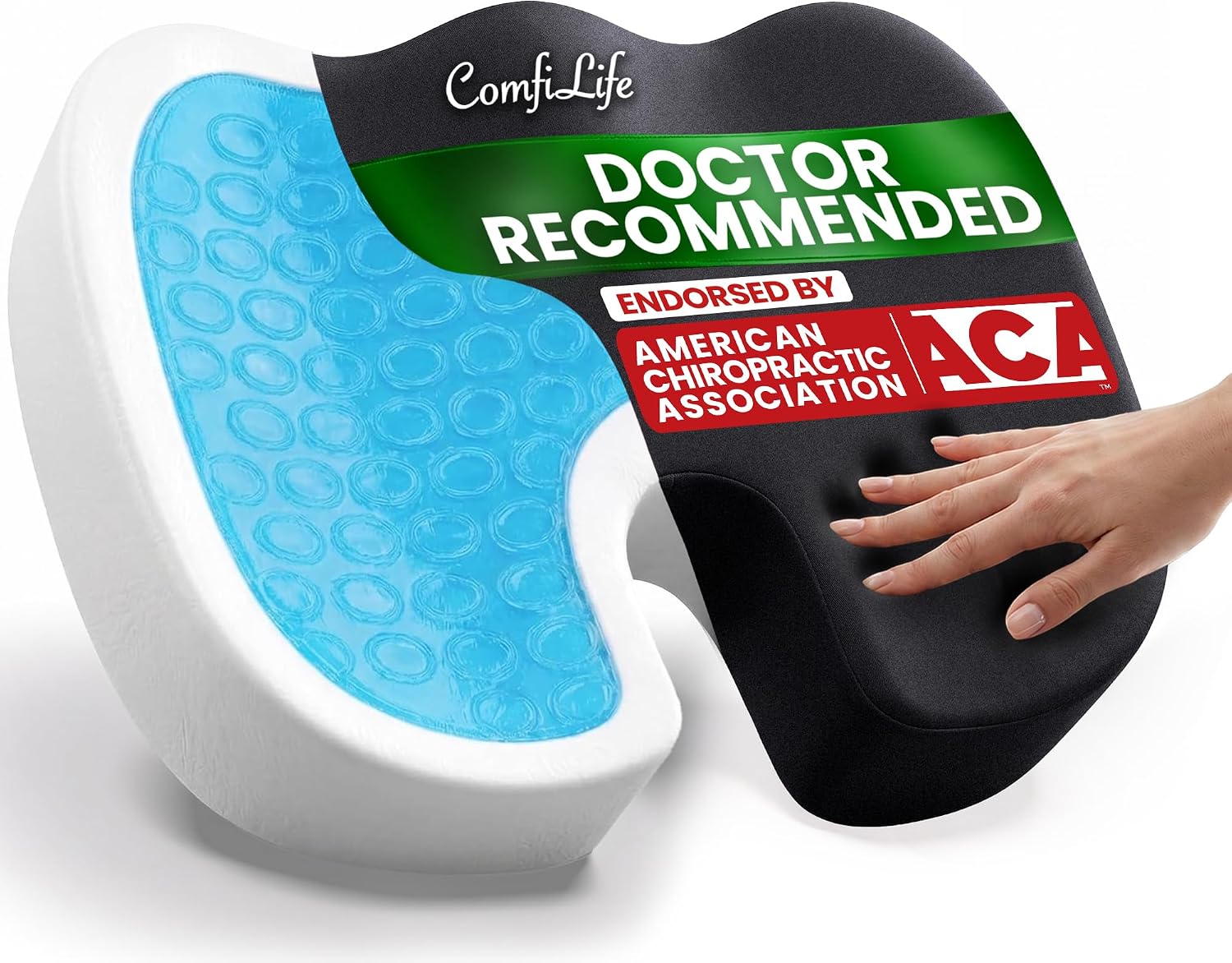
| ComfiLife Gel Enhanced Seat Cushion | Gel + memory foam | ~$60 | Coccyx cutout design | Check Price → |
| Purple Royal Seat Cushion | GelFlex Grid | ~$120 | Hard seats and cooling | Check Price → |
| Aylio Socket Seat | Contoured foam with sit-bone openings | ~$100 | Reducing pressure at the sit bones | Check Price → |
| Skil-Care X-Cushion | Gel + foam | Varies | Pressure-relief seating | Check Price → |
1. Everlasting Comfort Gel Seat Cushion – Best Everyday Office Option
Best for everyday office use
Everlasting Comfort’s current gel seat cushion combines memory foam with a cooling gel layer and is designed for office chairs, car seats, and other common seating surfaces. The manufacturer lists dimensions of 17.5 × 13.5 × 3 inches and a non-slip rubber bottom.
The main advantage is its relatively conventional shape: it adds substantial padding without introducing an unusual seating geometry. Keep in mind that the 3-inch profile can raise your sitting height, so check your chair height before ordering.
Best for: Office workers who want a traditional memory-foam cushion with additional gel-based cooling features.
2. ComfiLife Gel Enhanced Seat Cushion – Best Coccyx-Cutout Option
Gel + memory foam
The ComfiLife Gel Enhanced Seat Cushion uses gel-enhanced memory foam and a U-shaped opening at the rear. The manufacturer’s current specifications list it at roughly 17.6 × 13.8 × 2.75 inches and about 2 pounds.
Its removable cover is designed to be washable, and the manufacturer specifically instructs users to position the U-shaped opening toward the back of the chair.
Best for: People who prefer a coccyx-cutout design and want a relatively substantial office-chair cushion.
3. Purple Royal Seat Cushion – Best for Hard Seats and Cooling
GelFlex Grid
The Purple Royal is substantially different from a traditional memory-foam cushion. Purple lists a 2-inch, 100% GelFlex Grid construction, a grippy bottom, and a washable cover. Its dimensions are 17.5 × 15.75 × 2 inches.
Purple specifically positions the Royal for hard seats, stools, and floor seating. That makes it interesting for office workers whose chair feels unusually firm, although its 6-pound weight is considerably higher than many foam cushions.
Best for: People who prioritize a cooler, springier seating material or frequently use hard seating surfaces.
4. Aylio Socket Seat – Best for Sit-Bone Pressure
Different cushion geometry
The current Aylio product is the Socket Seat, not the older “Waffle” product name used in many older shopping guides. Its design uses two openings positioned beneath the sit-bone area rather than simply adding another layer of soft padding.
Aylio lists dimensions of 18.5 × 14.5 × 2.5 inches and a weight of about 2.5 pounds. The manufacturer also offers a 100-day trial.
Best for: Shoppers specifically looking for a cushion designed around sit-bone pressure rather than conventional full-surface padding.
5. Skil-Care X-Cushion – Specialized Gel/Foam Option
Specialized pressure-relief design
The Skil-Care X-Cushion is different from the consumer-focused office cushions above. Available versions use a combination of gel and high-density foam, with an X-design intended to improve stability and reduce forward or lateral movement.
Some versions are specifically designed for wheelchair seating and use straps or other securing systems. Because of that, check the exact model before purchasing it for a standard office chair.
Best for: Shoppers who need a more specialized gel-and-foam pressure-relief cushion and have confirmed that the specific model fits their chair.
How to Choose the Right Office Chair Cushion
The best cushion depends on what your current chair is missing.
If your chair feels too hard
Start with a conventional memory-foam or gel cushion. These designs add a new layer between your body and the chair and are usually the easiest transition from a standard office seat.
If pressure is concentrated around your sit bones
Consider a contoured design or a cushion specifically designed around the sit-bone area. The Aylio Socket Seat is an example of a different geometry that creates openings beneath the sit bones rather than simply adding more padding.
If you get hot while sitting
Look for materials with more airflow. Purple’s GelFlex Grid, for example, uses open channels and is designed to provide a temperature-neutral sitting experience.
If you are short and already have a high chair
Be careful with thick cushions. Adding 2–3 inches to the seat height can change your relationship with the floor, armrests, desk, and footrest. If your feet are already barely flat on the floor, a lower-profile cushion may make more sense.
For more guidance, see our guide to
office chairs for short people
.
How to Position a Seat Cushion Correctly
A good cushion can still feel wrong if it is positioned incorrectly.
- Place the cushion squarely on the chair seat rather than allowing it to hang over the front edge.
- For a cushion with a rear opening, position the opening toward the back of the chair unless the manufacturer’s instructions say otherwise.
- Sit normally and check whether your feet remain comfortably supported on the floor.
- Check your knee position and desk height after adding the cushion because a thick cushion changes your sitting height.
- If the cushion slides whenever you move, consider a non-slip base or a different cushion size.
Do not assume that a cushion needs to tilt your pelvis forward to be effective. Your goal should be a comfortable, stable sitting position that works with the rest of your chair.
Memory Foam vs. Gel vs. Grid Seat Cushions
| Material | Typical Feel | Potential Advantage | Watch For |
|---|---|---|---|
| Memory foam | Conforming | Adds cushioning and molds under load | Can raise seat height and retain heat |
| Gel + foam | Balanced | Combines foam with gel-based cushioning | Feel varies considerably by design |
| Gel grid | Springy | Airflow and a different pressure response | Often heavier and more expensive |
| Contoured foam | Structured | Changes pressure distribution through geometry | Shape may not suit every chair |
How Thick Should an Office Chair Cushion Be?
There is no universal ideal thickness. The right thickness is partly determined by the chair you already have.
- Lower profile: useful when your chair is already high or has limited clearance.
- Medium profile: a practical choice for many standard office chairs.
- Thicker profile: useful when the original seat is particularly hard, but check desk and foot position afterward.
Instead of choosing by thickness alone, measure the distance from the current seat to the floor and consider how much higher you can comfortably sit.
How to Maintain Your Seat Cushion
Follow the manufacturer’s cleaning instructions rather than assuming every foam or gel cushion can be washed the same way.
- Wash removable covers according to the care label.
- Do not machine-wash a foam core unless the manufacturer specifically says it is safe.
- Allow damp materials to dry completely before using the cushion again.
- Inspect the cushion periodically for permanent flattening, cracking, or loss of support.
Frequently Asked Questions
Can a seat cushion help with hip pain from sitting?
A seat cushion can make sitting more comfortable by changing the padding and pressure distribution between your body and the chair. It cannot determine or treat the underlying cause of hip pain. If discomfort continues or becomes more severe, consider professional medical advice.
Is memory foam or gel better for hip pain?
Neither material is automatically better for everyone. Memory foam generally provides a more conforming feel, while gel and grid materials can provide a different combination of firmness, airflow, and pressure response. Your chair, body size, sitting position, and personal comfort preference matter.
Does a coccyx cutout help with hip discomfort?
A coccyx cutout primarily changes the amount of material beneath the rear-center portion of the seat. Some people find that geometry more comfortable, while others prefer a full-surface cushion. It should not be treated as a guaranteed solution for hip pain.
Will a seat cushion fit my office chair?
Many cushions fit common office chairs, but dimensions vary considerably. Measure the width and depth of your chair’s seat before buying. Also check the cushion thickness because a thicker cushion changes your sitting height.
Can I use an office chair cushion in a car?
Many portable cushions can be used on multiple seating surfaces, including car seats. Check the product dimensions and stability on your specific seat, and make sure a cushion does not interfere with safe vehicle operation.
Should I use a cushion if my hip pain is severe?
A cushion should not be used as a substitute for professional evaluation of severe or persistent pain. If symptoms are worsening, follow an injury, or include significant weakness or numbness, seek appropriate medical advice.
Bottom line: The best seat cushion for office chair hip pain is not necessarily the softest or most expensive option. Start with your chair dimensions, sitting height, pressure points, and preferred material. For conventional memory-foam cushioning, Everlasting Comfort and ComfiLife are straightforward options; for a different gel-grid feel, Purple Royal is worth considering; and for a more specialized sit-bone design, Aylio Socket Seat offers a different approach.
Disclaimer: This article provides general product and ergonomic information and is not medical advice. Product specifications and prices can change, so verify current details with the manufacturer or retailer before purchasing.