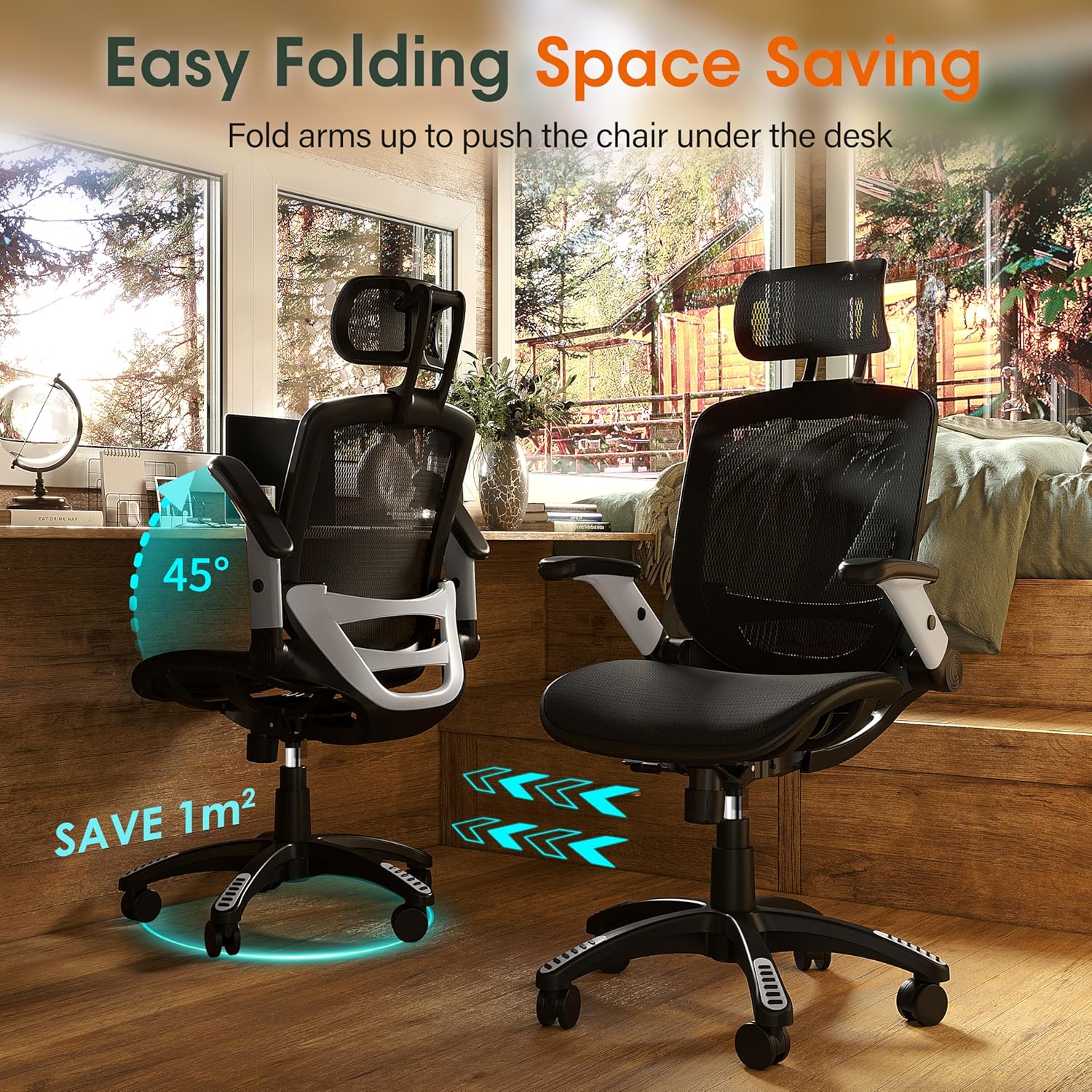
When your office chair hurts hips, the real culprit is usually a mismatch between your chair’s dimensions and your body. A seat that’s too deep forces you to sit on the edge, compressing the hip flexors. A seat that’s too low or too high changes the angle of your hip joint and shifts extra load into the surrounding muscles.
I’ve spent years testing office seating and helping people sort out desk setup pain. This guide covers the most common causes of chair-related hip pain, quick ergonomic fixes, and the stretches and support products that may actually help.
📌 Why Your Office Chair Causes Hip Pain
If your hips ache after a workday, start by looking at your chair. A seat that’s too low forces your knees above your hips, jamming the joint into deep flexion. Too high, and you perch on the edge, which compresses the underside of your thighs.
Seat depth matters just as much. A too-deep seat makes you slouch to reach the backrest — that tilts your pelvis and shortens your hip flexors. A too-shallow seat removes support under the upper thigh, increasing pressure on the sitting bones.
Cushioning and back support play a role, too. A hard or flat cushion concentrates your body weight on a small area under the ischial tuberosities. Over hours, that restricts blood flow to the gluteal muscles and can irritate the bursae on the outer hip. A lack of lumbar support lets your pelvis roll backward, tugging on the hip flexors and the sciatic nerve that runs behind the joint.
Prolonged static sitting is its own cause. Even a well-adjusted chair can leave your hip flexors shortened and your glutes inactive if you never stand up to move. Circulation in the deep hip tissues slows, and stiffness builds.
Watch for these signs that your chair is the likely culprit:
- Aching in the outer hip or buttock that gets worse after sitting for an hour or more
- Stiffness or a limp when you first stand up
- Pain that eases once you walk around for a few minutes
The hip joint itself sits deep below the gluteal muscles, with the sciatic nerve passing close behind it. Irritation in the joint, bursae, or surrounding muscles can send referred pain into the groin, outer hip, or down the back of the thigh — which is why a chair problem often feels like a hip injury.
📌 Quick Ergonomic Adjustments to Relieve Hip Pressure
Your chair setup alone can be a major source of hip strain. I usually start with the seat itself because even small height changes shift how much weight your hip flexors carry.
- Set seat height so your knees sit at 90–110 degrees with your feet flat on the floor. If you’re shorter, a footrest can help you reach that position without lowering the chair too far.
- Adjust seat depth to leave a 2–3 finger gap between the back of your knees and the seat edge. A deep seat can force you to slump or sit forward, both of which can twist the hips.
- Tilt the seat slightly forward or use a wedge cushion to open the hip angle. This may reduce the tight, pinched feeling in the front of your hips after long sitting.
- Place lumbar support at the small of your back, not mid-back. A neutral spine reduces the tendency to rotate your pelvis and put uneven torque through one hip.
- Set armrests so your elbows rest at about 90 degrees and your shoulders stay relaxed. If armrests are too high or low, you’ll lean to one side and load that hip more.
- Take micro-breaks every 30–45 minutes. Stand up, walk a few steps, and reset your posture. Even a 60-second break can interrupt the sustained pressure that aggravates hip pain.
Test these one at a time so you can tell which adjustment actually changes how your hips feel. Small tweaks often matter more than replacing the chair itself.
🔍 Best Office Chairs and Seat Cushions for Hip Pain (2026)
The right chair or cushion won’t cure hip pain, but it removes pressure points that keep it flaring up. Before you buy anything, check for the features below.
- Adjustable seat depth — lets you keep 2–3 fingers of space behind your knees so the seat edge doesn’t dig into your thighs.
- Waterfall seat edge — rounds the front lip downward to reduce pressure on the backs of your legs and hips.
- Memory foam or mesh seat — distributes weight more evenly than worn-out foam. Mesh also keeps you from bottoming out.
- Adjustable lumbar and seat tilt — a slight forward tilt opens the hip angle and may reduce hip flexor strain.
If replacing the chair isn’t in your budget, a pressure-relieving cushion is the fastest fix. Look for a coccyx or U-shaped cutout and a wedge design that tilts your pelvis slightly forward. Gel-infused memory foam cushions tend to work better than flat foam because they don’t collapse as quickly.
For chairs, the Herman Miller Aeron ($1,200–$1,800) has a mesh seat and adjustable seat depth. The Steelcase Leap ($1,000–$1,500) offers a flexible seat edge and strong lumbar support. If you need a budget-friendly option, search for an affordable mesh chair with seat depth adjustment around $250–$400 — just avoid hard mesh that feels like a trampoline.
Still not sure whether to replace or add a cushion? If your chair has a soft, flat seat and no seat depth adjustment, a wedge cushion is worth trying first. But if the seat is hard, bucketed, or the foam is visibly compressed, replacing the chair usually makes more sense than adding another layer.
Avoid these if hip pain is your main complaint:
- Hard wooden or plastic seats
- Deep bucket seats that roll your hips inward
- Worn-out foam that has lost its support
- Chairs without seat depth adjustment
📌 Simple Stretches and Exercises for Hip Pain Relief
When your hips ache after sitting, the fix isn’t just a better chair—it’s also daily mobility work. These moves target the tight hip flexors, weak glutes, and stiff lower back that office chairs tend to create. Do them after long sitting periods, not only when pain flares.
- Kneeling hip flexor stretch: Kneel on one knee, tuck your pelvis slightly, and shift forward until you feel a stretch at the front of the hip. Hold 60–90 seconds per side.
- Figure-4 stretch: Lie on your back, cross one ankle over the opposite knee, and gently pull the supporting thigh toward your chest. This releases gluteal and piriformis tension.
- Standing quadriceps and hamstring stretches: Stand and grab one ankle behind you for the quads, then place a heel on a low step and hinge forward for the hamstrings. Keep your back flat, not rounded.
- Glute bridges and clamshells: Lie on your back with knees bent, squeeze your glutes to lift your hips. For clamshells, lie on your side with knees bent and open the top knee. Do 10–15 slow, controlled reps each.
- Seated spinal twist and cat-cow: Sit tall, twist gently toward one side, then switch. On all fours, alternate arching and rounding your spine to mobilize the pelvis and lower back.
Frequency matters more than intensity. Aim for 1–2 minutes per stretch and repeat the whole routine 2–3 times daily, especially after sitting for an hour or more. Breathe slowly and never bounce. Consistency keeps hip flexors from shortening again and helps you sit with less discomfort the next day.
📌 When to See a Doctor for Persistent Hip Pain
Most chair-related hip soreness settles once you adjust your seat depth, height, and posture. But some symptoms deserve a proper medical workup instead of another cushion swap.
Book an appointment if you notice any of these red flags:
- Numbness or tingling that travels down the front, side, or back of your leg, especially past your knee.
- Radiating pain into the groin, buttock, or knee that doesn’t shift when you stand, sit, or lie down.
- Night pain that wakes you up, a fever, or unexplained weight loss — these can point to something beyond simple muscle strain.
Chair-related hip pain also overlaps with conditions like hip bursitis, sciatica, arthritis, a labral tear, and sacroiliac joint dysfunction. Several of these feel similar to a tight hip flexor, so self-diagnosis can send you down the wrong path.
If ergonomic tweaks and daily stretching don’t reduce the pain within 2–3 weeks, it’s worth getting checked. I’d rather rule out a labral or joint issue early than spend months treating the wrong problem.
Expect a physical exam that checks your hip range of motion, strength, and specific pain triggers. Your doctor may order an X-ray or MRI if arthritis or a soft-tissue injury is suspected. Many people are then referred to physical therapy, which can target weak glutes, stiff hip flexors, and poor sitting mechanics at the same time.
❓ FAQ: Office Chair Hip Pain
Why do my hips hurt after sitting in an office chair all day?
Prolonged sitting keeps your hips flexed and puts constant pressure on the soft tissues around the joint. It can tighten hip flexors and irritate the bursa over the outer hip bone, especially if your seat pan is too short or too soft.
Can a seat cushion help with hip pain?
Yes, if it promotes a neutral pelvis and spreads pressure evenly. A firmer cushion with a slight contour often works better than a plush one. The wrong cushion can tilt your hips unevenly, so test it for a few days before committing.
What is the best office chair for hip pain?
Look for a chair with adjustable seat depth, a waterfall seat edge, and a firm but forgiving cushion. You also want independent tilt and lumbar support so you can keep your hips slightly above your knees without sliding forward.
How should I sit to avoid hip pain?
Keep both feet flat on the floor, knees at roughly 90–100 degrees, and your hips just above knee level. Shift weight evenly across both sit bones, avoid crossing your legs, and change your position every 20–30 minutes.
Is a standing desk better for hip pain?
It can help as part of an alternating routine. Standing reduces constant hip flexion, but staying on your feet all day introduces its own strain. A sit-stand schedule, such as 20 minutes standing per hour, tends to work best.
When should I be worried about hip pain?
See a doctor if the pain lasts more than two weeks, wakes you at night, radiates into your groin or down your leg, or comes with fever, swelling, or unexplained weight loss. Sharp catching with movement also deserves a proper exam.
1 thought on “Office Chair Hurts Hips? Causes, Ergonomic Fixes, and Best Relief Products (2026 Guide)”