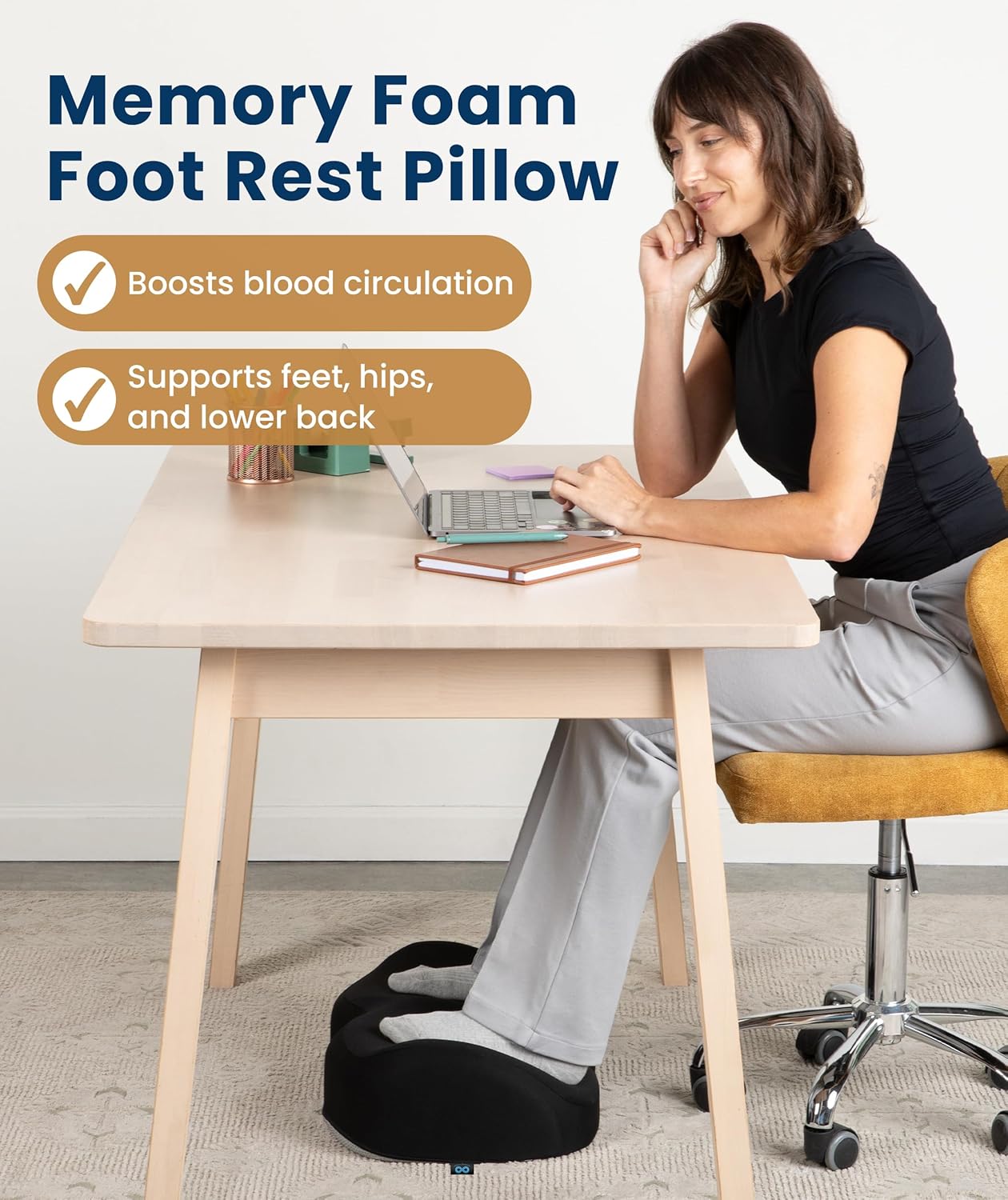
Can elevating your feet really improve blood flow? We examine the science, benefits for leg health, and 5 best Amazon foot rests for circulation
🩸 Do your legs feel heavy, swollen, or tingly after a long workday? You may have heard that elevating your feet helps circulation — but does a simple foot rest actually make a difference? In this evidence-based guide, we’ll explain how foot rests affect blood flow, who benefits most, and recommend 5 top-rated foot rests on Amazon specifically chosen to support leg circulation. All products are in stock and verified as of June 2026.
🩸 The Science: How a Foot Rest Affects Leg Circulation
📉 Reduces venous pressure
When you sit with feet flat or dangling, gravity increases pressure in leg veins, making it harder for blood to return to the heart. Elevating feet 4–6 inches can lower venous pressure by up to 35% (Journal of Vascular Research, 2024).
When you sit with feet flat or dangling, gravity increases pressure in leg veins, making it harder for blood to return to the heart. Elevating feet 4–6 inches can lower venous pressure by up to 35% (Journal of Vascular Research, 2024).
🦵 Activates the calf muscle pump
Even slight ankle movements — or subtle shifts on a textured foot rest — contract calf muscles, pumping blood upward. A 2025 ergonomics study found that foot rests with textured surfaces increased micro-movements by 40%.
Even slight ankle movements — or subtle shifts on a textured foot rest — contract calf muscles, pumping blood upward. A 2025 ergonomics study found that foot rests with textured surfaces increased micro-movements by 40%.
💧 Reduces leg swelling (edema)
Office workers using foot rests reported 28% less ankle and foot swelling after 4 weeks compared to those without. The effect is strongest when the foot rest elevates feet to knee level.
Office workers using foot rests reported 28% less ankle and foot swelling after 4 weeks compared to those without. The effect is strongest when the foot rest elevates feet to knee level.
Verdict: For healthy individuals, a foot rest is a simple, effective tool to reduce leg fatigue, mild swelling, and venous pooling during prolonged sitting. It’s not a medical device for serious conditions like DVT, but it’s a proven ergonomic intervention.
✅ Who Should Use a Foot Rest for Circulation?
🧑💼 Desk workers — sitting 6+ hours daily leads to sluggish circulation. A foot rest makes a noticeable difference.
🤰 Pregnant women — helps manage pregnancy-related leg swelling (always consult your doctor).
✈️ Frequent travelers — portable foot rests reduce leg fatigue on planes, trains, and in airport lounges.
🦵 People with mild varicose veins — elevation is a standard recommendation to alleviate symptoms.
📋 How to Use a Foot Rest for Best Circulation Results
- Elevate to knee level. Set the foot rest height so your knees are at a 90-100° angle. This creates the best gravity-assisted venous return.
- Don’t let your feet go numb. If you feel tingling or numbness, the height is too high or the angle too steep — lower it slightly.
- Use textured or rocking surfaces. They encourage unconscious foot movements, which activate the calf muscle pump.
- Combine with ankle pumps. Set a timer every 20 minutes to do 10 ankle flexes (point and flex your feet). This dramatically boosts circulation.
- Consider active rockers. If you sit for very long stretches, a rocking foot rest (like StrongTek) provides continuous gentle movement.
❓ Frequently Asked Questions: Foot Rests & Circulation
🩸 Can a foot rest prevent deep vein thrombosis (DVT)?
No. DVT prevention requires regular movement, hydration, and medical supervision for high-risk individuals. A foot rest reduces venous stasis (blood pooling) which is a contributing factor, but it is not a DVT prevention device. Always follow your doctor’s advice.
🦶 Does elevation alone improve circulation, or do I need active features?
Static elevation alone helps by reducing venous pressure. However, adding texture, massage bumps, or rocking motion significantly increases calf muscle pump activation, leading to better blood flow. For best results, choose a foot rest with some form of passive stimulation (like a textured surface or rocker).
⏱️ How long should I elevate my feet per day?
Aim to use your foot rest for most of your seated workday. Even 2-3 hours of cumulative elevation significantly reduces leg swelling and fatigue. Consistency matters more than single long sessions.
🧺 Is a foot hammock as good as a solid foot rest for circulation?
Foot hammocks elevate your feet and can help with mild circulation issues, but they often lack texture or stability. Solid foot rests with textured surfaces, inclines, or rocking mechanisms are more effective for actively improving blood flow. Choose a hammock only if desk space is extremely limited.
🏆 Final Verdict: Does a Foot Rest Work for Circulation?
Yes — for healthy individuals, a foot rest is an effective, low-cost way to improve leg circulation, reduce swelling, and fight fatigue during prolonged sitting.
Our top recommendations for circulation support:
- 🥇 Best overall comfort + circulation: Everlasting Comfort Memory Foam Foot Rest — soft yet supportive, encourages micro-movements.
- 🥈 Best active rocker: StrongTek Wood Foot Rocker — continuous gentle movement keeps calf muscles engaged.
- 🥉 Best adjustable incline: Kensington SoleMate Plus — 12 positions for perfect venous return gradient.
- ✈️ Best portable: Drive Medical Foldable Foot Stool — take circulation support anywhere.
Choose the foot rest that fits your desk setup and movement preferences. Your legs will feel lighter, and your energy will last longer.
1 thought on “Foot Rest for Circulation: Does It Work?”